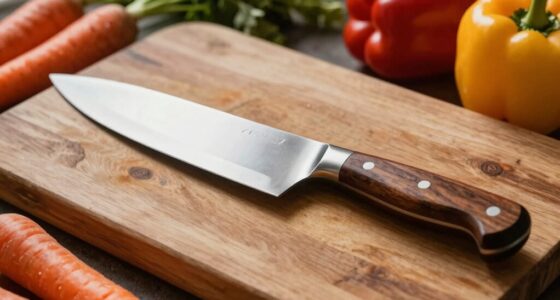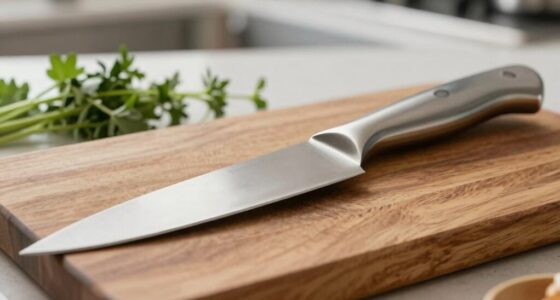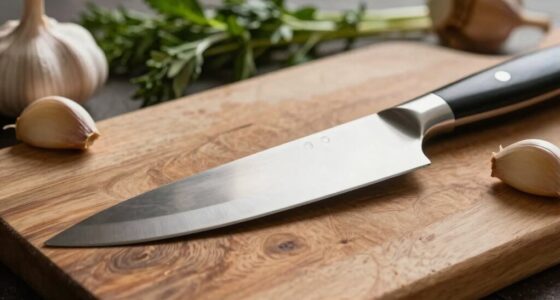
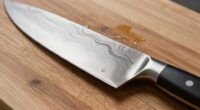
Your cutting board markedly influences your knives’ performance and lifespan. Hardwoods like maple or walnut keep blades sharper longer, while softer materials dull them faster. Proper maintenance, such as cleaning and oiling wooden boards, prevents deep scratches that trap bacteria and hurt knife edges. Using separate boards for different foods reduces cross-contamination. Caring for your board properly can make a big difference—continue exploring to discover how these simple steps can improve your kitchen safety and efficiency.
Key Takeaways
- The material of your cutting board affects how quickly your knives dull or stay sharp over time.
- Hardwoods like maple or walnut are gentler on blades, preserving knife edge longevity.
- Soft or plastic surfaces can cause blades to dull faster due to increased resistance and scoring.
- Proper maintenance, such as avoiding deep cuts, helps prevent damage that accelerates knife wear.
- Using appropriate cutting boards for different foods reduces cross-contamination and maintains overall knife performance.
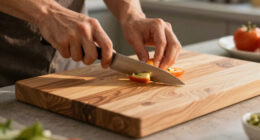
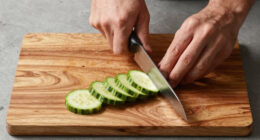
Many people overlook the true importance of cutting boards in the kitchen, but these simple tools play a essential role in food safety and preparation. Beyond just providing a surface to cut on, your choice of material greatly impacts your knife’s performance and longevity. Different materials affect how your knives cut, how quickly they dull, and how easy they are to maintain. For instance, hardwood boards like maple or walnut tend to be gentle on blades, helping to keep edges sharper longer. Conversely, softer woods or certain plastics may cause blades to dull more quickly, requiring more frequent sharpening.
Understanding the material impact helps you select the right cutting board for your needs. If you frequently prepare delicate ingredients, a hardwood board might be your best bet for preserving your knives’ sharpness. If you prefer easy maintenance and affordability, high-quality plastic boards can work well, provided you choose ones with a dense grain that resists scoring. No matter what material you choose, proper maintenance tips become essential to guarantee your cutting board remains safe and effective. Regular cleaning with hot, soapy water after each use prevents bacteria buildup, and occasional deep cleaning with vinegar or hydrogen peroxide can help disinfect. For wooden boards, oil them regularly with food-grade mineral oil to prevent cracking and warping, which can harbor bacteria and damage your knives. Plastic boards, on the other hand, can often be sanitized more thoroughly in the dishwasher, but it’s still good practice to inspect them for deep cuts where bacteria might hide.
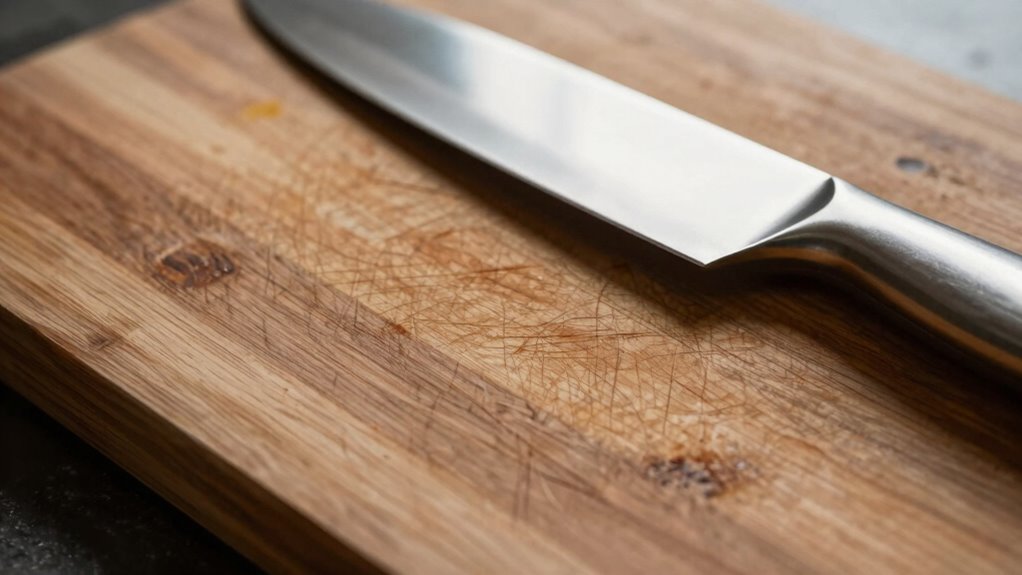
Maintaining your cutting board isn’t just about cleanliness; it’s about preserving its material integrity. Avoid cutting on surfaces that cause gouges or deep scratches, especially on softer materials like plastic or softwood, as these imperfections can trap bacteria and dull your knives faster. Rotating your cutting boards and using separate boards for raw meat, produce, and cooked foods also helps prevent cross-contamination. Remember, a well-maintained cutting board not only keeps your food safe but also ensures your knives perform at their best. Dull knives require more force, which can lead to slips and accidents, and they also damage the blades faster. By paying attention to the material impact of your cutting board and following simple maintenance tips, you protect both your knives and your health, making your overall kitchen experience safer and more efficient. Additionally, selecting cutting boards made from durable materials can extend the lifespan of your tools and reduce replacement costs over time.
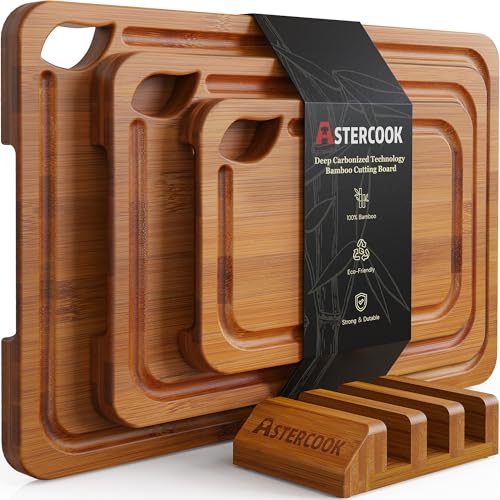
Astercook Deep-Carbonized Bamboo Cutting Boards for Kitchen with Wood Storage Stand, Reversible Charcuterie & Chopping Boards with Juice Grooves and Easy-Grip Handles, Fathers Day Gift for Men
- Material: Deep-carbonized bamboo for durability
- Set Includes: Three cutting boards with storage stand
- Board Sizes: 15×10, 12×8, 9×6 inches
As an affiliate, we earn on qualifying purchases.
As an affiliate, we earn on qualifying purchases.
Frequently Asked Questions
How Does Cutting Board Material Affect Knife Sharpening Needs?
The cutting board material directly influences your knife sharpening needs. Harder surfaces like glass or ceramic dull blades faster, requiring frequent sharpening, while softer, eco-friendly materials like bamboo or wood are gentler, preserving your knife’s edge longer. Plus, choosing eco-friendly options promotes better cutting board hygiene, reducing bacteria buildup. So, selecting the right material not only extends your knife’s sharpness but also guarantees safer, cleaner food prep.
Can a Cutting Board’s Surface Damage Affect Knife Edge Longevity?
Yes, a cutting board’s surface damage can affect your knife edge longevity. When the knife encounters rough or gouged areas, it’s forced to work harder, causing the edge to dull faster or even chip. Regularly inspect your cutting board for damage and replace or repair it as needed. Maintaining a smooth, clean surface reduces the risk of cutting board damage and helps preserve your knife’s sharpness longer.
What Is the Ideal Cutting Board Thickness for Maintaining Knife Performance?
You should choose a cutting board with a thickness of about 1.5 to 2 inches to maintain ideal knife performance. A thicker board offers better stability and absorbs impact, reducing wear on your knife edge. Keep in mind, the board’s weight, which usually increases with thickness, aids stability during chopping. Too thin, and it may wobble, damaging your knife, while too thick makes handling cumbersome.
How Often Should I Replace My Cutting Board to Protect My Knives?
You should replace your cutting board every 6 to 12 months to protect your knives, as a study shows that wooden boards can develop thousands of tiny cuts annually, which dull blades faster. The cutting board lifespan depends on usage and maintenance, but regular replacement guarantees your knives stay sharp. If you notice deep grooves or excessive wear, it’s time for a new board to keep your knives performing at their best.
Do Different Cutting Board Textures Influence Knife Blade Wear Differently?
Yes, different cutting board textures do influence knife blade wear because surface abrasiveness and material hardness vary. A rougher, more abrasive surface can cause blades to dull faster, while harder materials like glass or stone may be more abrasive than softer woods or plastics. To protect your knives, opt for softer, less abrasive surfaces like wooden or plastic boards, and avoid overly hard or textured surfaces that accelerate blade wear.

Kate Naturals Mineral Oil for Wood Cutting Board, Food Grade, Odorless, 8oz
- Food-grade mineral oil for wood: Restores and protects cutting boards and surfaces
- No greasy residue: Absorbs quickly without oily film or scent
- Safe for kitchen use: Meets food safety standards for utensils and appliances
As an affiliate, we earn on qualifying purchases.
As an affiliate, we earn on qualifying purchases.
Conclusion
Your cutting board isn’t just a surface—it’s the secret partner to your knives. Like a dance partner that guides every move, it influences how well your blades perform and stay sharp. Choosing the right board and caring for it properly can make slicing smoother and safer. So, next time you prep, remember: a good cutting board is the silent hero behind every perfect cut, silently supporting your skills like a steady anchor in a storm.
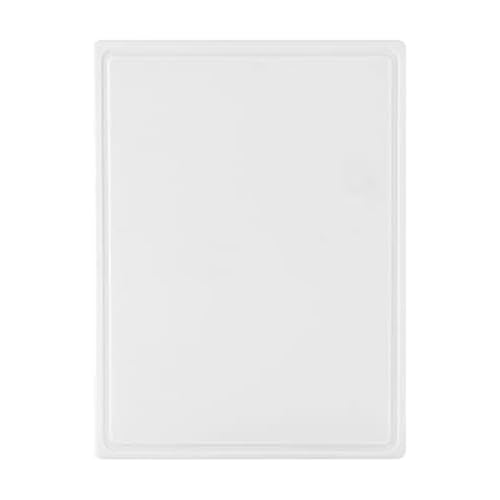
Farberware Cutting Board for Kitchen, Extra Large 15 x 20 Inch Plastic Cutting Board with Deep Juice Groove, Reversible, Dishwasher Safe, White
- Size: 15 x 20 inches large surface
- Reversible Design: Double cutting surface for versatility
- Material: BPA-free, polypropylene plastic
As an affiliate, we earn on qualifying purchases.
As an affiliate, we earn on qualifying purchases.

GORILLA GRIP BPA-Free Reversible Kitchen Cutting Board Set of 3, US Designed, Nonporous, Juice Grooves Catch Liquid, Slip Resistant Border, Dishwasher Safe, Durable Large Food Chopping Boards, Black
- Durable Nonporous Surface: Resists splintering and peeling
- Juice Catch Grooves: Contain liquids for easy cleanup
- Slip-Resistant Handle: Provides secure grip during use
As an affiliate, we earn on qualifying purchases.
As an affiliate, we earn on qualifying purchases.