The most overlooked feature in home kitchen knives is the handle design. A comfortable, ergonomic handle guarantees better control, reduces fatigue, and keeps your grip secure—even when your hands are wet or oily. Many forget how essential handle shape and material are for safety and comfort during prolonged use. Investing in a well-designed handle makes a significant difference. Keep exploring to discover how choosing the right handle can transform your kitchen experience.

Get kitchen gear delivered free — and shop member deals
- Fast, free delivery on millions of items
- Access to Prime Big Deal Days deals on October 6–7
- Prime Video, Amazon Music and more included
Key Takeaways
- Handle ergonomics and comfort often get overlooked but are crucial for control and safety during prolonged use.
- Non-slip handle materials are essential in wet or oily conditions to prevent accidents.
- Proper blade and handle balance significantly reduce fatigue and improve maneuverability.
- Overall knife design, including shape and material, impacts grip security and precision.
- Investing in high-quality handle materials enhances durability and maintains safety over time.
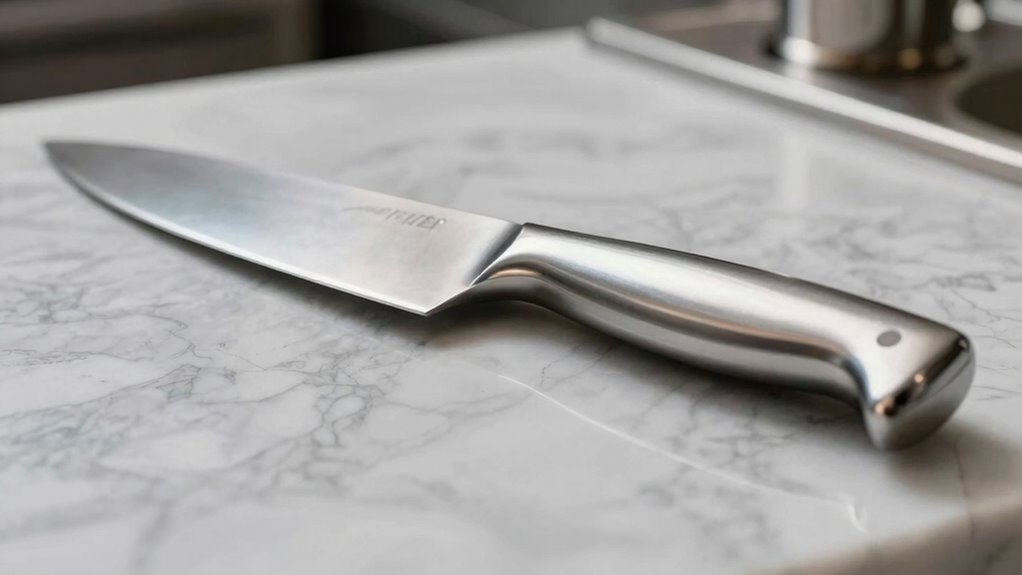
Have you ever stopped to think about what truly makes a kitchen knife easier and safer to use? Many people focus on the sharpness or brand, but one crucial feature often gets overlooked is the knife’s handle comfort. It’s tempting to just pick a knife based on its look or price, but the way it feels in your hand can significantly impact your safety and efficiency. A comfortable handle ensures you maintain control during cutting tasks, reducing the risk of slips that could cause injuries. When your grip feels natural and secure, you’re less likely to exert unnecessary force, which not only makes slicing easier but also safer.
A comfortable, secure handle enhances control, safety, and efficiency during your kitchen tasks.
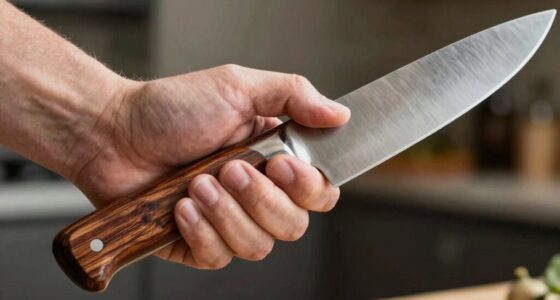
The handle’s design and material play a huge role in your overall experience with a knife. Handle comfort isn’t just about soft padding; it’s about ergonomics. A well-designed handle fits your hand’s shape, allowing for a firm grip without strain or fatigue. This is especially important if you spend a lot of time chopping or slicing. If the handle is too thin, too bulky, or poorly shaped, it can cause discomfort or even lead to cramping. You want a handle that feels like an extension of your hand, giving you precision control over each cut. The right handle reduces fatigue and helps you work longer without discomfort, which is a big plus when preparing large meals.
Blade material also ties into handle comfort in subtle but impactful ways. While the blade’s sharpness and durability are often the focus, the material of the blade influences the overall balance and weight of the knife. A well-balanced knife feels effortless to maneuver, making chopping safer and more accurate. When the blade and handle are well-matched in weight and feel, you’re more confident during use. This balance minimizes strain on your wrist and arm, reducing the risk of accidents caused by fatigue or loss of control. Additionally, the connection between handle material and blade design can affect the overall knife durability, and choosing a high-quality handle material can also improve the grip, especially when working in a wet or oily environment. Incorporating ergonomic handle design principles can further enhance comfort and safety during prolonged use. Understanding how blade and handle balance affects overall performance can help you select a more reliable and comfortable knife.
To ensure better grip and safety, selecting a handle with non-slip material can make a significant difference, especially in busy kitchens. Choosing a knife with the right handle comfort and blade material may seem small, but it’s actually a vital step toward safer and more enjoyable cooking. You might think that a sharp blade alone is enough, but the connection you have with the handle determines how effectively you can utilize that sharpness. When these features work in harmony, your knife becomes a trustworthy tool rather than a hazard. Taking the time to select a knife with a comfortable handle and quality blade material ensures you’re investing in safety, efficiency, and a better cooking experience overall.
As an affiliate, we earn on qualifying purchases.
Frequently Asked Questions
How Does Handle Material Affect Knife Safety and Comfort?
The handle material directly impacts your knife safety and comfort. A handle with an ergonomic grip helps you hold the knife securely, reducing hand fatigue during extended use. Materials like rubber or textured composites provide slip resistance, preventing accidents. Choosing a handle that feels comfortable and offers a firm grip guarantees safer, more precise cutting, making your kitchen tasks easier and more enjoyable.
Are There Specific Knife Features for Left-Handed Users?
You’re in luck—there are specific knife features designed for left-handed users. Left-handed ergonomics focus on handle design that fits comfortably in your left hand, reducing fatigue and enhancing control. Reversible blades let you flip the knife for ambidextrous use, making them versatile. By choosing knives with these features, you guarantee safer, more precise cutting, proving that sometimes, it’s the small details that make a big difference.
What Is the Importance of Knife Tang Design?
The importance of knife tang design lies in its impact on safety and comfort. A full tang provides better blade balance and stability, making slicing easier and reducing fatigue. When you choose a knife with an ergonomic grip and a full tang, you guarantee more control and safety during use. This overlooked feature enhances your overall kitchen experience by offering durability and a comfortable, secure grip.
How Does Blade Thickness Influence Cutting Performance?
Blade thickness directly affects your cutting performance by balancing flexibility and stability. A thinner blade offers more flexibility, making precise cuts through delicate ingredients, but may sacrifice edge retention. Thicker blades provide stability and better edge retention, ideal for tougher tasks. When choosing a knife, consider how blade thickness influences these factors to match your cooking needs, ensuring you get maximum control and durability in your kitchen tools.
Can Knife Storage Impact Blade Longevity?
Yes, knife storage impacts blade longevity. Proper storage conditions protect your knife material from moisture, rust, and corrosion, which can dull or damage the blade over time. Using a knife block, magnetic strip, or protective sheath keeps blades safe from impact and environmental factors. Avoid storing knives loosely in drawers, as this exposes them to knocks and friction that degrade the blade. Good storage is essential for maintaining sharpness and extending your knife’s lifespan.
As an affiliate, we earn on qualifying purchases.
Conclusion
Don’t underestimate the power of a comfortable, well-balanced handle—it’s the unsung hero that transforms your entire cooking experience. When your knife feels like an extension of your hand, chopping becomes effortless and enjoyable, turning a mundane task into a culinary dance. Ignoring this feature is like trying to cut through steel with a butter knife—inefficient and frustrating. Prioritize comfort and balance, and you’ll reveal the full potential of your kitchen tools, making every meal a masterpiece.
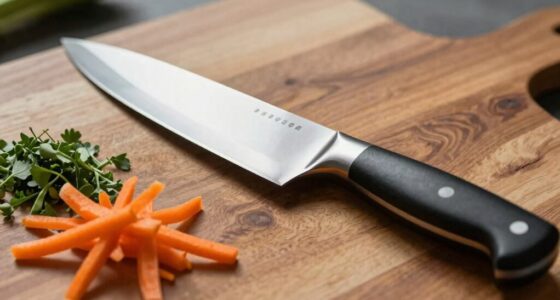
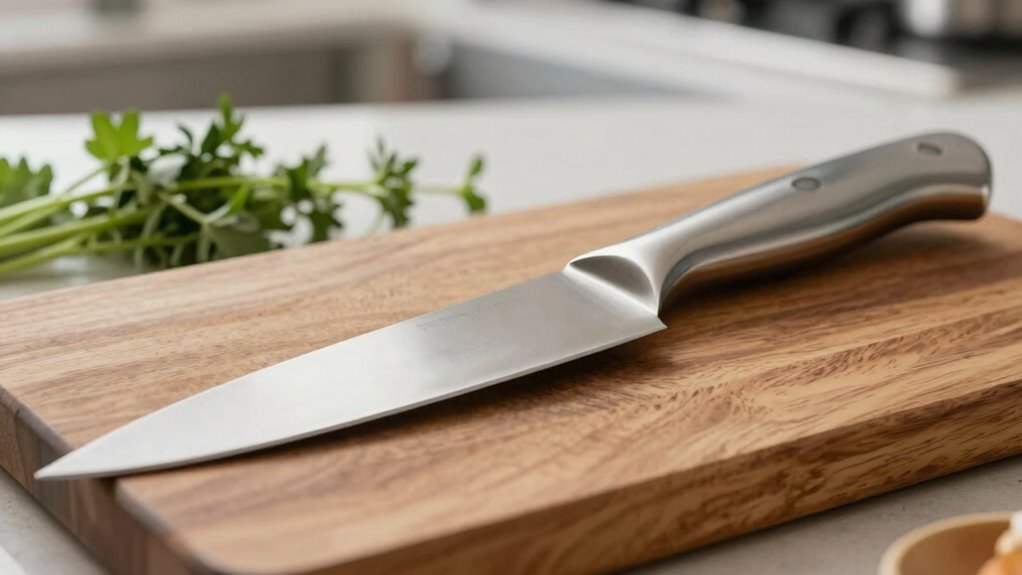
balanced chef's knife with comfortable handle
As an affiliate, we earn on qualifying purchases.
As an affiliate, we earn on qualifying purchases.
high durability kitchen knife handle
As an affiliate, we earn on qualifying purchases.
As an affiliate, we earn on qualifying purchases.
Fall Picks
fall essentials
As an affiliate, we earn on qualifying purchases.