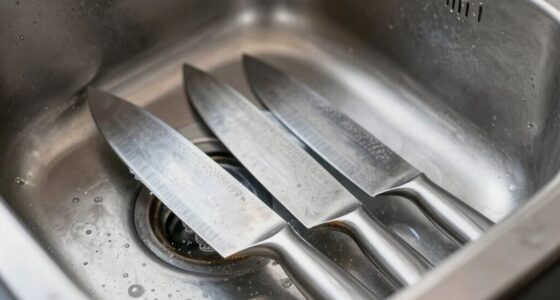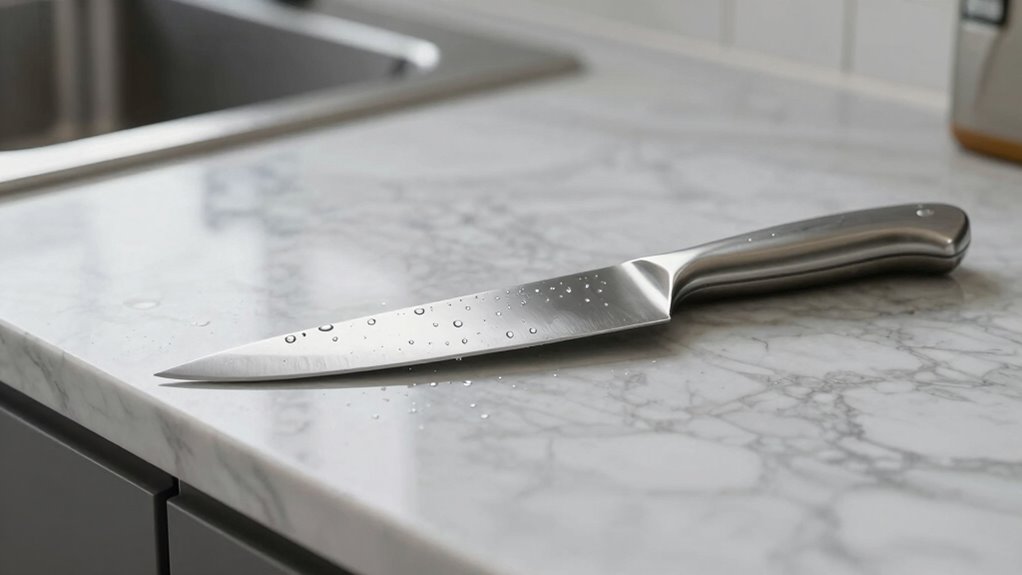

Water spots on your knife happen when mineral-rich droplets dry on the surface, leaving deposits that dull its shine and can cause corrosion. To prevent this, dry your knife immediately after washing with a soft towel, paying attention to edges and crevices. Regularly polishing with stainless steel cleaner or mineral oil also helps protect the surface. Keep your knives shiny and rust-free by mastering simple care techniques—you’ll discover more effective tips as you go.
Key Takeaways
- Mineral-rich water droplets dry on the blade, leaving mineral residues that form water spots.
- Properly drying with a soft cloth immediately after rinsing removes residual moisture.
- Focus on cleaning crevices and edges to prevent hidden water from causing spots.
- Regularly polish and apply mineral oil to create a protective barrier against water spots.
- Avoid air drying or leaving knives wet to minimize mineral deposit buildup over time.
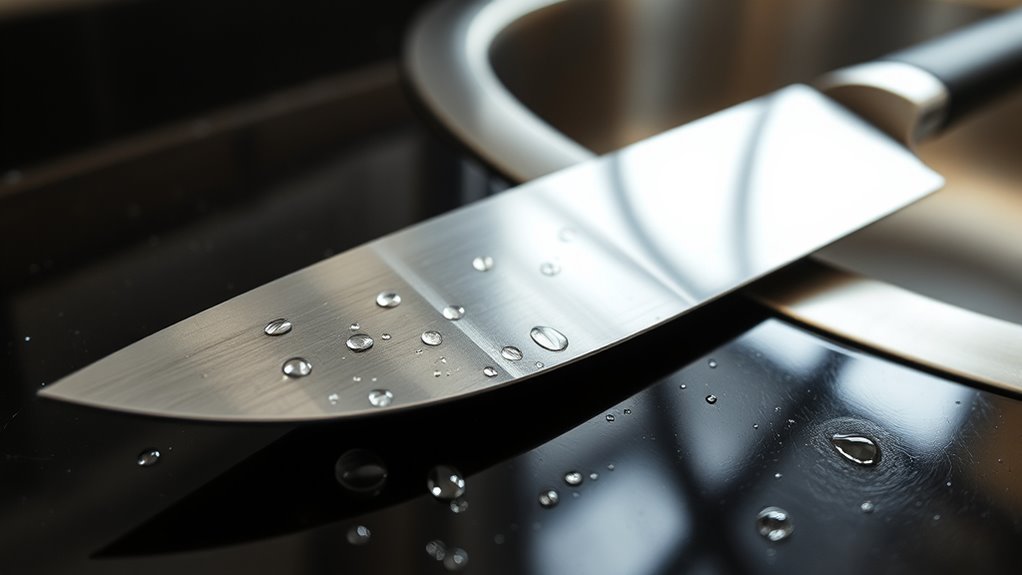
Water spots on your knives can be more than just unsightly—they can also cause corrosion over time. If you’re noticing those stubborn marks on your stainless steel blades, it’s a sign that your stainless steel maintenance routine needs a little tweak. These spots form when mineral-rich water droplets dry on the surface, leaving behind deposits that dull your knife’s shine and potentially weaken the metal. To keep your knives looking their best and functioning properly, it’s essential to understand proper drying techniques. Proper drying isn’t just about wiping your knives with a towel; it’s about removing moisture thoroughly to prevent water spots from forming in the first place.
When you finish washing your knives, avoid simply air drying or leaving them wet on the countertop. Instead, use a soft, clean towel to dry each blade immediately after rinsing. Focus on the edges and any crevices where water might hide, as residual moisture can lead to spots and corrosion. Microfiber cloths work particularly well because they absorb water quickly and don’t scratch the surface. If you’re in a hurry, a quick wipe with a lint-free towel can make a big difference in preventing water spots. Remember, the goal is to eliminate all traces of water before it has a chance to evaporate and leave deposits behind.
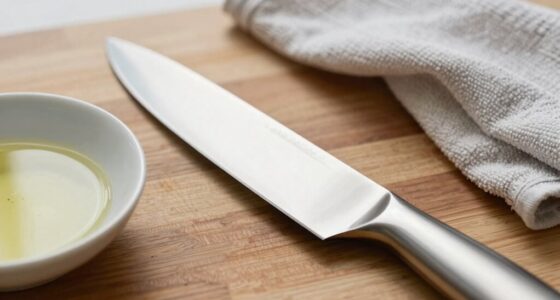
In addition to drying techniques, paying attention to stainless steel maintenance can also help. Regularly polishing your knives with a food-safe stainless steel cleaner or a tiny bit of mineral oil can create a protective barrier against water spots. These products help repel water and mineral deposits, making future cleaning easier and keeping your blades shiny longer. Avoid using harsh abrasives or steel wool, as they can scratch your knife’s surface and compromise its integrity. Instead, stick to gentle cleaning methods and routine polishing to maintain the sleek appearance and longevity of your knives.
Ultimately, preventing water spots boils down to a combination of proper drying and regular maintenance. By drying your knives thoroughly with a soft towel immediately after washing and applying protective coatings, you minimize the risk of mineral deposits and corrosion. Consistent care not only preserves the aesthetic appeal but also prolongs the life of your knives, ensuring they stay sharp and functional for years. So, take a few extra seconds to dry your knives carefully and incorporate a regular stainless steel maintenance routine—you’ll notice the difference in their appearance and performance over time.
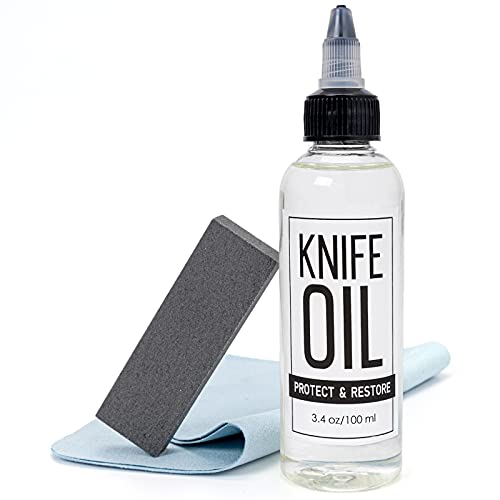
PuGez Knife Oil Rust Eraser Kit, Extra Large Rust Remover for Knives, Sword Maintenance Oil (3.4 oz) for Carbon Steel Blade, Cleaning, Protection And Lubricant Care Set
- Professional Knife Maintenance Oil: Protects steel and carbon steel blades
- Large Rust Eraser Tool: Measures 3x1x0.5 inches for durability
- Food-Grade Safe Formula: Made with refined mineral and camellia oils
As an affiliate, we earn on qualifying purchases.
As an affiliate, we earn on qualifying purchases.
Frequently Asked Questions
Do Water Spots Affect the Knife’s Blade Longevity?
Water spots don’t directly affect your knife’s blade longevity, but neglecting proper blade maintenance can lead to corrosion over time. To keep your knife in top shape, use effective cleaning techniques and dry it thoroughly after washing. Regularly inspecting and maintaining your blade helps prevent rust and staining, ensuring it stays sharp and durable longer. Proper care extends your knife’s life and keeps it performing at its best.
Can Water Spots Cause Rust or Corrosion Over Time?
Water spots alone usually won’t cause rust or corrosion on your knife, but they can if left untreated over time. Water spots indicate moisture lingering on the blade, which can lead to rust if it isn’t wiped off properly. To prevent rust, you should dry your knife thoroughly after washing and regularly apply rust prevention measures. Taking these steps protects your knife’s integrity and keeps it in top condition longer.
Are Certain Knife Materials More Prone to Water Spots?
Think of your knife’s material as its armor against water spots. Stainless steel often bears the brunt, showing water spots more visibly, like scars telling a story. Ceramic knives, however, are more resistant, like a polished shield. You can expect fewer spots on ceramic blades, but stainless steel may require extra care to keep them spotless. Knowing your knife’s material helps you choose the right maintenance to keep it pristine.
How Does Water Temperature Impact Spot Formation?
Higher water temperature increases mineral solubility, which means hot water leaves fewer spots on your knife. Conversely, cold water has lower mineral solubility, making minerals more likely to deposit as spots. To prevent water spots, use warm or hot water for rinsing your knife, and dry it thoroughly afterward. This reduces mineral buildup and keeps your knife looking shiny and spot-free.
Is There a Difference Between Water Spots and Mineral Deposits?
Think of water spots and mineral deposits like fingerprints on your knife. Water spots are transient, often just surface stains that disappear with wiping, while mineral deposits are tougher, like stubborn smudges that linger. Water stains are usually caused by mineral deposits left behind after evaporation. Identifying water stains helps you know whether you need simple drying or more thorough cleaning to remove mineral buildup, ensuring your knife stays pristine.

HOMEXCEL Grey Microfiber Cleaning Cloth, 8 Pack Cleaning Towels for Kitchen, Lint Free, Scratch-Free, Highly Absorbent, and Reusable Cleaning Rags for House, Window and Glass, Cars, 11.5 X11.5 inch
- Ideal Size for Versatile Cleaning: 11.5 x 11.5 inches for multiple surfaces
- Lint-Free and Scratch-Free Material: Soft microfiber prevents scratches and lint
- Highly Absorbent and Quick-Drying: Efficiently absorbs liquids for fast cleaning
As an affiliate, we earn on qualifying purchases.
As an affiliate, we earn on qualifying purchases.
Conclusion
To keep your knives shining like stars in a clear night sky, stay vigilant against water spots. Dry your knives immediately after washing, and consider using a soft cloth to polish away any remaining moisture. Think of water spots as tiny, unwelcome guests that can dull your knife’s brilliance—don’t let them linger. With these simple steps, you’ll preserve your knives’ beauty and sharpness, ensuring they remain your trusty companions in the kitchen for years to come.

Kate Naturals Mineral Oil for Wood Cutting Board, Butcher Block, and Knife. Food Grade Mineral Oil for Wooden Cutting Board & Utensils (8oz, Food Safe)
- Food-grade mineral oil for wood: Restores and protects cutting boards and surfaces
- No greasy residue: Absorbs quickly without oily film or scent
- Safe for kitchen use: Meets food safety standards for utensils and appliances
As an affiliate, we earn on qualifying purchases.
As an affiliate, we earn on qualifying purchases.

Metal Polish Paste – 1.76oz USA-Made Silver Polish for Solid Chrome, Stainless Steel, & Aluminum – Non-Abrasive for Light Oxidation – Requires Manual Buffing – Not for Plated/Coated Surfaces (1 Pack)
- Made in USA: Wisconsin-crafted metal polish paste
- Suitable for Solid Metals: Chrome, stainless steel, aluminum, jewelry
- Removes Light Tarnish: Oxidation, water spots, surface rust
As an affiliate, we earn on qualifying purchases.
As an affiliate, we earn on qualifying purchases.