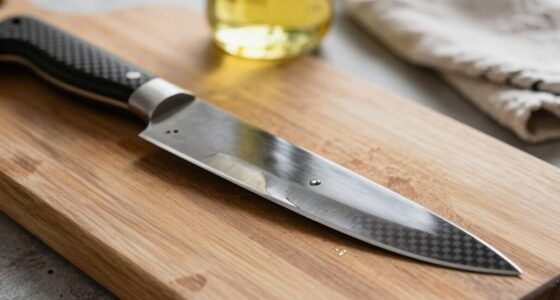

To clean a knife after cutting sticky dough or cheese, soak it in warm, soapy water for a few minutes to loosen residues. Then, gently scrub with a soft sponge or brush, focusing on crevices near the handle and edge. Rinse thoroughly under warm water, making sure all soap and debris are removed. Dry immediately with a clean towel to prevent rust and keep the blade sharp. For more detailed tips, keep exploring next steps.

Get kitchen gear delivered free — and shop member deals
- Fast, free delivery on millions of items
- Access to Prime Big Deal Days deals on October 6–7
- Prime Video, Amazon Music and more included
Key Takeaways
- Soak the knife in warm, soapy water to loosen sticky dough or cheese residues before scrubbing.
- Use a soft sponge or non-abrasive brush to gently clean the blade and handle, paying attention to crevices.
- For stubborn residue, let the knife sit in soapy water a few minutes, then scrub gently again.
- Rinse thoroughly under warm running water, keeping fingers away from the blade to avoid cuts.
- Dry immediately with a clean towel to prevent water spots and maintain blade sharpness.
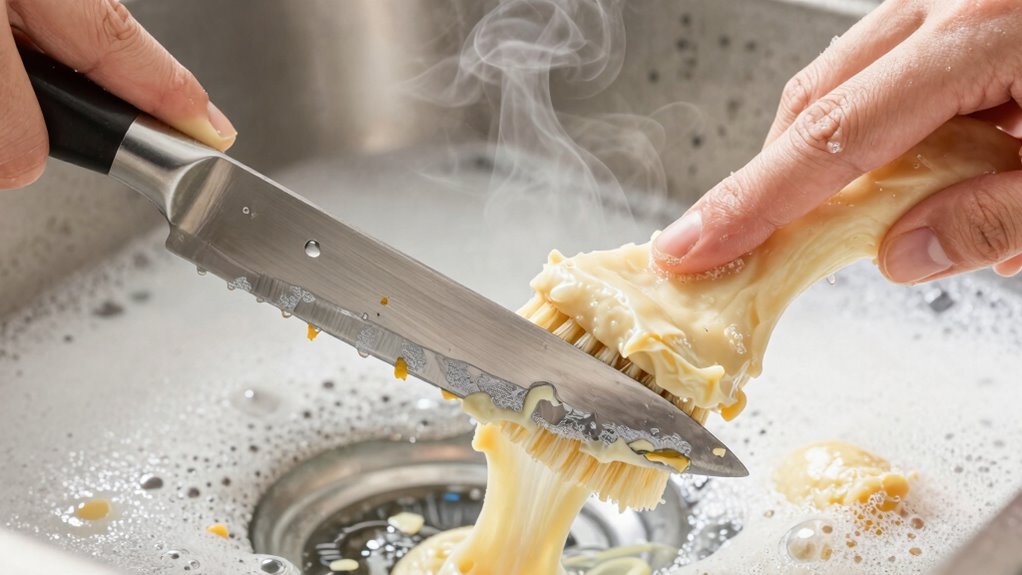
Keeping your knife clean is essential for safety and maintaining its sharpness. When you’ve been cutting sticky dough or cheese, residue can cling to the blade, making it harder to use and increasing the risk of accidents. To start, fill your sink or a basin with warm water. Warm water helps loosen sticky substances without damaging your knife’s edge or handle. Add a few drops of dish soap to the water; dish soap is effective at breaking down fats and sugars present in cheese and dough, ensuring a thorough clean. Submerging your knife in this soapy water allows the loosened residue to soften, making it easier to remove.
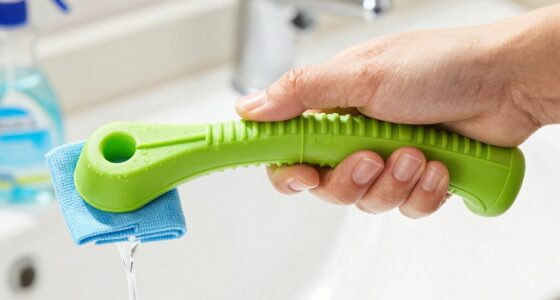
Next, gently scrub the blade using a soft sponge or a non-abrasive brush. Pay close attention to the area near the handle and the edge, where dough or cheese can accumulate and hide. Use light, controlled strokes to avoid dulling the blade. For stubborn bits that cling stubbornly, you can dip the sponge back into the warm, soapy water and repeat the process. Avoid using steel wool or abrasive scrubbers, as they can scratch and damage the knife’s surface, reducing its sharpness and longevity.
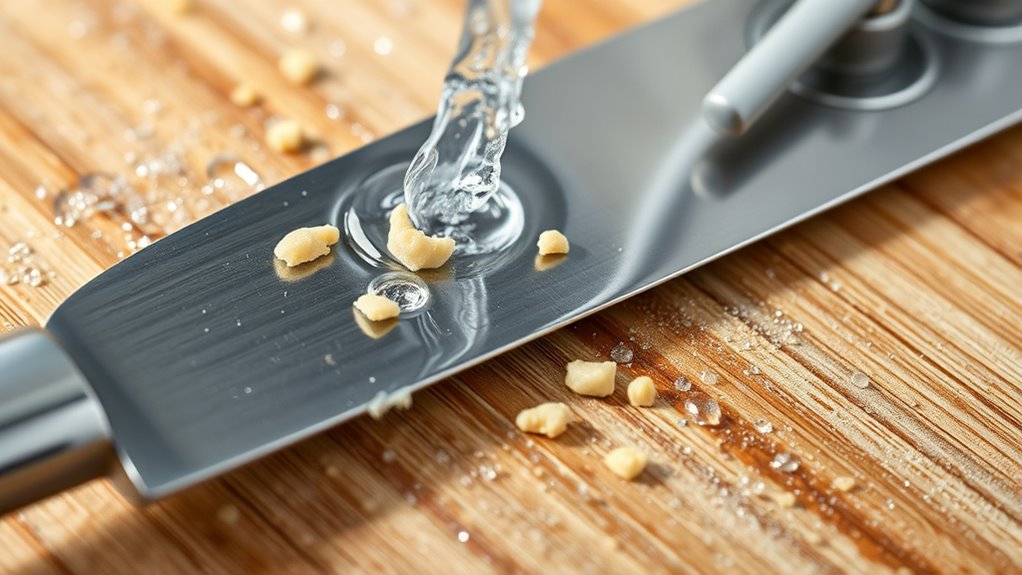
If you notice any residue that’s particularly resistant, you might want to let the knife sit in the warm, soapy water for a few minutes before scrubbing again. This helps loosen the stubborn bits more effectively. Once the residue is removed, rinse the knife thoroughly under warm running water to wash away any remaining soap and loosened debris. Make sure to hold the knife securely by the handle, keeping your fingers away from the blade’s edge to prevent cuts. Proper cleaning practices also help maintain the contrast ratio by keeping the surface free of residues that could cause uneven reflections.
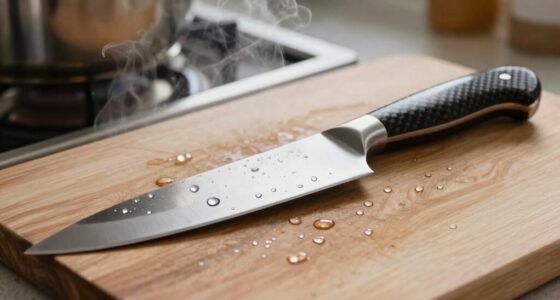
After rinsing, dry your knife immediately with a clean towel to prevent water spots and corrosion. Proper drying also helps keep the edge sharp and the handle in good condition. If the residue was especially sticky or greasy, you might want to give the knife a second rinse, just to ensure all soap and debris are gone. Remember, never soak your knife for an extended period or put it in the dishwasher unless it’s dishwasher safe, as prolonged exposure to water and harsh detergents can damage the metal and handle.
As an affiliate, we earn on qualifying purchases.
Frequently Asked Questions
Can I Use a Dishwasher to Clean Sticky Dough or Cheese off My Knife?
You can use a dishwasher to clean sticky dough or cheese off your knife, but consider dishwasher safety first. Dishwashers are effective, but harsh cycles may dull your blade. For best results, remove excess residue, then clean with soap during the wash. Hand washing often ensures a thorough clean, especially for sticky substances, and helps maintain your knife’s sharpness longer. Always check your knife’s care instructions for ideal cleaning methods.
Is It Safe to Use Abrasive Scrubbers on My Knife?
You shouldn’t use abrasive scrubbers on your knife, as they can scratch the blade, compromise knife safety, and reduce its sharpness. Instead, opt for gentle cleaning methods like soft sponges or brushes, and avoid harsh pads. Protect your knife’s edge, maintain its safety, and extend its lifespan by choosing non-abrasive tools. Remember, careful cleaning preserves your knife’s quality and keeps your kitchen safe.
How Do I Prevent Cheese From Sticking to My Knife in the Future?
To prevent cheese from sticking to your knife, you can apply a thin layer of cooking oil or non-stick spray before cutting. Keep your knife sharp, as dull blades tend to trap more cheese and sticky substances. Regularly maintain your knife by cleaning and drying it thoroughly after use, which helps prevent residue buildup. Proper knife maintenance and preventing sticking will make your cutting tasks easier and keep your knife in top condition.
Can I Use Lemon Juice to Clean Stubborn Cheese Residue?
A stitch in time saves nine, so yes, you can use lemon juice cleaning to tackle stubborn cheese residue. The acidity in lemon juice breaks down the fats and proteins, making it effective for cleaning your knife. Simply apply lemon juice, let it sit for a few minutes, then scrub gently with a sponge or brush. Rinse thoroughly, and your knife will be free of stubborn cheese residue.
How Often Should I Sharpen My Knife After Cleaning Sticky Substances?
You should sharpen your knife based on its usage and dullness, typically every 1-3 months for regular home use. After cutting sticky substances like dough or cheese, it’s good to verify your knife’s sharpness and perform a quick hone if needed. Proper knife maintenance involves regular sharpening to keep the edge keen and prevent damage. Don’t wait until it’s dull—consistent care ensures safer, more efficient cutting.
As an affiliate, we earn on qualifying purchases.
Conclusion
Now that you know how to clean a knife after cutting sticky dough or cheese, you’ll keep your tools pristine and pest-free. Properly rinsing, scraping, and drying ensures your knife stays sharp and streak-free. Stay diligent, and don’t let gooey residues grow. With consistent care, your cutlery remains clean, crisp, and enthrallingly clear. So, seize the scrubbing, savor the sanitation, and keep your kitchen knives brilliantly bright and beautifully blemish-free!
non-abrasive sponge for kitchen knives
As an affiliate, we earn on qualifying purchases.
As an affiliate, we earn on qualifying purchases.
As an affiliate, we earn on qualifying purchases.
Evergreen bestsellers Picks
bestsellers
As an affiliate, we earn on qualifying purchases.