To protect your knives in humid homes and coastal kitchens, keep them clean and dry after each use, wiping blades thoroughly with a soft towel. Apply a light layer of food-safe oil on steel blades to prevent rust, and store them in a magnetic strip or knife block to keep air circulating. Regularly sharpen and hone your knives to maintain their edge, and address rust spots immediately. For more tips on keeping your blades in top shape, continue exploring these essential care strategies.

Get kitchen gear delivered free — and shop member deals
- Fast, free delivery on millions of items
- Access to Prime Big Deal Days deals on October 6–7
- Prime Video, Amazon Music and more included
Key Takeaways
- Dry knives thoroughly after each use to prevent moisture buildup and rust formation.
- Store knives in a dry, ventilated area like a magnetic strip or knife block to reduce humidity exposure.
- Regularly apply a thin layer of food-safe oil to carbon steel blades to protect against rust and corrosion.
- Use rust removers promptly on any spots and avoid soaking knives in water or leaving them damp.
- Hone and sharpen knives regularly to maintain sharpness and reduce the risk of injury in humid environments.
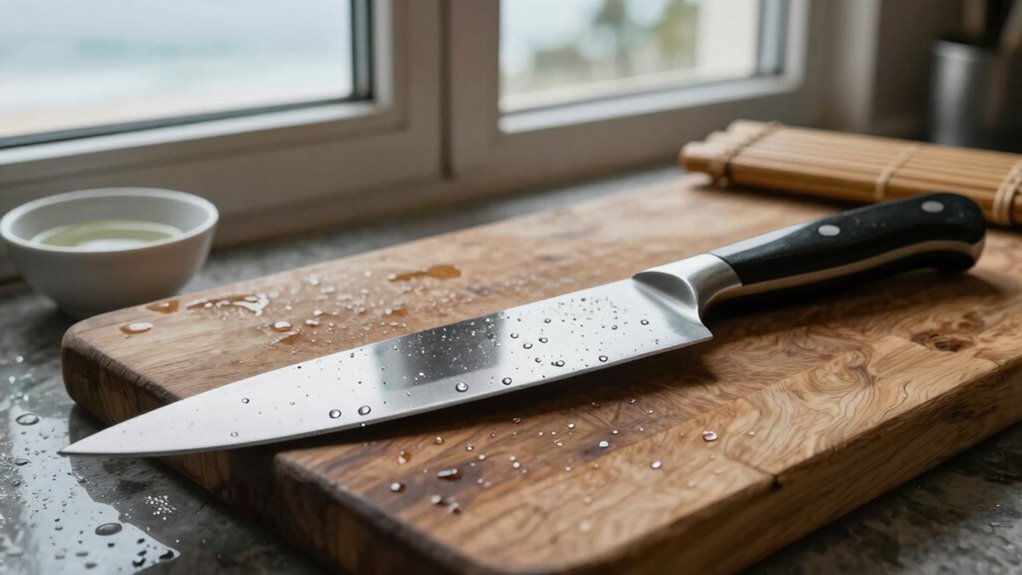
Caring for your knives properly is vital to keep them sharp, safe, and long-lasting. In humid homes and coastal kitchens, moisture can be a real challenge, leading to rust and corrosion if you don’t pay close attention to blade maintenance. To guarantee your knives stay in top shape, you need to develop a routine that addresses these specific conditions. Regular knife sharpening isn’t just about keeping the edge sharp—it’s also about maintaining the integrity of the blade in environments where moisture can cause damage over time. Dull knives are more dangerous because they require more force to cut, increasing the risk of slips and injuries. So, sharpening your knives regularly helps keep your blades performing at their best and prevents unnecessary wear.
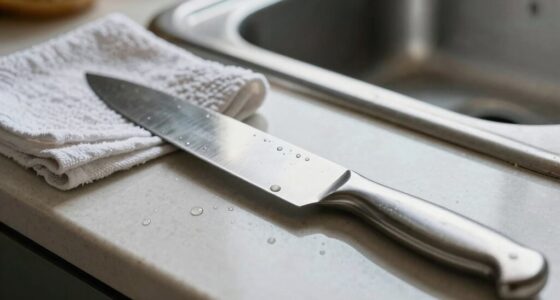
Blade maintenance in humid and coastal environments involves more than just sharpening. You should always dry your knives thoroughly after each use, especially around the edges and in any crevices where moisture can hide. Use a soft towel to wipe them down, and consider storing them in a knife block or on a magnetic strip that keeps them exposed to air rather than enclosed in a humid drawer. If you notice any rust spots or discoloration, address these immediately with gentle cleaning and, if necessary, a rust remover designed for kitchen knives. Avoid leaving your knives soaking in water or in damp environments, as this accelerates corrosion. Applying a thin layer of mineral oil or another food-safe oil on your blades, especially if they’re carbon steel, provides an extra layer of protection against moisture. Additionally, understanding the impact of environment on metal preservation can help you choose the best storage solutions for your situation.
Proper storage plays a vital role in blade maintenance in coastal kitchens. Keep your knives dry and make certain they aren’t rubbing against each other or other utensils that could nick the blades. When it’s time to sharpen, do so carefully using a whetstone or an appropriate sharpening tool, following the manufacturer’s instructions. Regularly honing your knives with a honing steel also helps maintain the edge and reduces the frequency of full sharpening sessions. Remember, sharp knives are safer knives, and consistent blade maintenance ensures you get the best performance and longevity from your investment. By combining proper storage, diligent cleaning, and routine sharpening, you’ll help your knives withstand the humid, salty air and stay in prime condition.
As an affiliate, we earn on qualifying purchases.
Frequently Asked Questions
Can Humid Environments Cause Knives to Rust Faster?
Yes, humid environments can cause your knives to rust faster because increased moisture accelerates metal corrosion. To prevent rust, you should focus on rust prevention by thoroughly drying knives after use and storing them in a dry place. Applying a light coat of mineral oil can also help protect the metal surface. Regular maintenance and proper storage are key to keeping your knives sharp and rust-free in humid settings.
What Types of Knife Storage Are Best for Humid Homes?
You should consider knife storage solutions that keep moisture away and prevent rust. Use knife blocks, magnetic strips, or knife guards to keep blades dry and protected. Regular knife maintenance, like drying blades immediately after cleaning, complements these storage methods. By choosing these storage solutions, you reduce humidity exposure, preserve blade sharpness, and extend your knives’ lifespan, ensuring your knives stay in top shape despite the humid environment.
Should I Oil My Knives Regularly in Coastal Kitchens?
Yes, you should oil your knives regularly in coastal kitchens. Regular oiling helps with blade maintenance and prevents rust caused by humidity. Use food-grade mineral oil to keep the blade protected, especially if you’re sharpening your knives often. Proper oiling reduces corrosion and guarantees your knives stay sharp longer. Remember, consistent knife sharpening combined with routine oiling will keep your knives in top condition, even in humid environments.
How Does Salt Air Affect Different Knife Materials?
Salt air causes corrosion on many knife materials, especially those prone to rust like high-carbon steel. Stainless steel knives resist salt air corrosion better, thanks to their durability, but they still need regular cleaning and drying to prevent buildup. If you own knives made from softer metals or carbon steel, you should take extra care, as salt air accelerates corrosion and weakens their overall durability. Proper maintenance helps preserve your knives longer.
Are There Specific Cleaning Products Recommended for Humid Conditions?
For humid conditions, you should use gentle, non-abrasive cleaning products for knife maintenance. Avoid harsh chemicals that can corrode blades or handles. Instead, opt for mild dish soap and warm water, followed by thorough drying to prevent rust. Use soft cloths or sponges for cleaning and avoid dishwasher use, which can damage knives. Proper cleaning techniques guarantee your knives stay sharp and rust-free, even in challenging humid or coastal environments.
As an affiliate, we earn on qualifying purchases.
Conclusion
To keep your knives sharp and rust-free in humid, coastal kitchens, regular cleaning, thorough drying, and proper storage are key. Remember, stainless steel knives can still corrode if neglected, and studies show that up to 80% of kitchen knives suffer from rust due to moisture. By following these simple tips, you’ll prolong the life of your knives and maintain their edge, ensuring safe and efficient cooking every time. Stay vigilant, and your knives will serve you well for years to come.
As an affiliate, we earn on qualifying purchases.
As an affiliate, we earn on qualifying purchases.
Fall Picks
fall essentials
As an affiliate, we earn on qualifying purchases.