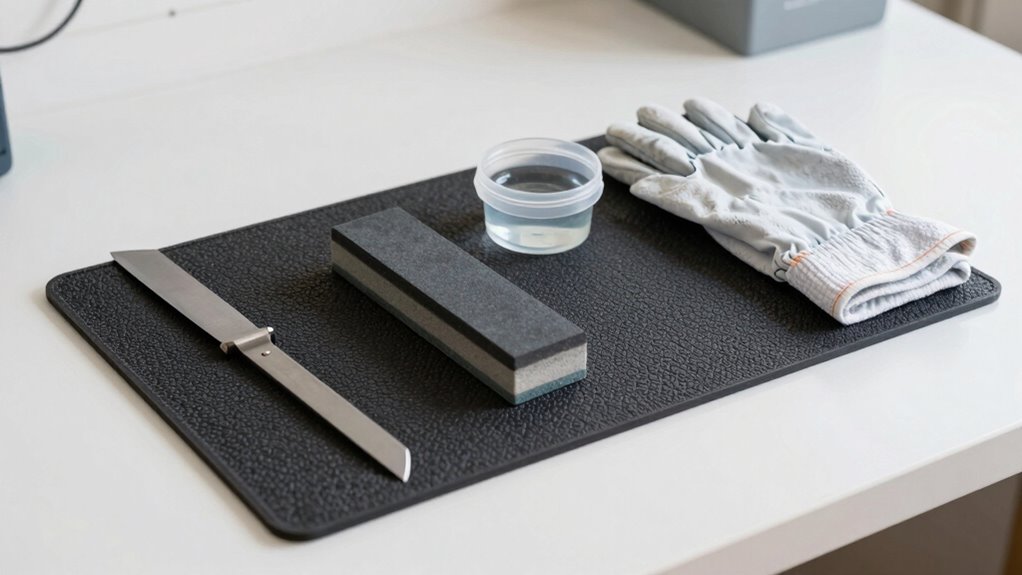

To keep your sharpening setup safer and cleaner, always wear the right safety gear like gloves, goggles, and masks, and check they’re in good condition before starting. Keep your workspace organized with tools and supplies within easy reach, and regularly clean dust, debris, and metal shavings using appropriate methods like vacuums or damp cloths. Proper ventilation and dust control prevent airborne particles, while maintaining a neat environment prolongs tool life. Keep exploring for more tips to improve your setup further.

Get kitchen gear delivered free with Prime
- Fast, free delivery on millions of items
- Prime Video, Amazon Music and more included
- Member-only deals all year
Key Takeaways
- Always wear appropriate safety gear, including gloves, eye protection, and dust masks, and inspect it regularly before use.
- Keep the workspace organized with designated storage for tools, lubricants, and cleaning supplies to prevent accidents.
- Regularly clean dust, metal shavings, and debris using vacuums with HEPA filters or damp cloths.
- Use proper ventilation to disperse dust and fumes, maintaining a healthy environment during sharpening.
- Inspect and maintain tools, safety gear, and cleaning equipment regularly to ensure optimal safety and cleanliness.
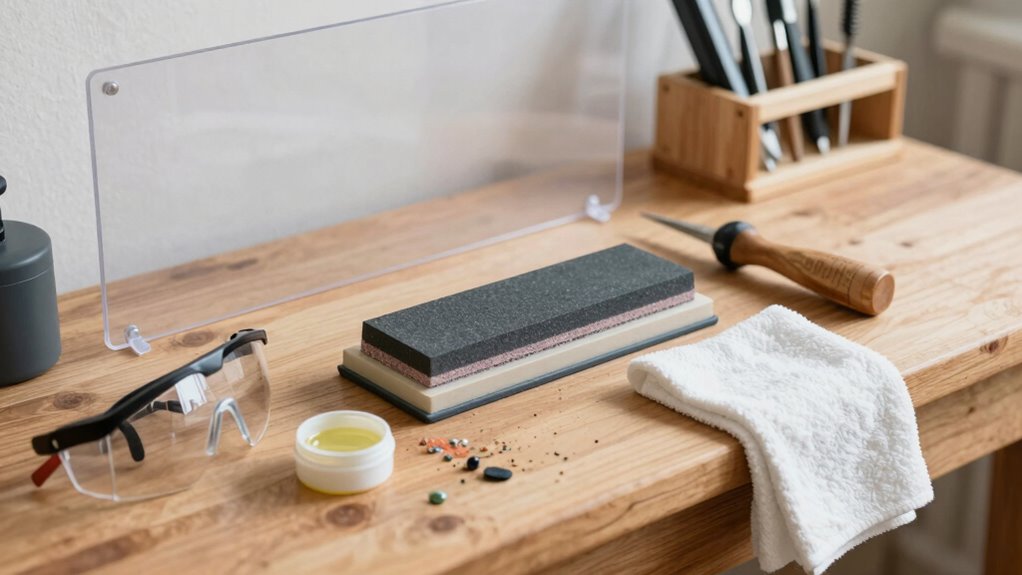
Have you ever considered how a cluttered or unsafe sharpening setup can lead to accidents or damage? When you’re working with sharp tools, safety should be your top priority. Proper safety gear is crucial to protect yourself from potential cuts, sparks, or flying debris. Wear cut-resistant gloves, eye protection, and a dust mask if necessary. Gloves help prevent minor cuts when handling blades or abrasive stones, while goggles shield your eyes from particles or sparks. A dust mask can prevent inhaling fine metal shavings or grinding dust, which is especially important if you’re working in a poorly ventilated area.
Prioritize safety with gloves, eye protection, and a dust mask to prevent injuries during sharpening.
Keeping your workspace clean is just as essential as wearing safety gear. Regularly using cleaning supplies to clear away metal shavings, dust, and debris reduces the risk of accidents. Use a brush or compressed air to remove particles from your tools and work surface. Avoid blowing dust with compressed air directly at your face, as this can cause particles to fly into your eyes or respiratory system. A damp cloth or vacuum with a HEPA filter can help pick up fine dust more safely. Maintaining a tidy setup also improves efficiency; when everything has its place, you’re less likely to accidentally knock over tools or leave hazards lurking nearby. Additionally, ensuring your air quality remains safe helps prevent respiratory issues during prolonged sharpening sessions. Using proper ventilation techniques can further enhance safety by dispersing dust and fumes effectively. Ensuring proper storage of hazardous materials such as lubricants and cleaning agents is also vital for a safe workspace. Implementing dust control methods can significantly reduce airborne particles and improve overall safety.
Establishing a designated area for sharpening helps contain potential messes and hazards. Use a sturdy, stable workbench with enough space to keep tools organized and within reach. Keep sharpening stones, files, and lubricants neatly arranged so you don’t have to scramble or reach over cluttered surfaces. When you’re finished, take the time to thoroughly clean your tools and workspace. Disinfect cutting surfaces with appropriate cleaning supplies, ensuring no residue or debris remains that could cause damage or accidents during your next session.
Always inspect your safety gear before starting work. Torn gloves or scratched goggles compromise protection, so replace them promptly. Similarly, regularly check your cleaning supplies to ensure they’re effective and suitable for the task. Using the wrong cleaning agents or worn-out brushes can leave dirt or residues that compromise your safety and the quality of your tools. Remember, a clean and organized sharpening setup isn’t just about aesthetics; it’s about creating a safe environment where you can work confidently and efficiently. Prioritizing safety gear and diligent cleaning practices helps prevent injuries and prolongs the life of your tools, making every sharpening session safer and more productive.
safety gloves for sharpening tools
As an affiliate, we earn on qualifying purchases.
As an affiliate, we earn on qualifying purchases.
Frequently Asked Questions
What Personal Protective Equipment Should I Wear During Sharpening?
You should wear protective gloves to shield your hands from accidental cuts and safety goggles to protect your eyes from sparks, metal shards, and debris during sharpening. These safety gear pieces help prevent injuries and keep you safe while working. Always make certain your gloves fit well and goggles are snug to your face. Using personal protective equipment makes sharpening safer and reduces the risk of accidents.
How Often Should I Clean My Sharpening Tools?
You should clean your sharpening tools regularly—after every few uses or when you notice buildup—to maintain peak performance. Think of it like applying sharpening techniques; consistent tool maintenance keeps your tools effective and safe. Neglecting cleanliness can cause uneven edges and even injuries. Use a brush or cloth to remove metal shavings and debris, and occasionally oil your tools. Regular cleaning ensures your sharpening setup stays safe, efficient, and ready for the next project.
What Should I Do if I Accidentally Cut Myself?
If you accidentally cut yourself, immediately stop sharpening and wash your hands with soap and water. For first aid, apply pressure to stop bleeding, then clean the wound with antiseptic. Use a sterile bandage to cover it, and keep it dry. If the cut is deep or bleeding won’t stop, seek medical attention promptly. Proper wound treatment helps prevent infection and promotes faster healing.
Are There Specific Storage Tips for Sharpening Supplies?
You should store sharpening supplies in designated storage containers to stay organized and prevent accidents. Keep sharpening oil in a sealed, clearly labeled bottle to avoid spills, and store it in a cool, dry place away from children. Use small containers or tins for sharpening stones or blades, ensuring everything is secure and upright. Proper storage minimizes messes, reduces risk, and keeps your sharpening setup safe and clean.
How Can I Prevent Dust and Debris From Spreading?
Think of your workspace as a fortress, and dust containment as its sturdy walls. You can prevent dust and debris from spreading by setting up debris barriers around your sharpening station and using a vacuum or damp cloth to capture particles immediately. Regularly clean the surrounding area, and consider using a dust extractor or air purifier. These steps keep your workspace clean and safe, like a fortress guarding against unwanted messes.
As an affiliate, we earn on qualifying purchases.
Conclusion
By keeping your sharpening area organized, your tools sharp, and your workspace free of debris, you create a safer, more efficient environment. Regularly inspecting and maintaining your setup guarantees safety is never compromised. Staying mindful of clutter, handling blades carefully, and cleaning up after each session help prevent accidents. When your workspace is clean, your focus sharpens; when your tools are well-maintained, your results improve. Keep safety and cleanliness at the forefront, and your sharpening experience will always be smooth and secure.
As an affiliate, we earn on qualifying purchases.
As an affiliate, we earn on qualifying purchases.
Halloween Picks
halloween
As an affiliate, we earn on qualifying purchases.