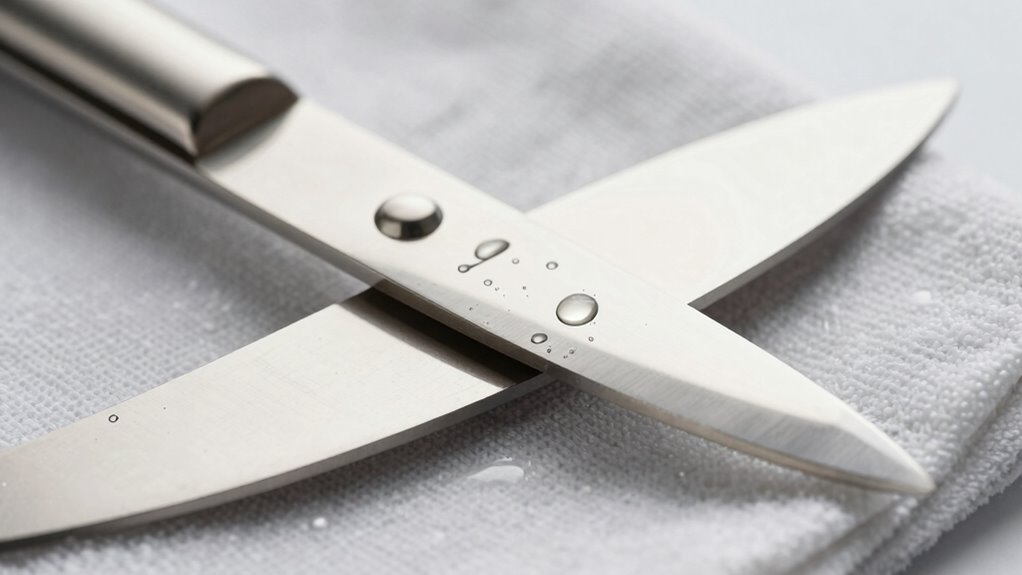

To prevent water spots on stainless steel blades, wipe the surfaces with a damp cloth after use, then dry thoroughly with a clean, soft towel to eliminate moisture. Consider applying a stainless steel polish or protective coating to create a barrier against water and mineral deposits. If you have hard water, installing a water softener can help reduce mineral buildup. Consistent cleaning and dry-spotting are key; keep exploring for more tips to maintain a spot-free finish.
Key Takeaways
- Wipe blades with a damp cloth followed by a dry towel after each use to remove moisture.
- Apply a stainless steel polish or protective coating to repel water and mineral deposits.
- Regularly clean with vinegar or mild soap and water to break down mineral buildup.
- Install a water softener if water has high mineral content to reduce mineral deposits.
- Maintain consistent cleaning routines and dry blades thoroughly to prevent water spots.
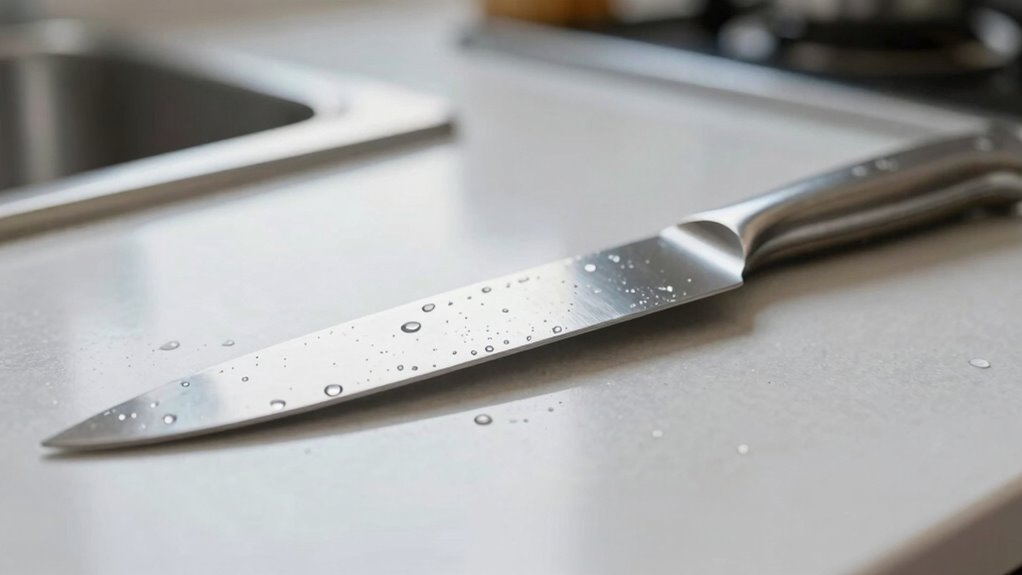
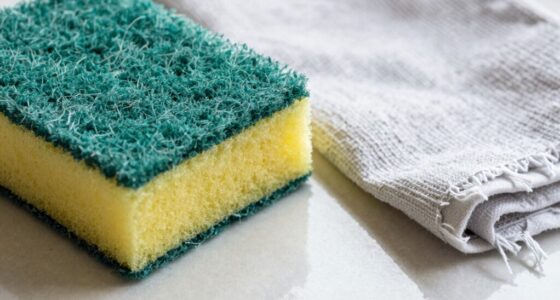
Water spots on stainless steel can be frustrating, but with the right techniques, you can keep your surfaces looking pristine. The key is understanding how to prevent these spots from forming in the first place. Regular cleaning techniques and prevention tips go hand in hand to keep your stainless steel appliances and fixtures shiny and spotless. First, it’s important to wipe down your stainless steel surfaces after each use, especially when water has been splashed or spilled. Use a soft cloth or microfiber towel to gently remove excess moisture, preventing water droplets from drying and leaving behind marks. When cleaning, avoid abrasive scrubbers or harsh chemicals that can scratch or damage the finish. Instead, opt for a gentle cleaner specifically made for stainless steel, or a mixture of mild soap and water. After cleaning, dry the surface thoroughly with a clean, dry cloth to eliminate any lingering moisture that could cause water marks.
Prevention tips involve more than just wiping after use. Consider installing a water softener if your water supply has high mineral content, as hard water is a primary culprit behind water marks. If installing a water softener isn’t an option, you can also wipe your stainless steel surfaces with a damp cloth followed by a dry one after each use, especially in areas prone to mineral deposits. Applying a stainless steel polish or protective coating can add a barrier that repels water and minimizes marks. Additionally, avoid leaving standing water in sinks or on appliances, and always dry the surface if you notice any water droplets remaining. Understanding mineral deposits is crucial because recognizing the causes of water spots such as mineral deposits and hard water can help you better target your prevention efforts. Regular maintenance and understanding water mineral content are essential for effective prevention.
Another effective prevention tip is to avoid using harsh cleaning agents that contain ammonia or bleach, which can dull the finish and make water marks more noticeable. Instead, opt for natural solutions like vinegar or a mixture of vinegar and water—these help break down mineral deposits and leave a streak-free shine when properly wiped and dried. Remember, consistent maintenance is vital; the more diligent you are about cleaning techniques and prevention tips, the less likely you’ll be to deal with unsightly water marks. With a little effort and the right approach, you can keep your stainless steel surfaces looking sleek, shiny, and free of water marks for years to come.
stainless steel water spot remover
As an affiliate, we earn on qualifying purchases.
As an affiliate, we earn on qualifying purchases.
Frequently Asked Questions
Do Water Spots Damage Stainless Steel Over Time?
Water spots won’t usually damage stainless steel over time if you practice water spot prevention. These spots are mainly surface stains caused by minerals, not corrosion. Proper care maintains stainless steel longevity, but neglecting water spots can lead to dullness or minor surface damage eventually. To keep your blades in top shape, dry them thoroughly after washing and use protective coatings. Regular maintenance guarantees your stainless steel stays shiny and durable.
Can Specific Cleaners Prevent Water Spots?
Did you know that using specific cleaners can reduce water spots by up to 80%? You can prevent spots by choosing cleaners with a balanced pH, ideally neutral or slightly alkaline, which helps maintain your stainless steel’s shine. Natural remedies like vinegar or lemon juice also work well, as they adjust the pH balance without harsh chemicals. Regular cleaning with these solutions keeps your blades spotless and protected over time.
Are Water Spots More Common in Certain Climates?
Yes, water spots are more common in humid or coastal climates because of higher moisture levels. Climate effects like humidity and rainfall can accelerate water spot formation on stainless blades. To prevent this, you should regularly dry your blades after washing and consider applying a protective coating. Water spot prevention becomes essential in these climates to keep your blades shiny and free from unsightly marks.
How Often Should I Clean My Stainless Steel Blades?
Cleaning your stainless steel blades is like giving your tools a revitalizing shower — it keeps them in top shape. You should clean your blades after each use to remove water residue, which can lead to water spots. Regular blade maintenance prevents buildup and keeps your blades shiny. If you notice water spots, give them a thorough cleaning immediately. Consistent care guarantees your blades stay sharp and spotless longer.
Do Water Spots Affect the Blade’s Performance?
Water spots typically don’t affect your blade’s performance directly, but they can lead to corrosion over time if not addressed. Proper blade maintenance includes regular water spot removal to keep the blade in ideal condition. If you notice spots, wipe them off promptly using a soft cloth, and consider applying a protective coating. This helps prevent rust, maintains sharpness, and extends your blade’s lifespan, ensuring it performs well whenever you need it.
stainless steel polish and protective coating
As an affiliate, we earn on qualifying purchases.
As an affiliate, we earn on qualifying purchases.
Conclusion
So, next time you marvel at your spotless stainless steel, remember it’s only a splash away from those pesky water spots. Ironically, the very water that keeps your blades sharp might also be their undoing. But with a little effort—wiping dry and avoiding hard water—you can keep that shiny finish intact. After all, who knew that a bit of diligence could turn a water spot into an artful reminder of your stainless steel’s resilience?
water softener for hard water
As an affiliate, we earn on qualifying purchases.
As an affiliate, we earn on qualifying purchases.
microfiber cleaning cloth for stainless steel
As an affiliate, we earn on qualifying purchases.
As an affiliate, we earn on qualifying purchases.