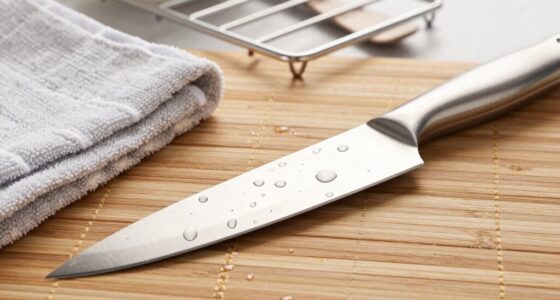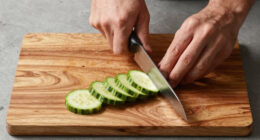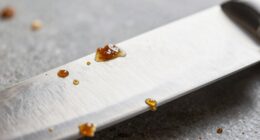

To prevent water spots on your stainless steel knives, always rinse them thoroughly with warm water after use and dry immediately with a lint-free towel. Use gentle cleaning tools and avoid abrasive scrubbers that can scratch the surface. Store your knives in a dry, well-ventilated area, such as a knife block or magnetic strip, and skip the dishwasher. Applying vinegar-water solutions and occasional knife oil can also help maintain shine and protect against spots—discover more ways to keep your knives pristine.
Key Takeaways
- Dry knives immediately after washing to prevent water evaporation and mineral deposits.
- Use a vinegar-water solution to remove mineral deposits and maintain shine.
- Store knives in dry, well-ventilated areas, avoiding damp drawers or standing water.
- Regularly inspect for water spots and wipe blades with vinegar or stainless steel polish.
- Hand wash knives instead of using a dishwasher to reduce heat and moisture exposure.
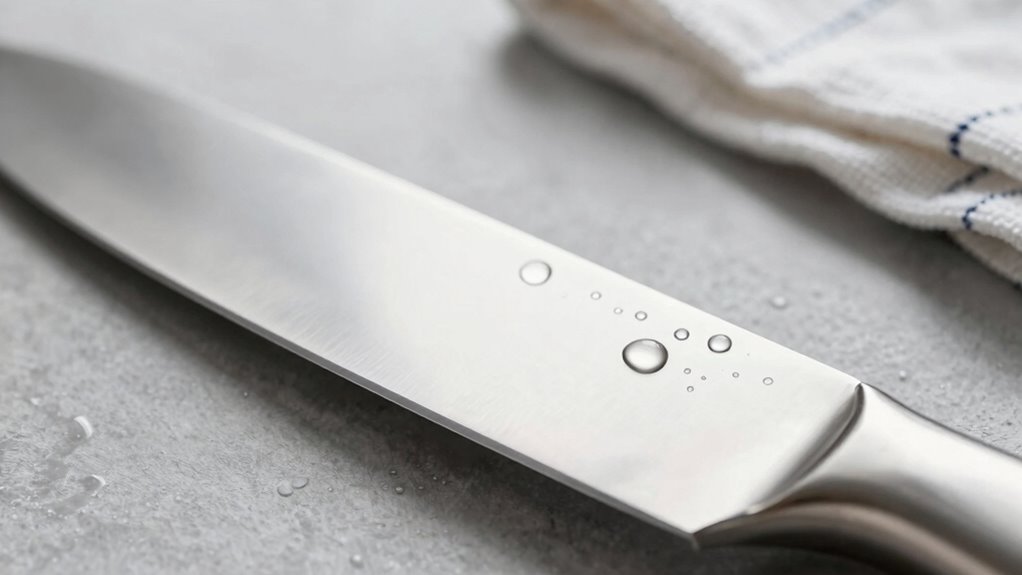
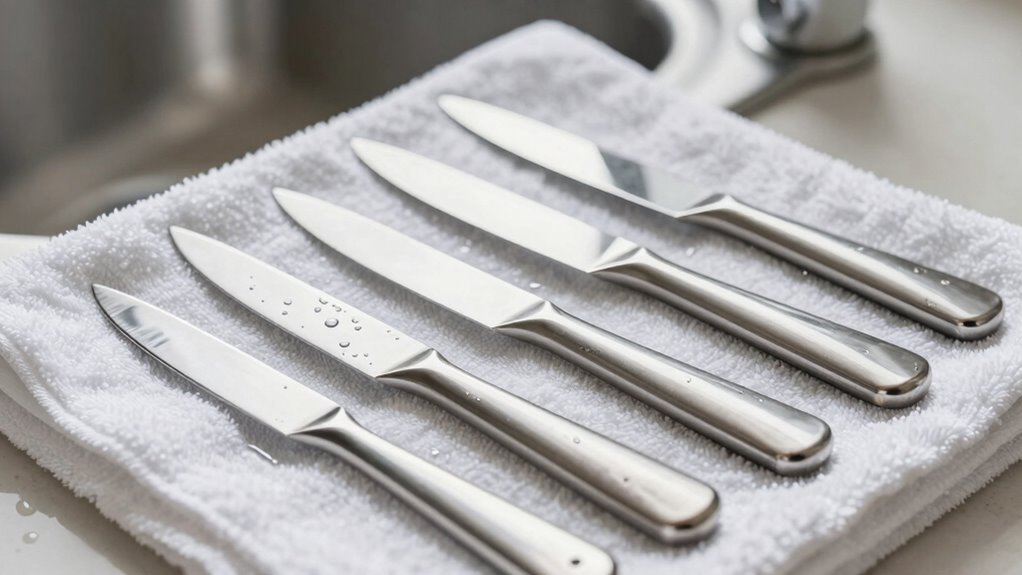
Water spots on stainless knives can be frustrating, but they’re often easy to prevent with simple steps. One effective way to minimize spots is by paying close attention to your cleaning techniques. After each use, rinse your knives thoroughly with warm water to wash away any food particles, mineral deposits, or soap residue. Use a soft cloth or sponge to gently wipe the blades, avoiding abrasive scrubbers that could scratch the surface. Dry the knives immediately with a clean, lint-free towel to remove any lingering moisture. Drying promptly prevents water from evaporating and leaving mineral deposits behind, which are the primary cause of water spots. If you notice spots forming, you can also use a mixture of vinegar and water to wipe down the blades; vinegar helps dissolve mineral deposits and restores shine. Make sure to rinse the knives again with plain water after using vinegar, and dry thoroughly. Proper cleaning techniques are essential in preventing water spots and maintaining the appearance of your knives. Additionally, using appropriate cleaning products can further reduce the buildup of mineral deposits. Regularly inspecting your knives for early signs of water spots can help you address issues before they become more serious and difficult to remove. Including proper drying methods can also make a significant difference in preventing moisture-related spots. When it comes to storage solutions, how you store your knives can considerably impact their appearance over time. Avoid leaving knives in standing water or in damp, unventilated drawers, as these environments trap moisture and promote spotting. Instead, opt for a knife block, magnetic strip, or a knife drawer insert with individual slots. These storage options keep each blade separated and allow air circulation, reducing moisture buildup. Proper storage not only protects your knives from water spots but also maintains their sharpness and overall condition. If you store your knives in a dishwasher, be aware that the high heat and moisture can accelerate spotting and corrosion; hand washing is always preferable. Additionally, consider applying a thin coat of food-safe mineral oil or knife oil periodically. This creates a protective barrier against moisture and mineral deposits, further reducing the chance of water spots forming. Regularly inspecting and maintaining your knives can also help identify early signs of spots or corrosion before they become more serious. To further combat water spots, some experts recommend the use of stainless steel polish to enhance the shine and provide an extra layer of protection. Combining good cleaning techniques with smart storage solutions is the key to keeping your stainless knives spotless and shiny. Always dry your knives immediately after washing, avoid leaving them in water, and store them in a dry, well-ventilated space. Regular maintenance, such as wiping down blades with vinegar solution and applying oil, can keep water spots at bay. By staying consistent with these habits, you’ll preserve the sleek appearance of your knives and ensure they remain in top condition for years to come. It’s a simple effort that pays off in the long run, making your kitchen tools not only functional but also visually appealing.

Weiman Stainless Steel Cleaner, 30 Count Wipes, Anti-Fingerprint, Removes Grease, Water Spots, Streaks & Residue, Polishing Cleaner Safe for Appliances, Chrome, Sinks & Grill Exteriors
- Cleans and polishes stainless steel: Removes fingerprints, grease, water spots
- Protects against smudges: Leaves a streak-free shine and barrier
- Safe for all finishes: Non-abrasive, won't scratch or dull
As an affiliate, we earn on qualifying purchases.
As an affiliate, we earn on qualifying purchases.
Frequently Asked Questions
Can Water Spots Damage the Knife’s Blade Over Time?
Water spots themselves typically won’t damage your stainless knife’s blade over time. However, if you leave water on the knife and don’t use proper cleaning techniques, mineral deposits can form, leading to potential corrosion or staining. To protect your knife, dry it thoroughly after washing and consider protective measures like wiping with a soft cloth. Regular cleaning and proper storage help maintain the blade’s sharpness and prevent long-term damage.
Are There Specific Types of Water That Cause More Spots?
You might think all water causes spots, but mineral content and water hardness play a big role. Hard water, rich in minerals like calcium and magnesium, causes more spots because these minerals leave deposits on your knife’s surface. Soft water, with fewer minerals, results in fewer spots. To keep your knife spotless, use softened or distilled water for cleaning, and dry it immediately after washing to prevent mineral deposits.
Does Using a Dishwasher Increase Water Spot Formation?
Using a dishwasher can increase water spot formation on stainless knives, especially if your water hardness is high. Dishwasher cleaning often involves rapid water evaporation, which leaves mineral deposits behind, leading to spots. To minimize this, you can use a rinse aid designed for hard water, opt for a water softening system, or hand wash your knives. Managing water hardness and ensuring proper drying helps keep your knives spotless.
How Often Should I Reapply Protective Coatings?
Think of your protective coatings as a shield for your knives, like armor that needs regular polishing. You should reapply protective coatings every 6 to 12 months, depending on usage and exposure. Stick to a consistent maintenance schedule, just like tending a garden, to keep your knives shiny and free from water spots. Regular reapplication guarantees your knives stay protected and looking their best over time.
Can Water Spots Be Completely Removed Once They Form?
Yes, water spots on stainless steel knives caused by mineral deposits can often be completely removed. You should use a mixture of vinegar and water or a commercial stainless steel cleaner to dissolve the mineral deposits and lift the water spots. Make sure to wipe the knives thoroughly with a soft cloth afterward. Regular cleaning and drying help prevent future spots, keeping your knives shiny and free of mineral deposits.

VALENGO New Lint Free Rags – 100% Cotton Cloth, Soft T-Shirt Rags, Lint Free Cloth for Staining Wood, Cast Iron, Dusting, Polishing, Painting and Cleaning – Reusable & Absorbent – 17”x17” (Pack of 7)
- Super Absorbent & Multi-Purpose: Ideal for dusting, staining, and polishing
- Streak-Free & Scratch-Safe: Prevents smudges and scratches on delicate surfaces
- 100% Cotton & Microplastic-Free: Biodegradable, eco-friendly, synthetic-free cloths
As an affiliate, we earn on qualifying purchases.
As an affiliate, we earn on qualifying purchases.
Conclusion
By drying your stainless knives thoroughly after each use and avoiding prolonged exposure to water, you can keep water spots at bay. Regular maintenance and proper storage are your best tools for shining your knives like new. Remember, a stitch in time saves nine—addressing small spots early prevents bigger issues down the road. With a little care, your knives will stay spot-free and ready for any culinary challenge.

Calyptus 80% Concentrated Vinegar | Ultra-Performance (20X Power), 1 Quart
- Pure Technical Grade Vinegar: Consistent purity and quality
- Highly Concentrated Formula: Dilutes 1:20 for maximum power
- Equivalent to 5 Gallons: Power of 5 gallons of 4% vinegar
As an affiliate, we earn on qualifying purchases.
As an affiliate, we earn on qualifying purchases.

Magnetic Knife Holder for Wall, Knife Magnetic Strip Magnetic Knife Holder for Refrigerator Mount Knife Rack Kitchen Utensil Holder Metal Tool Holder Knife Block Kitchen Organizer Accessories 9.7 Inch
- Heavy Duty Magnetic Hold: Strong magnets securely hold knives and utensils
- Rust-Resistant Stainless Steel: Made of durable 304 stainless steel, corrosion resistant
- Sleek Modern Design: Smooth satin finish complements contemporary kitchens
As an affiliate, we earn on qualifying purchases.
As an affiliate, we earn on qualifying purchases.