To dry and store your knives quickly, immediately use a clean, dry towel or microfiber cloth to pat the blades and handles, avoiding vigorous rubbing. Store them safely in a knife block, magnetic strip, or with blade guards to protect the edges and prevent accidents. Handle knives carefully during drying and placement, and make sure they’re completely dry to prevent rust. Want to discover more tips for keeping your knives sharp and safe? Keep exploring!

Get kitchen gear delivered free with Prime
- Fast, free delivery on millions of items
- Prime Video, Amazon Music and more included
- Member-only deals all year
Key Takeaways
- Immediately pat the knife dry with a clean, microfiber cloth to remove excess water.
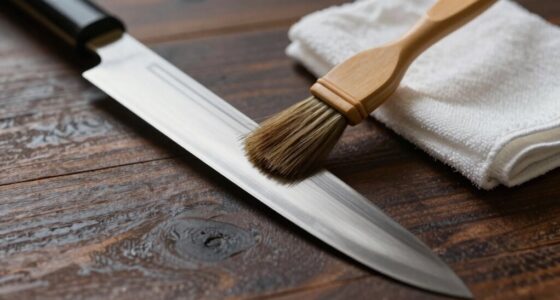
- Use a soft brush for hard-to-reach spots to ensure all moisture is eliminated.
- Store knives in a knife block, magnetic strip, or with blade guards for quick, safe placement.
- Handle knives carefully during drying to prevent accidents and maintain blade integrity.
- Incorporate a routine of quick drying and proper storage after each use for longevity and safety.

Drying and storing your knife quickly is vital for safety and maintaining its sharpness. When you handle knives regularly, especially after washing, it’s imperative to dry them thoroughly to prevent rust and corrosion. In addition, proper storage helps keep the blade sharp longer and reduces the risk of accidents. To do this efficiently, you should develop a routine that emphasizes quick drying and safe placement. This approach not only preserves the integrity of your knife but also guarantees your safety in the kitchen.
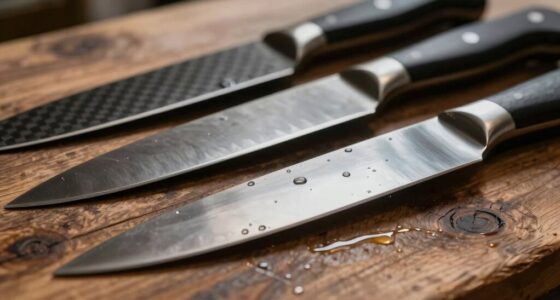
The first step in fast drying involves using a clean, dry towel or microfiber cloth immediately after washing. Gently pat the blade and handle to remove excess water, avoiding vigorous rubbing that could damage the edge. If your knife has hard-to-reach spots, consider using a soft brush to clean and dry those areas. Always pay close attention to the blade’s edge and the handle joint, as moisture here can cause corrosion. After drying, inspect the knife for any remaining water spots or residue, and wipe it again if necessary.
Once the knife is dry, focus on safe and efficient storage. Using a knife block, magnetic strip, or knife sheath can keep the blade protected and prevent accidental cuts. If you’re short on time, a quick placement into a designated drawer with a blade guard is acceptable, but be sure to handle it carefully. Always store knives in a way that keeps the edge protected and prevents it from knocking against other utensils, which dulls the blade. Proper storage also minimizes the chance of injury, especially if you have children around. Additionally, understanding knife maintenance, such as regular sharpening and honing, makes cleaning and drying easier, as a sharp knife tends to hold less moisture and is less prone to rust. Remember that metal corrosion can develop rapidly if moisture remains on a blade for too long, so prompt drying is essential.
In terms of knife maintenance, regularly sharpening and honing your blades will make cleaning and drying easier, as a sharp knife tends to hold less moisture and is less prone to rust. Implement safety tips by always handling knives with clean, dry hands and placing them securely away from high-traffic areas. When putting away your knife, make sure the storage method is stable and secure, reducing the risk of accidental falls or cuts. Developing a quick, safe routine for drying and storing your knives not only prolongs their lifespan but also guarantees your safety during kitchen tasks.
As an affiliate, we earn on qualifying purchases.
Frequently Asked Questions
Can I Dry a Knife With a Hairdryer?
You can dry a knife with a hairdryer, but it’s not the best method for knife maintenance. Hairdryers might blow water into crevices or cause uneven drying, risking corrosion. Instead, use a clean towel for effective drying. Proper drying techniques help prevent rust and damage. After drying, store your knife safely to maintain its sharpness and longevity. Prioritize gentle, thorough drying to keep your knife in top condition.
What Type of Cloth Is Best for Drying Knives?
For knife maintenance and effective drying techniques, use a soft, lint-free cloth like microfiber or cotton. These materials absorb moisture without scratching the blade or handle. Avoid rough fabrics or paper towels, which can leave fibers or cause damage. Gently dry the entire knife, paying attention to the edge and handle. Proper drying prevents rust and maintains sharpness, ensuring your knives stay in top condition for safe, efficient use.
Should I Oil My Knife After Drying?
Yes, you should oil your knife after drying to maintain its blade and prevent rust. Proper oiling is part of good blade maintenance and helps keep your knife sharp for knife sharpening tasks. After drying with a soft cloth, apply a thin layer of food-safe oil, like mineral oil, to protect the metal. Regular oiling ensures your knife stays in prime condition, ready for precise cutting and long-lasting performance.
How Do I Prevent Rust When Storing Knives?
Rust prevention starts with proper knife maintenance. You should thoroughly dry your knives after use, especially in the blades’ crevices, to prevent moisture buildup. Store your knives in a dry, low-humidity environment, ideally in a knife block or on a magnetic strip. Regularly oil the blades to create a barrier against moisture. These simple steps keep rust at bay and preserve your knives’ sharpness and longevity.
Is It Safe to Put Knives in the Dishwasher?
It’s generally safe to put knives in the dishwasher, but it can harm your blade maintenance and dull your knife over time. The high heat and harsh detergents can cause rust and damage the blade’s edge, making knife sharpening necessary more often. To keep your knives in top condition, hand wash and dry them immediately after use. This way, you preserve the sharpness and prevent rust, extending your knife’s lifespan.
As an affiliate, we earn on qualifying purchases.
Conclusion
Now that you’ve mastered the art of drying and stowing your knife, you’re like a skilled gardener tending to delicate blooms—precise and mindful. With a quick flick of the towel and a confident slide into its sheath, you keep your blade sharp and ready, like a knight sheathing his sword after battle. Remember, a well-cared-for knife isn’t just a tool; it’s a trusted partner in your culinary adventures, always waiting to spring into action when you need it most.
As an affiliate, we earn on qualifying purchases.
As an affiliate, we earn on qualifying purchases.
Halloween Picks
halloween
As an affiliate, we earn on qualifying purchases.