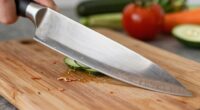
A bent knife tip usually happens when you apply excessive force, cut on hard surfaces, or handle the knife improperly. Poor grip and low-quality handles can also increase the risk of damage. Keep an eye out for early signs like chips, cracks, or increased cutting resistance. To avoid this, use proper technique, store your knives carefully, and choose durable materials. Want to learn more tips to protect your blades? Keep going for expert advice.
Open a free Amazon Business account
Business pricing, bulk buying and tax-exempt orders.
As an affiliate, we earn on qualifying purchases.
Key Takeaways
- Improper use, such as applying excessive force or twisting, causes bending and damage to knife tips.
- Impact with hard surfaces like glass or stone increases the risk of chips and cracks.
- Poor handle grip and low-quality materials reduce control, leading to uneven pressure and tip damage.
- Rushing or using improper technique during cutting can stress and bend the blade tip.
- Proper storage, gentle handling, and regular maintenance help prevent tip damage and extend blade life.
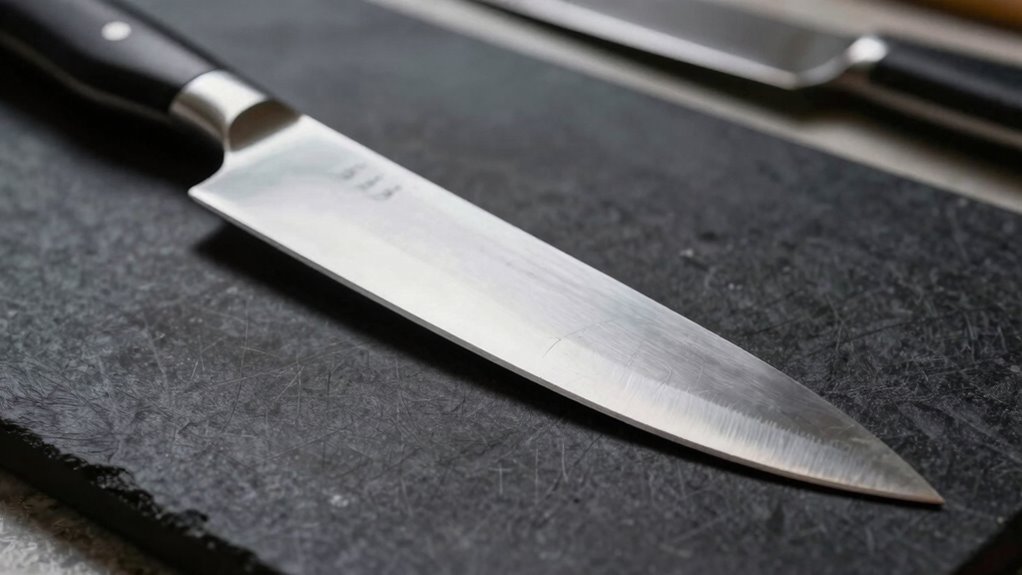
high-quality chef's knife with durable tip
As an affiliate, we earn on qualifying purchases.
As an affiliate, we earn on qualifying purchases.
Common Causes of Bent Knife Tips

Bent knife tips often result from improper use or handling. Poor blade ergonomics can cause you to exert uneven pressure, increasing the risk of bending the tip during cutting. If your knife feels uncomfortable or unbalanced, you might unknowingly apply force in the wrong areas, leading to damage. Handle materials also play a role; handles made of slippery or low-quality materials can reduce your grip control, making it harder to maneuver safely. When you don’t have a secure hold, you might accidentally push the tip into hard surfaces or apply excessive force. Ensuring your knife has good blade ergonomics and choosing handles with reliable, non-slip materials help you maintain control and prevent tipping or bending, especially during tough cuts. Proper handling techniques are essential to avoiding damage and maintaining your knife’s longevity. Additionally, understanding knife design and how it influences your grip can further help prevent accidental damage. Being aware of the material properties of your blade can also help you select the right knife for different tasks, reducing the risk of damage. Paying attention to blade maintenance can also extend the lifespan of your knives and prevent unnecessary damage. Recognizing common user errors can further improve your technique and protect your tools.
As an affiliate, we earn on qualifying purchases.
How Improper Use Leads to Damage
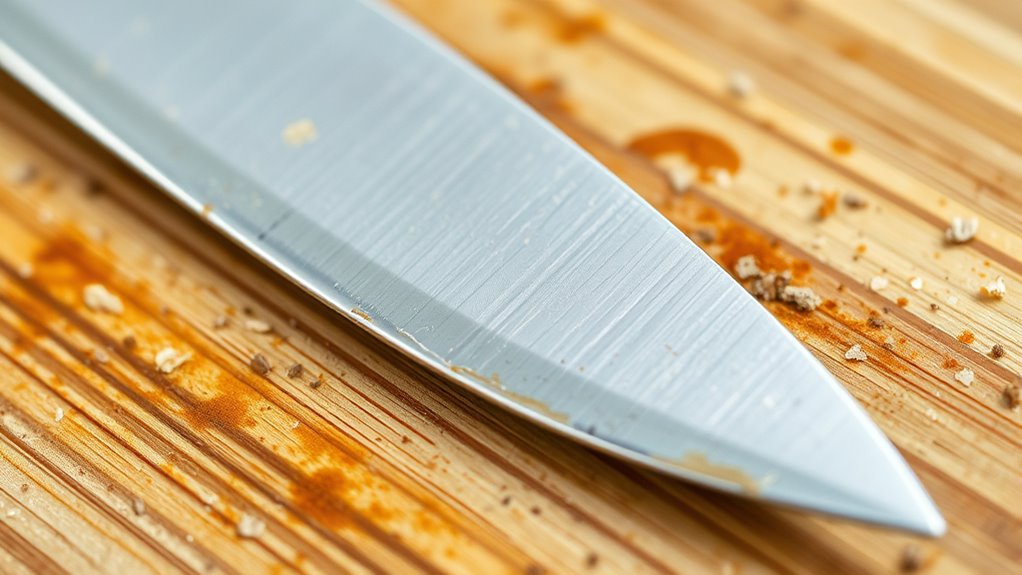
Using too much force when cutting can easily damage your knife tip. If you try to cut through hard materials, you risk bending or breaking the tip instead of slicing smoothly. Being mindful of your technique helps prevent unnecessary damage and extends your knife’s lifespan. Additionally, using the correct body jewelry materials can reduce wear and stress on your knife tip during tasks that involve piercing or cutting.
Applying Excessive Force
Applying excessive force when using a knife can quickly lead to tip damage, especially if you press too hard during cutting or prying tasks. Poor user technique and ignoring blade ergonomics increase the risk of bending or snapping the tip. When you push too aggressively, you overload the blade’s delicate tip, causing unnecessary stress. Visualize these scenarios:
- Forcing the knife through thick, tough materials without adjusting your grip
- Using a chopping motion that jams the tip into dense surfaces
- Applying downward pressure while prying, instead of leveraging proper leverage and technique
Focusing on proper user technique and understanding blade ergonomics helps you avoid these pitfalls. Use controlled pressure, let the blade do the work, and always be mindful of the force you’re applying to protect your knife’s tip from damage.
Using on Hard Materials
When you attempt to cut or pry hard materials without modifying your technique, you risk damaging your knife’s tip. Hard surfaces like bone or metal can quickly chip or bend your blade, especially if you ignore blade coatings designed for durability. Poor handle ergonomics may cause you to apply uneven force, increasing the chance of tip damage. To prevent this, choose blades with tough coatings and ensure your grip is secure. Here’s a quick guide:
| Material | Proper Technique | Common Mistakes |
|---|---|---|
| Bone/Metal | Use controlled, steady pressure | Rushing or twisting force |
| Hard Plastics | Score first, then cut with light force | Prying aggressively |
| Frozen Items | Thaw slightly or use a heavy-duty blade | Bending tip during forceful cuts |
| Stone/Brick | Use appropriate tools, not knives | Attempting to chip or crack |
Avoid damage by adapting your approach and selecting the right tools. Being aware of blade durability can help you make smarter decisions when tackling tough materials.
knife sharpening and maintenance kit
As an affiliate, we earn on qualifying purchases.
As an affiliate, we earn on qualifying purchases.
The Role of Material Quality in Durability

The durability of a knife tip heavily depends on the quality of the materials used in its construction. High-quality materials offer better material strength and ideal alloy composition, making the tip more resistant to bending or chipping. When you choose a knife with superior material quality, you’re investing in longevity and performance. Visualize:
- A gleaming blade with a dense, uniform structure that resists dulling and damage
- An alloy composition designed to withstand impact without cracking
- A tip capable of handling tough tasks without bending, thanks to high material strength
Using quality materials minimizes the risk of tip damage, saving you from costly repairs or replacements. Proper material properties are essential for ensuring the knife maintains its sharpness and structural integrity over time. The choice of materials suitable for high-stress applications directly influences how well a knife tip withstands demanding tasks. Additionally, the material composition plays a crucial role in determining the overall toughness and resilience of the blade. When you prioritize material quality, you’re ensuring your knife stays sharp and resilient through demanding use. Material durability is also enhanced by proper maintenance and careful handling, further extending your knife’s lifespan. Moreover, selecting high-performance materials can significantly improve the overall resilience of the blade during intensive use.
As an affiliate, we earn on qualifying purchases.
Recognizing Early Signs of Damage

Keep an eye out for visible tip chips on your knife, which signal early damage. You might also notice that cutting suddenly requires more effort or feels unusual. Recognizing these signs early helps prevent further damage and extends your knife’s lifespan. Additionally, using the proper knife care techniques can significantly reduce the risk of tip damage and maintain optimal performance. Regularly inspecting your knives and proper storage practices can also help preserve their integrity over time. Incorporating auditory feedback therapy strategies can enhance your awareness of proper cutting techniques, reducing accidental tip damage. Paying attention to wiring basics and ensuring safe handling when sharpening tools can further protect your knife tips from damage. Being familiar with the material properties of your knives can also guide you in choosing the right cutting techniques to prevent tip chipping.
Visible Tip Chips
Have you noticed tiny chips or cracks on the tip of your knife? These visible tip chips are early signs of damage that can compromise blade aesthetics and user safety. Spotting these issues early allows you to address them before they worsen. Look for:
- Small, jagged edges that break the smoothness of the tip
- Fractures or cracks near the blade’s apex
- Discoloration or dull spots indicating material stress
- Proper maintenance techniques can help prevent damage to your knife tips and prolong their lifespan. Regular inspections are essential, as blade durability depends heavily on proper care and handling. Additionally, avoiding excessive force during cutting can significantly reduce the risk of chips forming. These chips not only mar the knife’s appearance but also pose a safety risk, as weakened tips are more prone to further damage. Regularly inspecting your knife’s tip helps you catch problems early, maintaining both the blade’s sharpness and its visual appeal. Addressing chips promptly can prevent more serious damage and keep your kitchen safe. Incorporating correct sharpening methods can also help maintain the integrity of your knife tips and prevent unnecessary damage. Proper blade material selection and handling can further reduce the likelihood of tip chips forming over time.
Unusual Cutting Resistance
Noticing that your knife requires more effort to cut through ingredients can be an early warning sign of damage. Unusual cutting resistance often indicates the blade’s edge isn’t performing ideally, possibly due to dullness or minor damage. Pay attention to changes in blade ergonomics—if the knife feels less smooth or more cumbersome, it’s a sign to inspect further. Your cutting technique also plays a role; applying uneven pressure can accelerate blade wear. If you notice increased resistance, avoid forcing the cut, as this can worsen tip damage. Instead, reassess your technique and examine the blade for nicks or dull spots. Recognizing these early signs helps you address issues before they develop into more serious damage, prolonging your knife’s lifespan and maintaining safe, efficient cutting. Being aware of blade quality can help you choose the right tools and prevent damage from occurring in the first place. Additionally, understanding proper maintenance techniques can significantly extend the longevity of your knives and keep them performing at their best. Paying attention to care routines can further prevent early signs of wear and damage, and incorporating appropriate tool selection can also minimize risk of bent tips.
Preventative Tips for Protecting Your Blade

To effectively protect your knife tip from damage, adopting careful handling habits is essential. Proper blade storage keeps your knife safe from accidental knocks, preventing tip damage. Use a dedicated knife block or a magnetic strip to avoid dulling or bending the tip. Your cutting technique also plays a vital role; focus on controlled cuts, avoiding excessive force or twisting the blade. Maintain awareness of where the tip contacts the work surface to prevent accidental strikes.
- Store your knife securely in a sheath or designated holder.
- Use gentle, deliberate motions when cutting, especially near hard surfaces.
- Keep your workspace clear to avoid knocking the tip against other objects.
Repairing Bent or Broken Tips at Home

If your knife tip becomes bent or broken, you can often repair it at home with some careful steps. Start by evaluating the damage and straightening the tip gently with pliers if it’s bent. For a broken tip, filing or grinding may be necessary, but proceed cautiously to avoid weakening the blade. Proper knife handle ergonomics are essential—ensure your grip is secure and controlled during repairs. Additionally, consider your storage solutions to prevent future damage; storing knives properly reduces accidental bending or breaking. Here’s a quick guide:
| Repair Method | Tips |
|---|---|
| Straightening with pliers | Use cloth to protect the blade; gentle bends |
| Filing or grinding | Use a fine file or stone; maintain angle |
| Reinforcing with epoxy | For minor breaks; ensure proper bonding |
| Re-sharpening after repair | Restore edge to original sharpness |
Always prioritize safety and precision.
When to Seek Professional Help

While minor repairs like straightening or filing a bent or broken tip can often be done at home, there are situations where professional help becomes necessary. If the damage is severe or the tip is chipped, attempting repairs yourself could worsen the injury or compromise safety precautions. You should seek professional repair when you notice:
Seek professional repair for severe damage or chips to ensure safety and restore blade integrity.
- Deep cracks or large chips that weaken the blade’s structure
- Extensive bending that cannot be aligned easily
- Signs of rust or corrosion near the tip that require specialized tools
In these cases, a professional knife smith can ensure the repair restores the blade’s integrity safely. Relying on experts helps prevent further damage and reduces the risk of accidents during repair. Don’t hesitate to get professional help when in doubt.
Best Practices for Maintaining Knife Sharpness and Integrity

Maintaining your knife’s sharpness and structural integrity requires consistent care and proper techniques. Regular honing keeps the blade aesthetics pristine, while careful cutting habits prevent tip damage. Use a honing steel to realign the edge, avoiding excessive force that can harm the blade. An ergonomic design enhances control, reducing accidental pressure on vulnerable tips. Store your knives properly in a sheath or knife block to protect the tip from impact. Avoid cutting on hard surfaces like glass or stone, which dull blades faster. Here’s a quick guide:
| Technique | Benefit | Tip |
|---|---|---|
| Regular honing | Preserves sharpness and blade aesthetics | Use a steel at proper angle |
| Proper storage | Prevents accidental damage | Keep knives sheathed or in block |
| Safe cutting habits | Maintains blade integrity | Use appropriate surfaces and techniques |
Frequently Asked Questions
Can Bent Tips Be Safely Repaired Without Professional Help?
Yes, you can attempt DIY repairs on a bent knife tip, but exercise caution. Use tip reinforcement techniques like carefully straightening the blade with gentle pressure or applying a small amount of epoxy to strengthen the tip. However, if the damage is severe or you’re unsure, it’s safer to seek professional help to avoid further damage or injury. Always prioritize safety and proper tools when attempting repairs.
What Are the Long-Term Effects of Using a Damaged Knife Tip?
A damaged knife tip may seem minor but can compromise blade integrity, leading to unpredictable breaks. Over time, this deterioration affects cutting performance, making tasks harder and increasing safety risks. You might notice uneven cuts or increased effort, which signals that the tip’s damage is affecting the overall function. Ignoring these issues can cause further damage, so it’s wise to repair or replace your knife to maintain peak performance and safety.
How Does Storage Method Influence Tip Durability?
Proper storage method greatly influences your knife tip’s durability. When you prioritize storage safety and use knife organization solutions like magnetic strips or knife blocks, you reduce the risk of accidental damage. Avoid loose drawers or stacking knives haphazardly, which can cause tips to bend or chip. By keeping your knives securely organized and protected, you guarantee the tips stay sharp, straight, and ready for precise cutting every time.
Are Certain Knife Brands More Prone to Tip Damage?
Some knife brands are more prone to tip damage due to their reputation and material quality. You should watch out for lesser-known brands that use lower-quality materials, as these tend to have weaker tips. Established brands with a reputation for quality usually use durable materials like high-carbon steel or stainless steel, making their tips more resilient. Investing in reputable brands guarantees your knife tips stay sharp and less susceptible to damage.
What Techniques Can Extend the Lifespan of Delicate Knife Tips?
Think of your knife tip as the crown jewel—treat it with care. To extend its lifespan, focus on proper blade maintenance and gentle sharpening techniques. Use a fine honing rod regularly, and avoid aggressive sharpening that can weaken the tip. Always cut on proper surfaces, and store your knife safely. These habits help prevent damage, keeping your delicate knife tips sharp and resilient, ready for any culinary challenge.
Conclusion
To keep your knives sharp and your confidence steady, treat them like delicate dancers—handle them with care and respect. Avoid the pitfalls of improper use and material shortcuts, and always listen to those early warning signs. Think of your blade as a trusted friend; with proper care, it’ll glide through tasks like a well-oiled machine, avoiding the dreaded bent tip. Protect your investment, and your kitchen will thank you with every precise cut.
Flea & tick season Picks
flea and tick prevention
As an affiliate, we earn on qualifying purchases.