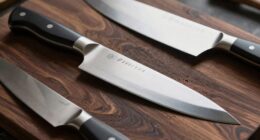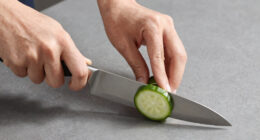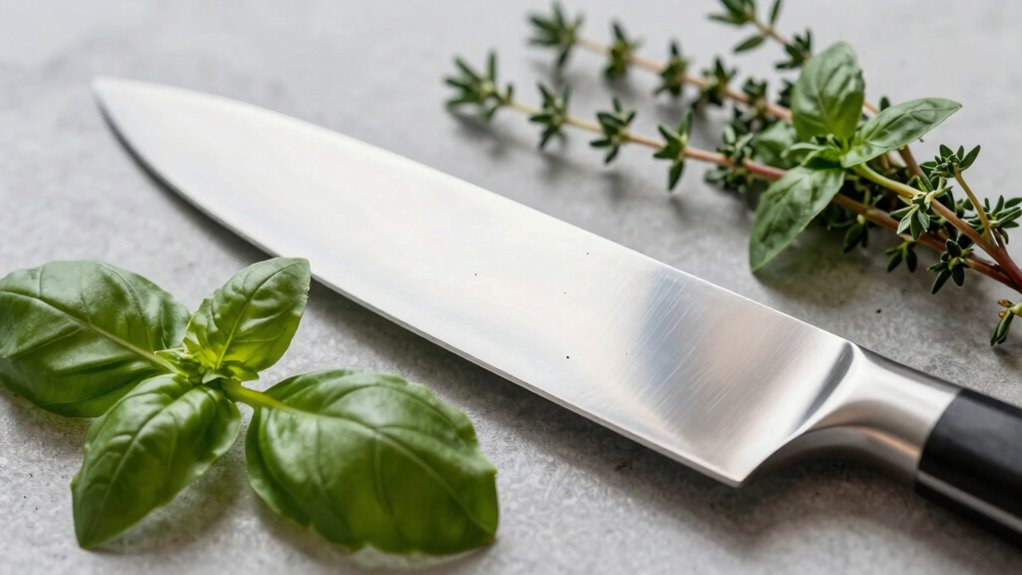

Even if your knife feels sharp, it can still tear herbs if the edge isn’t properly maintained at the correct angle, usually between 15-20°. Dull or poorly sharpened blades don’t cut cleanly and require more force, which damages delicate leaves. Also, using aggressive chopping techniques can cause tearing, even with a sharp blade. To get better results, verify your knife is well-honed and use gentle slicing motions—continue to explore how technique and maintenance can improve your cuts.
Key Takeaways
- The blade may be dull or improperly sharpened, causing tearing despite feeling sharp to touch.
- An improper or inconsistent blade angle reduces cutting precision, leading to damage of delicate herbs.
- Using forceful chopping instead of gentle slicing damages herbs even with a sharp blade.
- Worn or poorly maintained blades can cause tearing, as the edge is no longer optimized for clean cuts.
- Incorrect cutting technique or handling, such as pressing herbs against the board, can cause tearing regardless of sharpness.
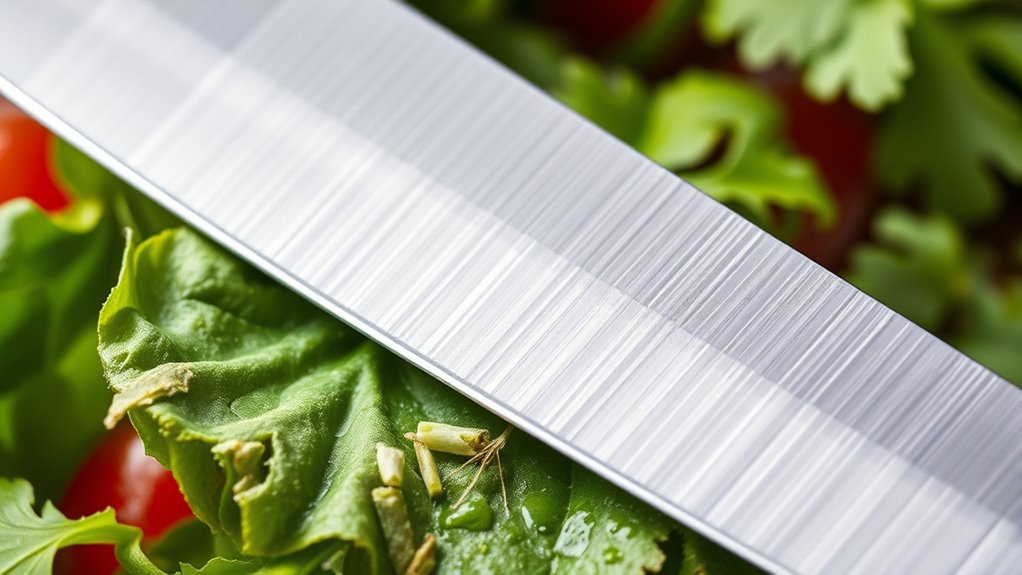
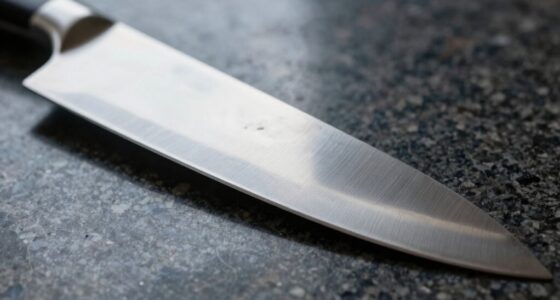
A sharp knife makes all the difference when tearing herbs, ensuring clean cuts that preserve flavor and aroma. But even if your knife feels sharp to the touch, you might still be tearing herbs instead of slicing through them smoothly. This often comes down to blade angles and cutting techniques. The angle at which your knife’s blade is honed plays a significant role in how it interacts with delicate herbs. Most kitchen knives are sharpened to an edge angle between 15 and 20 degrees, which is ideal for general use. However, for herbs, a finer angle—closer to 15 degrees—can make a noticeable difference. A sharper, more precise blade reduces resistance and allows for cleaner cuts, preventing the tearing and bruising that can occur with a dull or improperly sharpened edge.
A finer knife angle around 15 degrees ensures cleaner cuts and prevents tearing delicate herbs.
When it comes to cutting techniques, how you hold and move your knife matters just as much as its sharpness. Many cooks tend to press down hard or use a chopping motion that forces the blade through herbs rather than slicing gently. Instead, opt for a rocking or slicing motion that maintains constant contact with the herbs, minimizing tearing. Use the tip of the knife to start the cut, then gently glide through, applying even pressure. This technique allows the blade’s edge to do the work, rather than your hand or force, which can cause bruising or tearing.
Additionally, the way you position your herbs on the cutting board influences the outcome. Keep herbs in a loose pile rather than pressing them down or squeezing them tightly, which can cause the leaves to tear when you cut. When you use proper cutting techniques—such as a gentle rocking motion facilitated by the correct blade angle—you avoid unnecessary pressure that leads to tearing. The key is to develop a smooth, fluid motion that respects the herb’s delicate structure.
If you notice tearing despite your best efforts, your blade’s edge might be slightly dull even if it still feels sharp to the touch. Regular honing and periodic sharpening help maintain an ideal blade angle and edge sharpness. Remember, a finely honed edge with the correct blade angle combined with proper cutting techniques creates a seamless slicing experience. This approach not only enhances the quality of your herbs but also preserves their flavor and aroma, making every dish fresher and more vibrant. Ultimately, understanding and applying the right blade angles and cutting techniques empower you to cut herbs cleanly and efficiently, avoiding that frustrating tearing sensation.

Intelitopia Complete Knife Sharpening Stone Set – Dual Grit Whetstone 400/1000 3000/8000 Knife Sharpener with Leather Strop, Flattening Stone, Bamboo Base, 3 Non-slip Rubber Bases & Angle Guide
【Complete Knife Sharpening Stone Kit】You don't need to be a Pro to sharpen your blades, all you need…
As an affiliate, we earn on qualifying purchases.
As an affiliate, we earn on qualifying purchases.
Frequently Asked Questions
Can a Dull Knife Still Feel Sharp?
Yes, a dull knife can still feel sharp because the edge may appear fine but lacks the actual cutting power. This can be dangerous, so always practice knife safety. To fix this, try sharpening methods like honing or using a whetstone. Regularly maintaining your knife guarantees it stays genuinely sharp, preventing tears in herbs and reducing the risk of accidents. Keep your blades in top shape for safe, effective cutting.
Does Blade Material Affect Herb Tearing?
Sure, your blade material totally affects herb tearing. When you pick a knife with high blade hardness and a clever metal composition, it slices cleaner, reducing tears. Cheaper metals or softer blades bend and crush herbs instead of slicing smoothly. So, if you want to avoid herb massacre, invest in a well-crafted knife with the right blade hardness and metal composition. Your herbs will thank you, and so will your fingers.
How Does Cutting Technique Impact Herb Damage?
Your cutting technique greatly impacts herb damage. Using a gentle, slicing motion minimizes tearing by reducing force and maintaining herb texture. Avoid pressing straight down or using a chopping motion, which can crush delicate leaves. Instead, use a smooth, back-and-forth cut to preserve herb integrity. This method helps keep herbs looking fresh and intact, ensuring a better presentation and flavor in your dishes.
Can Honing Restore a Dull Knife’s Sharpness?
Yes, honing can restore a dull knife’s sharpness by realigning the blade’s edge microchips and improving blade alignment. When you hone regularly, it pushes the tiny imperfections back into place, making your knife feel sharper. However, if your blade has significant microchips or is heavily damaged, honing alone might not suffice—sharpening or professional repair may be necessary to fully restore its cutting performance.
Why Do Some Herbs Tear More Than Others?
Did you know that herbs with thicker, more rigid cell structures tend to tear more? When you use a sharp knife, its blade edge microstructure interacts differently with herb cell structures, causing tearing if the cells are tough or fragile. Herbs like basil with soft cell walls cut smoothly, while tougher herbs like rosemary tear easily because their cell structure resists clean slicing. Your knife’s sharpness isn’t enough; understanding herb cell structure matters.

SYOKAMI Cleaver Chef Knife with Herb Stripper, 7" Asian Kitchen Knife 3-in-1 Combined with Chef's Knife, Santoku, Nakiri for Slicing, Chopping, Dicing, Mincing, Housewarming Birthday Cooking Gifts
The SYOKAMI Asian knife is a highly versatile knife that will instantly be your new go-to for conquering…
As an affiliate, we earn on qualifying purchases.
As an affiliate, we earn on qualifying purchases.
Conclusion
So, next time your knife feels sharp but tears herbs, remember it’s not just about the edge. It’s about the way you hold, press, and glide. It’s about the gentle touch and steady hand, the smooth motion and careful pressure. When you align your technique with the knife’s true sharpness, you’ll slice through herbs like a breeze, creating clean cuts instead of tears. Master the rhythm, and enjoy the perfect chop every time.

Utopia Kitchen Knife Sharpener Rod 12 Inch, Professional Honing Rod for Knife Sharpening with Hanging Hook, Black
Premium Steel Construction – The steel rod is made of carbon steel and plated with nickel-chrome; the fine…
As an affiliate, we earn on qualifying purchases.
As an affiliate, we earn on qualifying purchases.

BAOUROUGE' Precision Slicing Knife (Right-Handed) – 8 and 1/4 Inches Stainless Serrated Blade With Cutting Guide for Exact Slices Up To 5/8 Inch Thick
Slicing / Carver knife with adjustable aluminum guide for cutting widths of 1-16 mm (3/64″ to 0.62")
As an affiliate, we earn on qualifying purchases.
As an affiliate, we earn on qualifying purchases.