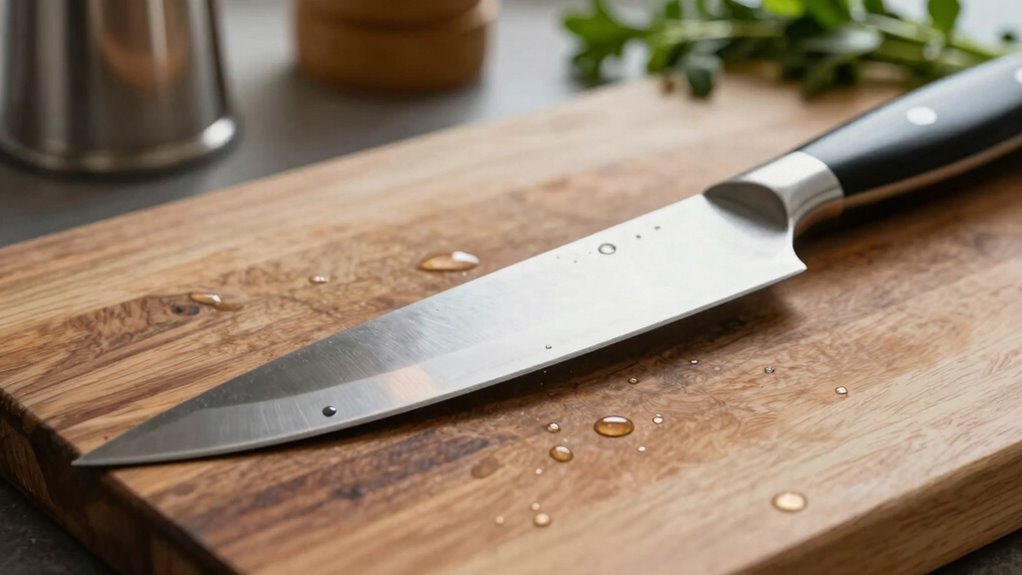
When your knife feels unpredictable, first handle it carefully, keeping fingers clear of the blade. Check if the blade is dull or damaged, and sharpen it using a proper tool like a sharpening stone or electric sharpener. Confirm the handle is secure and in good condition, tightening or replacing parts if needed. Regular cleaning and proper storage help keep your knife reliable. If issues persist, consider professional help. Keep exploring to learn more ways to maintain safety and performance.
Key Takeaways
- Examine the blade for dullness or damage and sharpen if necessary.
- Ensure the handle is secure and free from looseness or damage.
- Test the knife on a stable surface to identify specific issues.
- Seek professional sharpening or repair if problems persist.
- Regularly maintain and store the knife properly to prevent future unpredictability.
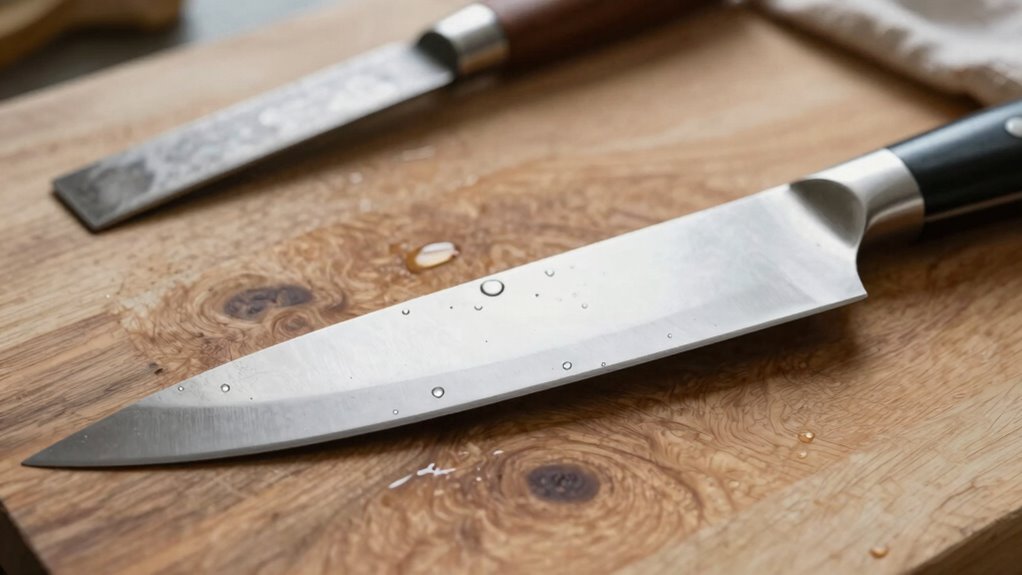
If your knife suddenly starts feeling unpredictable during use, it’s a sign that something might be off with its sharpness, balance, or overall condition. When this happens, your first priority should be guaranteeing safety. Unpredictable knives are more likely to slip, causing potential injuries. So, before doing anything, make sure to handle the knife carefully, keeping your fingers clear of the blade’s path. Always cut on a stable surface and avoid rushing through tasks. Keeping safety precautions in mind helps prevent accidents while you assess the situation.
Prioritize safety if your knife feels unpredictable—handle carefully, stay alert, and cut on a stable surface to prevent injuries.
Next, examine your knife for signs of dullness or damage. A dull blade is often the culprit behind unpredictable handling. If the knife isn’t cutting smoothly, it’s time for some knife maintenance. Using a sharpening stone, honing rod, or electric sharpener can restore the blade’s edge. Regular sharpening not only improves performance but also extends the life of your knife. Remember, a well-maintained knife requires less force to cut, reducing the risk of slips. When sharpening, follow the manufacturer’s instructions or seek guidance from tutorials to ensure proper technique. Proper knife maintenance keeps your tools in top shape and safe to use. Additionally, understanding how to maintain the balance of your knife is essential for safe handling.
Balance is another critical factor. If your knife feels uneven or awkward, check the handle for looseness or damage. A poorly balanced knife can be difficult to control, increasing the chance of unpredictable movements. Tighten any loose screws or rivets, and if the handle is damaged beyond repair, consider replacing it or getting a new knife altogether. Maintaining the overall condition of your knife—cleaning it regularly and storing it properly—also contributes to consistent performance. Proper storage in a knife block or on a magnetic strip can help preserve the blade’s edge and balance. Avoid leaving your knife in the dishwasher or soaking it in water, as this can lead to rust or corrosion, affecting its balance and safety. Regular inspection and safe handling practices are vital to preventing damage.
If, after sharpening and inspecting the knife, it still feels off, it might be time to consult a professional. A skilled knife sharpener or repair service can identify issues you might miss, such as internal damage or warping. Remember, safety should always come first. Never attempt to force a dull or damaged knife into use, as this can cause injury. By practicing good knife maintenance routines and following safety precautions, you’ll keep your knives reliable and safe for all your culinary endeavors. A sharp, well-maintained knife not only performs better but also makes your cooking safer and more enjoyable.
As an affiliate, we earn on qualifying purchases.
Frequently Asked Questions
How Often Should I Sharpen My Knife for Optimal Performance?
You should sharpen your knife every 1 to 2 weeks for ideal performance, depending on how often you use it. Regular knife maintenance, including sharpening frequency, keeps your blade sharp and safe to use. If you notice dullness or difficulty cutting, sharpen it sooner. Using a honing rod between sharpenings also helps maintain the edge longer. Consistent care ensures your knife performs well and lasts longer.
Can Different Cutting Techniques Affect My Knife’s Unpredictability?
Like a dance partner improvising unexpectedly, your cutting techniques can influence your knife’s unpredictability. Aggressive or uneven cuts stress the blade, affecting blade maintenance and reducing cutting precision. Using smooth, controlled strokes helps maintain your knife’s predictability, ensuring consistent performance. Always pay attention to how you handle your knife, as proper technique preserves its sharpness and stability, making your cutting safer and more accurate over time.
Is It Safe to Use a Knife That Feels Unpredictable?
Using an unpredictable knife isn’t safe, as it increases the risk of slips and cuts. To guarantee knife safety, stop using it immediately and check its sharpness and balance. Maintaining the blade’s sharpness helps prevent accidents, so sharpen or hone your knife regularly. If the knife remains unstable after sharpening, consider professional repair or replacement. Always prioritize safety by handling knives carefully and avoiding use when unpredictability occurs.
What Types of Knives Are Most Prone to Becoming Unpredictable?
You’ll find that lightweight, thin-bladed knives, especially those with less durable blades, are more prone to becoming unpredictable. Knives with poor handle grip can also cause instability, making it harder to control your cuts. Regularly check the blade durability and confirm your handle grip is secure. If you notice any looseness or signs of wear, consider sharpening, tightening, or replacing the knife to maintain safe, predictable performance.
Should I Replace My Knife if It Continues to Feel Unpredictable?
If your knife remains unpredictable after proper maintenance, consider replacing it. Studies show that poorly maintained knives cause 45% more accidents, emphasizing safety. Regular knife maintenance ensures sharpness and control, but if issues persist, a new knife might be safer. Always follow safety precautions like wearing cut-resistant gloves and storing knives properly. Trust your judgment—if the knife feels unsafe despite efforts, replacing it is the best choice for your safety.
As an affiliate, we earn on qualifying purchases.
Conclusion
When your knife begins to dance unpredictably in your hand, it’s like trying to tame a wild stallion—trust your instincts and slow down. Sharpen the edge, check the alignment, and guarantee your grip is steady. Remember, a well-maintained knife is your trusted companion in the kitchen’s symphony. By nurturing your tools, you’re not just sharpening blades—you’re sharpening your skills, turning chaos into harmony, and making every cut a confident, controlled stroke.
As an affiliate, we earn on qualifying purchases.
As an affiliate, we earn on qualifying purchases.