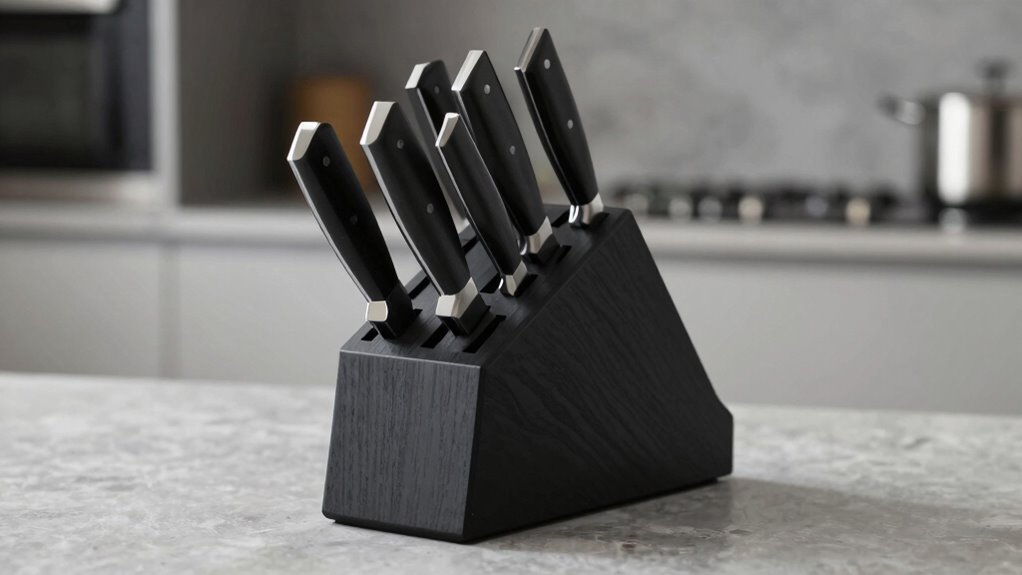

To keep your expensive knife edges safe, choose a knife block with individual, slightly wider, or angled slots that prevent blades from rubbing or dulling. Soft-touch interiors or magnetic strips gently hold knives without contact that damages edges. Make certain the block has good ventilation to reduce moisture and corrosion. Solid, non-slip bases add stability, and rounded edges minimize accidental cuts. Keep your knives protected and sharp longer by selecting a well-designed block—discover more ways to enhance safety next.

Get kitchen gear delivered free — and shop member deals
- Fast, free delivery on millions of items
- Access to Prime Big Deal Days deals on October 6–7
- Prime Video, Amazon Music and more included
Key Takeaways
- Individual, slightly wider or angled slots prevent blade contact and reduce dulling or chipping risks.
- Soft-touch interiors or magnetic strips gently secure blades without unnecessary contact.
- Proper ventilation and moisture control prevent corrosion and blade damage over time.
- Sturdy, non-slip bases and smooth edges enhance stability and minimize accidental cuts during handling.
- Customizable, technologically integrated designs optimize blade protection and secure storage for high-end knives.
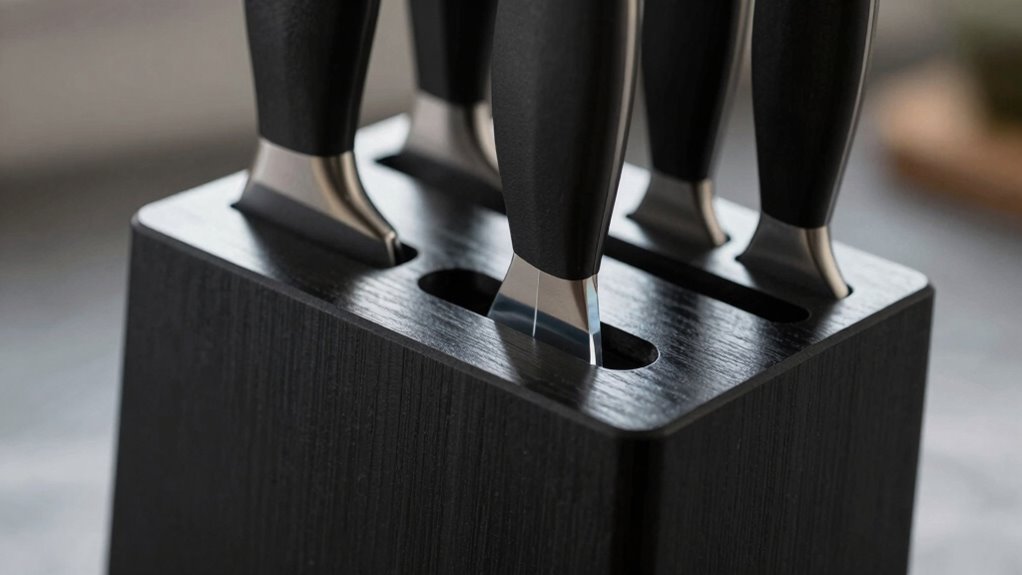
Have you ever wondered if your knife block is as safe as it should be? Many people overlook the importance of proper knife storage, but it’s essential for maintaining your knives’ blades and guaranteeing safety in your kitchen. A well-designed knife block not only keeps your knives organized but also plays a key role in blade protection, preventing dulling or damage that can occur from improper storage. When you choose a knife block, look for one that offers secure slots tailored to your knife collection. Proper knife storage means each blade is held firmly without excessive pressure or bending, which can compromise the edge over time.
Proper knife storage protects blades, prevents damage, and ensures safety in your kitchen.
A safer knife block features individual slots that keep each knife separate, reducing the risk of blades rubbing against each other or other utensils. This separation is critical for blade protection, especially for expensive or high-quality knives, where even minor damage can diminish performance or value. Some knife blocks include slots that are slightly wider than the blade, allowing the edge to stay unscathed during insertion and removal. Others incorporate angled or open slots that reduce contact with the blade’s edge entirely, further preventing dulling or chipping.
Material quality matters too. A sturdy, non-slip base ensures the knife block doesn’t slide around when you’re grabbing or replacing knives, which adds an extra layer of safety. Additionally, some designs incorporate features like soft-touch interiors or individual magnetic strips, providing a gentle yet secure grip on each knife. These options help protect blades from unnecessary contact or pressure, extending their sharpness and lifespan. Incorporating blade protection features into the design can significantly enhance the longevity of your knives. Furthermore, choosing a ventilated or open-structured knife block can help reduce moisture buildup, a common enemy for blade preservation, especially in humid environments. Proper ventilation**** not only safeguards your blades but also helps prevent bacterial growth, ensuring a more hygienic storage solution.
Another aspect to think about is ventilation. A ventilated or open-structured knife block allows air circulation, which can help prevent moisture buildup that might lead to corrosion on your blades. Moisture is a common enemy for blade preservation, so a well-ventilated storage solution keeps your knives dry and in top condition. Additionally, look for knife blocks with rounded edges or smooth finishes; these minimize accidental cuts or snags when you’re reaching for a knife, making the entire process safer. Properly designed storage solutions can also reduce clutter, making your kitchen safer and more efficient. Additionally, CAD and 3D printing technologies can be utilized to customize and optimize knife block designs for enhanced safety and efficiency.
Ultimately, a safer knife block combines thoughtful design with quality materials, offering secure knife storage and prime blade protection. It’s an investment in your knives’ longevity and your safety. When you prioritize these features, you won’t just enjoy the convenience of organized knives—you’ll also preserve their sharpness and ensure safer handling every time you cook.
knife block with individual wide slots
As an affiliate, we earn on qualifying purchases.
As an affiliate, we earn on qualifying purchases.
Frequently Asked Questions
How Often Should I Replace My Knife Block?
You should replace your knife block every 5 to 10 years, depending on its condition. Regularly inspect your knife storage for signs of wear, such as loose slots or damage. Proper maintenance helps preserve your knife edges, preventing dullness and chipping. If you notice damage or difficulty inserting knives, it’s time for a new block. This guarantees your knives stay sharp and safe for everyday use.
Are There Specific Materials Safer for High-End Knives?
You’ll want a knife block made from materials like hardwood, which is incredibly durable and gentle on high-end knives. Hardwoods like maple or walnut are highly compatible, preventing dulling or chipping. Avoid softer woods or porous materials that can damage blades over time. These durable, compatible materials safeguard your expensive edges, ensuring your knives stay sharp longer and your investment remains protected through countless culinary adventures.
Can Improper Cleaning Damage Expensive Knife Edges?
Yes, improper cleaning can damage your expensive knife edges. Using harsh cleaning techniques, like scrubbing with steel wool or dishwasher cleaning, can dull or chip the blades. To protect your knives, always focus on edge maintenance by hand washing with mild soap and warm water. Avoid soaking blades and dry them thoroughly. Proper cleaning techniques help preserve sharpness, ensuring your knives stay in top condition longer.
What’s the Best Way to Store Serrated Knives Safely?
To store serrated knives safely, choose a knife block with specific knife slot design that securely holds serrated blades without damaging their edges. Opt for a block made from materials compatible with your knives, like wood or bamboo, which won’t dull or chip the blades. Always insert knives carefully, ensuring they fit snugly in their slots, and avoid overcrowding to prevent accidental slips or damage.
Do Knife Blocks Prevent Accidental Cuts Better Than Magnetic Strips?
Knife blocks generally prevent accidental cuts better than magnetic strips because their design keeps blades securely sheathed and organized, reducing the chance of mishandling. While magnetic strips offer easy access and quick retrieval, they pose a risk of snagging or accidental contact. Choosing a well-designed knife block with individual slots enhances safety, especially for expensive or delicate edges, whereas magnetic strips provide convenience but require extra caution to avoid cuts.
As an affiliate, we earn on qualifying purchases.
Conclusion
So, next time you’re choosing a knife block, remember: it’s not just about looks or storage, but about protecting your precious, expensive edges. After all, a good knife block isn’t just a pretty face—it’s the knight in shining armor for your blades. Skip the cheap plastic and embrace the sturdy, safe design. Because, really, your knives deserve a better life than a janky junk drawer, and you deserve fewer trips to the ER.
As an affiliate, we earn on qualifying purchases.
As an affiliate, we earn on qualifying purchases.
Fall Picks
fall essentials
As an affiliate, we earn on qualifying purchases.