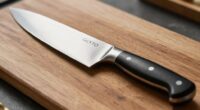
A knife-friendly cutting board resists deep cuts, scratches, and wear, helping your blades stay sharp longer. Choose durable materials like hardwoods such as maple or cherry, which gently cushion your knives without gouging. A well-balanced surface texture minimizes blade impact and prevents dulling, while also making cleaning easier to maintain hygiene. Pay attention to material properties to guarantee longevity for both your board and knives. Keep going to discover even more tips to protect your tools.
Key Takeaways
- Use hard, dense woods like maple or cherry to prevent gouging and maintain knife sharpness.
- Opt for a surface with a balanced texture that reduces blade impact and preserves blade edges.
- Choose materials that resist deep cuts and grooves, minimizing bacteria buildup and surface damage.
- Ensure the board is easy to clean and sanitize to prevent bacteria and maintain hygiene.
- Select durable materials that withstand regular use without damaging knives or the board itself.
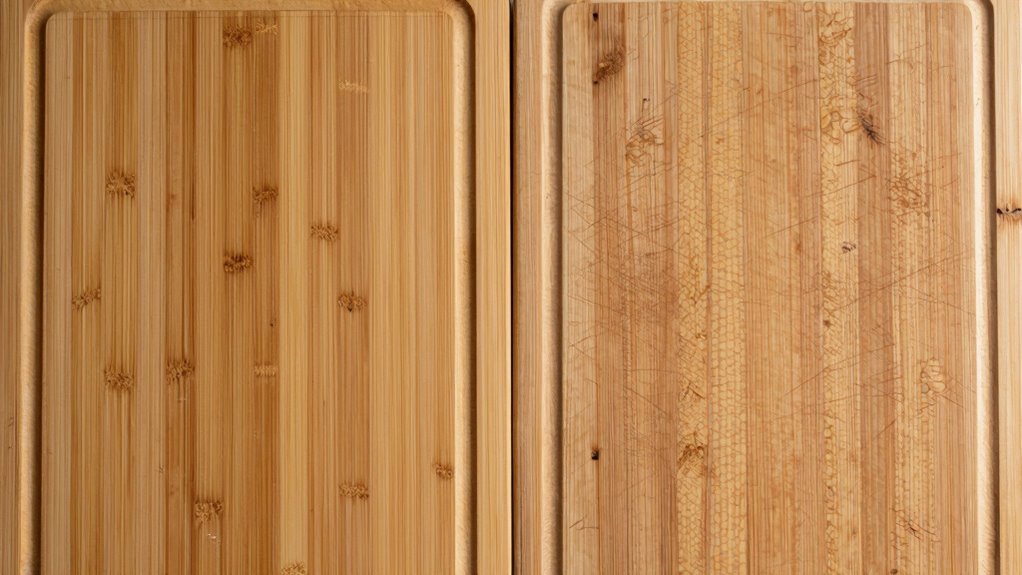
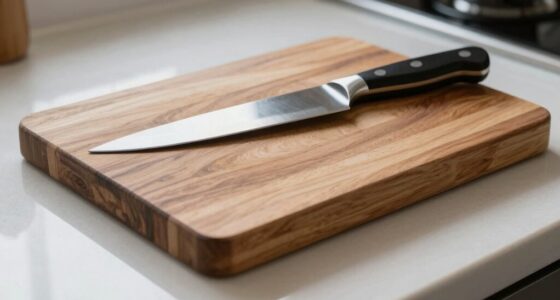
Have you ever wondered what makes a cutting board ideal for your knives? The answer lies in understanding the significance of material durability and surface texture. When choosing a cutting board, you want something that can withstand the constant impact of your knives without wearing down quickly. Material durability refers to how well the board resists cuts, scratches, and general wear over time. A durable surface ensures your cutting board remains in good condition, providing a consistent cutting experience and protecting your knives from unnecessary damage. For example, hardwoods like maple or cherry are prized for their strength and resilience, allowing them to handle heavy use without gouging or splintering. Conversely, softer woods or flimsy plastics may develop deep cuts or grooves after only a few uses, which can harbor bacteria and make your knives dull faster. Choosing a surface with a balanced surface texture helps maintain your knives’ sharpness and overall longevity. Additionally, selecting a surface that is easy to clean and sanitize is essential for maintaining food safety and preventing bacteria buildup. A well-structured surface also minimizes blade impact, which further helps preserve your knives’ edges and prolongs their lifespan. Being aware of the material properties of your cutting board can guide you in selecting the best option for durability and knife-friendliness. Recognizing the impact of surface texture on knife performance can further influence your choice for optimal cutting efficiency.
hardwood cutting board for knives
As an affiliate, we earn on qualifying purchases.
As an affiliate, we earn on qualifying purchases.
Frequently Asked Questions
How Does Board Material Affect Knife Sharpness?
The board material directly impacts your knife’s sharpness by providing better knife blade protection and durability. Softer woods or plastic can dull your knives faster because they absorb more force and create more friction. Harder, dense materials like bamboo or composite boards are gentler on blades, helping maintain their sharpness longer. Choosing the right material guarantees your knives stay sharp, and your cutting tasks stay efficient and safe.
Are There Specific Cutting Board Sizes for Different Knives?
Think of your knives as dancers needing the perfect stage. Smaller boards suit paring knives, offering control, while larger ones provide ample space for chopping and prepping. For proper knife storage and cutting board maintenance, select sizes that match your knife types, preventing crowding and damage. A well-sized board keeps your knives sharp longer, avoiding unnecessary wear and tear. Tailoring size ensures your kitchen’s dance floor stays safe, organized, and efficient.
Can a Cutting Board Damage Certain Knife Types?
Yes, a cutting board can damage certain knife types if it lacks proper knife edge protection. Hard surfaces like glass or stone accelerate blade dulling factors, making your knives less sharp over time. To prevent this, choose softer woods or plastic that absorb impact and reduce blade dulling factors. Using a suitable cutting board guarantees your knives stay sharp longer and maintains their quality, saving you money and effort.
How Often Should I Replace My Cutting Board?
You should replace your cutting board every 3 to 5 years to guarantee food safety and hygiene maintenance. Studies show that wooden and plastic boards can harbor bacteria in deep cuts over time, risking cross-contamination. Regularly inspecting your board for deep grooves or cracks is essential. When it becomes excessively worn or stained, it’s time to replace it, helping prevent foodborne illnesses and maintaining proper hygiene in your kitchen.
Do Textured or Patterned Boards Impact Knife Safety?
Texture impact and patterned surfaces can influence knife safety. Textured boards might provide more grip, preventing slips, but they can also cause the knife to catch or dull more quickly. Patterned surfaces, especially those with deep grooves or intricate designs, may trap food particles and increase the risk of slipping or uneven cuts. Choose a surface that balances grip with smoothness to keep your knives safe and effective.
As an affiliate, we earn on qualifying purchases.
Conclusion
Choosing a knife-friendly cutting board means balancing durability with gentleness. You want a surface tough enough to withstand daily use, yet soft enough to preserve your blades’ sharpness. Think of it as a dance—firmness meets flexibility, strength meets care. When you pick the right board, you’re not just protecting your knives; you’re elevating your entire cooking experience. After all, a good cut starts with the right surface—where precision meets preservation.
As an affiliate, we earn on qualifying purchases.
As an affiliate, we earn on qualifying purchases.