
Storing your knives properly is key to keeping their edges sharp longer. Use knife blocks, magnetic strips, or protective sheaths to prevent contact and physical damage. Keep blades dry and in environments with stable humidity, away from moisture and extreme temperatures. Proper placement—like avoiding pressure on the edge—prevents dulling and chipping. By choosing the right storage and maintaining a good environment, you’ll extend your knives’ sharpness. Discover more ways to protect your blades effectively.
Key Takeaways
- Proper storage prevents blade contact and impact, reducing dulling, chipping, and micro-abrasions that shorten edge life.
- Keeping knives dry and in low-humidity environments prevents rust and corrosion, preserving sharpness over time.
- Using protective sheaths, magnetic strips, or organized blocks minimizes friction and accidental damage to the blade edges.
- Storing blades with the edge facing away from pressure points avoids dulling and bending during long-term storage.
- Regular maintenance, cleaning, and oiling extend the knife’s edge longevity by preventing oxidation and maintaining optimal conditions.
As an affiliate, we earn on qualifying purchases.
The Impact of Storage Methods on Knife Blade Preservation
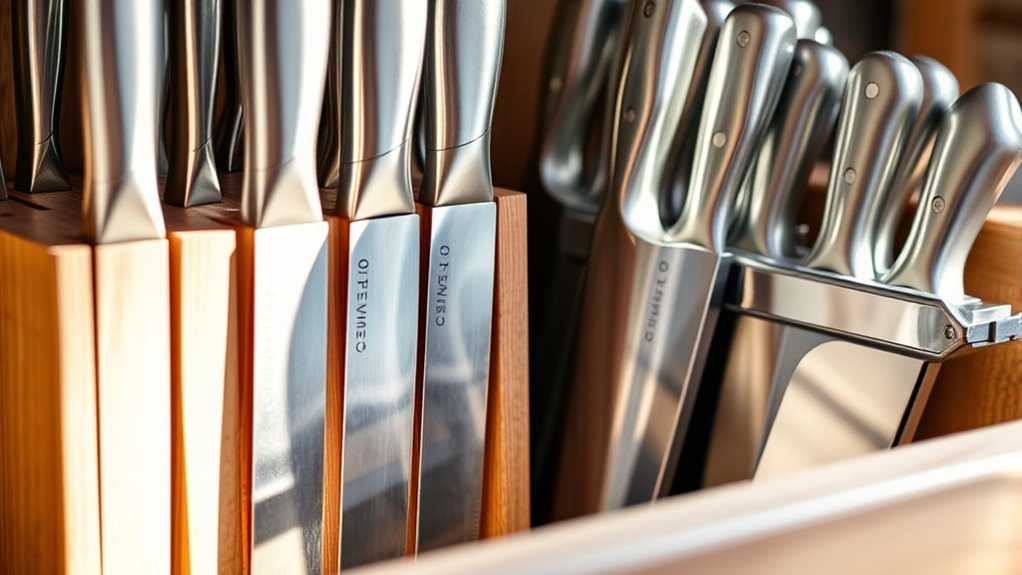
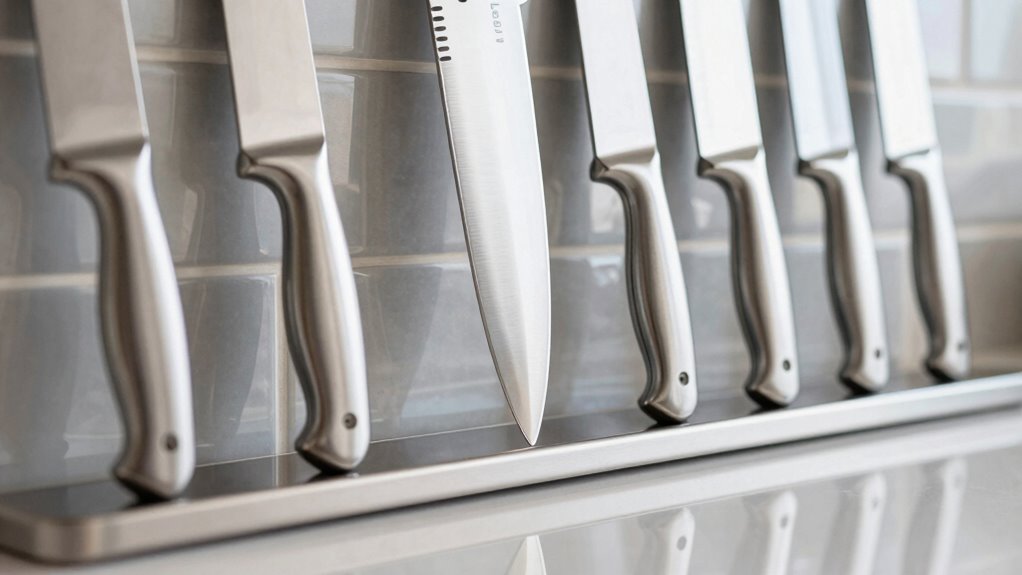
Choosing the right storage method directly influences how well your knife blades stay sharp and rust-free over time. Proper storage minimizes blade damage, dulling, and corrosion. For example, knife blocks keep blades protected from contact and impact, but overcrowding can cause dings and dulling. Magnetic strips prevent blade contact with surfaces, reducing micro-abrasions, and allow air drying, which helps prevent moisture buildup. Sheaths and guards provide individual protection, especially during transport, preventing edges from dulling or chipping. Rolls and wraps organize multiple knives securely, reducing friction and accidental damage. Additionally, storing knives in a controlled environment helps maintain optimal humidity levels, crucial for preventing rust and corrosion. Using appropriate storage solutions tailored to your environment can further extend the lifespan of your knives. Proper air circulation around stored knives can also help prevent moisture entrapment and oxidation. Ensuring proper cleaning, drying, and correct storage methods reduces the potential for blade deterioration, ultimately preserving sharpness and safety. Whichever method you choose, ensuring blades are clean, dry, and stored correctly helps maintain sharpness and prevents rust, extending your knives’ lifespan and ensuring safety during use. Proper storage also affects blade preservation by reducing exposure to damaging elements like moisture and physical impact.
As an affiliate, we earn on qualifying purchases.
Choosing the Right Storage Solution for Different Knife Types

Choosing the right storage depends on your knife’s blade material and safety needs. You should match storage options, like magnetic strips or sheaths, to protect steel blades from damage and corrosion. Making the right choice helps keep your knives sharp, safe, and long-lasting. Proper storage methods can also prevent accidents and extend the life of your knives. Additionally, understanding blade material considerations ensures you select storage that minimizes corrosion and damage over time. Being aware of auditory processing challenges can also inform safety strategies when handling sharp objects. Considering storage environment factors, such as humidity and temperature, further contributes to maintaining your knives’ condition long-term.
Blade Material Compatibility
Different blade materials require tailored storage solutions to maintain their performance and longevity. Your choice of storage depends on whether your knife is stainless steel, high-carbon steel, or ceramic.
- Stainless Steel: Use magnetic strips or wooden blocks that prevent micro-abrasions and allow air circulation to prevent corrosion. Proper storage environment can also mitigate rust risks and maintain sharpness. Ensuring adequate ventilation can further reduce moisture buildup that accelerates deterioration. Regular inspection for signs of corrosion or damage is also important to keep your blades in optimal condition.
- High-Carbon Steel: Opt for wooden cases or wraps with acid-free paper, and always apply a light coat of mineral oil to prevent rust. Proper maintenance routines are essential to preserve the edge and prevent oxidation. Avoid storing high-carbon knives in humid environments to reduce the risk of rust formation.
- Ceramic Blades: Store in padded sheaths or dedicated ceramic knife holders to avoid chipping and minimize stress on the brittle material. Proper storage techniques can significantly extend the life of your ceramic blades and prevent accidental damage.
Matching storage to material helps prevent damage, reduces dulling, and extends edge life. Properly tailored solutions safeguard your investment and ensure your knives perform at their best. Incorporating connected equipment and proper maintenance routines can also enhance the longevity and performance of your blades over time.
Storage Safety for Steel
Selecting the right storage method for steel knives helps protect their edges, prevent damage, and extend their lifespan. Your choice depends on knife type, material, and usage habits. For stainless steel, magnetic strips and well-designed blocks work well, reducing micro-abrasions. Carbon steel knives benefit from individual sheaths, wraps, or wooden rolls to prevent moisture contact and rust. Proper pre-storage cleaning and oiling are essential. Keep environments dry and avoid temperature extremes.
| Storage Method | Best For | Key Benefit |
|---|---|---|
| Knife Blocks | Daily use | Easy access, protects edges |
| Magnetic Strips | Stainless | Reduces micro-abrasions |
| Sheaths & Guards | Carbon steel | Rust prevention, transport |
As an affiliate, we earn on qualifying purchases.
How Proper Knife Placement Prevents Dulling and Damage
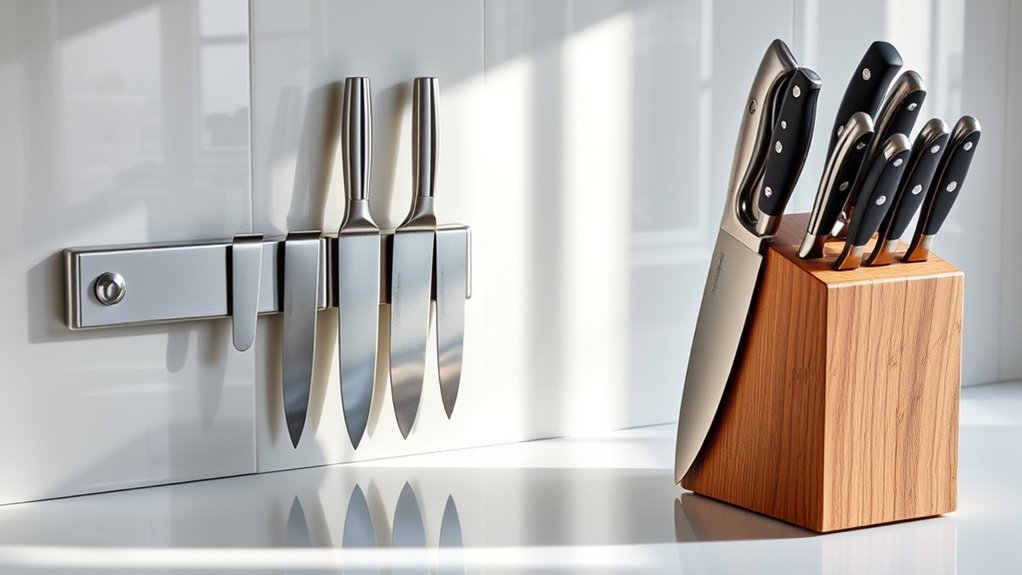
Proper knife placement protects your blades from unnecessary dulling and damage. When you store knives with the spine facing down or away from the edge, you prevent pressure that can cause dullness or chips. Consistent, careful placement keeps your knives sharp and in good condition for longer. Incorporating vintage-inspired storage solutions can also enhance your kitchen’s aesthetic while preserving your tools. Additionally, understanding home organization principles can help you create a safer and more efficient storage system for all your kitchen utensils, ensuring that your knives are stored properly according to storage best practices. Applying simple organization strategies can make a noticeable difference in maintaining your knives’ sharpness over time, especially when you consider the importance of knife safety in everyday use.
Spine-Facing Storage Benefits
Storing knives with the spine facing down helps protect the blade’s edge from unnecessary pressure and contact. This orientation prevents the sharp edge from pressing against surfaces or other knives, reducing dulling and chipping risks. Proper placement also minimizes accidental contact that could damage the edge. Additionally, thermal behavior considerations suggest that correct storage can help maintain consistent blade temperature and prevent warping or damage over time. For example, temperature regulation can be crucial in preventing the metal from expanding or contracting unevenly, which could compromise the blade’s integrity. Using appropriate storage solutions that promote air circulation can further reduce moisture buildup and corrosion risks. Proper storage also supports the longevity of the blade, ensuring your knives stay sharp and effective for years to come. Here are three key benefits: 1. Protects the Edge: Keeps the cutting surface away from abrasive contact. 2. Reduces Dulling: Prevents micro-damage caused by constant pressure. 3. Limits Damage: Avoids blade chipping or bending from improper stacking.
Avoid Edge Pressure Damage
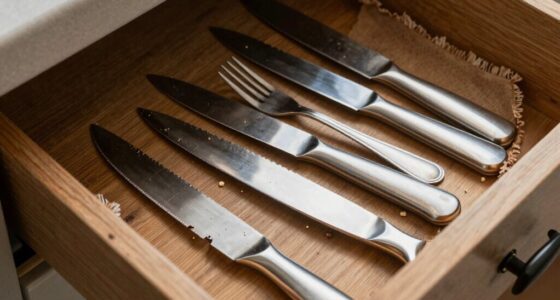
To prevent dulling and damage, it’s vital to pay close attention to how you place your knives during storage. Always keep the blades on the spine or in protective sheaths to avoid unnecessary pressure on the edge. When inserting knives into a block, make sure they’re not pushed all the way down with force, which can bend or chip the edge. Use individual guards or wraps for drawer storage to prevent contact and pressure between blades. Avoid stacking knives directly on top of each other, as this can cause micro-damage over time. Regularly check storage setups for any signs of pressure or misalignment, and rearrange as needed. Proper placement minimizes contact, preserves sharpness, and extends your knives’ lifespan. Additionally, understanding Free Floating storage options can help reduce contact and improve longevity. Implementing proper storage techniques can further safeguard your knives from accidental damage and maintain their precision over time, especially when considering how knives are stored impacts their overall performance and edge retention. Being aware of storage environment factors, such as humidity and temperature, also plays a role in maintaining the integrity of your blades. Proper organization and knives maintenance routines can enhance their durability and sharpness over the years.
As an affiliate, we earn on qualifying purchases.
The Role of Environmental Conditions in Maintaining Sharpness
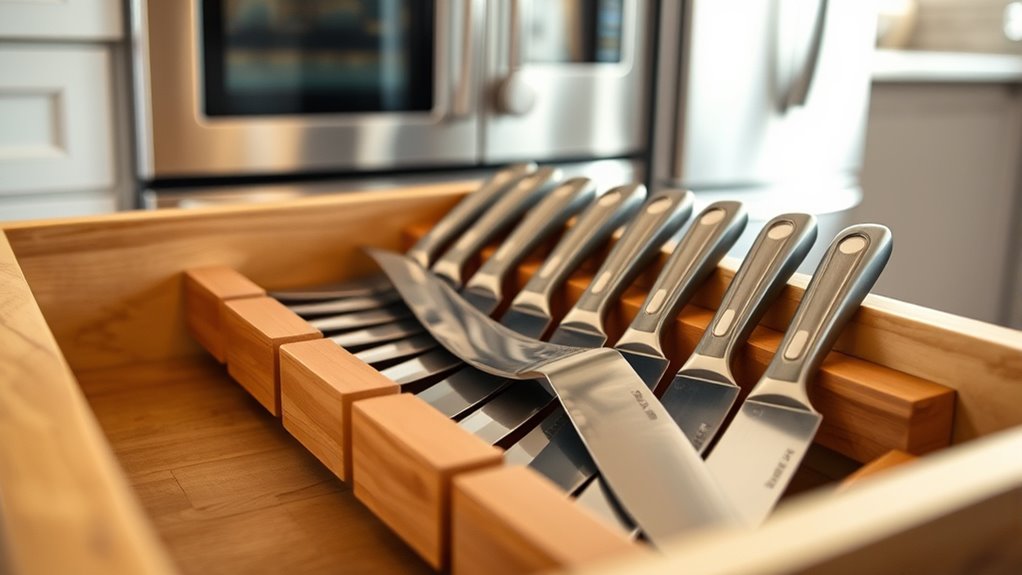
Environmental conditions play a crucial role in keeping your knives sharp and in good condition. You need to control humidity, temperature, and exposure to elements to prevent corrosion and dulling. Here are three key tips:
- Store knives in dry environments with humidity below 60%, using silica gel packets or VCI paper to absorb excess moisture. Proper storage materials can significantly influence metal preservation.
- Avoid extreme temperatures, which can cause metal expansion or contraction, leading to cracks or dull edges.
- Keep knives away from salt air and direct sunlight, as salt accelerates corrosion and UV exposure damages some blade coatings.
Maintaining a stable, dry environment ensures your knives stay sharp longer, prevents rust, and preserves edge integrity. Consistent environmental management is essential for peak performance and longevity of your blades. Additionally, being aware of indoor air quality factors can help you create a more suitable storage environment.
Cleaning and Preparing Knives for Optimal Storage
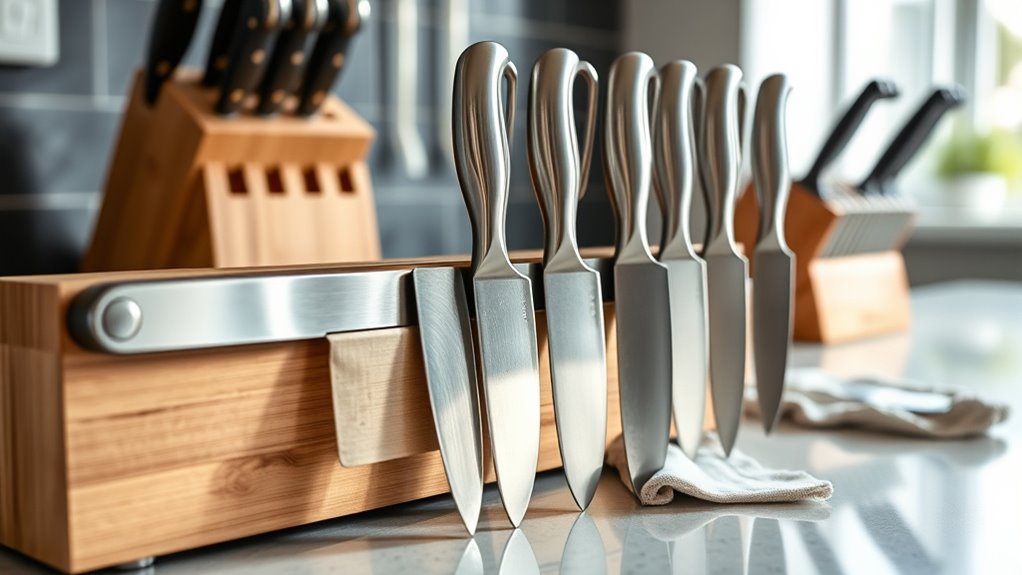
Properly cleaning and preparing your knives is essential to make sure they stay in top condition and safe for storage. Start by washing your knives with a mild detergent and warm water, then dry them thoroughly to prevent rust and corrosion. For carbon steel blades, apply a thin layer of food-grade mineral oil to protect against moisture and oxidation. Ensure the blades are completely dry before storing; any residual moisture can cause rust, especially in high-carbon steel. Rest the knives on their spines, avoiding contact with the edge to prevent dulling or damage. Regularly inspect for signs of oxidation or corrosion, especially in humid environments. Proper cleaning and preparation prolong the edge life and keep your knives safe, sharp, and ready for use whenever you need them.
Advantages and Disadvantages of Common Storage Options
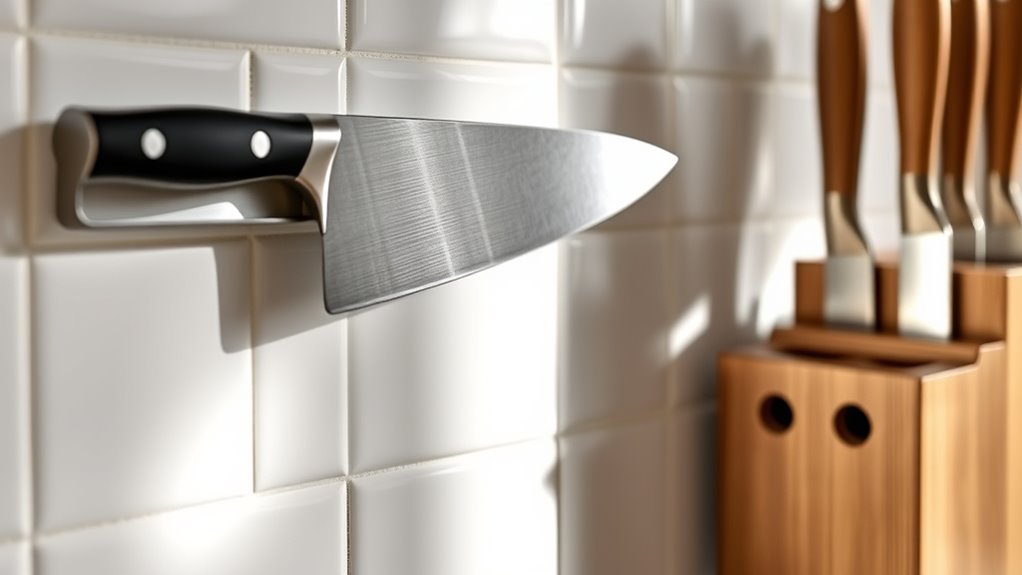
Choosing the right storage option depends on balancing convenience, protection, and space. Each method offers distinct benefits and drawbacks.
- Knife Blocks: They keep knives accessible and organized but can cause blade dulling if overcrowded or poorly maintained. Wooden blocks are great for carbon steel but need cleaning to prevent bacteria buildup.
- Magnetic Strips: They save space and allow for quick access. However, they risk scratching blades if not maintained and can harbor bacteria if not cleaned regularly.
- Sheaths and Guards: They protect edges during transport and storage, especially for high-value or travel knives. Yet, they can be cumbersome for daily use and may require extra care to prevent moisture buildup.
Evaluate your needs to choose the best option for maintaining your knives’ edge and longevity.
Preventing Rust and Corrosion Through Correct Storage Practices
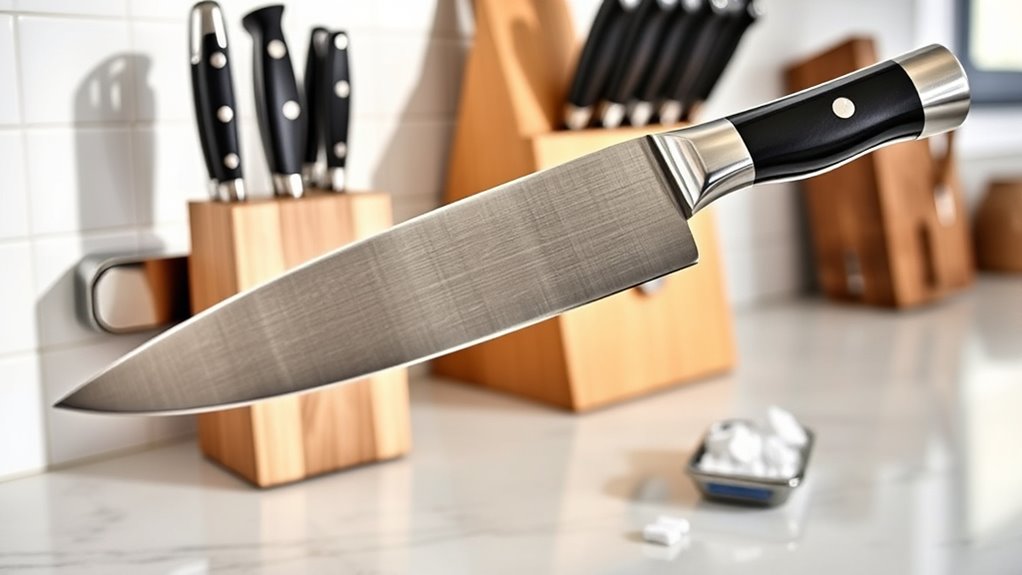
To prevent rust and corrosion, you must store your knives in a way that minimizes exposure to moisture and air. Keep blades dry and avoid humid environments. Use silica gel packets or VCI paper to absorb excess moisture, especially for long-term storage. Always dry knives thoroughly after washing, and apply a thin layer of food-grade mineral oil to carbon steel blades to create a protective barrier. Store knives upright or in protective sheaths to prevent contact with moisture or other metals.
| Storage Method | Best Practice |
|---|---|
| Knife Blocks | Keep clean and dry; avoid overcrowding |
| Magnetic Strips | Ensure they remain clean and dry after use |
| Sheaths & Guards | Wrap blades in acid-free paper; keep dry |
Tips for Long-Term Knife Care and Storage Maintenance
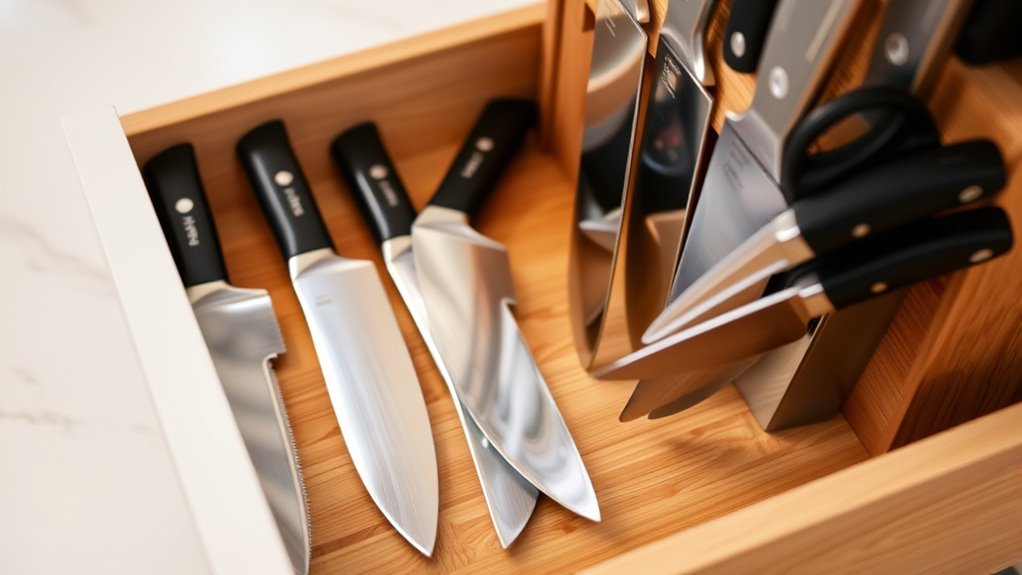
Maintaining your knives for long-term use requires consistent care and proper storage practices. To keep your blades sharp and rust-free, follow these tips:
Consistent cleaning, proper storage, and oiling keep knives sharp, rust-free, and safe for long-term use.
- Clean and dry thoroughly after each use to prevent moisture buildup. Use mild detergent and wipe with a soft towel.
- Apply a thin layer of food-grade mineral oil on carbon steel blades before storing to prevent rust.
- Choose the right storage method—wooden blocks, magnetic strips, or sheaths—based on your knife type and space. Ensure blades rest on the spine and avoid pressure on the edge.
Regularly inspect your knives for signs of oxidation or dullness. Proper care extends edge life and keeps your knives safe and effective for years.
Frequently Asked Questions
How Often Should I Replace or Upgrade My Knife Storage Solutions?
You should replace or upgrade your knife storage solutions when they show signs of damage, wear, or no longer protect your blades effectively. If your magnetic strip becomes loose, your knife block develops cracks, or your sheaths no longer fit snugly, it’s time for an upgrade. Regularly inspect for rust or dulling caused by poor storage, and invest in better options to keep your knives in top condition.
Can Improper Storage Cause Irreversible Damage to My Knives?
Ever seen a blade with chipped or bent edges? Improper storage can cause irreversible damage to your knives, making them dull or even unsafe to use. If you toss them in a cluttered drawer or expose them to moisture and extreme temperature changes, you risk rust, corrosion, and dullness that can’t be fixed. Always store knives properly, like in magnetic strips or sheaths, to preserve their sharpness and longevity.
What Are the Best Practices for Storing Specialty or High-End Knives?
To store your specialty or high-end knives properly, you should use protective sheaths or custom-fitted guards to prevent scratches and damage. Keep them in a dedicated, organized knife roll or a display case that prevents contact with other utensils. Always clean and thoroughly dry them before storage, apply a light coat of mineral oil if needed, and store in a stable, dry environment to preserve their sharpness and appearance.
How Does Storage Affect the Lifespan of Different Knife Materials?
You might think storage has little impact on knife lifespan, but it actually plays a vital role. Proper storage prevents corrosion, dulling, and damage, especially for different materials like carbon steel, stainless steel, or ceramic. For example, keeping carbon steel blades dry and protected from moisture extends their life, while proper sheaths or magnetic strips prevent micro-abrasions on stainless steel knives. Good storage habits truly preserve your knives’ sharpness and integrity over time.
Are There Specific Storage Options Recommended for Outdoor or Camping Knives?
For outdoor or camping knives, you should opt for protective sheaths or custom-fit blade guards to prevent damage and accidental injuries. Store them in a dry, cool place away from moisture and extreme temperatures, ideally in a rugged knife roll or belt sheath for portability and protection. Regularly clean and dry the blades after use, and apply a light coat of mineral oil to prevent rust and corrosion during extended outdoor storage.
Conclusion
Storing your knives properly can extend their sharpness by up to 50%, according to recent studies. By choosing the right storage method and maintaining a clean, dry environment, you prevent damage and rust, saving you money and time. Remember, a well-cared-for knife not only lasts longer but also makes your cooking safer and more enjoyable. Take these tips seriously, and you’ll keep your blades in top shape for years to come.