
To choose a portable knife setup for classes or pop-ups, prioritize safety, versatility, and easy maintenance. Select a variety of high-quality knives, including chef’s, paring, and serrated, with ergonomic handles for comfort. Use protective cases and storage solutions to prevent accidents during transport. Keep your knives sharp, sanitized, and check for damage regularly. Setting up a stable, clean workspace and organized tools will boost efficiency—continue exploring to master the essentials of a perfect setup.

Get kitchen gear delivered free — and shop member deals
- Fast, free delivery on millions of items
- Access to Prime Big Deal Days deals on October 6–7
- Prime Video, Amazon Music and more included
Key Takeaways
- Select versatile, high-quality knives with ergonomic handles for comfort and ease of use during mobile setups.
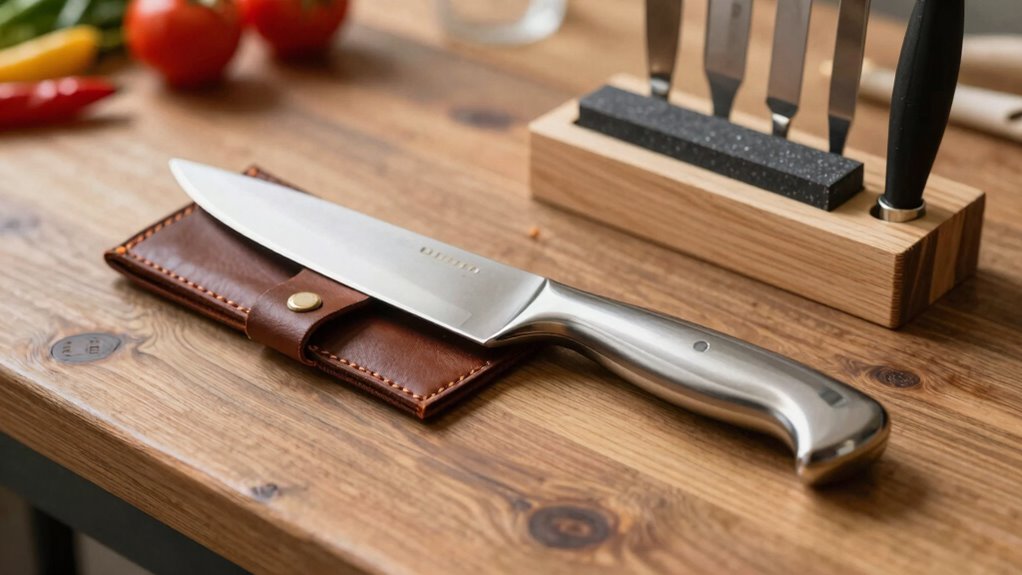
- Use protective storage solutions like sheaths, cases, or sleeves to prevent damage and ensure safety during transport.
- Include a portable sharpening stone or honing rod to maintain blade sharpness on the go.
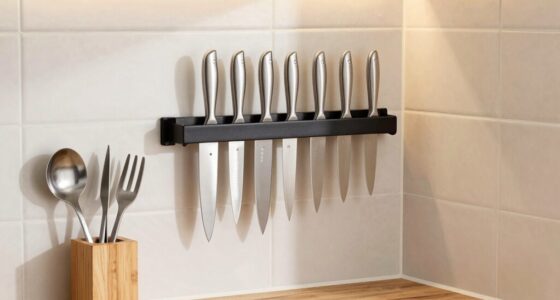
- Organize knives securely with dedicated holders or compartments to prevent shifting and accidents.
- Maintain hygiene with sanitizable tools and a clean workspace, including portable cutting boards or mats.
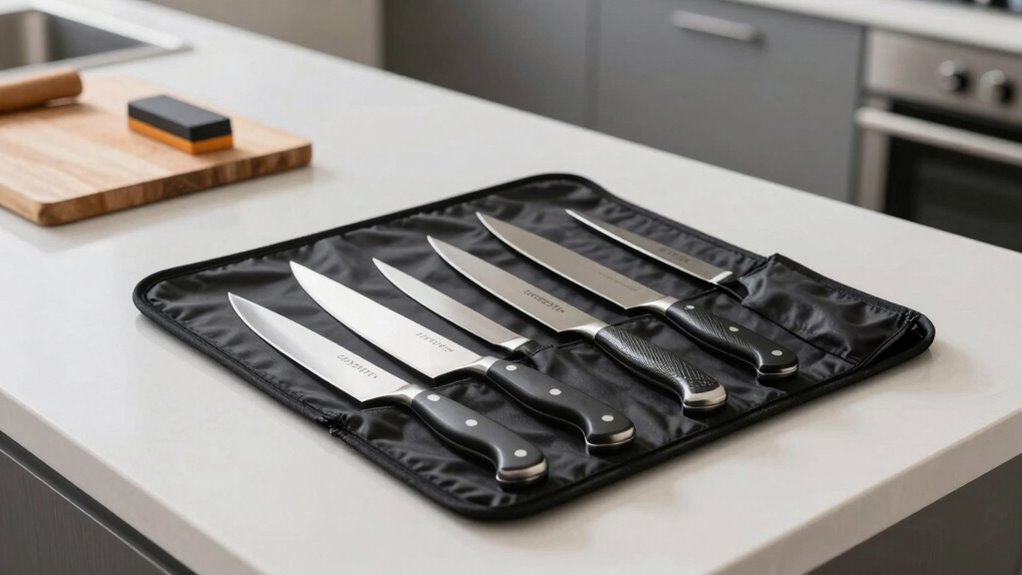
When selecting a portable knife setup, you need to take into account how you’ll use it and the environments you’ll encounter. Whether you’re setting up for classes, pop-ups, or on-the-go culinary demonstrations, your choice of knives impacts your efficiency and safety. The key is to choose a setup that’s versatile, reliable, and easy to manage in different settings. First, consider the types of knives you’ll need—think about a chef’s knife for versatility, a paring knife for detail work, and perhaps a serrated knife for bread or tougher ingredients. Opt for high-quality blades that hold their edge well, reducing the need for frequent sharpening during your event. Compact, lightweight handles are essential for portability, but they shouldn’t compromise your grip or control. Additionally, selecting ergonomic knife handles can improve comfort and reduce fatigue during extended use.
Once you’ve picked your knives, focus on how you’ll maintain them during your use. Knife maintenance is crucial, especially when working in mobile environments where access to sharpening tools may be limited. Carry a small, portable sharpening stone or a honing rod to keep your blades in top condition. Regularly check for any signs of dullness or damage, and sharpen or replace blades as needed. Proper knife maintenance not only ensures safety but also improves your efficiency and results. Using proper storage solutions can help prevent accidents and keep your knives in optimal condition. Additionally, investing in knife guards or sheaths can protect both the blades and your hands during transport and storage. Implementing effective organization in your setup can streamline your workflow and reduce the risk of accidents. Safety protocols should always be a priority when handling and transporting knives. Use protective sleeves or cases to prevent accidental cuts during transit, and ensure your blades are securely stored so they don’t shift or fall. When you’re ready to use a knife, inspect it thoroughly for any cracks or chips, and handle it with care.
Your setup should also include a clean, stable workspace, which might mean bringing a portable cutting board or mat. This reduces the risk of accidents and keeps your knives in good condition. Also, remember to sanitize your knives regularly, especially if you’re working with different ingredients or in shared spaces. Proper hygiene and safety protocols help prevent cross-contamination and ensure a safe environment for everyone involved. Additionally, selecting knives with interchangeable blades can enhance your versatility in different tasks and environments. When choosing your knives and storage solutions, look for options that are easy to clean and maintain. The right setup makes a difference—not just in your workflow but in safety and the longevity of your tools. By focusing on knife maintenance and safety protocols, you’ll be prepared to handle your portable setup confidently, no matter where your culinary adventures take you.
As an affiliate, we earn on qualifying purchases.
Frequently Asked Questions
How Do I Ensure My Knife Setup Complies With Local Safety Regulations?
To guarantee your knife setup complies with local safety regulations, start by researching specific laws in your area. Incorporate regular knife sharpening to maintain safe, effective blades, and provide safety training to all users. Keep your knives stored securely and labeled clearly. Stay updated on any regulation changes, and document safety practices. This proactive approach helps you meet legal requirements while promoting a safe environment in your classes or pop-ups.
What Are the Best Materials for a Lightweight, Durable Knife Case?
For a lightweight, durable knife case, opt for materials like high-quality nylon or ballistic polyester, which combine strength with lightness. Hard-shell options, like polycarbonate or aluminum, offer excellent protection but might be heavier. Lightweight case options, such as padded fabric or soft-shell cases with reinforced corners, are ideal for portability. Choose materials that balance durability and ease of transport, ensuring your knives stay safe without adding unnecessary weight.
How Can I Prevent Theft or Damage to My Knives During Transport?
To prevent theft or damage during transport, use knife locking mechanisms and theft deterrent locks on your case. Always secure your knives in well-padded compartments, ensuring they won’t shift or hit each other. Lock the case when not in use, and consider adding additional security like a portable lock or cable. This minimizes the risk of theft and keeps your knives safe from damage during transit.
What Are Recommended Backup Tools for a Portable Knife Setup?
You never know when you’ll need a backup, so pack a spare knife with a sharpener and extra blades. Keep a small, portable sharpening stone or ceramic rod for on-the-spot knife sharpening, ensuring your blades stay razor-sharp during busy sessions. Regular blade maintenance is essential—your backup tools will save the day if your main knife dulls or gets damaged, keeping your workflow smooth and your skills sharp.
How Do I Sanitize My Knives Effectively Between Uses?
To sanitize your knives effectively, focus on proper knife sterilization and follow good sanitation practices. Wash knives thoroughly with hot, soapy water immediately after use, then rinse and dry them completely. For thorough sterilization, use a food-safe sanitizer or immerse the knives in a solution of diluted bleach or alcohol-based disinfectant. Make certain all surfaces are cleaned regularly, and store knives in a clean, dry place to prevent cross-contamination.
knife sharpening stone for travel
As an affiliate, we earn on qualifying purchases.
As an affiliate, we earn on qualifying purchases.
Conclusion
In summary, selecting the right portable knife setup can make or break your class or pop-up experience. Remember, about 60% of food vendors find that having a compact, versatile knife kit boosts efficiency and safety. Keep your tools organized, lightweight, and easy to access. When you choose wisely, you’ll not only improve your workflow but also impress your customers with professional results. So, invest in a setup that suits your needs and watch your culinary ventures thrive.
As an affiliate, we earn on qualifying purchases.
As an affiliate, we earn on qualifying purchases.
Fall Picks
fall essentials
As an affiliate, we earn on qualifying purchases.