To sharpen angles without gadgets, focus on maintaining a consistent freehand technique by visualizing and controlling your blade’s angle, using slow, deliberate strokes, and ensuring your stone stays flat and moist. Position your hand comfortably and use your wrist and arm for smooth movement. Mark your bevel with a light marker to monitor wear and adjust as needed. With patience and practice, you’ll develop muscle memory and confidence, learning to achieve sharp edges on your own. Keep going to master this skill.

Get kitchen gear delivered free — and shop member deals
- Fast, free delivery on millions of items
- Access to Prime Big Deal Days deals on October 6–7
- Prime Video, Amazon Music and more included
Key Takeaways
- Focus on maintaining a consistent freehand angle by visualizing the desired bevel before sharpening.
- Use light, controlled strokes and keep the blade at a steady, repeatable angle throughout.
- Mark the bevel with a light permanent marker to monitor angle consistency and wear pattern.
- Practice slow, deliberate movements to develop muscle memory and improve control over time.
- Keep the sharpening stone flat and moist for even, accurate results without gadgets.

Sharpening angles without gadgets might seem intimidating, but with the right technique, it’s entirely doable. The key is mastering freehand techniques that emphasize control and precision. When you rely on your hands rather than tools, you develop a better feel for the edge and angle, which ultimately improves your overall sharpening skills. To start, you need to understand the importance of maintaining good angle accuracy—keeping the blade at the same consistent angle throughout the process ensures a sharp, even edge. This consistency is what separates amateur sharpening from professional results.
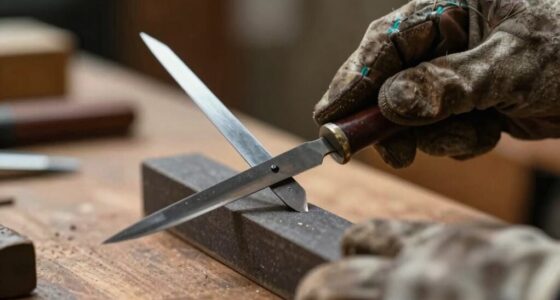
Begin by positioning your blade on a stable, flat surface. Rest your hand comfortably on the handle and focus on your wrist and arm movement. Instead of rushing, take slow, deliberate strokes, moving the blade across the sharpening stone or strop in a controlled manner. The goal is to keep the angle steady, which you can do by visualizing an approximate angle before starting. A common beginner mistake is changing the angle mid-stroke, so stay mindful of your wrist’s position and avoid twisting or tilting the blade. Over time, your muscle memory will improve, making it easier to maintain the same angle naturally. Developing a consistent technique also involves understanding the importance of edge alignment, which ensures even sharpening and a durable edge. Practicing muscle memory through repetitive strokes helps solidify your technique and enhance precision. Additionally, recognizing the role of proper technique consistency can significantly impact your sharpening results.
Maintain a steady angle with slow, controlled strokes, focusing on your wrist and muscle memory for precise freehand sharpening.
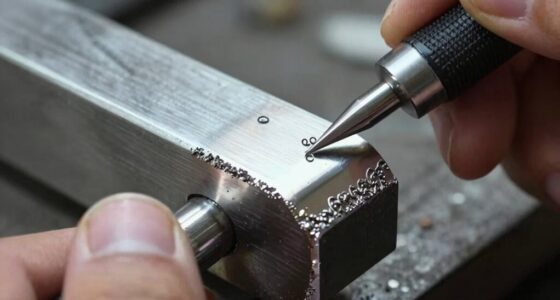
Practicing freehand techniques requires patience. You might find it helpful to mark the bevel of your blade with a light line of permanent marker. As you sharpen, you’ll see how evenly the line wears down, providing immediate feedback on your angle accuracy. If the line disappears unevenly, it’s a sign you need to adjust your technique. Focus on consistent strokes, applying gentle, even pressure, and pay attention to the feel of the blade against the stone. If you’re using a sharpening stone, keep it moist and flat to promote even sharpening. When stroking, imagine drawing the same arc repeatedly—this mental focus helps maintain the correct angle.
As you become more confident, challenge yourself by sharpening different blades and adjusting your angle slightly to suit various needs. The more you practice freehand techniques, the better your muscle memory becomes, and your angles will become more precise without the aid of gadgets. Remember, the secret to success is patience and consistent effort. With time, sharpening angles freehand will become second nature, and you’ll enjoy the satisfaction of achieving sharp edges through skill rather than tools.
manual sharpening stone for knives
As an affiliate, we earn on qualifying purchases.
As an affiliate, we earn on qualifying purchases.
Frequently Asked Questions
Can I Sharpen Angles on All Types of Blades?
Yes, you can sharpen angles on most blades using angle gauges and sharpening stones. These tools help you maintain the correct angle, whether you’re working on kitchen knives, woodworking tools, or scissors. By carefully setting the angle with gauges and honing with stones, you guarantee precise, consistent results. Just remember, some specialty blades may require specific techniques, but generally, these tools make sharpening angles accessible on a variety of blades.
How Often Should I Sharpen My Tools Manually?
You should sharpen your tools manually whenever you notice dullness or decreased performance, usually every few weeks depending on use. Regular blade maintenance keeps your tools in top shape and prevents damage. Use sharpening tools consistently to maintain a sharp edge and extend the lifespan of your blades. By staying attentive to their condition, you guarantee safer, more effective cuts and avoid unnecessary replacements, ultimately saving you time and money.
Are There Specific Techniques for Sharpening Very Steep Angles?
Yes, there are techniques for sharpening very steep angles. To maintain angle consistency and achieve sharpening accuracy, you should stabilize the tool and focus on consistent pressure and stroke angle. Use a steady hand and keep the sharpening surface aligned with the original bevel. Regularly check your angle with a simple guide or visual cues, ensuring each stroke preserves the steep bevel and results in a sharp, precise edge.
What Safety Precautions Should I Take During Manual Sharpening?
Safety first, because a stitch in time saves nine. When manually sharpening, always wear protective gear like gloves and safety glasses to shield your hands and eyes. Maintain a proper grip on your tools to prevent slips, and work in a well-lit, stable area. Keep your fingers away from the blade’s edge, and stay focused to avoid accidents. Following these precautions guarantees a safe and effective sharpening experience.
Can I Damage My Tools by Sharpening Angles Incorrectly?
Yes, you can damage your tools by sharpening angles incorrectly. Poor technique or misconceptions about sharpening can lead to uneven edges, weakened tools, or even breakage. Proper tool maintenance requires understanding the correct angle, avoiding over-sharpening, and maintaining a consistent technique. Ignoring sharpening misconceptions might cause long-term damage, so take your time, learn the right methods, and regularly inspect your tools to make certain they stay sharp and functional.
As an affiliate, we earn on qualifying purchases.
Conclusion
Now that you know how to sharpen angles without gadgets, you’re ready to tackle any tool with confidence. Did you know that 80% of tool sharpening can be done effectively with basic techniques like these? Mastering this skill saves you money and extends the life of your tools. Just remember to stay patient and practice regularly. With a little effort, you’ll keep your blades razor-sharp and ready for any project—no fancy gadgets needed.
As an affiliate, we earn on qualifying purchases.
As an affiliate, we earn on qualifying purchases.
Fall Picks
fall essentials
As an affiliate, we earn on qualifying purchases.