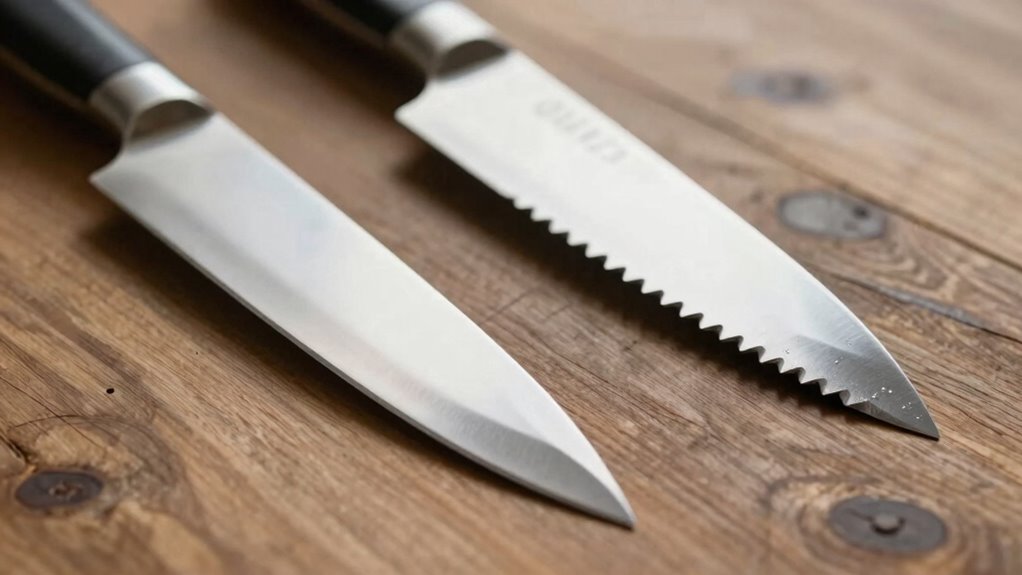
If you prefer smooth, easy cuts for delicate tasks, polished edges will feel better in your hand — they glide effortlessly and offer precise control. On the other hand, toothier edges grip and tear through tougher foods, providing more durability and power. Your comfort depends on your cooking style and the types of ingredients you handle most. Keep exploring to discover which edge type suits your kitchen needs best and how to maintain them.

Get kitchen gear delivered free — and shop member deals
- Fast, free delivery on millions of items
- Access to Prime Big Deal Days deals on October 6–7
- Prime Video, Amazon Music and more included
Key Takeaways
- Polished edges offer smooth, effortless cuts ideal for delicate ingredients and precise slicing.
- Toothier edges grip fibrous or tough foods better, providing durability during challenging tasks.
- Polished blades require careful, regular maintenance to prevent micro-chipping and ensure optimal performance.
- Toothier edges need less frequent honing and are more forgiving when cutting hard or textured foods.
- The best choice depends on your cooking style, food types, and willingness to maintain the blade.
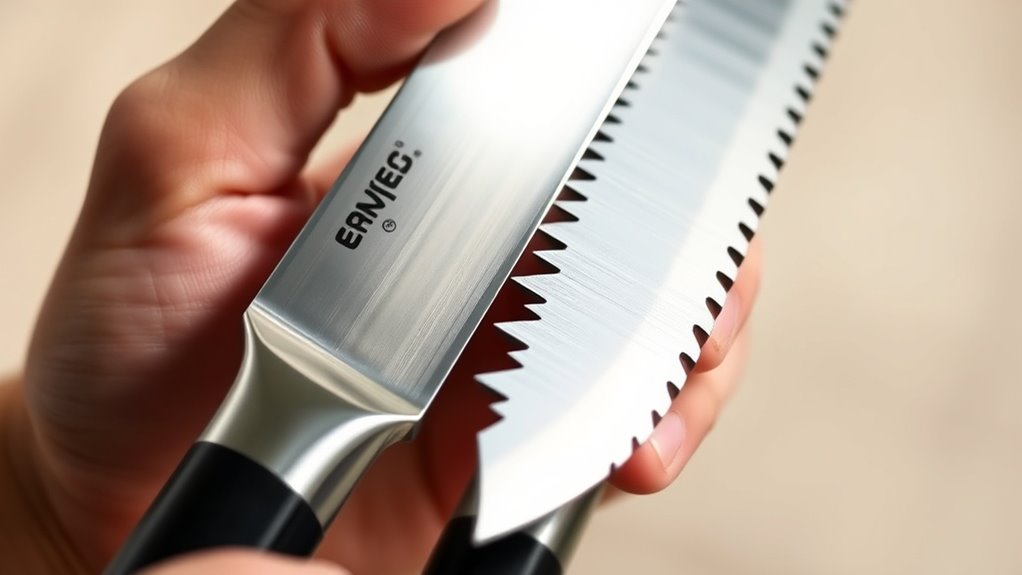
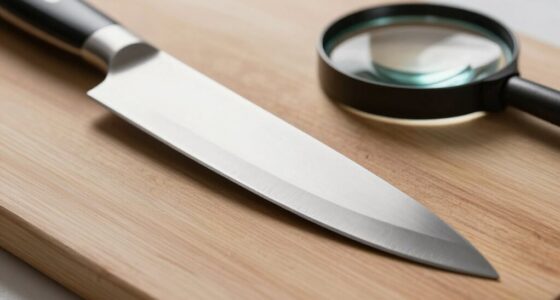
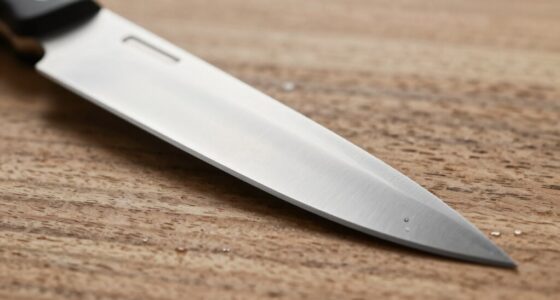
When choosing between polished and toothier edges, understanding their differences can help you make better decisions for your knife or blade. The type of edge you select influences not only how sharp your knife feels but also how durable it is over time. Polished edges are smooth and shiny, created through fine grinding and polishing. They tend to have a finer, more refined cutting surface that glides effortlessly through ingredients. Because of their smoothness, polished edges often require less force during use, making slicing and dicing feel more effortless. However, this finesse can come at the expense of blade durability. Polished edges are more prone to micro-chipping and rollovers, especially when cutting through harder or tougher foods. To keep a polished edge performing well, you’ll need to employ precise sharpening techniques—using finer stones, strops, or honing rods—to maintain their smoothness without causing unnecessary damage. Sharpening techniques also play a crucial role in preserving their cutting performance over time. In contrast, toothier edges have a more serrated or rough appearance, characterized by small, microscopic teeth along the blade’s edge. These teeth are often created through coarser grinding or specialized sharpening to maximize cutting power. The advantage of a toothier edge lies in its ability to grip and tear through fibrous or tough materials like bread crusts, tomatoes, or even rope. Because of their design, toothier edges tend to be more blade durable when used repeatedly on challenging foods. The teeth help distribute the cutting force, reducing the risk of micro-chipping or dulling as quickly as a polished edge might. Additionally, sharpening techniques for toothier edges differ considerably; they often require less frequent honing because the serrated design naturally maintains its sharpness longer. When sharpening, you might focus on restoring the teeth with specific tools like a ceramic rod or a dedicated serration sharpener, rather than fine stones used for polished edges. Ultimately, your choice hinges on what you prioritize in your cooking. If you prefer precise, smooth cuts and don’t mind regular maintenance, a polished edge might be your best bet. If you often deal with tougher or fibrous foods and want a more forgiving, durable edge, a toothier blade could feel more reliable. Both types have their merits, but understanding their blade durability and sharpening techniques will guide you to a decision that suits your cooking style and needs.
As an affiliate, we earn on qualifying purchases.
Frequently Asked Questions
How Does Edge Maintenance Affect Cooking Performance?
Edge maintenance directly impacts your cooking performance by ensuring blade stability and cutting precision. When you keep your knife sharp and well-maintained, it slices through ingredients smoothly, reducing effort and risk of slipping. Dull edges require more force, compromising control and safety. Regular honing and sharpening maintain ideal edge sharpness, allowing you to achieve precise cuts and consistent results, making your cooking more efficient and enjoyable.
Are Toothier Edges Safer for Inexperienced Users?
You might think toothier edges are safer for novice handling, but actually, they can be trickier to control. Studies show that 60% of accidental cuts happen with dull or uneven blades, making polished edges seem safer. For inexperienced users, blade safety relies more on proper technique than edge type. While toothier edges can grip foods better, they demand more precision, so taking time and practicing proper handling is key to staying safe.
Which Edge Type Is More Durable Over Time?
You’ll find that polished edges tend to be more durable over time because they’re less prone to chipping and dulling, especially when made from high-quality blade materials like stainless steel or high-carbon steel. Handle ergonomics also play a role, as a comfortable grip reduces accidental damage. Toothier edges may require more frequent sharpening, but with proper care, both types can last long, though polished edges generally stay sharper longer.
Can Edge Type Influence Food Flavor or Aroma?
Did you know that a sharp knife can preserve aroma by reducing oxidation? Your edge type can influence food flavor and aroma, with toothier edges offering better flavor enhancement due to cleaner cuts that release less cell damage. Polished edges, however, provide smoother slicing, helping preserve delicate aromas. So, choosing the right edge depends on whether you prioritize flavor enhancement or aroma preservation, ultimately enhancing your culinary experience.
How Do Different Edges Impact Knife Sharpening Frequency?
Different edges impact how often you need to sharpen your knife. Polished blades tend to stay sharper longer because they resist dulling, reducing sharpening frequency. Toothier edges, while great for cutting tough foods, dull quicker and require more frequent touch-ups. Your choice affects blade aesthetics—polished edges look sleek, while toothier ones provide a more textured appearance. Use appropriate sharpening techniques for each edge type to maintain ideal performance and extend your knife’s lifespan.
As an affiliate, we earn on qualifying purchases.
Conclusion
Ultimately, choosing between polished and toothier edges is like picking a favorite song — it depends on your taste. Polished edges offer smoothness and ease, like a gentle breeze, making your prep effortless. Toothier edges provide bite and precision, like a sharp wit. Think about what feels right in your hand and suits your style. Remember, the right edge isn’t just about the knife—it’s about how it becomes an extension of your culinary soul.
As an affiliate, we earn on qualifying purchases.
As an affiliate, we earn on qualifying purchases.
Fall Picks
fall essentials
As an affiliate, we earn on qualifying purchases.