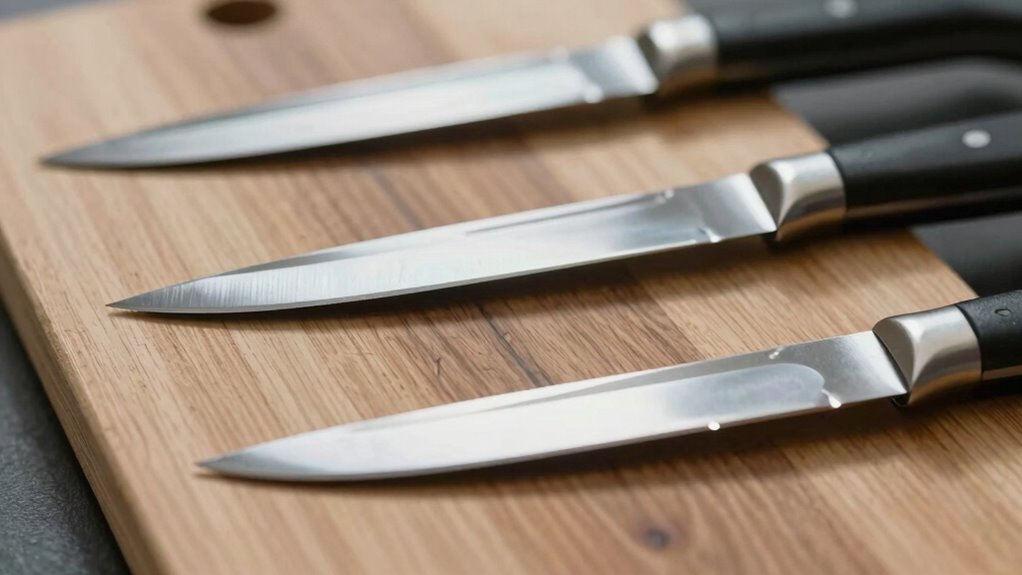

To build a simple sharpening progression, start by removing nicks and deformities with a coarse grit stone or diamond plate, creating a true, stable edge. Next, refine the shape and improve edge stability with medium grits, maintaining consistent angles and gentle pressure. Progress to finer grits for polishing, reducing microscopic serrations, and finishing with stropping to align the microstructure. Following this logical sequence will enhance your skills and extend your blade’s sharpness—if you keep exploring, you’ll master this process even better.

Get kitchen gear delivered free — and shop member deals
- Fast, free delivery on millions of items
- Access to Prime Big Deal Days deals on October 6–7
- Prime Video, Amazon Music and more included
Key Takeaways
- Start with coarse grit to remove deformations and establish a true edge.
- Progress to medium grit for refining shape and improving edge stability.
- Use finer grits to polish the edge and reduce microscopic serrations.
- Finish with stropping or polishing to align microstructure and enhance sharpness.
- Follow a logical, sequential process to build skills and maximize blade longevity.

Ever wondered how to develop an effective sharpening progression that steadily improves your skills? Building a well-structured sharpening routine isn’t just about honing your tools; it’s about understanding how each step influences edge retention and the overall longevity of your blades. A thoughtful progression allows you to refine your sharpening techniques gradually, guaranteeing that each stage prepares you for the next without risking damage or inefficiency. By establishing clear, sequential steps, you create a system that enhances your skills while maintaining the integrity of your blades.
Start with the basics. Your first step should involve removing any nicks or deformations using a coarse grit stone or diamond plate. This initial stage is essential because it establishes a true edge and prevents uneven wear down the line. When you focus on removing material efficiently, you set a solid foundation for future refinements. Once the edge is roughly aligned, you can move to medium grit stones to refine the shape and improve edge stability. This stage is critical for boosting edge retention because a well-maintained edge resists dulling longer. Proper sharpening techniques during this phase include maintaining consistent angle control and applying even pressure, which ensures the edge is both sharp and durable. Understanding how material removal impacts the sharpening process can help you achieve better results and extend the lifespan of your blades. Additionally, recognizing the role of abrasive grit in shaping and polishing the edge can further optimize your routine.
Next, progress to finer grits—say, a 4000 or 8000 grit stone—to hone the edge to a polish. This step isn’t just about aesthetics; a polished edge reduces microscopic serrations that can cause premature dulling. The more refined your edge, the better it will hold its sharpness over time, meaning less frequent sharpening and better edge retention. During this phase, focus on gentle, controlled strokes, and avoid excessive pressure that could round the edge or cause uneven wear. Additionally, understanding the importance of proper sharpening techniques can significantly impact your results and the longevity of your blades. Recognizing the role of material properties in sharpening can also help you select the appropriate tools and methods for different types of blades.
Finally, finish with a stropping or polishing step to remove any remaining burrs and align the edge’s microstructure. This last step enhances cutting performance and prolongs the time before your next sharpening. Consistent, deliberate technique here ensures you preserve the edge’s integrity, making it easier to maintain in the long run. Remember, the key to a successful sharpening progression is not rushing through the steps but understanding how each stage builds upon the previous one. This methodical approach improves your sharpening techniques, guarantees maximum edge retention, and extends the lifespan of your blades. By sticking to a logical sequence, you develop a skill set that makes sharpening faster, safer, and more effective—ultimately giving you a sharper edge that stays sharper longer.
As an affiliate, we earn on qualifying purchases.
Frequently Asked Questions
Can I Customize the Sharpening Progression for Different Types of Knives?
Yes, you can customize the sharpening progression for different knives by considering blade materials and sharpening techniques. For example, softer steels may need gentler, more frequent touch-ups, while harder steels require more precise, controlled strokes. Adjust your sharpening progression accordingly, focusing on the specific blade material and the appropriate techniques to maintain ideal edge sharpness. This tailored approach ensures each knife receives the right care for its unique properties.
What Tools Are Best for Maintaining the Sharpening Progression?
Imagine holding a sleek, precision tool that glides smoothly across your knife’s edge—these are your best allies for maintaining your sharpening progression. Sharp, fine grit stones, honing rods, and quality strops keep your blades in top shape. Regular tool maintenance, like cleaning and sharpening your tools, guarantees consistent sharpening techniques. With these tools, you’ll preserve your knife’s sharpness and extend its lifespan effortlessly, making every cut feel like slicing through butter.
How Often Should I Revisit or Adjust My Sharpening Progression?
You should revisit and adjust your sharpening progression based on sharpening frequency and how your tools respond. Typically, check your edges every few uses to guarantee they stay sharp. If you notice dullness sooner, increase sharpening frequency or add more flexibility to your progression. Regularly evaluating your tools’ performance helps you maintain ideal sharpness and adapt your progression as needed, ensuring your sharpening process remains effective and efficient.
Is It Necessary to Follow the Progression Strictly Every Time?
Only about 20% of sharpeners follow their progression precisely every time, but it’s not strictly necessary. You can vary your approach based on the blade material and sharpening angle. If a blade is softer or harder, adjusting your progression helps maintain a perfect edge. Focus on consistency within your chosen method, but don’t stress over strict adherence—adapt as needed to achieve the best results for each blade.
How Do I Troubleshoot Issues if My Knives Don’T Sharpen Properly?
If your knives don’t sharpen properly, first check for knife safety by handling blades carefully. Inspect your sharpening tools for wear or damage. Remember that sharpening myths, like needing a high angle, can cause issues—stick to recommended angles. Troubleshoot by cleaning the sharpening surface and testing on a less valuable knife. Ensuring proper technique and equipment maintenance helps resolve problems and achieves a sharper, safer blade.
As an affiliate, we earn on qualifying purchases.
Conclusion
By following this gentle sharpening progression, you’re guiding your skills along a smooth, inviting path. Think of it as tending a delicate garden, where each step helps your technique bloom naturally, without strain. As you nurture your craft with patience and care, your abilities will sharpen like a well-honed blade—quietly, beautifully, and with a touch of grace. Keep moving forward, and watch how your artistry gracefully takes shape, revealing its true brilliance over time.
As an affiliate, we earn on qualifying purchases.
As an affiliate, we earn on qualifying purchases.
Fall Picks
fall essentials
As an affiliate, we earn on qualifying purchases.