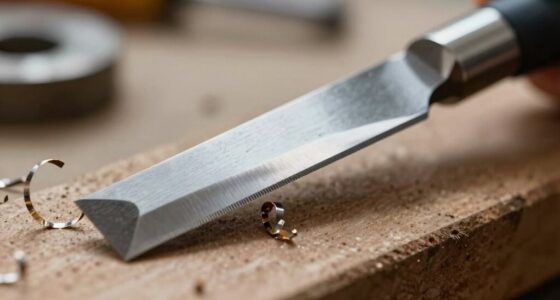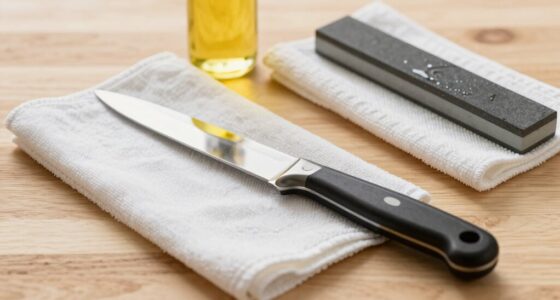
To keep your knives performing well between sharpenings, focus on honing regularly. Honing realigns the microscopic edge without metal removal, helping maintain sharpness and precision during daily use. Aim to hone after every few uses or before each session, using a honing rod at a 15-20° angle with gentle strokes. Recognizing when to sharpen involves noting increased effort or uneven cuts. Following proper techniques and safety tips will prolong your blade’s lifespan. If you want to master the best routine, keep exploring these tips.
Key Takeaways
- Regular honing aligns the microscopic edge, maintaining sharpness between sharpening sessions.
- Hone knives after every few uses or before each use for optimal performance.
- Use a honing rod at a 15-20° angle with 5-10 light strokes per side.
- Test sharpness regularly with paper or the thumb test to determine honing effectiveness.
- Proper handling, cleaning, and storage extend the benefits of honing and delay the need for sharpening.

Utopia Kitchen Knife Sharpener Rod 12 Inch, Professional Honing Rod for Knife Sharpening with Hanging Hook, Black
Premium Steel Construction – The steel rod is made of carbon steel and plated with nickel-chrome; the fine…
As an affiliate, we earn on qualifying purchases.
As an affiliate, we earn on qualifying purchases.
Understanding the Purpose of Honing and Sharpening
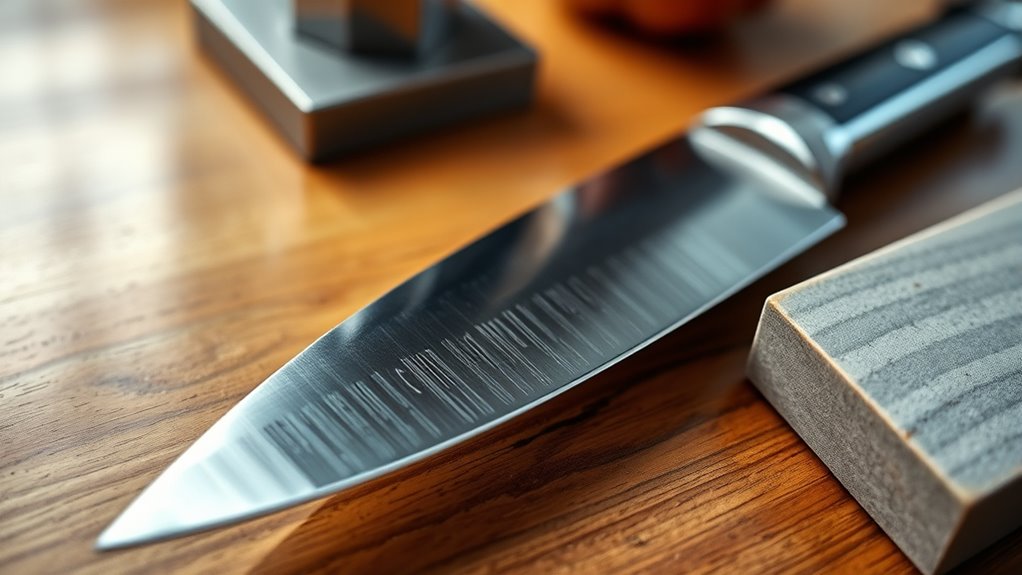
Understanding the purpose of honing and sharpening is essential to maintaining your knives effectively. Honing realigns the blade’s microscopic edge without removing metal, helping it stay sharp longer. It’s performed with a honing rod at a 15-20 degree angle, usually after each few uses. Honing corrects tiny deformities that occur during normal cutting, which keeps your knife performing smoothly. Unlike sharpening, honing doesn’t remove material; instead, it straightens the edge for better cutting precision. Regular honing prevents the edge from bending or becoming misaligned, reducing the need for more aggressive sharpening. Proper blade maintenance through regular honing extends the intervals between sharpenings, saving time and preserving metal integrity. This process is especially important for maintaining the sharpness of high-quality knives and ensuring safety during use. By incorporating honing into your routine, you maintain ideal performance and prolong your knife’s lifespan, ensuring safety and efficiency in the kitchen. This simple step is essential for keeping your knives in top condition between full sharpenings. Free floating techniques can also be employed to improve overall yard and outdoor space maintenance, contributing to a well-rounded approach to home care.

Intelitopia Complete Knife Sharpening Stone Set – Dual Grit Whetstone 400/1000 3000/8000 Knife Sharpener with Leather Strop, Flattening Stone, Bamboo Base, 3 Non-slip Rubber Bases & Angle Guide
【Complete Knife Sharpening Stone Kit】You don't need to be a Pro to sharpen your blades, all you need…
As an affiliate, we earn on qualifying purchases.
As an affiliate, we earn on qualifying purchases.
When to Use Honing for Daily Maintenance
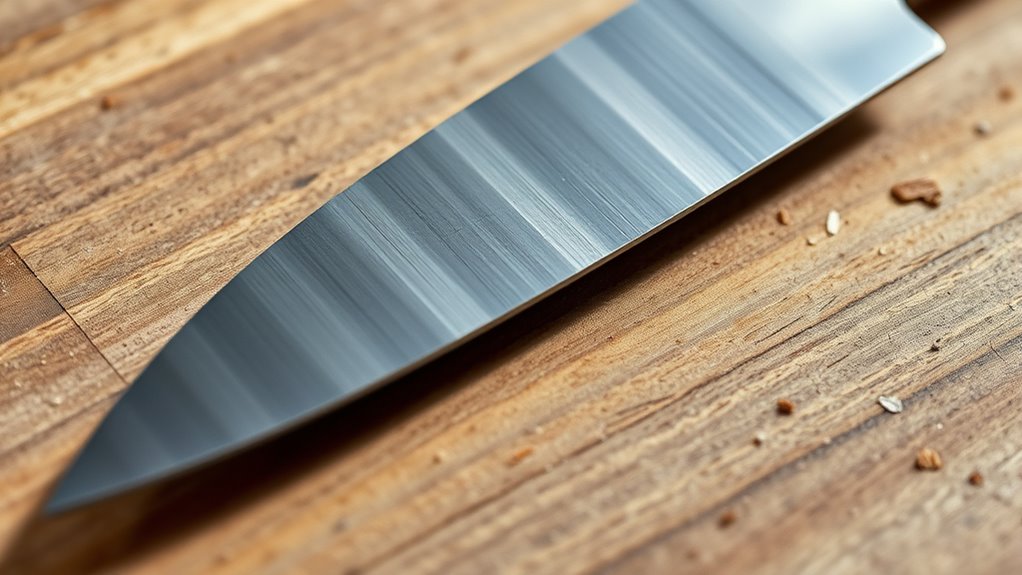
You should hone your knife regularly, ideally after every few uses or before each use, to keep the edge aligned. Look for signs like difficulty slicing or a dull feel when cutting, which indicate it’s time to hone. By maintaining a consistent honing schedule, you’ll extend your blade’s sharpness and reduce the need for more aggressive sharpening. Regular honing supports precision and automation in your kitchen tools, ensuring your knives perform at their best. Incorporating proper knife maintenance techniques can further prolong the lifespan of your blades and enhance your overall cooking experience. Additionally, utilizing smart kitchen technology, such as connected honing guides or maintenance reminders, can help automate and optimize your routine.
Proper Frequency of Honing
Honing should be part of your daily kitchen routine to maintain a consistently sharp edge. How often you hone depends on your usage, but a good rule is to hone after every few uses or before each use if possible. For most home cooks, honing once daily or every couple of days keeps the knife performing well. If you’re using your knife heavily or in demanding environments, like outdoor cooking or busy restaurants, consider honing more frequently—even daily. Regular honing realigns the microscopic edge, preventing it from bending or dulling prematurely. Keep in mind that honing isn’t a replacement for sharpening; it’s a maintenance step that extends the time between full sharpening sessions. Consistent, moderate honing helps preserve your blade’s integrity and ensures safer, more precise cutting. Using the right honing technique can significantly improve your kitchen safety and efficiency, especially when combined with proper technique and regular inspection of your knives. Incorporating routine maintenance like honing can also prolong the lifespan of your blades and enhance your overall culinary experience. Additionally, understanding the importance of regular maintenance can help prevent costly repairs or replacements over time.
Signs Indicating Need for Honing
Recognizing the signs that your knife needs honing helps you maintain ideal performance daily. When your cuts become ragged, or food resists slicing smoothly, it’s time to hone. A dull edge often causes more force, increasing fatigue and safety risks. You might notice difficulty cutting through soft items or increased slipping. To assist, here’s a quick guide:
| Sign | Indicator |
|---|---|
| Food tearing | Blade is dull or misaligned |
| Increased force needed | Edge is no longer sharp |
| Uneven cuts | Blade edge is bent or deformed |
| Resistance during cutting | Micro-deformities develop |
Honing corrects these issues by realigning your blade, restoring smoothness and precision. Regular honing keeps your knife performing at its best.

Kimura® Professional Honing Steel, 10 inch Honing Rod, Carbon Steel Knife Sharpener, Magnetized Steel, Ergonomic & Balanced Polypropylene Handle, Ideal for All Chef Knives, Japanese Gift Box
[ PREMIUM STEEL ] – The honing rod is made from a premium carbon steel that is grooved…
As an affiliate, we earn on qualifying purchases.
As an affiliate, we earn on qualifying purchases.
Recognizing Signs That Your Knife Needs Sharpening
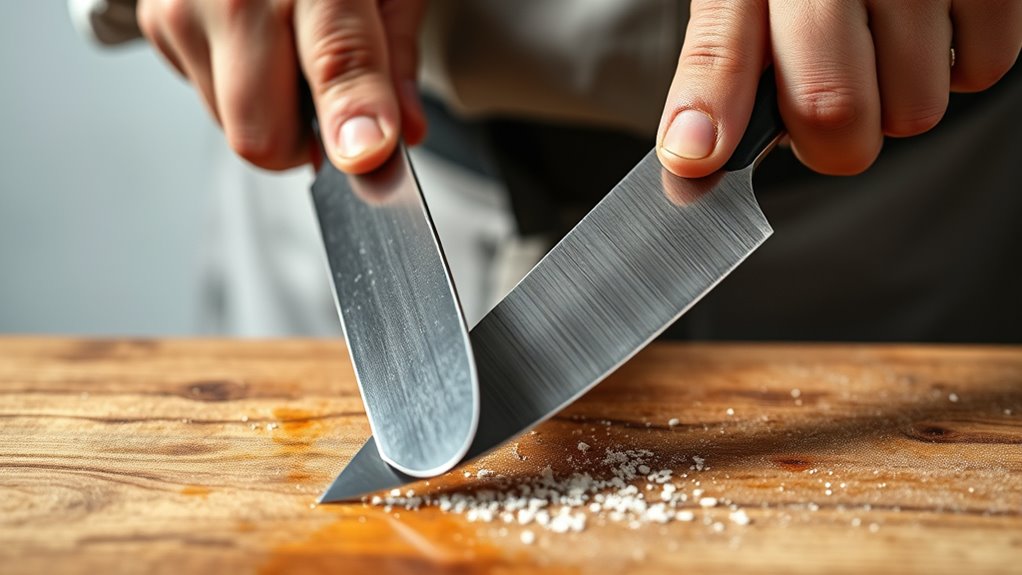
A dull knife often shows telltale signs that it’s time for sharpening, even if it still appears visually intact. You might notice increased effort when cutting or a slipping blade that’s hard to control. Food may crush instead of slice cleanly, and your cuts could become uneven. Here are some clear indicators:
- The knife glides less smoothly through food, requiring more pressure.
- It tears or crushes ingredients rather than slicing cleanly.
- You need to saw back and forth more to cut through tough items.
Additionally, a sharp edge can improve safety by reducing the risk of slips that cause injuries. If you experience any of these, it’s a sign your knife’s edge has dulled and needs sharpening to restore its performance and safety. Regular maintenance, such as honing your blades, can help maintain that razor-sharp condition longer.

Yoshihiro 100% Pure Tsubaki Japanese Knife Maintenance Oil 3.4oz(100ml) with Complimentary Sabitori Rust Eraser and Microfiber Cloth
3.4oz(100ml) Pure Tsubaki knife Oil(Camellia Oil)
As an affiliate, we earn on qualifying purchases.
As an affiliate, we earn on qualifying purchases.
Proper Techniques for Honing Your Blade
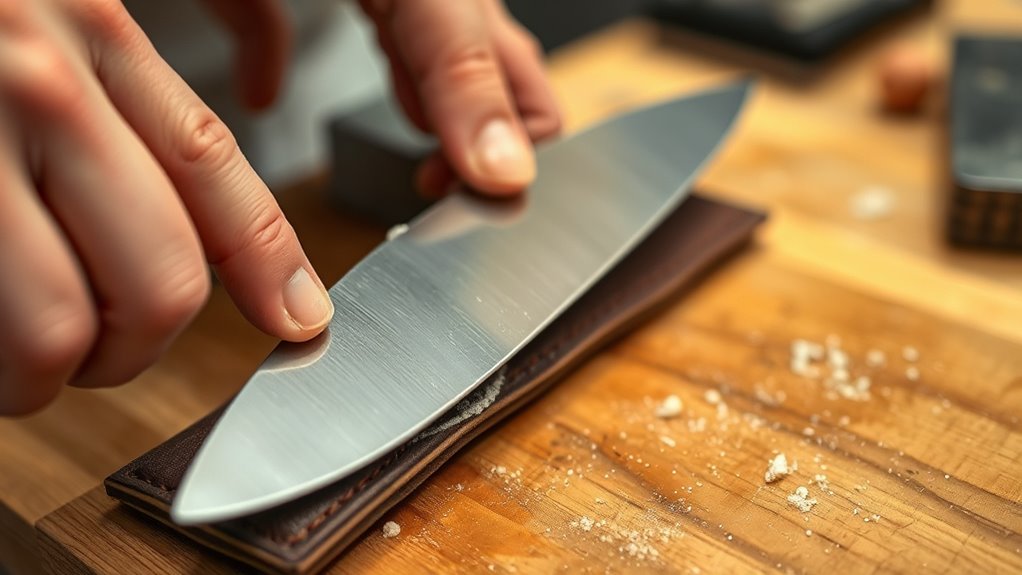
To hone your blade effectively, you need to master the correct angle, typically between 15-20 degrees, to realign the edge properly. Use gentle, controlled strokes on your honing rod, alternating sides with each pass to avoid uneven wear. Regularly test your blade’s sharpness to make sure you’re maintaining the right edge without overdoing it. Additionally, understanding care techniques can help prolong the sharpness and overall performance of your knives. Practicing proper storage methods is also essential to prevent unnecessary dulling of your blades over time and preserve their longevity. Proper cleaning practices can further prevent corrosion and maintain hygiene, ensuring your knives stay in optimal condition longer. Using high-quality shampoos for highlighted hair can also help keep your hair vibrant between salon visits, maintaining the health of your hair and preventing color fading.
Correct Honing Angle
Maintaining the correct honing angle is essential for effectively realigning your blade’s edge without removing metal. The ideal angle is typically between 15-20 degrees, depending on your knife’s design. Keeping this angle consistent guarantees efficient realignment and prolongs your blade’s sharpness. To achieve this, focus on these key points:
- Determine the correct angle based on your knife type, usually 15-20 degrees.
- Hold the honing rod firmly at this angle throughout each stroke.
- Maintain a steady, even motion from heel to tip, avoiding excessive pressure or angle variations.
Practicing consistent angles will improve your honing results, ensuring your knife stays sharp and well-aligned between sharpening sessions.
Gentle Strokes Technique
Using gentle, controlled strokes is key to effective honing. You want to avoid pressing too hard, which can damage the edge or cause uneven wear. Keep your movements smooth and deliberate, maintaining a consistent angle—usually 15-20 degrees—throughout each stroke. Start by placing the honing rod vertically, then swipe the blade from heel to tip, applying light pressure. Alternate sides with each stroke to ensure even realignment. Focus on maintaining steady, fluid motions rather than rushing through. After about 5-10 strokes on each side, check the edge’s sharpness. Remember, the goal is to gently coax microscopic deformities back into alignment without removing metal. Proper technique preserves your blade’s integrity and prevent unnecessary damage, helping you develop a consistent honing routine that keeps your knives performing their best. Regular maintenance helps prolong the lifespan of your knife and ensures optimal performance.
Consistent Blade Testing
Regularly testing your blade’s sharpness guarantees honing is effective and prevents unnecessary wear. It confirms whether your blade maintains its edge or needs further attention. To test your knife’s sharpness effectively:
- Use the paper test—try slicing through a sheet; clean cuts indicate good sharpness.
- Perform the thumb test—lightly run your thumb perpendicular to the edge; it shouldn’t feel dull or jagged.
- Check for smoothness—glide the blade along a clean, flat surface to feel for any catching or roughness.
Consistent testing helps you identify when honing is sufficient or if it’s time to sharpen. It keeps your blade performing at its best, prolongs its lifespan, and ensures safety during use. Incorporate these simple checks into your routine for the best results.
How Often Should You Hone and Sharpen?

To keep your knives performing their best, you should hone them frequently—ideally after every few uses or before each use—while sharpening is needed less often, about once every 1-2 months. Honing realigns the microscopic edge deformities that occur during regular use, maintaining cutting efficiency and preventing dullness. It only takes 5-10 strokes per side with a honing rod, making it quick and easy to incorporate into your routine. Sharpening, on the other hand, removes metal to restore a dull or damaged edge, and should be done less frequently—typically once or twice a year, or every 1-2 months if you use your knives heavily. Regular honing extends the interval between sharpening sessions, keeping your knives sharper longer and reducing the need for aggressive repairs.
Tools and Materials for Effective Honing
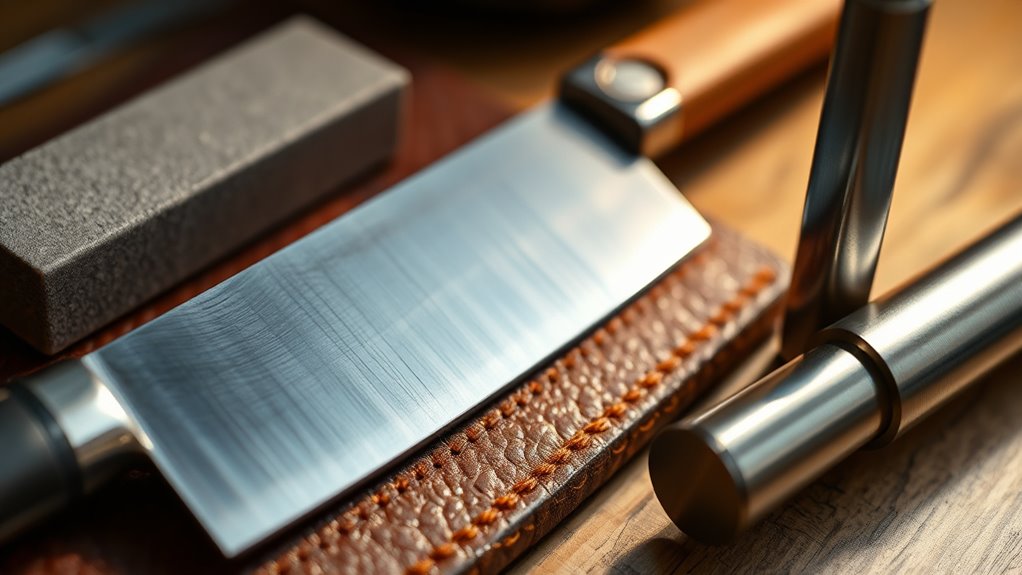
Choosing the right honing rod is essential for effective results, so consider the material and grit that match your blades. Mastering proper honing technique, like maintaining the correct angle and consistent strokes, guarantees your edge stays aligned. Regular maintenance and cleaning of your tools keep them in top shape, prolonging their effectiveness and your knife’s performance.
Honing Rod Selection
Selecting the right honing rod is essential for maintaining your knives effectively, as the tool’s material and design directly impact its ability to realign the blade’s edge. A quality honing rod should feel comfortable in your hand and match your knife’s steel type. Proper maintenance routines can prevent global disruptions from affecting your kitchen workflow. To help you choose, consider these factors:
- Material: Ceramic rods are hard and durable, ideal for fine-tuning, while steel rods are more aggressive, perfect for initial realignment.
- Grit Level: Medium grit is suitable for regular maintenance, whereas fine grit is best for polishing.
- Rod Diameter and Length: A longer, sturdy rod provides better control and covers more blade length in fewer strokes.
Select a rod that fits your use frequency and comfort to keep your knives performing at their best.
Proper Honing Technique
Effective honing depends on using the right tools and materials. Start with a quality honing rod, ideally made of steel or ceramic, and guarantee it’s clean and dry. Hold the rod vertically on a stable surface or grip it firmly at an angle. Position your knife at a 15-20 degree angle against the rod. Using consistent pressure, swipe the blade heel to tip, then switch sides. Perform 5-10 strokes per side, maintaining the same angle throughout. Keep the blade’s edge in contact with the rod without forcing it. After honing, wipe the blade clean to remove any metal particles. Using proper tools and techniques assures your knife’s edge stays aligned, prolonging its sharpness and performance.
Maintenance and Cleaning
Have you guaranteed your honing tools are clean and in good condition? Dirty or dull honing rods won’t realign your blade properly. To keep your tools effective, focus on maintenance and cleaning regularly. Additionally, ensure your honing tools are compatible with your specific knives and investment goals, much like selecting a reputable Gold IRA provider for secure retirement savings.
Common Mistakes to Avoid During Honing
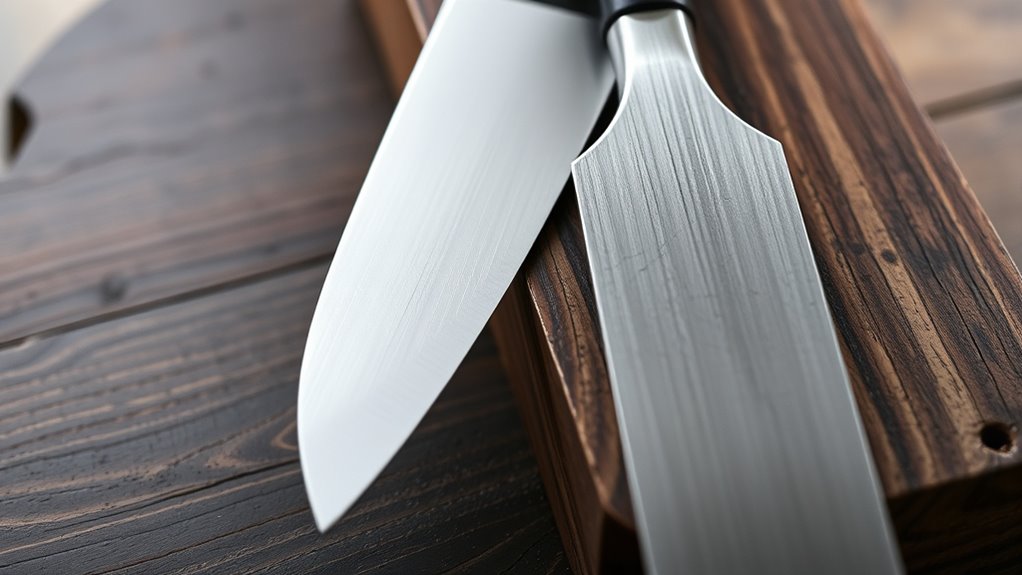
Honing is a delicate process that requires attention to technique, and mistakes can easily compromise your blade’s effectiveness. One common error is using the honing rod at the wrong angle; sticking to 15-20 degrees is vital for proper realignment. Avoid applying excessive pressure, which can bend or damage the edge instead of polishing it. Skipping sides or not alternating evenly can cause uneven honing, reducing overall sharpness. Also, neglecting to clean your blade after honing lets food particles and debris build up, dulling the edge faster. Rushing through the strokes or over-honing can wear down your edge prematurely. Remember, honing is about precision, not speed. Proper technique ensures your knife stays aligned and effective, extending its lifespan and performance. Additionally, understanding the importance of proper maintenance can help you prevent common mistakes and ensure your knives stay in optimal condition. Performing regular inspection and care routines, such as checking for burrs or chips, can further prolong the life of your blades. Incorporating regular pore minimizing routines, such as exfoliation with glycolic acid, can also contribute to healthier skin and a more polished appearance.
Extending Your Knife’s Lifespan With Regular Care
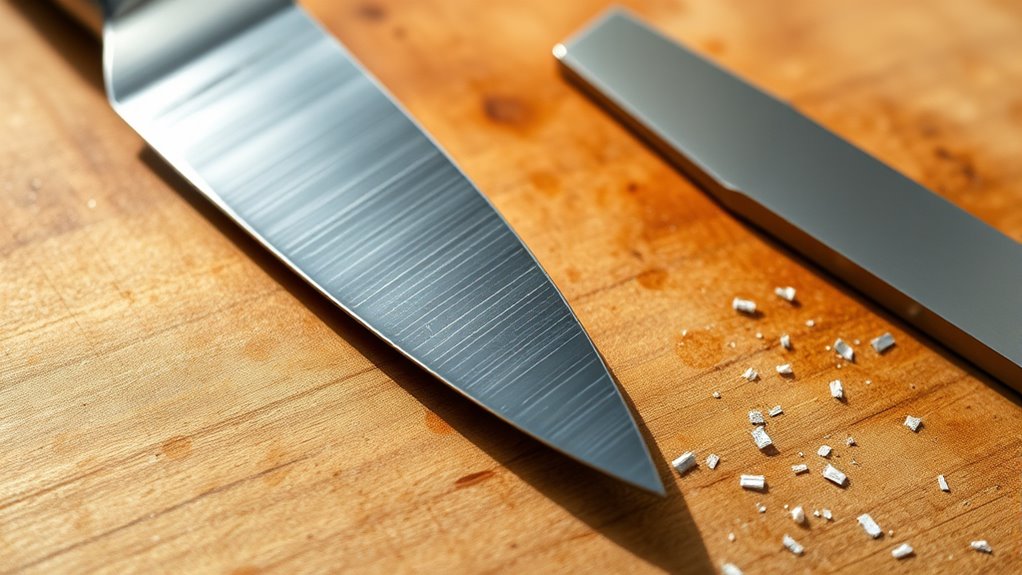
Regular maintenance plays a vital role in prolonging your knife’s lifespan and maintaining ideal performance. By incorporating simple, consistent care, you prevent damage and keep your blade sharp longer. Here are key steps to extend your knife’s life:
- Hone regularly—use a honing rod daily or after a few uses to realign the edge.
- Clean after each use—wash with mild soap, dry thoroughly, and avoid acidic foods that can corrode the steel. Proper cleaning prevents corrosion and preserves the integrity of the steel material.
- Store properly—use a knife block, magnetic strip, or sheath to prevent nicks and maintain the edge.
- Monitor your knife’s performance—if you notice decreased sharpness, consider re-evaluating your maintenance routine to ensure optimal care. Regular inspection helps identify early signs of dullness or damage, enabling timely intervention.
Following these routines minimizes wear, reduces the need for frequent sharpening, and guarantees your knife stays in top shape for years to come.
Safety Tips for Maintaining Sharp Edges
Maintaining a sharp edge on your knife is essential for safe and efficient cutting, but it also requires careful attention to avoid accidents. Always handle your knife with dry, clean hands and keep your fingers away from the blade’s edge. When honing, use a stable surface and hold the rod vertically, swiping the blade at a consistent 15-20 degree angle. Apply gentle pressure—pressing too hard can damage the edge or cause slips. After honing, test the sharpness carefully, avoiding rushing. Keep your workspace clear and store knives properly, preferably with blade guards or in a knife block. Regularly clean and dry your knife to prevent corrosion. Additionally, understanding the importance of blade angles can significantly impact your sharpening routine and overall knife performance. Following these safety tips minimizes risks and helps you maintain a sharp, reliable blade for safer, more precise cutting.
Creating a Personalized Routine for Knife Upkeep

Creating a personalized routine for knife upkeep guarantees your blades stay sharp, safe, and ready for use. To develop an effective schedule, consider your knife usage, environment, and personal preferences. Start by establishing a consistent honing routine—honing daily or after every few uses to realign the edge without removing metal. Next, set regular sharpening intervals—every 1-2 months or as needed—to address major dullness or damage. Finally, maintain your blades with proper cleaning, drying, and occasional stropping or fine stone touch-ups between sessions.
Here’s a simple guide:
- Hone after every few uses or before each use.
- Sharpen every 1-2 months or when dull.
- Clean and dry blades after each use for longevity.
Frequently Asked Questions
Can Honing Damage My Knife if Done Incorrectly?
Honing can damage your knife if done incorrectly, especially if you use the wrong angle or apply too much pressure. You might bend or dull the edge instead of realigning it. To avoid this, hold the honing rod at a consistent 15-20 degree angle and use gentle, controlled strokes. Proper technique guarantees your knife stays sharp and safe, prolonging its life without risking unnecessary damage.
Is Honing Suitable for All Types of Knives?
You might hesitate, wondering if honing suits every knife, but yes, most knives benefit from it. Whether you have a delicate paring knife or a sturdy chef’s blade, honing realigns the edge without damage. Yet, avoid honing very dull or damaged blades; they need sharpening. Regular honing keeps your knives performing smoothly, prolonging their life. Just guarantee you use the correct angle and technique to avoid unintended wear.
How Do I Know if My Knife Needs Honing or Sharpening?
You’ll know your knife needs honing if it struggles to cut smoothly or if you notice a slight dullness even after cleaning. If it’s difficult to slice through paper or food requires more pressure, it’s time for honing. However, if the blade looks visibly damaged, chipped, or fails to cut despite honing, then sharpening is necessary. Regularly check your knife’s performance to decide whether honing or sharpening is needed.
Can Honing Extend the Time Between Sharpening Sessions?
Did you know honing can extend sharpening intervals by two to three times? Yes, regular honing realigns your knife’s edge, preventing microscopic deformities from worsening. By honing after each use or several times a week, you keep your blade sharp and safe. This routine reduces the need for frequent sharpening, saving you time and maintaining your knife’s quality longer. So, stay consistent with honing to keep your knife performing at its best.
What Are the Best Tools for Effective Honing at Home?
You should use a high-quality honing rod or steel for effective honing at home. Look for one made of ceramic or stainless steel, with a comfortable handle and a smooth, even surface. Hold it at a consistent 15-20 degree angle, swipe the blade from heel to tip on each side, and do this regularly. This routine keeps your edge aligned, prolongs sharpness, and enhances overall cutting performance.
Conclusion
By maintaining a regular honing routine, you keep your knives performing like a well-oiled machine. Think of honing as a gentle brush-up that keeps your blades sharp and ready for action. When you recognize the signs and follow proper techniques, you’ll extend your knife’s lifespan and make cooking safer and more enjoyable. Keep your routine consistent, and your knives will serve you faithfully—like a trusted friend always there when you need them.