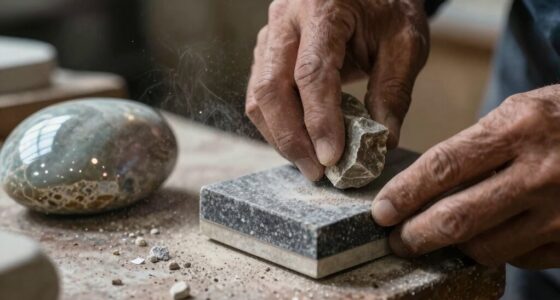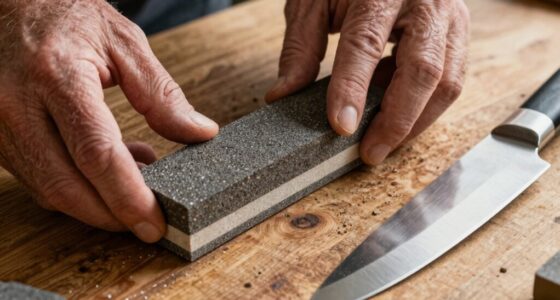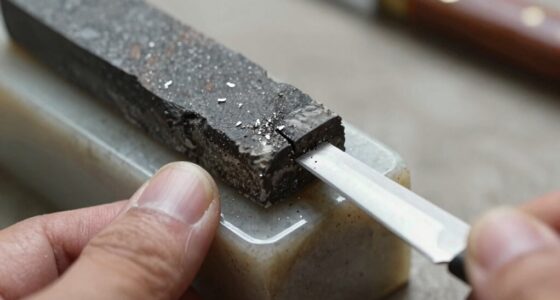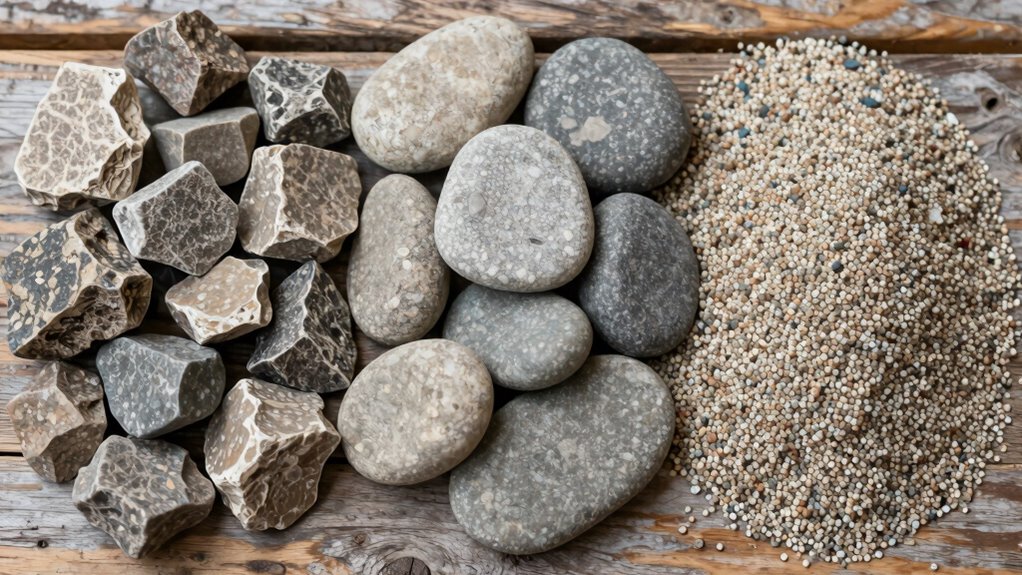

In real use, coarse stones quickly remove material, making them ideal for repairing chips or reshaping dull blades, but they leave rough scratches. Medium stones refine the edge, smoothing out scratches from coarse stones and preparing the blade for polishing. Fine stones focus on polishing and finishing with a smooth, razor-sharp edge. Understanding these differences helps you sharpen efficiently and extend your tools’ life—keep exploring to learn more about making the most of each grit.

Get kitchen gear delivered free — and shop member deals
- Fast, free delivery on millions of items
- Access to Prime Big Deal Days deals on October 6–7
- Prime Video, Amazon Music and more included
Key Takeaways
- Coarse stones rapidly remove material, ideal for repairs and reshaping dull or damaged blades.
- Medium stones balance material removal and refinement, smoothing scratches from coarse stones.
- Fine stones polish the edge, creating a smooth, razor-like finish for professional results.
- Progressing through grits ensures efficient sharpening, reducing wear and extending blade lifespan.
- Proper use involves starting coarse for heavy-duty work, then medium and fine for finishing and polishing.
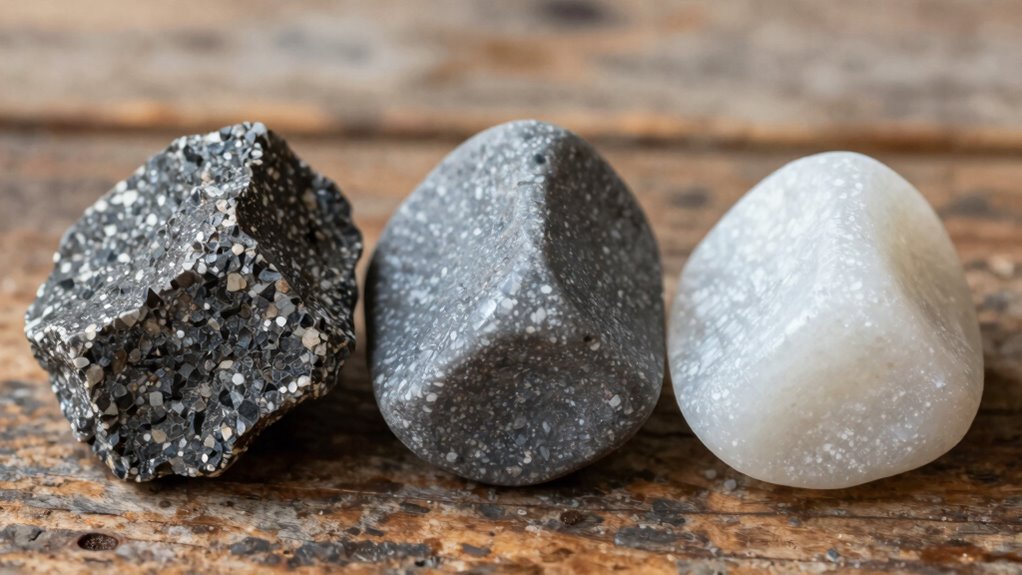
Choosing the right sharpening stone depends on understanding the differences between coarse, medium, and fine grits. Each grit type plays a crucial role in maintaining and sharpening your blades, and knowing when to use each can improve your results significantly. When you start with a coarse stone, you’re primarily removing material quickly—perfect when you need to repair chips or reshape a dull edge. Polishing techniques at this stage focus on aggressive material removal, which means sharpness is restored faster, but it takes longer to achieve a fine, polished edge. Expect longer sharpening durations if you’re working with very dull or damaged knives, as the coarse grit clears out the rough material before moving to finer stones.
Once you’ve gotten your blade to a decent edge, switching to a medium grit speeds up the refinement process. Medium stones smooth out the scratches left by the coarse grit, aligning the edge and preparing it for polishing. This step reduces sharpening durations compared to starting with a fine stone because you’re not removing as much material. Your polishing techniques here focus on refining the edge, ensuring it’s evenly aligned and sharper. It’s a balance—if you rush through this stage, your final finish might be uneven, so take your time to achieve a consistent bevel along the blade. Medium grit stones are versatile, capable of both sharpening and minor repairs, making them suitable for regular maintenance. Understanding the grit levels and their specific roles can help you plan your sharpening routine more effectively.
Finally, fine stones are all about polishing and finishing. They don’t remove much material but are essential for creating a smooth, razor-like edge. When you reach this stage, your polishing techniques should be gentle, emphasizing precise, controlled strokes to achieve a polished, professional finish. The benefit here is a significantly reduced sharpening duration because fine stones require fewer passes to hone the edge to perfection. This step is ideal for maintaining an already sharp blade or giving a finishing touch after using coarser stones. In real use, the combination of these grits ensures your knife stays sharp, durable, and ready for precise cuts. Proper grit progression is key to achieving optimal results with minimal effort. Additionally, understanding how each grit level interacts with the material can help you avoid unnecessary wear on your tools and extend their lifespan.
As an affiliate, we earn on qualifying purchases.
Frequently Asked Questions
How Do I Choose the Right Stone Grit for My Project?
To select the appropriate stone grit for your project, consider your stone maintenance needs and sharpening techniques. For removing nicks or reshaping, go coarse. For general sharpening or smoothing edges, use medium grit. Fine stones are best for honing and polishing. Matching grit to your task guarantees efficient sharpening, prolongs your stone’s life, and achieves a smooth, sharp edge. Always start coarse and progress to finer grits for ideal results.
Can I Use the Same Stone for Different Materials?
Ever wonder if one sharpening stone can handle all your tools? The answer is: it depends on stone material compatibility. Using the same stone for different materials can wear it out faster and reduce its lifespan, especially if the stone isn’t suited for certain metals or stones. To keep your stone effective and long-lasting, choose the right grit for each material, and avoid mixing incompatible materials on one stone.
How Often Should I Sharpen or Replace My Stones?
You should sharpen your tools whenever you notice a decline in cutting performance, which varies based on use frequency and material. For regular use, honing your stones every few sessions helps maintain their effectiveness. To prolong stone longevity, avoid excessive pressure and store them properly. Swap out your stones when they become too worn or cracked, as this ensures consistent sharpening results and prevents damage to your tools.
What Safety Precautions Are Needed When Using Sharpening Stones?
Like a knight guarding his sword, you must prioritize safety when using sharpening stones. Always wear safety gear, especially eye protection, to prevent chips or debris from causing harm. Handle the stone with proper techniques—keep your fingers clear of the blade’s edge, and don’t rush. Maintain a stable surface, and use controlled motions. These precautions guarantee safe sharpening, protecting you from injury while keeping your blades in top shape.
Are There Specific Storage Tips for Maintaining Stone Quality?
To sustain your sharpening stones, focus on proper stone storage and maintenance tips. Store stones in a dry, cool place, preferably in a protective case or wrapped in a cloth to prevent chipping or dirt buildup. Avoid extreme temperature changes and keep them away from moisture. Regularly clean your stones with water and a brush, and make sure they’re completely dry before storage. Proper care extends their lifespan and keeps your sharpening tools effective.
knife sharpening stone coarse medium fine
As an affiliate, we earn on qualifying purchases.
As an affiliate, we earn on qualifying purchases.
Conclusion
By mastering the differences between coarse, medium, and fine stones, you reveal the secret to flawless sharpening and precision that could turn you into a legendary craftsman. Using the wrong stone is like wielding a butterknife in a sword fight—ineffective and frustrating. So, choose wisely! Whether you’re carving mountains or just perfecting your pocket knife, understanding these stones guarantees your tools stay sharper than a hawk’s eyesight, making every task feel like an effortless breeze.
professional sharpening stone kit
As an affiliate, we earn on qualifying purchases.
As an affiliate, we earn on qualifying purchases.
multi-grit sharpening stone for knives
As an affiliate, we earn on qualifying purchases.
As an affiliate, we earn on qualifying purchases.
Fall Picks
fall essentials
As an affiliate, we earn on qualifying purchases.