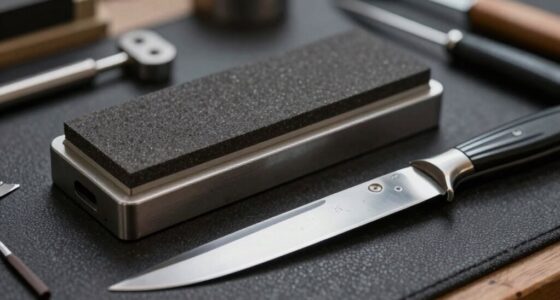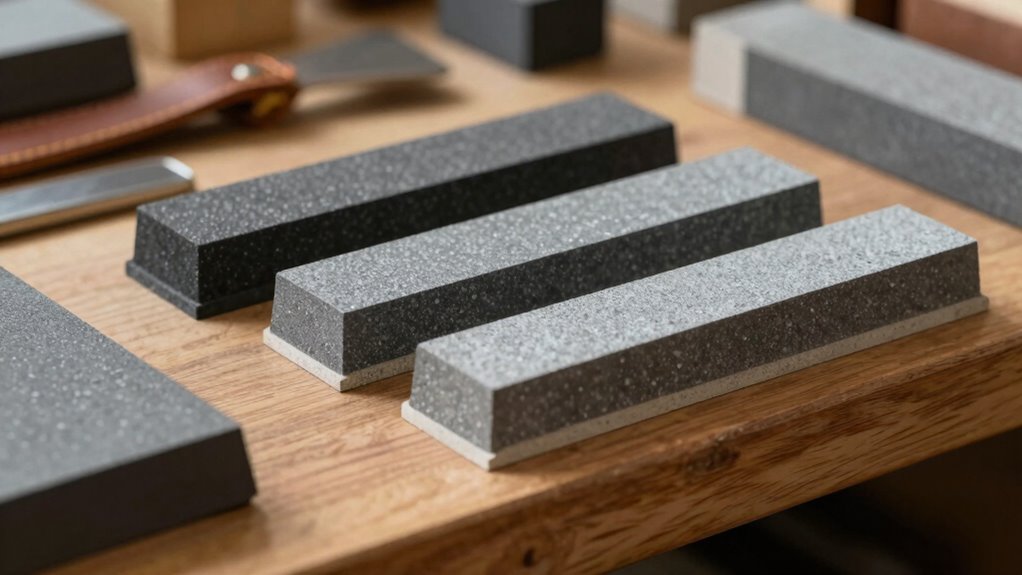

To keep your whetstones ready to use, clean them thoroughly after each use with water and a gentle brush, then let them dry completely to prevent mold or cracks. Store them in a dry, well-ventilated area away from humidity, extreme temperatures, dust, and direct sunlight. Use padded boxes or soft cloths to protect against scratches, and regularly inspect for damage. Following these tips will help you maintain their effectiveness and longevity; discover more ways to care for them effectively.

Get kitchen gear delivered free — and shop member deals
- Fast, free delivery on millions of items
- Access to Prime Big Deal Days deals on October 6–7
- Prime Video, Amazon Music and more included
Key Takeaways
- Clean and thoroughly dry whetstones after each use to prevent damage and mold growth.
- Store in a dry, well-ventilated area away from humidity, extreme temperatures, dust, and chemicals.
- Use padded boxes or soft cloths to protect stones from scratches and chips during storage.
- Regularly inspect for damage and address issues immediately to maintain surface integrity.
- Keep stones organized and protected from contamination to ensure they remain effective and ready for sharpening.

Have you ever wondered if you’re storing your whetstones correctly? Proper storage is essential to keep your tools in top shape and ensure you’re always ready to sharpen your blades effectively. When it comes to whetstone maintenance, how you store your stones directly impacts their effectiveness and lifespan. If you neglect proper storage, you risk damaging the surface, which can make sharpening techniques less effective and more difficult. To prevent this, start by cleaning your whetstones after each use with water and a gentle brush to remove metal particles and debris. Let them dry thoroughly before storing, as moisture can cause cracking or mold growth over time.
Once dry, consider the type of whetstone you have. For water stones, keep them in a dry, well-ventilated area, away from humidity and extreme temperature changes. If you use oil stones, ensure they are wiped clean of excess oil and stored in a way that prevents oil buildup or contamination. Proper storage not only protects the surface but also helps maintain consistent sharpening techniques, making your honing sessions more predictable and precise. Use a dedicated, padded box or a soft cloth to prevent scratches or chips, especially if you have multiple stones. Stacking stones can cause them to rub against each other and develop uneven surfaces, which hampers sharpening performance. Additionally, choosing the right storage environment can help prevent surface damage and preserve the integrity of the stones over time.
Store water stones in a dry, ventilated area; use padded boxes or soft cloths to prevent damage.
Another key aspect of whetstone maintenance is avoiding unnecessary exposure to dust, dirt, or chemicals that could degrade the surface. Store your whetstones in a location that’s free from clutter and away from direct sunlight, which can cause warping or fading. Exposure to extreme temperatures can negatively impact the stone’s structure, so maintaining a stable environment is crucial. Proper storage can also help prevent the buildup of contaminants, which could impair the stone’s abrasive qualities. If your stones have a coarse grit, be extra cautious, as any damage or contamination can significantly impact their ability to sharpen effectively. Regularly inspect your stones for cracks, chips, or uneven surfaces, and address issues immediately to prevent further damage. Remember that storing your stones in a stable environment will also help maintain their abrasive qualities over time.
Finally, remember that consistent sharpening techniques rely heavily on well-maintained whetstones. When you take the time to store them properly, you’re ensuring that each honing session is as effective as the last. Good storage habits contribute to better whetstone performance, reducing the need for frequent replacements and making your sharpening process more predictable and satisfying. Keep your stones clean, dry, and protected, and you’ll always be ready to bring your blades back to perfect sharpness whenever you need it.
water stone sharpening whetstone storage box
As an affiliate, we earn on qualifying purchases.
As an affiliate, we earn on qualifying purchases.
Frequently Asked Questions
Can I Store Multiple Whetstones Together Without Issues?
Yes, you can store multiple whetstones together, but keep an eye on storage humidity to prevent mold or damage. Make certain each stone is clean and dry before stacking them to avoid transferring debris or moisture. Use gentle cleaning methods like wiping with a damp cloth, and store them in a dry, well-ventilated space. This helps guarantee they stay ready to use whenever you need them, without issues.
How Often Should I Rehydrate My Whetstones During Storage?
You should rehydrate your whetstones every few weeks during storage, especially if they’re stone materials that tend to lose moisture. This helps maintain their moisture retention, ensuring they stay ready for use. Check the stones periodically; if they feel dry or lose their initial dampness, soak them again for 10-15 minutes. Proper rehydration prevents cracking and keeps your whetstones in prime condition for sharpening.
Is It Necessary to Seal Whetstones in Plastic?
Sealing moisture isn’t strictly necessary for whetstones, but it helps prevent cracking and water damage. About 85% of stone damage occurs from improper storage, often due to moisture loss or cracking. By sealing whetstones in plastic, you lock in humidity and prevent them from drying out, which keeps them ready to use longer. Just make certain the plastic isn’t airtight, allowing some breathing to avoid trapped moisture.
What Temperature Is Ideal for Storing Whetstones?
You should store whetstones at a cool, dry temperature, ideally between 50-70°F, to prevent moisture buildup. Proper moisture control is essential, so avoid damp environments that can lead to mold or stone degradation. Regular stone cleaning helps remove debris, while keeping them in a stable temperature prevents cracking. Ensuring these conditions keeps your whetstones ready for use and maintains their effectiveness over time.
Should I Store Whetstones Vertically or Horizontally?
You should store whetstones horizontally to keep them flat and prevent warping, which is crucial for effective blade sharpening and stone maintenance. Horizontal storage distributes weight evenly, maintaining the stone’s shape for consistent sharpening results. Avoid stacking stones vertically, as this can cause uneven pressure and damage. Proper storage guarantees your whetstones stay in peak condition, making blade sharpening easier and more precise every time.
padded storage case for whetstones
As an affiliate, we earn on qualifying purchases.
As an affiliate, we earn on qualifying purchases.
Conclusion
By storing your whetstones properly, you guarantee they’re always prepared to sharpen your blades, much like a gardener tending to a prized plant. Think of your stones as the silent guardians of your craftsmanship, quietly waiting in the wings for their moment to shine. With attentive care, they’ll remain reliable allies, ready to restore your tools’ edge. In doing so, you keep the spirit of mastery alive—ever vigilant, ever sharp.
As an affiliate, we earn on qualifying purchases.
whetstone cleaning and storage kit
As an affiliate, we earn on qualifying purchases.
As an affiliate, we earn on qualifying purchases.
Fall Picks
fall essentials
As an affiliate, we earn on qualifying purchases.