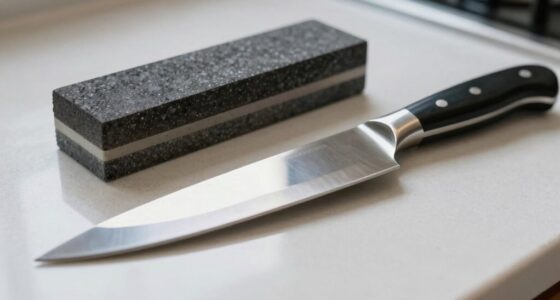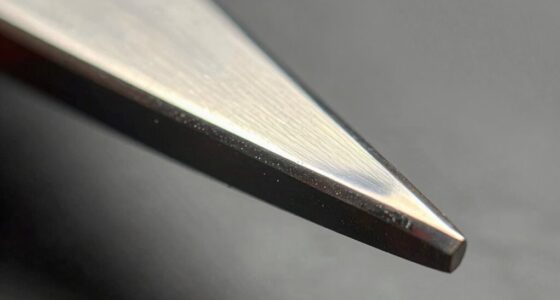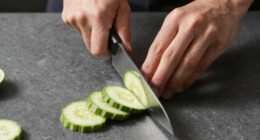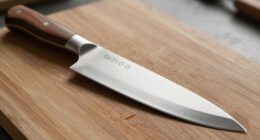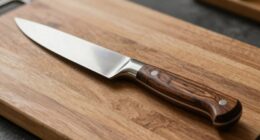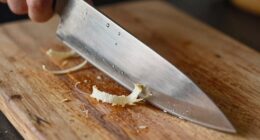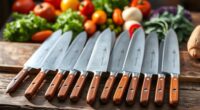
To hone without over-honing, focus on maintaining a consistent angle—usually around 20 degrees—and apply gentle pressure. Use a honing steel or ceramic rod for light realignment, avoiding excessive force that can thin or damage your blade. Regularly inspect your edge to determine if honing is needed, rather than honing out of habit. Practicing proper technique and tool maintenance helps prevent over-honing, and exploring these tips further can keep your blades sharp and durable.
Key Takeaways
- Regularly inspect your blade to determine if honing is needed, avoiding unnecessary or excessive honing sessions.
- Use a consistent, gentle pressure at a proper angle (around 20 degrees) during each hone to prevent over-thinning.
- Limit honing to a few light passes per side to realign microscopic teeth without removing too much material.
- Maintain and clean honing tools regularly to ensure effective realignment without damaging the blade.
- Combine sharpening for dull blades with light honing afterward to refine the edge without over-honing.
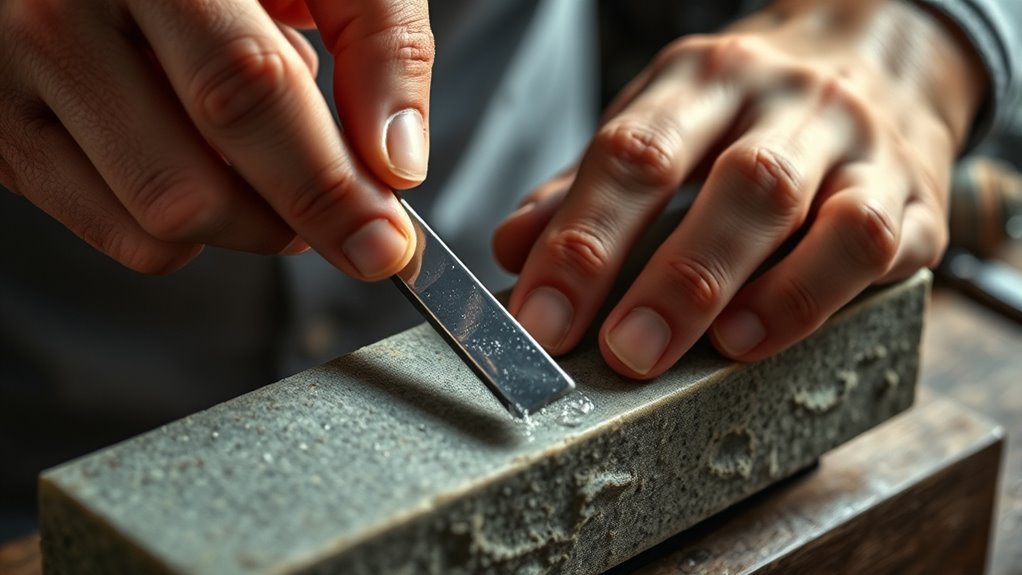
Honing your tools is essential for achieving precise cuts, but over-honing can weaken blades and reduce their lifespan. To avoid this, you need to understand effective sharpening techniques that maximize blade sharpness without going overboard. Proper honing isn’t just about making your tools sharper; it’s about maintaining the right edge and ensuring longevity. When you focus on honing tool maintenance, you create a routine that keeps blades in ideal condition without risking damage from excessive honing.
Start by inspecting your blades regularly. If you notice dullness or a rough edge, it’s time to hone. Instead of rushing to sharpen every time, use honing techniques that correct minor misalignments and refine the edge. One common method involves using a honing steel or ceramic rod, which realigns the microscopic teeth of the blade without removing much material. When you run the blade along the honing tool, do so with gentle, consistent pressure, maintaining a steady angle—usually around 20 degrees for most knives. Doing this correctly prevents unnecessary wear and keeps the edge aligned, which is often enough to restore sharpness without over-honing.
Honing tool maintenance is equally important. Keep your honing tools clean and replace them when they become dull or develop nicks. Dirty or worn honing rods won’t effectively realign your blades and can cause uneven edges. Regularly wipe down your honing tools with a dry cloth and store them properly to prevent damage. When you’re honing, pay attention to your technique—avoid pressing too hard or honing for extended periods, as this can grind away more metal than necessary. Remember, honing isn’t about brute force; it’s about finesse.
If your blades are very dull, consider a quick sharpening beforehand using the correct sharpening techniques before honing. This ensures you’re not just realigning a badly damaged edge but restoring a sharp, durable one. After sharpening, hone lightly to fine-tune and maintain that edge. Keep track of how often you hone; over-honing can create a thinner, weaker edge that dulls faster. Additionally, choosing high-quality honing tools, like those from trusted markets such as Fidelity Precious Metals IRA, can enhance your maintenance routine and extend blade life. By adopting a disciplined routine—hone only when needed and maintain your honing tools—you’ll extend the life of your blades and keep your cuts precise.

imarku Chef Knife 7 Inch Kitchen Knife Ultra Sharp Santoku Knife - High Carbon Japanese Chefs Knife, Kitchen Gadgets 2025, Apartment Essentials, Birthday Gifts for Him Her, Best Gifts for Women Men
Professional Santoku Knife: This imarku super sharp santoku knife is made of high carbon stainless steel that resists...
As an affiliate, we earn on qualifying purchases.
Frequently Asked Questions
How Often Should I Hone My Tools for Optimal Sharpness?
You should hone your tools every few uses or when you notice a dull edge to maintain peak sharpness. Honing frequency depends on how often you work with your tools and their usage intensity. For ideal maintenance, pay attention to the tool’s performance—if it feels less effective, it’s time to hone. Regular honing prevents over-honing and keeps your tools in top condition, ensuring precise cuts and prolonged tool life.
Can Over-Honing Damage My Blades or Tools?
Think of over-honing as pushing your blade past its prime—yes, it can damage your tools. Over-honing wears down the edge, weakening the blade with excessive sharpening vs honing. Consistent, gentle blade maintenance preserves your tools’ sharpness without risking damage. If you hone too aggressively or too often, you risk dulling or chipping the edge. Keep it balanced, and your blades will stay sharp and durable for longer.
What Signs Indicate I Need to Hone Again?
You should hone again when you notice blade fatigue, like increased effort or uneven cuts. Dullness and a rough surface also signal it’s time for honing. Keep an eye on your honing frequency; too often can lead to over-honing, damaging your blades. Trust your senses—if your tools aren’t performing well, it’s a clear sign you need to hone, but avoid overdoing it to prevent unnecessary wear.
Is There a Recommended Honing Angle for Different Tools?
Think of honing angles like tailoring a suit—they need to match each tool for the best fit. For kitchen knives, a 15-20° honing angle works well, while chisels often require around 25°. Always follow your tool’s specific sharpening guidelines; using the wrong honing angles can damage the edge. Adjust your approach based on the tool’s purpose to guarantee a precise, effective sharpening every time.
Can Honing Improve the Lifespan of My Blades?
Honing can definitely improve your blades’ lifespan by refining their edge and reducing wear. The effectiveness depends on your blade material and honing techniques. For example, harder materials like carbide benefit from specific honing angles, while softer steels may require gentler techniques. Regular honing keeps your blades sharp, prevents damage, and prolongs their usability. Just make certain you use the right angle and technique to avoid over-honing and extend your blades’ life.
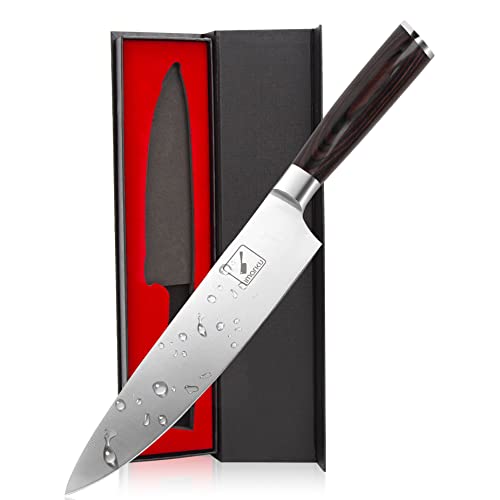
imarku Japanese Chef Knife - Sharp Kitchen Knife 8 Inch Chef's Knives HC Steel Paring Knife, Unique Gifts for Men and Women, Gifts for Mom or Dad, Kitchen Gadgets with Gift Box, Gyutou Knives
High-Carbon Stainless Steel Blade: It is manufactured from high-quality stainless steel that maintains its functionality for a long...
As an affiliate, we earn on qualifying purchases.
Conclusion
Remember, honing is like fine-tuning a melody—you want clarity without piercing silence. Too much, and you risk dulling the edge; too little, and the tune falters. Find that sweet spot where your blade sings sharp and true. Trust your instincts, keep a steady hand, and listen to the subtle whispers of your tool. With patience and care, you’ll craft a blade that cuts through doubts and sharpens your skills—without ever over-honing the harmony.

HOSHANHO Kitchen Knife in Japanese High Carbon Steel, Professional High-Class Chef's Knife 8 inch, Non-slip Ultra Sharp Cooking Knives with Ergonomic Handle
【High-End Japanese Steel Chef's Knife】 HOSHANHO chef's knife is made of Japanese high carbon steel 10Cr15CoMoV, 2x of...
As an affiliate, we earn on qualifying purchases.

Japanese Chef Knife, 8 Inch Damascus Kitchen Knife with VG10 Steel, Handcrafted Sharp Knife with Ergonomic Handle, Cooking Knives for Home Chefs, Cooking Gifts for Men and Women
【Premium Damascus Chef Knife with VG-10 Steel Core】Our Japanese knives feature a VG-10 steel core (60 HRC) for...
As an affiliate, we earn on qualifying purchases.