
If your over-polished edge slips, start by re-establishing a sharp bevel using medium grit stones, maintaining consistent angles and gentle strokes to reshape the edge. Then, refine and smooth the edge with fine stones, leather strops, or honing pastes, focusing on micro-serrations. Test the cut with paper and adjust as needed. Careful, controlled polishing restores grip and safety—continue exploring tips to perfect your sharpening technique.
Key Takeaways
- Re-establish a defined bevel using medium grit stones to reshape the edge carefully.
- Use fine stones or leather strops with polishing compounds to smooth micro-serrations and micro-roughness.
- Maintain consistent angle and gentle pressure during polishing to avoid further rounding.
- Test the edge on paper; repeat polishing if the cut slips or feels uneven.
- Regularly inspect and lightly hone the edge to prevent over-polishing and maintain sharpness.
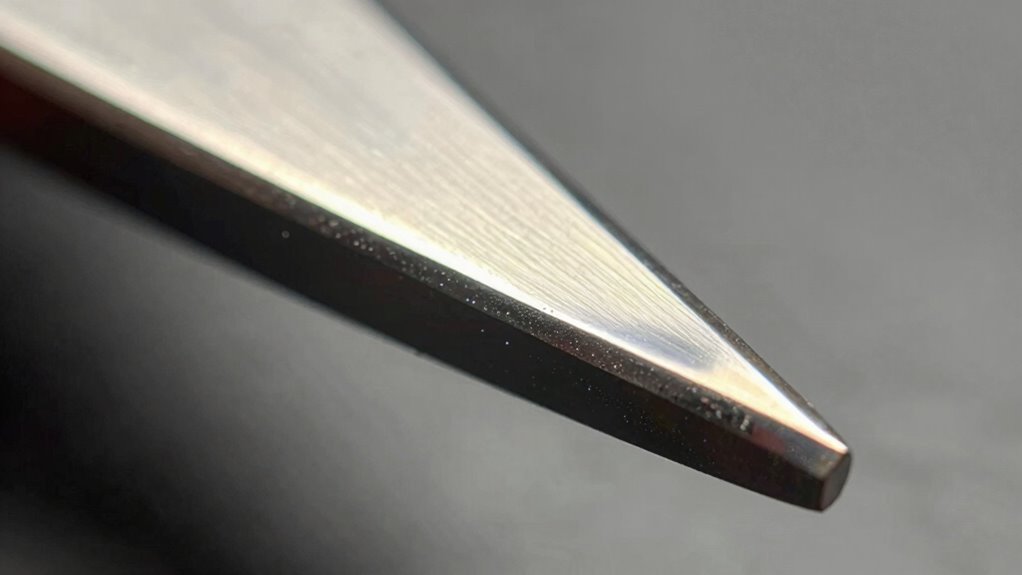
If you’ve accidentally over-polished the edge of a blade or tool, it can compromise its sharpness and overall performance. When the edge becomes too refined or rounded, it may slip during use instead of slicing cleanly. Fortunately, you can fix this issue with some targeted edge smoothing and polishing techniques. The goal is to restore a fine, yet slightly more robust edge that maintains cutting efficiency without sacrificing safety or control. Proper edge design and technique are essential for effective repair and maintenance.
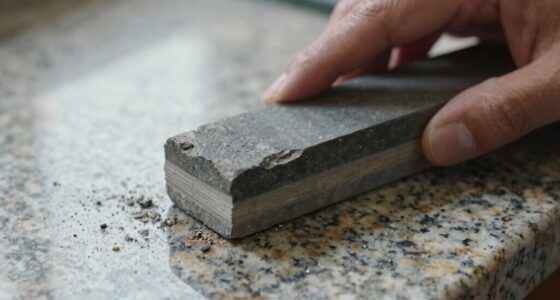
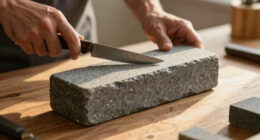
Start by evaluating how much the edge has been over-polished. If it’s just a tiny flattening or rounding, you can often correct it with careful abrasive work. Use progressively finer sharpening stones or honing films—begin with a medium grit (around 1000 to 2000 grit) to re-establish a sharper bevel. Light, controlled strokes work best here; don’t press too hard, as excessive force can further distort the edge. The idea is to gently reshape the edge while keeping the original bevel angle as consistent as possible.
Once you’ve re-established a more defined edge, it’s time for edge smoothing. This step involves refining the edge to remove any micro-serrations or uneven spots that might cause slipping. You can do this with a fine stone, leather strop, or honing paste. Use polishing techniques like stropping on a leather belt or paddle, applying a small amount of polishing compound. Hold the blade at the correct angle and pull it across the surface in smooth, even strokes. Repeat this process on both sides until the edge feels uniformly smooth and sharp. Edge smoothing isn’t about creating a razor-sharp point but about removing imperfections that cause slipping.
After polishing, test the edge carefully. A good way is to cut through a piece of paper or a similar material—if it slices cleanly without slipping, you’ve successfully restored the edge. If it still slips, repeat the polishing steps, focusing on even contact and consistent pressure. Remember, patience is key in honing and polishing. Rushing can lead to uneven edges or further damage.
In the end, maintaining your tools with proper sharpening and polishing techniques can prevent the need for extensive fixes. Regularly inspect and lightly hone your blades to keep them in prime condition. When over-polishing happens, don’t panic—by carefully smoothing and polishing the edge, you can bring it back to a functional, efficient state, ensuring safe, precise cuts every time.
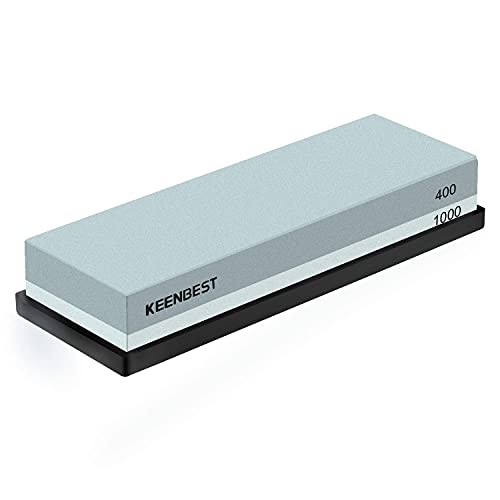
KEENBEST Actual Grit Premium Material Sharpening Stone 2 Side 400 1000 Whetstone Set Kitchen Knife Sharpener Stone Wet Stones for Sharping Knives Kit with Non-slip Rubber Base
- Premium Silicon Carbide Material: Suitable for daily sharpening and polishing
- Water-Only Use, No Oil Needed: Pre-soak 10-15 minutes for optimal use
- Universal Compatibility: Fits all types of knives and tools
As an affiliate, we earn on qualifying purchases.
As an affiliate, we earn on qualifying purchases.
Frequently Asked Questions
Can Over-Polishing Affect the Longevity of the Edge?
Over-polishing can reduce your knife’s edge durability because it removes material faster than necessary, leading to increased wear over time. When the edge becomes too thin, it’s more prone to chipping or dulling quickly, decreasing its lifespan. You should aim for a balanced polish that enhances sharpness without compromising material integrity, ensuring your edge stays effective and durable for longer periods.
Are There Specific Tools Better for Fixing Over-Polished Edges?
Think of fixing an over-polished edge like tuning a delicate instrument. You’ll want to use finer abrasive cloths to gently reshape the edge without removing too much material. Honing guides help keep your angle steady and precise. These tools work together to refine the edge, making it less slippery and more effective. Always start with less aggressive abrasives and move gradually to achieve a smooth, reliable cut.
How Do I Prevent Over-Polishing in Future Sharpening?
To prevent over-polishing in future sharpening, you should focus on maintaining your strop properly and controlling your sharpening angles. Regularly clean and condition your strop to guarantee a smooth, even surface, reducing excess polish. Additionally, pay close attention to your sharpening angles, keeping them consistent to avoid removing too much material. Practice slow, deliberate strokes to prevent over-polishing and preserve the edge’s sharpness and durability.
Is Professional Help Necessary for Severe Over-Polishing?
If your over-polished edge is severe, professional help isn’t always necessary. You might try some home remedies or DIY solutions first—like carefully re-sharpening with a finer stone or honing the edge gently. But be cautious; if these methods don’t work or the damage is extensive, consulting a pro guarantees your blade’s integrity. Don’t risk further damage—sometimes, expert intervention saves time and preserves your tool’s quality.
Can I Use Household Items to Fix an Over-Polished Edge?
Yes, you can try household remedies as DIY solutions to fix an over-polished edge. Gently rubbing the edge with a fine-grit sandpaper or a soft cloth dampened with a mild abrasive like baking soda can help smooth out the slip. Just be careful not to overdo it, and test a small area first. These simple household items often provide effective, quick fixes without needing professional help.

BeaverCraft Leather Strop for Knife Sharpening – Dual-Sided Knife Strop with Stropping Compound Kit – Honing Strop Block 14" for Woodcarving Tools, Chisel Knife Sharpening Kit Leather Sharpener LS6P1
- Leather Strop for Knife Sharpening: Ideal for beginners and professionals
- Dual-Sided Strop with Compound: Includes polishing compound for immediate use
- Ergonomic Ashwood Handle: Provides comfortable grip for all users
As an affiliate, we earn on qualifying purchases.
As an affiliate, we earn on qualifying purchases.
Conclusion
Remember, a slightly over-polished edge isn’t the end of the world. With just a little patience and the right technique, you can restore its grip and sharpness. Did you know that over-polished edges can slip up to 80% more often than properly finished ones? So, take your time, apply these tips, and you’ll be slicing smoothly again in no time. Your tools will thank you for the extra care, and your projects will turn out flawless.

Honing Compound PA70 for Use with Tormek Sharpening Grinders T-7, T-4, and T-3, and also other leather strops. Creates Razor Sharp Edges on Knives and Tools.
- Premium Quality Honing Compound: Premium quality honing compound for sharpening
- Fine Abrasive Particles: Averages 3 microns (6000-8000 grit) for polishing
- Razor Sharp Edges: Creates razor sharp edges on knives and tools
As an affiliate, we earn on qualifying purchases.
As an affiliate, we earn on qualifying purchases.

Work Sharp Precision Adjust Elite Knife Sharpener – Fixed Angle Sharpening System for Kitchen & Pocket Knives – Professional Guided Knife Sharpening Tool
- Ideal for Home and Enthusiasts: Sharpens kitchen, hunting, and pocket knives
- Adjustable Angles: Set from 15° to 30° for various knives
- Sharpens Serrated Knives: Includes ceramic rod for serrated blades
As an affiliate, we earn on qualifying purchases.
As an affiliate, we earn on qualifying purchases.