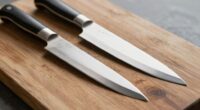
Cladding in kitchen knives layers different metals to boost durability, sharpness, and appearance. It protects the core steel from corrosion and impacts, while maintaining a fine edge for slicing. The layered design also offers aesthetic appeal with distinct patterns. Proper care extends the knife’s life and performance, making it a smart choice for long-term use. If you want to understand how these layers work together and improve your knife skills, keep exploring the details.
Key Takeaways
- Cladding layers different metals to improve durability, corrosion resistance, and aesthetic appeal of kitchen knives.
- The layered design balances a hard core for sharpness with softer outer layers for shock absorption and protection.
- Cladding enhances the blade’s resilience against chipping, impacts, and rust, extending its lifespan.
- It allows for a sharp, efficient cutting edge while maintaining overall strength and flexibility.
- Proper maintenance of clad knives preserves layered structure, ensuring consistent performance and appearance.
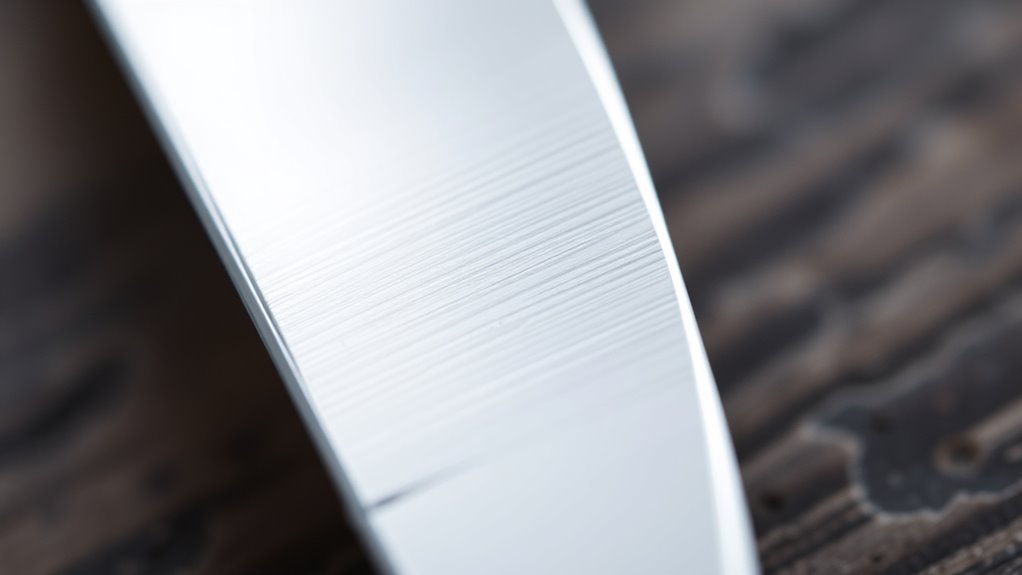
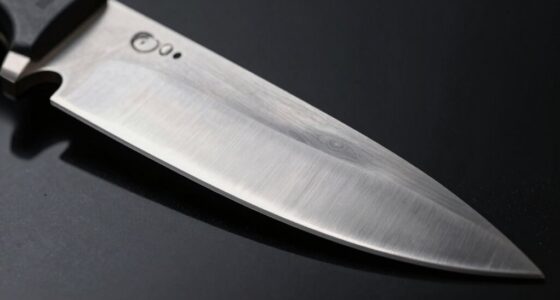
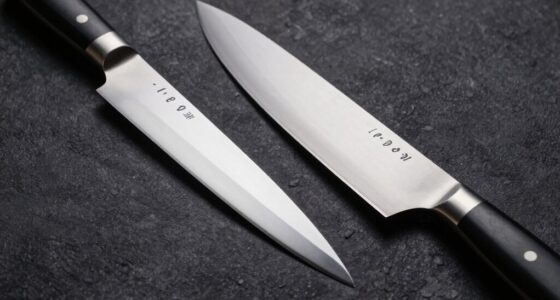
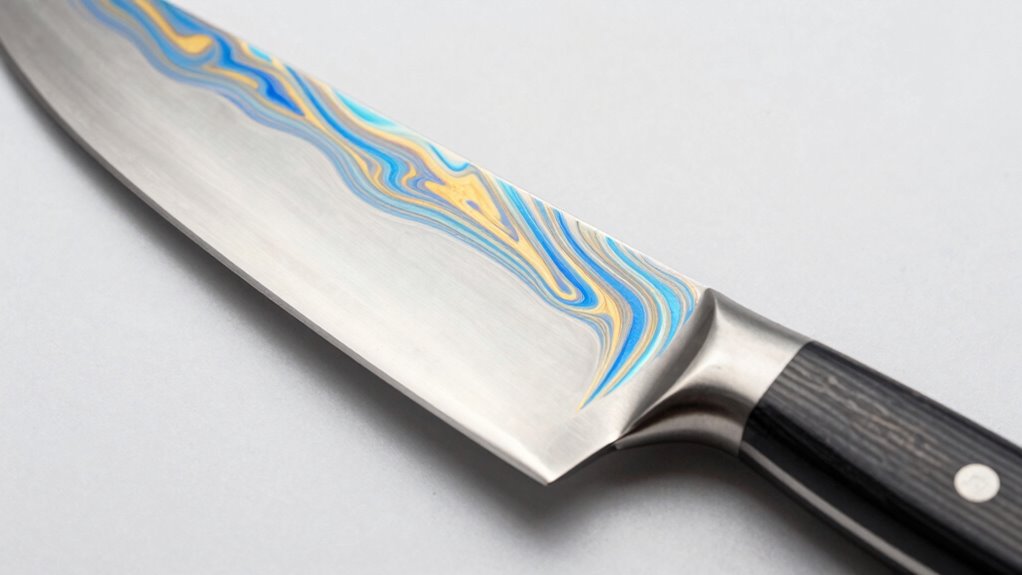
Cladding in kitchen knives refers to the process of layering different metals to enhance performance, durability, and aesthetics. When you look closely at a high-quality knife, you’ll notice a layered pattern or a distinct border between the core steel and the outer layers. This technique isn’t just for appearance; it actually plays a vital role in how well your knife performs and how long it lasts. The core, usually made of a hard, sharp steel like VG10 or VG-MAX, provides the cutting edge, while the outer layers—often softer stainless steel—protect the core and add corrosion resistance. This combination results in a blade that’s both sharp and resilient.
Cladding layers enhance kitchen knife durability, performance, and aesthetics through layered metal construction.
One of the biggest benefits of cladding is improved blade durability. The softer outer layers absorb shocks and resist chipping, which means your knife can withstand daily use without losing its edge or suffering damage. The harder core maintains a fine, sharp edge that slices through ingredients with less effort. Because of this layered structure, you don’t need to sharpen your knife as often, but when you do, it’s essential to follow proper maintenance tips. Regular honing with a steel rod can realign the edge, keeping your blade sharp longer. When sharpening, use a medium or fine grit stone, and avoid overdoing it, as excessive grinding can wear down the softer outer layers, exposing the core prematurely. Storing your knife properly—preferably in a knife block or on a magnetic strip—also prevents accidental damage to the edge.
Another key aspect of maintaining a clad knife is cleaning it properly. Hand wash your knife with warm, soapy water and dry it immediately to prevent rust or staining, especially around the joints where the layers meet. Avoid dishwasher cleaning, as harsh detergents and high heat can damage the layered structure and reduce blade durability over time. Also, steer clear of using steel wool or abrasive pads, which can scratch the layered surface and compromise its integrity. Proper maintenance extends beyond cleaning, as understanding the role of contrast ratio in your knife’s finish can help in choosing and caring for your tools effectively.
In essence, understanding how cladding contributes to a knife’s blade durability helps you make better maintenance choices. By following simple tips—such as gentle cleaning, proper sharpening, and safe storage—you’ll extend the life of your clad knife and keep it performing at its best. The layered design isn’t just about looks; it’s a smart engineering choice that balances strength, sharpness, and longevity, ensuring your kitchen tool remains a reliable part of your culinary arsenal.

HOSHANHO 16-Piece Knife Set, Japanese High Carbon Stainless Steel Kitchen Knife Set, Ultra Sharp Chef Knife Block Set with Sharpener
【Professional Knife Set】16 piece kitchen knife set includes: 8" chef knife, 8" bread knife, 8" carving knife, 7"…
As an affiliate, we earn on qualifying purchases.
As an affiliate, we earn on qualifying purchases.
Frequently Asked Questions
How Does Cladding Impact Knife Longevity?
Cladding enhances your knife’s longevity by improving blade durability and corrosion resistance. It creates a tough outer layer that guards the core steel from rust and damage, especially in humid or acidic environments. With cladding, your knife stays sharper longer and resists wear better over time. This protective layer ensures your knife remains reliable, making it easier to maintain and extending its effective lifespan in your kitchen.
Is Cladding Easier to Sharpen Than Solid Steel?
Cladded knives are generally easier to sharpen than solid steel blades because the softer outer layers wear down faster, exposing the harder core beneath. This means you can hone the edge more effectively without damaging the blade’s durability. The cladding helps maintain blade durability over time, making sharpening easier and more efficient. So, if you want a knife that’s simple to sharpen and lasts longer, cladding offers clear advantages.
What Are the Environmental Effects of Cladding Materials?
They say every cloud has a silver lining, but cladding materials can pose environmental challenges. Using eco-friendly materials helps reduce pollution and conserves resources, yet recycling cladding often faces hurdles due to mixed materials or coatings. This complicates waste management, increasing landfill waste and energy consumption. You can make a difference by choosing sustainable options, supporting recycling efforts, and advocating for better disposal methods to lessen the environmental impact of cladding.
Can Cladding Lead to Food Contamination?
Cladding in kitchen knives can potentially lead to food contamination if not properly maintained. If the cladding material wears down or chips, it might transfer particles to your food, risking contamination. To guarantee food safety, you should regularly inspect your knives for damage and clean them thoroughly. Proper maintenance and choosing high-quality cladding materials help prevent contamination, keeping your kitchen safe and hygienic during food preparation.
How Does Cladding Affect the Weight of a Knife?
Cladding can make your knife heavier, affecting blade flexibility and handle compatibility. If the cladding is thick or dense, it adds weight, which might make slicing less precise or tiring during extended use. This extra weight can also influence how well the handle fits your grip, impacting control. So, consider how the cladding’s weight and design might influence your comfort and the knife’s performance before choosing one.

Damascus Chef Knife 8 Inch, 67-Layer Japanese Kitchen Knives Sharp VG-10 High Carbon Stainless Steel with Ergonomic Pakkawood Handles, Elegant Gift Box Packaging for Home and Kitchen
Premium Design: This 8-inch chef's knife measures 13.78 inches in length, 8 inches 2.0 mm in thickness, and…
As an affiliate, we earn on qualifying purchases.
As an affiliate, we earn on qualifying purchases.
Conclusion
Understanding cladding helps you choose better kitchen knives, as it enhances durability and performance. Did you know that stainless steel-clad blades make up over 70% of professional kitchens? This shows how effective cladding is at combining toughness with precision. By paying attention to the cladding, you ensure your knife stays sharper longer and resists corrosion. So, next time you shop, remember that a well-clad blade isn’t just a trend—it’s a smart investment in your cooking.

HexClad Chef's Knife, 8-Inch Japanese Damascus Stainless Steel Blade, Pakkawood Handle
67 layers of Damascus steel for a harder blade that stays sharper longer with an ergonomic Pakkawood handle…
As an affiliate, we earn on qualifying purchases.
As an affiliate, we earn on qualifying purchases.

Damascus Chef Knife in Japanese Steel, 67-Layers Damascus Kitchen Knife with Wooden Gift Box and Original Olive Wood Handle, Cooking Knives for Home Kitchen Gift Idea
【 Japanese Steel Knife】67-layer Damascus knife with 0.98% carbon & 18% chromium content, lead hardness at 58HRC. Each…
As an affiliate, we earn on qualifying purchases.
As an affiliate, we earn on qualifying purchases.