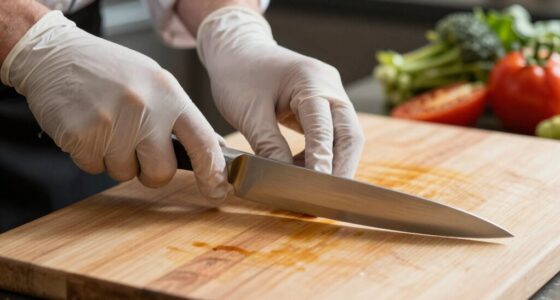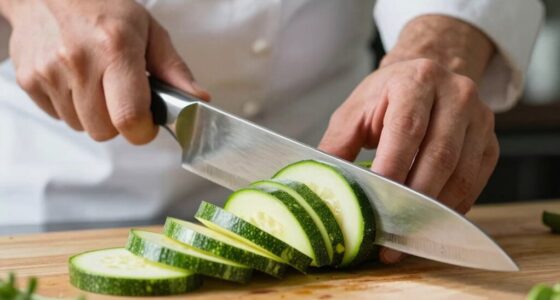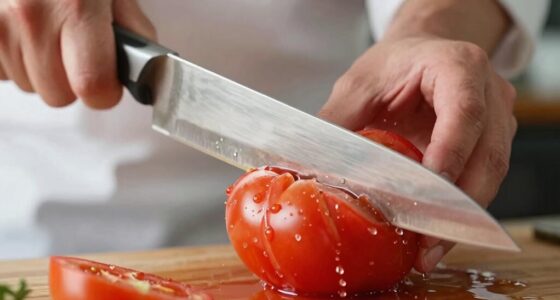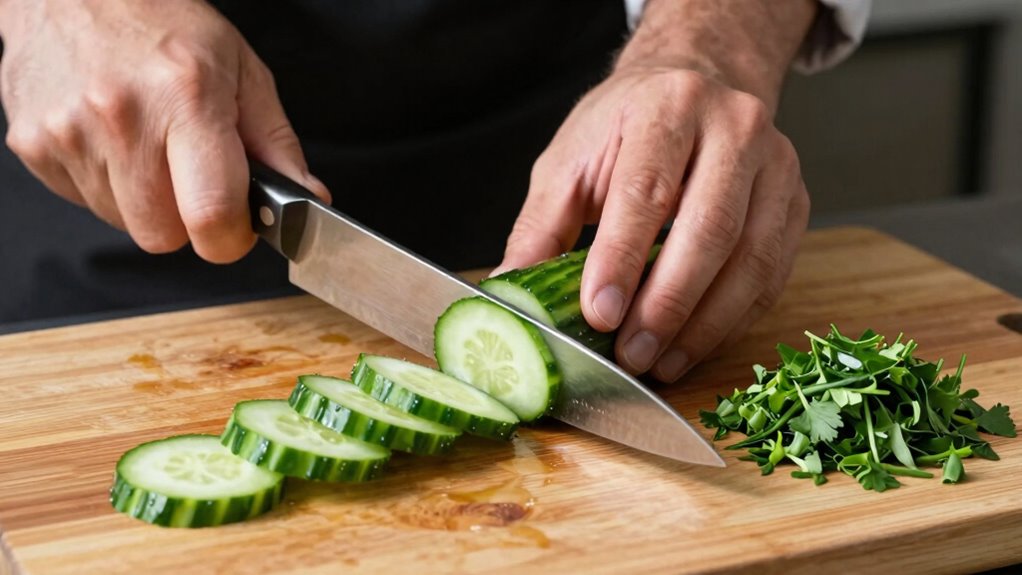
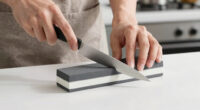
To shift smoothly between slicing and chopping, adjust your grip and hand positioning for each task. Use a lighter, delicate hold for slicing, and tighten your grip with your hand closer to the handle for chopping. Keep your fingers curled inward for safety during both actions, and stay steady with your wrist. Practice switching between the techniques regularly to develop confidence and control. Keep experimenting with these adjustments, and you’ll master seamless shifts in no time.
Key Takeaways
- Practice adjusting your grip: loosen for slicing, tighten and move hand closer for chopping.
- Maintain a steady wrist to ensure smooth transitions between techniques.
- Curl fingers inward on your guiding hand to safely switch between slicing and chopping.
- Develop muscle memory by regularly toggling between grips during prep.
- Focus on controlled movements to ensure precision and safety when changing techniques.
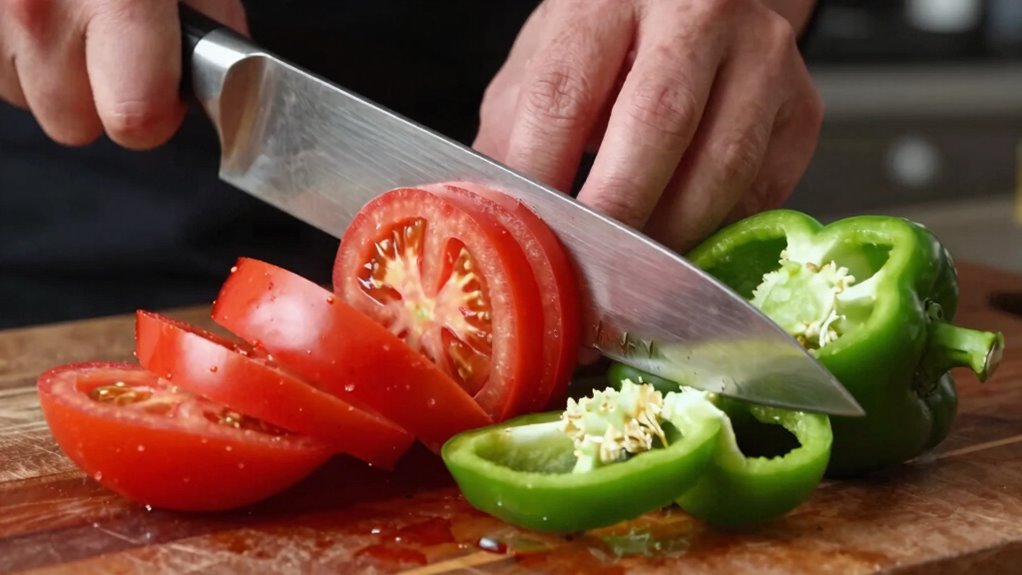
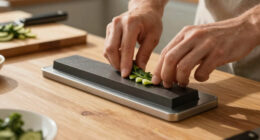
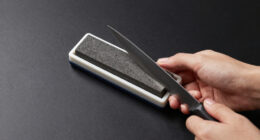
Switching between slicing and chopping might seem straightforward, but mastering the shift can greatly improve your efficiency and the quality of your cuts. The key lies in understanding how to adjust your knife grip and maintain your knife’s sharpness throughout the process. When transitioning from slicing to chopping, you’ll want to change your grip to better control your cuts. For slicing, a lighter, more delicate hold allows for smooth, even strokes, especially when working with softer ingredients like tomatoes or boneless meats. However, for chopping, you need a firmer grip that provides stability and power, allowing you to drive the knife down with confidence. To achieve this, shift your hand closer to the handle, gripping it firmly but not so tight that your hand tenses up. This adjustment gives you more control over the force and direction of your cuts, making the transition seamless. Additionally, paying attention to your knife grip and technique can significantly impact your safety and precision during these transitions. Practicing proper technique ensures consistent results and reduces fatigue over time. Regularly checking your knife sharpness is also crucial, as a dull blade demands more effort and can compromise your control. Maintaining knife sharpness is essential when switching between these techniques. A dull knife requires more force, increasing the risk of slips and uneven cuts. Regularly honing your knife with a honing steel or sharpening it with a whetstone ensures your blade remains razor-sharp. A sharp knife slices through ingredients effortlessly, whether you’re slicing thin ribbons or chopping with rapid, controlled strikes. When you switch from slicing to chopping, a sharp blade means less effort and more precision, helping you move smoothly between techniques without losing control or risking injury. Moreover, proper storage of your knives can prevent accidental dulling and damage, keeping them in optimal condition. Remember, a dull knife can lead to uneven cuts and increased fatigue, so incorporating regular maintenance into your routine is a simple yet crucial step. Proper knife maintenance extends the life of your blades and enhances your overall efficiency. As you practice transitioning, pay attention to your hand positioning and the feel of your knife. Keep your fingers curled inward on your guiding hand to avoid accidental cuts, and try to keep your wrist steady. This stability helps you exert controlled pressure during chopping, especially when working with tougher ingredients. When moving back to slicing, loosen your grip slightly to allow for more delicate, precise strokes. The more you practice toggling between these grips and maintaining your knife’s sharpness, the more natural and efficient your cutting technique will become. With time, these adjustments will become second nature, enabling you to switch effortlessly between slicing and chopping as the situation demands. Ultimately, mastering these small but important details will elevate your culinary skills and make your prep work faster, safer, and more enjoyable.

GoodCook Precision Chef's Knife 8-Inch Full-Tang & Full-Forged Bolster, Stainless Steel Forged Construction
- Blade Length: 8-inch precision fine edge blade
- Versatile Use: Suitable for all prep tasks
- Construction Material: Full forged stainless steel
As an affiliate, we earn on qualifying purchases.
As an affiliate, we earn on qualifying purchases.
Frequently Asked Questions
What Utensils Are Best for Transitioning Between Slicing and Chopping?
The best utensils for shifting between slicing and chopping are versatile, well-maintained knives like a chef’s knife or a santoku. Keep your knives sharp through regular knife maintenance to guarantee clean cuts. Focus on your cutting technique, applying different motions for slicing versus chopping. When changing tasks, simply adjust your grip and angle, and your sharp, well-maintained knife will make the switch smooth and efficient.
How Do I Prevent Cross-Contamination When Switching Techniques?
Think of your utensils as ambassadors of cleanliness, each with a duty to prevent cross-contamination. To guarantee food safety, always wash knives and cutting boards thoroughly after switching from slicing to chopping. Use separate tools for raw meats and vegetables, or sanitize between uses. This keeps contamination prevention top of mind, reducing the risk of harmful bacteria spreading. Staying vigilant protects your health and guarantees safe, delicious meals every time.
Are There Specific Cutting Boards Recommended for Both Tasks?
Yes, you should use separate cutting boards for slicing and chopping to prevent cross-contamination. Opt for color-coded boards, like green for vegetables and red for meat, to make alternative cutting techniques safer and more efficient. Additionally, choose boards with ergonomic knife handling features, such as non-slip bases, to improve safety and comfort during shifts. This setup helps you maintain hygiene and makes switching between techniques smoother.
How Can I Maintain Knife Sharpness During Frequent Transitions?
A sharp knife is your best friend in the kitchen. To sustain its sharpness during frequent shifts, focus on proper knife maintenance, like honing regularly and avoiding cutting on hard surfaces. Use correct cutting techniques—don’t press too hard or saw back and forth. This keeps the edge intact and guarantees clean cuts. Remember, a well-maintained knife makes every task easier and safer, preventing unnecessary dulling.
What Safety Tips Should I Follow When Changing Between Slicing and Chopping?
When shifting between slicing and chopping, always maintain a secure knife grip and keep your fingers curled under your knuckles to prevent accidents. Use a controlled cutting motion, avoiding sudden or forceful movements. Before changing techniques, pause to reposition your hand and knife safely. Stay focused, and guarantee your cutting surface is stable. These safety tips help you move seamlessly while minimizing the risk of slips or cuts.

Utopia Kitchen Knife Sharpener Rod 12 Inch, Professional Honing Rod for Knife Sharpening with Hanging Hook, Black
- Premium Steel Construction: Carbon steel with nickel-chrome plating
- Universal Compatibility: Suitable for all knife types
- Ergonomic Non-Slip Handle: Comfortable grip with slip-resistant base
As an affiliate, we earn on qualifying purchases.
As an affiliate, we earn on qualifying purchases.
Conclusion
Mastering the art of shifting between slicing and chopping is like dancing with your knife—fluid, graceful, and deliberate. As you move seamlessly from one technique to the next, you’ll find your confidence growing with each cut. Remember, it’s not just about the tools, but your rhythm and rhythm’s harmony. So, embrace the dance, trust your hands, and let your skills flow naturally—because in the kitchen, rhythm makes all the difference.

Right Angle Knife 2-Pack – Ergonomic L Shaped Knives with Serrated & Chopping Blades, Adaptive Kitchen Tools for Arthritis
- Ergonomic L-Shaped Handle: Minimizes wrist strain for comfortable use
- Includes Two Versatile Blades: Serrated and flat chopping blades included
- Designed for Independence: Ideal for arthritis and limited mobility
As an affiliate, we earn on qualifying purchases.
As an affiliate, we earn on qualifying purchases.
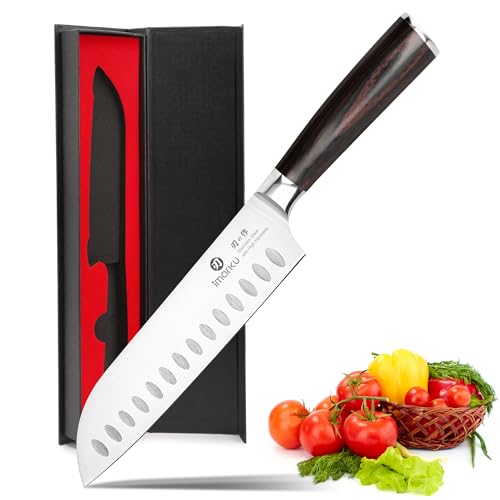
imarku Santoku Knife 7 Inch with Sharp Japanese High Carbon Stainless Steel
- Material: Japanese high carbon stainless steel
- Blade Sharpness: Ultra-sharp, 15-18° edge angle
- Blade Thickness: 2.5mm thick
As an affiliate, we earn on qualifying purchases.
As an affiliate, we earn on qualifying purchases.