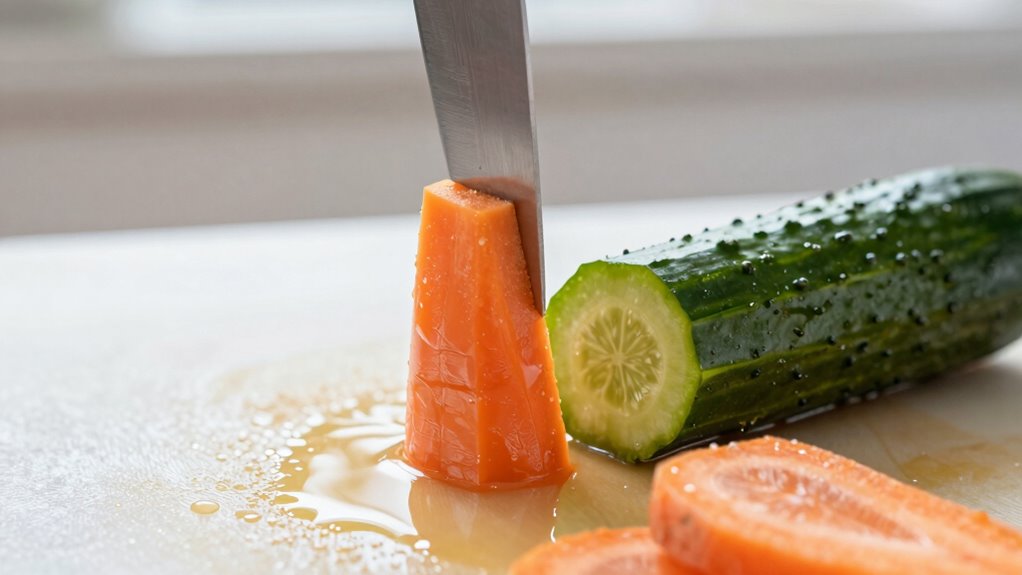
Tall ingredients expose weak cutting mechanics because they tend to shift, wobble, and slip, making it hard to control your knife. If your blades aren’t sharp or your technique isn’t steady, you’ll struggle to get even, clean cuts. Rushing or applying inconsistent pressure only worsens the problem. To improve, you need proper control, a sharp blade, and deliberate movements. Keep going to find out how mastering these fundamentals can boost your cutting skills.

Get kitchen gear delivered free — and shop member deals
- Fast, free delivery on millions of items
- Access to Prime Big Deal Days deals on October 6–7
- Prime Video, Amazon Music and more included
Key Takeaways
- Tall ingredients are more prone to wobbling, revealing instability in cutting control.
- Their height increases the likelihood of slipping or shifting during slicing.
- Inadequate technique causes uneven cuts and jagged edges on tall ingredients.
- Weak mechanics struggle to apply consistent pressure on tall, dense items.
- Proper control and sharp blades are essential to manage the instability of tall ingredients.
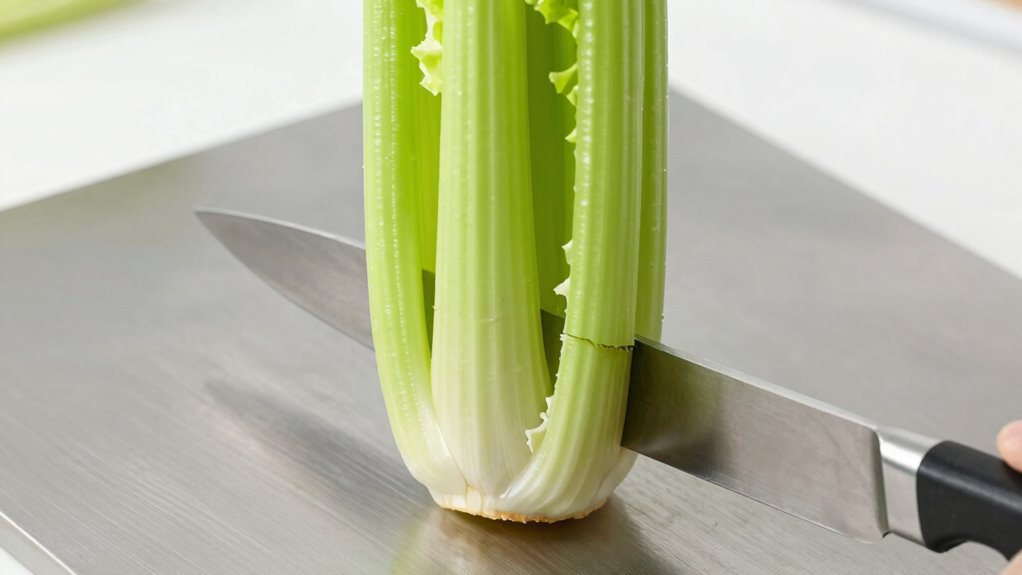
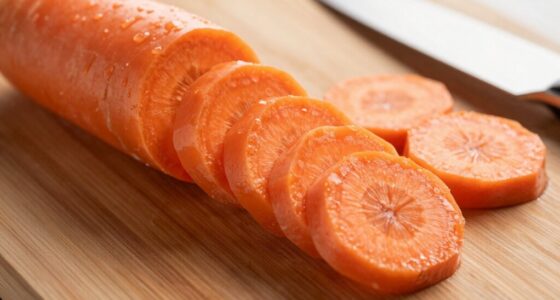
When dealing with tall ingredients, weak cutting mechanics often become painfully obvious, revealing the limitations of your knife or cutting technique. As you try to slice through vegetables like stacked celery or thick stalks of broccoli, you’ll notice that blade sharpness plays a critical role. A dull blade struggles to cut cleanly, forcing you to exert more pressure and slow down your cutting speed. This not only makes the process more laborious but also compromises the precision of your cuts. When your blade isn’t sharp enough, you’re likely to crush or tear the ingredient rather than slice through it smoothly. Tall ingredients tend to shift or wobble under your hand, exacerbating the problem. Your inability to maintain a steady, controlled motion highlights weak mechanics, making the task frustrating and inefficient. Additionally, improper cutting techniques can lead to uneven slices, which affects presentation and cooking consistency. Cutting speed is another factor that exposes poor technique when dealing with tall ingredients. When you attempt to rush through a tough stalk or a thick vegetable, your lack of proper control becomes evident. A faster cutting motion requires a confident, steady hand and a sharp blade to ensure even slices. If your technique is weak—perhaps you’re hesitant or applying inconsistent pressure—you’ll find yourself struggling to keep up with the height and density of the ingredient. The taller the ingredient, the more it demands a deliberate, precise approach. Speeding through it often results in uneven cuts, jagged edges, or incomplete slices. It also increases the risk of slipping, which could cause injury or damage to the ingredient. The key to overcoming these challenges lies in maintaining a sharp blade and adopting a confident cutting rhythm. A sharp knife reduces the force needed, allowing you to work more quickly and accurately. When your blade is crisp, you can make smooth, continuous motions, which are essential for tall ingredients. You should also focus on positioning your hand and wrist to apply consistent pressure, avoiding abrupt jerks that destabilize the ingredient or cause uneven cuts. Slow, controlled movements might seem counterintuitive, but they foster better control, especially with tall, unstable ingredients. Being mindful of cutting mechanics and how you apply pressure can significantly improve your technique. Developing good knife skills is essential for tackling challenging ingredients effectively. Moreover, practicing proper technique and control can help you become more confident and efficient in handling such tough ingredients. A well-maintained, sharp blade also plays a crucial role in ensuring safety and precision. In fact, understanding the importance of blade maintenance can further enhance your cutting performance. Ultimately, your ability to adjust your technique—keeping the blade sharp, controlling your cutting speed, and applying steady pressure—will make all the difference in successfully slicing tall ingredients. Weak mechanics become glaringly apparent when you neglect these fundamentals, but with practice, you’ll find yourself slicing through even the tallest, toughest ingredients with confidence.
sharp chef knife for precise cuts
As an affiliate, we earn on qualifying purchases.
As an affiliate, we earn on qualifying purchases.
Frequently Asked Questions
How Do Tall Ingredients Affect Overall Dish Presentation?
Tall ingredients impact your dish’s presentation by creating a striking visual balance, drawing the eye upward and adding height. They enhance ingredient aesthetics, making the dish more dynamic and interesting. However, if not carefully arranged, tall ingredients can overshadow other elements, disrupting harmony. You should consider the overall composition, using height strategically to emphasize key ingredients while maintaining a cohesive, appealing visual balance that elevates your dish’s presentation.
Can Cutting Techniques Compensate for Ingredient Height Issues?
Yes, cutting techniques can compensate for ingredient height issues. You should focus on precision slicing to guarantee uniform pieces, which helps maintain a balanced presentation. Using ergonomic techniques, like proper hand positioning and sharp knives, reduces fatigue and improves control. These methods allow you to handle tall ingredients more effectively, creating consistent cuts that enhance the dish’s appearance and overall quality despite their height.
Are There Specific Tools Better Suited for Tall Ingredients?
You’ll find specialized knives and sturdy cutting mats work wonders for tall ingredients. These tools help you navigate height challenges with ease, providing better control and precision. Opt for knives with longer, sharper blades designed for delicate yet detailed cuts. Using a quality cutting mat prevents slipping and offers stability. Together, these tools make working with tall ingredients smoother, turning a tricky task into a straightforward, enjoyable experience.
How Does Ingredient Height Influence Cooking Time?
When ingredient height increases, it can extend cooking time because taller pieces often have varied interior densities, affecting how heat penetrates. The shape consistency also matters; irregular or tall ingredients might cook unevenly, requiring more time. You should monitor internal temperature and adjust cooking duration accordingly. To guarantee even cooking, consider slicing tall ingredients into shorter, uniform pieces, which helps maintain consistent heat transfer and prevents undercooking.
What Are Common Mistakes When Cutting Tall Ingredients?
When cutting tall ingredients, you often make the mistake of uneven slicing, which affects cooking consistency. To avoid this, make sure you use a sharp knife for clean, uniform slicing. Always follow safety precautions, like keeping your fingers tucked and using a stable cutting surface. Don’t rush, and take your time to make precise cuts. This approach helps you achieve even cooking and minimizes the risk of accidents.
cutting board with grip for stability
As an affiliate, we earn on qualifying purchases.
As an affiliate, we earn on qualifying purchases.
Conclusion
Just like Icarus flying too close to the sun, tall ingredients can tempt you into overconfidence, exposing the flaws in your cutting mechanics. When you ignore proper technique, those towering veggies or fruits turn into your Achilles’ heel. Remember, even Hercules needed steady strength and careful planning. So, stay grounded, sharpen your skills, and don’t let your tall ingredients be the Achilles’ heel in your kitchen adventures. Stay sharp, and cut with confidence!
professional kitchen knife sharpening kit
As an affiliate, we earn on qualifying purchases.
As an affiliate, we earn on qualifying purchases.
ergonomic vegetable knife for tall ingredients
As an affiliate, we earn on qualifying purchases.
As an affiliate, we earn on qualifying purchases.
Halloween Picks
halloween
As an affiliate, we earn on qualifying purchases.