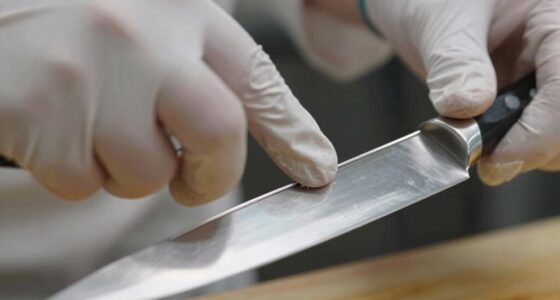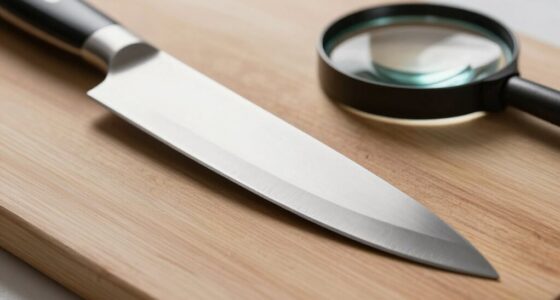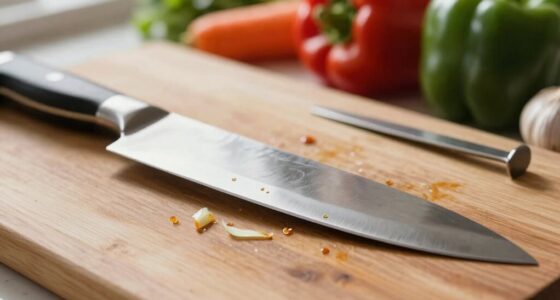
Angle guides are great for helping you maintain a consistent sharpening angle, which is key for safe, effective, and durable blades. They prevent guessing, making it easier to sharpen evenly with whetstones or honing rods. Using an angle guide can improve your knife’s performance and safety while building confidence in your sharpening skills. Plus, it helps you care for your knives better, prolonging their life. Discover more tips to perfect your technique as you keep exploring.

Get kitchen gear delivered free — and shop member deals
- Fast, free delivery on millions of items
- Access to Prime Big Deal Days deals on October 6–7
- Prime Video, Amazon Music and more included
Key Takeaways
- They ensure consistent sharpening angles for safety, effectiveness, and blade longevity.
- They simplify the sharpening process by providing a stable, accurate guide.
- They improve knife performance and safety by maintaining proper edge angles.
- They help develop skills and confidence in maintaining correct sharpening techniques.
- They promote better blade maintenance for longer-lasting, safer knives.
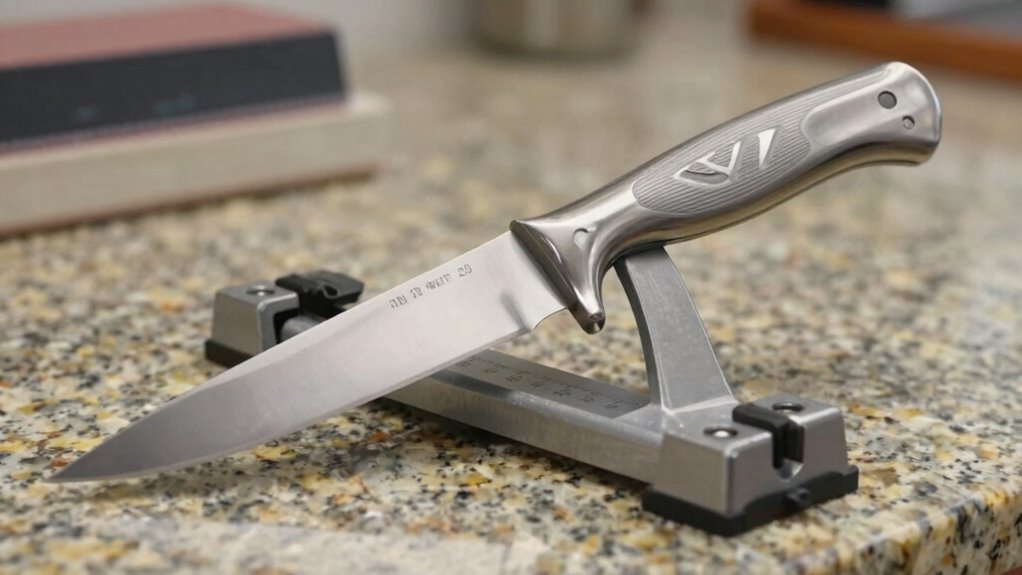
When it comes to keeping your kitchen knives sharp and safe, using an angle guide can make all the difference. An angle guide helps you establish the correct sharpening angle, which is crucial for maintaining blade safety and achieving effective sharpening techniques. Without a guide, it’s easy to accidentally tilt the blade or apply uneven pressure, which can dull the edge faster or even damage the knife. By providing a consistent angle, the guide ensures you sharpen each side evenly, preserving the integrity of the blade and extending its lifespan.
Using an angle guide simplifies the sharpening process, especially if you’re new to it. It takes the guesswork out of finding the right angle, so you don’t have to rely solely on intuition or experience. This consistency not only improves the sharpness of your knives but also reduces the risk of slipping or cutting yourself during sharpening. When your knives are sharpened at the proper angle, they cut more efficiently and safely, minimizing the effort needed during food prep. Plus, maintaining the correct angle helps prevent chips or cracks that can occur if the blade is sharpened haphazardly.
Using an angle guide ensures consistent sharpening, safer cuts, and better knife performance.
In terms of sharpening techniques, an angle guide encourages good habits by promoting uniformity. Whether you’re using a whetstone, a honing rod, or a sharpening system, an angle guide provides a stable reference point. This consistency makes your sharpening more precise, allowing you to achieve a razor-sharp edge with fewer passes. It also ensures that you don’t remove too much metal from the blade, which can weaken the edge over time. Properly sharpened blades with the right angle are safer to handle, as they’re less likely to slip during cutting. Additionally, understanding sharpening angles can help you better care for your knives and extend their lifespan. Developing a good grasp of proper sharpening techniques can also lead to more efficient and enjoyable kitchen experiences.
Another benefit of angle guides is that they help you develop a better understanding of the sharpening process. Over time, you’ll recognize the feel of the correct angle and gain confidence in your skills. This knowledge contributes to better blade maintenance overall. If you’re serious about blade safety and want to master sharpening techniques, investing in a good angle guide is a smart move. It streamlines your routine, improves the quality of your sharpening, and makes your kitchen safer. It’s also helpful to understand the correct sharpening angle for different types of knives, as this can vary depending on the blade’s purpose. Using a guide also helps you develop a consistent technique, which is essential for achieving a sharp, durable edge. As you become more familiar with the sharpening process, you’ll also gain a deeper appreciation for the importance of blade maintenance in the kitchen. Ultimately, using an angle guide is about ensuring each cut is clean, safe, and efficient, making your kitchen tasks more enjoyable and less hazardous.
As an affiliate, we earn on qualifying purchases.
Frequently Asked Questions
Can Angle Guides Be Used for Serrated Knives?
Angle guides aren’t ideal for serrated blades because they’re designed for straight edges. Using them on serrated knives can damage the teeth or hinder proper edge preservation. Instead, you should sharpen serrated blades with a specialized tool or by hand, focusing on each serration individually. This approach guarantees your serrated knives stay sharp without compromising their unique edge, helping you maintain their cutting performance longer.
How Do I Maintain and Clean My Angle Guide?
A stitch in time saves nine, so regularly maintaining your angle guide keeps your blades sharp. To clean it, remove any debris, then wipe it with a damp cloth—water lubrication helps prevent rust. Check blade alignment frequently, ensuring the guide stays true to your preferred angle. Avoid harsh chemicals, and dry it thoroughly afterward. Proper maintenance guarantees your guide remains precise and reliable, making sharpening safer and more effective.
Are Adjustable Angle Guides More Accurate Than Fixed Ones?
Adjustable angle guides offer better precision consistency compared to fixed ones, allowing you to customize the sharpening angle for different knives. This flexibility enhances user convenience, especially if you work with various blades. You can fine-tune the angle easily, ensuring consistent results every time. Fixed guides are simpler but might lack the same level of accuracy. Overall, adjustable guides give you more control, making your sharpening more precise and reliable.
What Is the Ideal Angle for Different Types of Kitchen Knives?
The ideal angle varies by knife type: 15-20 degrees for Japanese chef’s knives, and 20-25 degrees for Western ones. When sharpening, use an angle guide to maintain consistent angles, which promotes knife safety and effectiveness. Always use sharpening stones suited for your knife’s steel and angle. Correct angles prevent accidents, keep blades sharp longer, and guarantee safe handling. Regularly check your angles to maintain the best cutting performance and safety.
Can Angle Guides Help With Sharpening Asian-Style Knives?
Angle guides are like trusty compasses for sharpening Asian-style knives, helping you stay on course with precise angles. They’re invaluable for knife maintenance, ensuring consistent sharpening techniques that preserve the blade’s edge. With the right guide, you avoid uneven edges and damage. Using an angle guide makes sharpening easier, giving you confidence in maintaining your knives’ sharpness and longevity—making every cut smooth as silk.
As an affiliate, we earn on qualifying purchases.
Conclusion
Using angle guides can greatly improve your sharpening accuracy, ensuring your knives stay sharp and safe to use. They help maintain consistent angles, which is vital for the longevity of your blades. Notably, studies show that well-maintained knives can reduce cutting effort by up to 50%, making your prep work easier and safer. So, investing in a good angle guide not only sharpens your knives but also enhances your overall kitchen experience, saving you time and effort in the long run.
knife honing rod with angle guide
As an affiliate, we earn on qualifying purchases.
As an affiliate, we earn on qualifying purchases.
As an affiliate, we earn on qualifying purchases.
Fall Picks
fall essentials
As an affiliate, we earn on qualifying purchases.