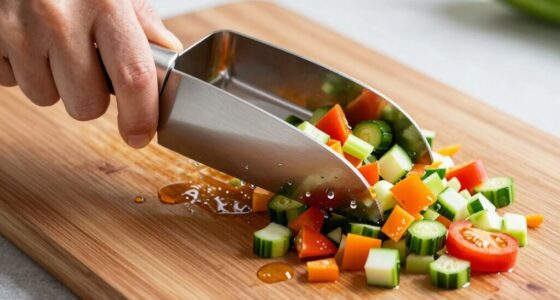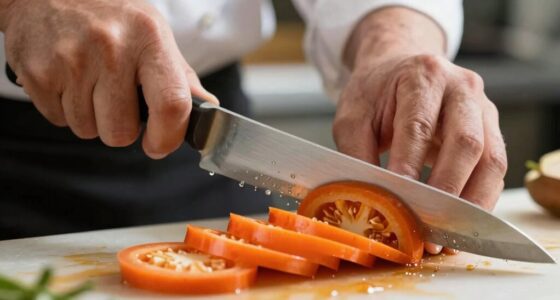
To stop twisting the knife mid-cut, make sure you’re holding it with a firm, controlled grip, wrapping your fingers securely around the handle and resting your thumb lightly on the blade for stability. Use steady, deliberate motions guided by your wrist and arm, avoiding force or rushing. Keep your knife at a consistent angle and focus on controlled cuts. Continuing with these tips will help you master safe, precise cutting techniques and improve your overall control.

Get kitchen gear delivered free — and shop member deals
- Fast, free delivery on millions of items
- Access to Prime Big Deal Days deals on October 6–7
- Prime Video, Amazon Music and more included
Key Takeaways
- Maintain a proper, secure grip to ensure stability and control during cutting.
- Use controlled, deliberate motions rather than forcing the knife through food.
- Keep the knife angle shallow and consistent to prevent twisting.
- Ensure the cutting surface is stable and food is properly positioned to reduce slipping.
- Practice regularly to build muscle memory and improve overall cutting control.
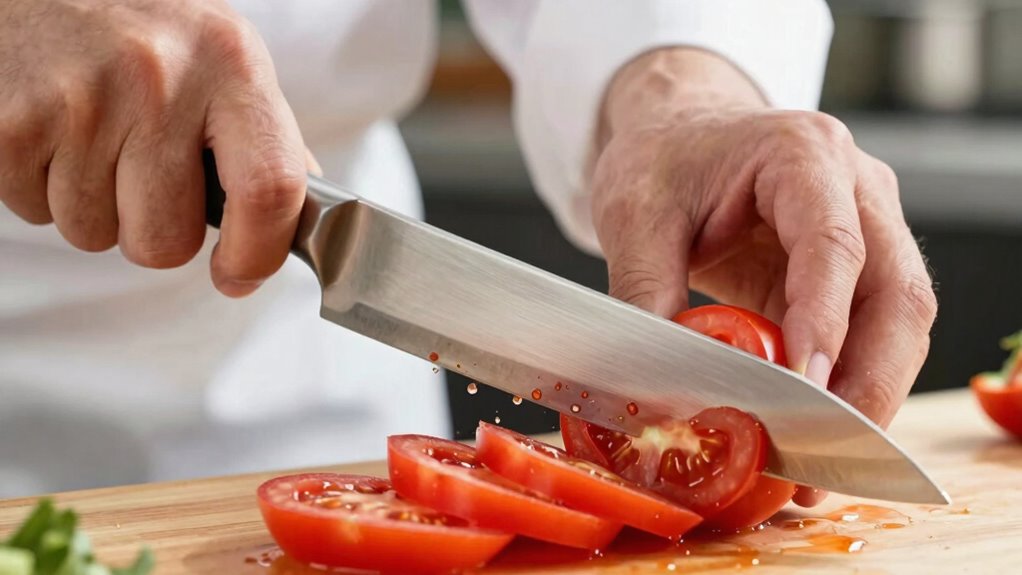
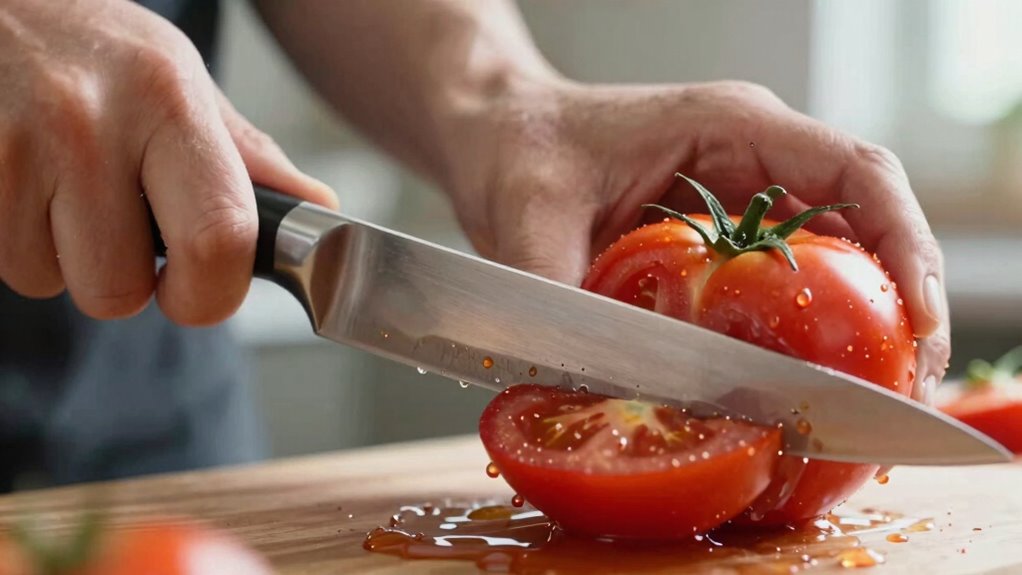
If you’ve ever found yourself twisting a knife mid-cut, you know how frustrating and dangerous it can be. That twisting often happens when your grip isn’t secure or your cutting technique isn’t providing enough control. To prevent this, you need to focus on how you hold the knife and how you approach each cut. The way you grip your knife plays a crucial role in maintaining stability and preventing unwanted twisting. A proper knife grip should feel firm but comfortable, with your fingers wrapped around the handle and your thumb resting lightly on the side or top of the blade. This grip gives you better control and helps transfer force smoothly through the knife, reducing the tendency to twist or slip.
Your cutting technique also makes a big difference. Instead of forcing the knife through food with excessive pressure, rely on a controlled, steady motion. Use your wrist and arm to guide the blade, keeping your movements deliberate and precise. When you push or pull with a consistent rhythm, you create less opportunity for the knife to twist or veer off course. Pay attention to the angle at which your knife meets the food; a shallow, consistent angle will give you more control and improve the smoothness of your cuts. Developing a good cutting motion can help you build muscle memory and improve overall technique over time. Additionally, focusing on your knife safety habits ensures you stay mindful of potential hazards during food prep. Practicing proper technique and grip consistently will help reinforce safe habits and improve your overall efficiency. Maintaining awareness of knife control techniques can further enhance your precision and safety.
Another key is to keep your cutting surface stable and secure. A cutting board with a non-slip mat underneath prevents slipping, which can cause your hand or knife to suddenly shift, leading to twisting. Make sure your food is properly prepared and positioned so it doesn’t move unexpectedly as you cut. When you’re slicing, don’t try to get through thick pieces with one heavy push; instead, use multiple lighter strokes. This approach reduces strain on your hand and gives you better control over the knife’s movement, decreasing the risk of twisting.
Practicing proper technique and maintaining a consistent knife grip can turn your cutting into a safer, more efficient process. Focus on controlled, deliberate motions rather than rushing through cuts. Keep your grip firm but relaxed, and always pay attention to your hand positioning and the angle of your cut. Proper knife grip and technique are essential for maintaining control and safety during food prep. Developing these habits through consistent practice will help you build confidence in your skills and make twisting a thing of the past. Remember, precision and control are key, and with practice, twisting will become a thing of the past.
As an affiliate, we earn on qualifying purchases.
Frequently Asked Questions
Why Do I Tend to Twist the Knife While Cutting?
You tend to twist the knife mid-cut because you’re likely not focusing on proper knife safety and cutting techniques. This habit can stem from trying to control the knife or applying uneven pressure. To fix this, practice steady, controlled cuts and guarantee your grip is firm but relaxed. Remember, using the right cutting techniques helps maintain stability, preventing accidental twisting and reducing the risk of injury.
Can Twisting the Knife Cause Damage to the Blade?
Twisting the knife can definitely cause damage to the blade, much like a knight’s sword might bend or chip in battle. It’s essential to practice proper cutting techniques and maintain your knife regularly. Twisting puts uneven stress on the blade, risking dulling or chipping. Focus on controlled, straight slicing to preserve your knife’s edge, ensuring longevity and peak performance. Proper knife maintenance and technique keep your blade sharp and effective.
Are There Specific Knives Better Suited to Prevent Twisting?
Yes, certain knives are better suited to prevent twisting. Look for knives with a sturdy, full tang construction, which offers better control and stability. Proper knife maintenance, like keeping blades sharp, reduces the need for excessive force. Additionally, refining your cutting technique—using smooth, controlled motions—helps prevent twisting and damage. Choosing the right knife and practicing proper cutting methods guarantee safer, more efficient slicing without risking blade damage.
How Does Grip Affect the Tendency to Twist the Knife?
Did you know that improper grip increases twisting by up to 40%? Your hand positioning and cutting angles directly influence this. When you hold the knife too tightly or at awkward angles, it’s harder to maintain control, leading to twisting. Keep a relaxed grip and use a natural cutting angle to enhance stability. Proper hand positioning guarantees smoother cuts and reduces the risk of twisting, making your slicing safer and more precise.
Is Twisting the Knife Dangerous or Just Annoying?
Twisting the knife can be dangerous because it compromises knife safety and increases the risk of slipping or injury. It’s also just plain annoying, disrupting your cutting techniques and making the process less efficient. To avoid this, focus on proper grip and controlled movements, which help maintain stability. Good cutting techniques not only keep you safe but also make your work smoother and more precise, preventing unnecessary twisting.
As an affiliate, we earn on qualifying purchases.
Conclusion
To prevent pain and prolong your progress, pause, plan, and practice patience. When you feel the urge to twist the knife mid-cut, take a deep breath, and gently guide your hand. Remember, patience prevents pain, precision promotes progress, and practice perfects proficiency. By calming your cues and controlling your cravings, you can conquer the challenge, cultivate confidence, and create a cleaner cut. Keep calm, control your craft, and carry on with care.
As an affiliate, we earn on qualifying purchases.
As an affiliate, we earn on qualifying purchases.
Halloween Picks
halloween
As an affiliate, we earn on qualifying purchases.