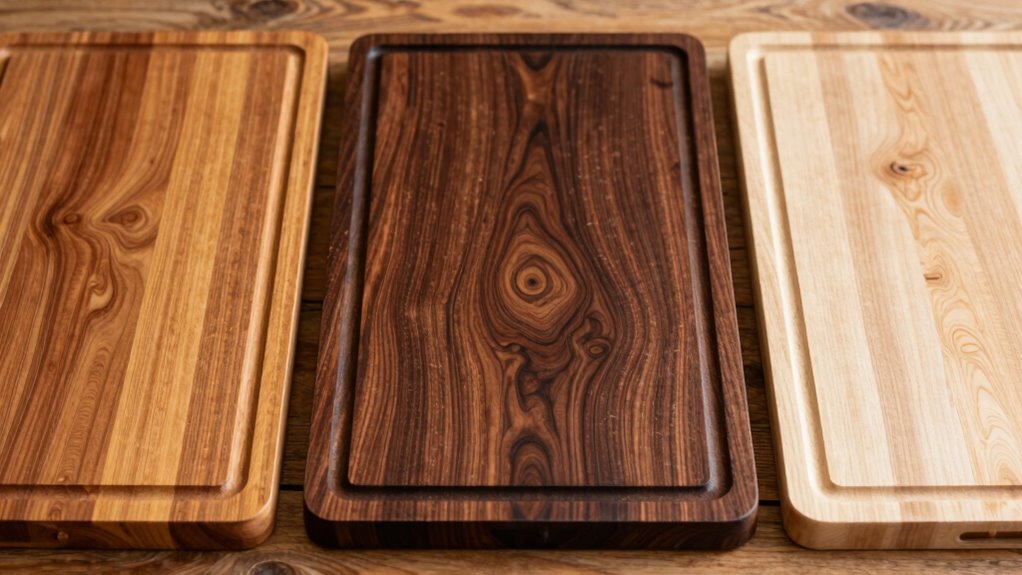
Teak, walnut, and maple each offer distinct benefits for cutting boards. Teak’s natural oils resist water and bacteria, making it durable and low-maintenance, but its hardness can dull knives faster. Walnut and maple are less resistant but easier on blades and often require more upkeep to prevent damage. If you want a durable, bacteria-resistant board, teak is ideal, but for smoother cuts and easier maintenance, walnut or maple might suit you better. To explore their differences further, keep looking closer.

Get kitchen gear delivered free — and shop member deals
- Fast, free delivery on millions of items
- Access to Prime Big Deal Days deals on October 6–7
- Prime Video, Amazon Music and more included
Key Takeaways
- Teak’s natural oils resist water and bacteria, making it highly durable and low-maintenance for cutting boards.
- Walnut and maple are less resistant to moisture, requiring more upkeep to prevent damage and bacterial growth.
- Teak’s density and hardness can dull knives faster but offer extended longevity and stability.
- Proper oiling and care are essential for all woods, especially teak, to maintain surface quality and hygiene.
- The dense grain of teak reduces cracks and warping, providing a safer and more hygienic food prep surface.
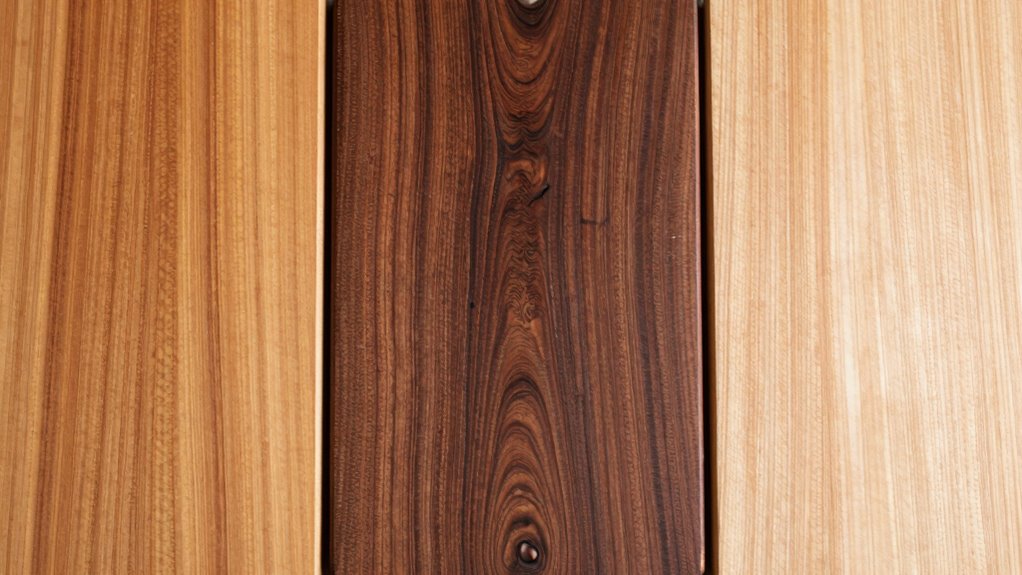
When choosing a cutting board, the type of wood you select can markedly impact durability, maintenance, and overall performance. Teak, walnut, and maple each have unique qualities that influence how well they hold up over time, how easy they are to care for, and how safe they are for food prep. Your choice affects not just the longevity of the board but also your knife maintenance routine and food safety considerations.
Teak is renowned for its natural oils, which make it highly resistant to water and bacteria. This resistance means you don’t have to worry as much about bacteria hiding in cracks or seams, making it a safer option for food prep. Additionally, the oils help preserve the wood, reducing warping or cracking, which means less frequent maintenance. However, because of its dense grain, a knife might require more frequent sharpening when used on teak. You’ll find that its hardness can dull blades faster, so you’ll need to pay close attention to knife maintenance. Regular oiling is recommended to preserve its oils and keep the surface smooth, ensuring your knives glide effortlessly and stay sharp longer. Proper wood maintenance is essential to preserve its qualities over time, especially considering its resistance to water and bacteria. It’s also worth noting that teak’s density and hardness contribute to its longevity but may influence your choice depending on your specific cutting needs. Being aware of wood properties can help you select the best material for your particular use and care routine. Additionally, understanding how different woods respond to wear and tear can help extend the lifespan of your cutting boards.
As an affiliate, we earn on qualifying purchases.
Frequently Asked Questions
Which Cutting Board Is Most Eco-Friendly?
You’ll find that maple cutting boards are the most eco-friendly due to their lower environmental impact and sustainable sourcing. Maple trees grow quickly and are harvested responsibly, reducing environmental harm. Walnut and teak, on the other hand, often come from slower-growing or less sustainably managed forests, increasing their environmental impact. Choosing maple supports sustainable practices, helping you minimize ecological footprint while still enjoying a durable, beautiful cutting board.
How Do I Properly Maintain Each Wood Type?
To properly maintain each wood type, start by cleaning with mild soap and warm water, avoiding soaking. For teak, use food-safe mineral oil to preserve its natural oil content, highlighting its tight wood grain. Walnut benefits from periodic oiling to prevent drying, while maple is best kept smooth with food-grade beeswax or mineral oil. Regular treatment methods help sustain their appearance and durability, ensuring your cutting board remains in great condition.
Are Certain Woods Better for Specific Foods?
Think of your cutting board as a stage for different flavors—certain woods are better suited for specific foods. Teak’s durability makes it ideal for heavy-duty tasks, while walnut’s rich aesthetic appeals to cheese or fruit prep. Maple’s smooth surface is perfect for meats and vegetables, balancing durability and aesthetic appeal. By choosing the right wood, you enhance both the functionality and beauty of your culinary performances.
How Do Prices Compare Among the Three Options?
You’ll find that teak often costs the most due to its durability and rich appearance, while walnut prices are moderate, offering a good balance of quality and affordability. Maple tends to be the most budget-friendly, making it an eco-friendly option for many. When comparing prices, consider each wood’s longevity and sustainability. Teak and walnut are pricier but last longer, whereas maple is more affordable and still eco-conscious, especially if sourced responsibly.
Can These Woods Be Used for Other Kitchen Utensils?
Think of these woods as versatile artists in your kitchen. Yes, you can use teak, walnut, and maple for other utensils; their beautiful wood grain adds character. Teak’s dense grain resists knife marks, making it perfect for salad bowls. Walnut’s rich hue suits spoons and spatulas, while maple’s smooth surface works well for rolling pins. Each wood’s durability and appearance make them excellent choices for a variety of kitchen tools.
As an affiliate, we earn on qualifying purchases.
Conclusion
Choosing between teak, walnut, and maple cutting boards is like picking the perfect paint color for your home — it depends on your style and needs. Teak offers durability and water resistance like a seasoned sailor, walnut brings rich beauty and moderate hardness, while maple provides a hard, budget-friendly surface. Whatever you pick, your kitchen’s foundation is set—like a sturdy tree standing tall, ready to serve your culinary adventures.
As an affiliate, we earn on qualifying purchases.
Bacteria resistant cutting board
As an affiliate, we earn on qualifying purchases.
As an affiliate, we earn on qualifying purchases.
Fall Picks
fall essentials
As an affiliate, we earn on qualifying purchases.