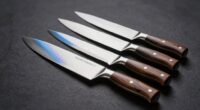
To make julienne and brunoise cuts look professional, start with sharp, quality knives and stable cutting boards. Use precise techniques like trimming vegetables into flat bases, slicing into uniform thickness, and controlling angles for bias cuts. Practice steady, deliberate motions and employ tools like rulers to guarantee consistency. Mastering these steps transforms ordinary vegetables into clean, uniform cuts. Keep practicing, and you’ll soon craft impressive, restaurant-quality results—continue on to discover more expert tips and techniques.

Get kitchen gear delivered free with Prime
- Fast, free delivery on millions of items
- Prime Video, Amazon Music and more included
- Member-only deals all year
Key Takeaways
- Use a sharp, high-quality knife and a stable wooden cutting board for precise, clean cuts.
- Trim vegetables into uniform pieces and maintain consistent thickness for professional julienne strips.
- Cut vegetables at an extreme diagonal for bias julienne, ensuring even length and thickness throughout.
- Stack julienne strips securely and make even cross-cuts to create uniform brunoise cubes.
- Practice steady, deliberate cuts with proper grip and tools to achieve consistency and a polished presentation.
professional chef's knife 8 inch
As an affiliate, we earn on qualifying purchases.
As an affiliate, we earn on qualifying purchases.
Essential Tools and Preparation Techniques
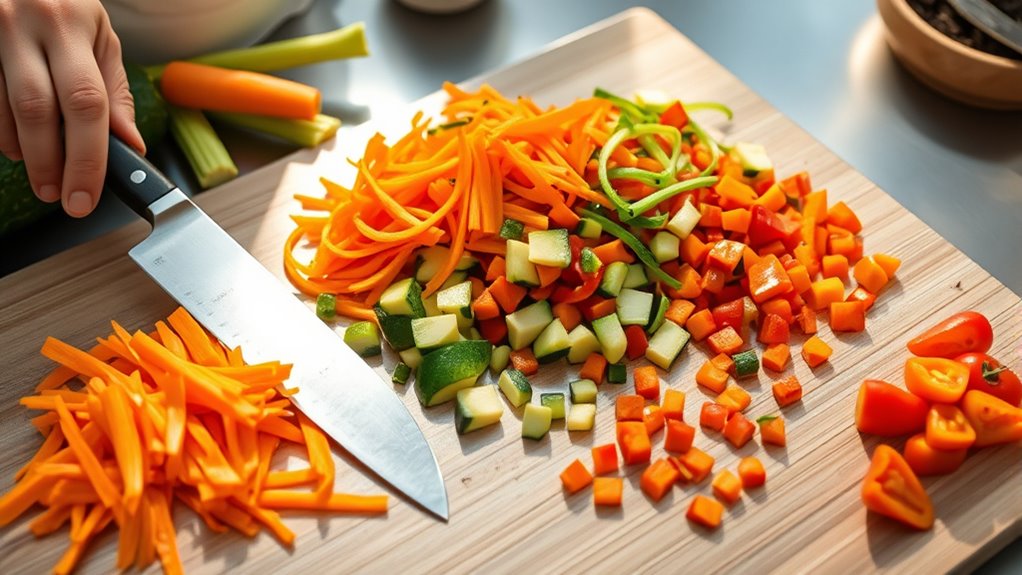
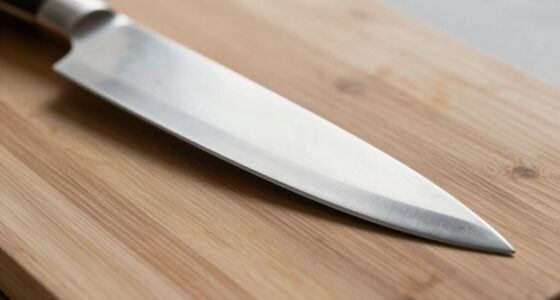
To achieve professional-looking julienne and brunoise cuts, having the right tools and proper preparation techniques are essential. Start with a sharp 8-inch chef’s knife; it provides the precision needed for clean, uniform slices. Use a sturdy wooden cutting board, which offers better stability than plastic and prevents slipping. A ruler helps trim vegetables to consistent lengths, ensuring even cuts. Choose fresh, firm produce to make slicing easier and safer. A vegetable peeler is useful for preparing items like carrots, removing tough skins before cutting. Always keep your tools sharp—dull knives cause uneven cuts and increase safety risks. Properly preparing your vegetables sets a solid foundation for achieving precise, professional results, minimizing effort and waste during the cutting process. Additionally, understanding safe installation practices when setting up your kitchen tools can prevent accidents and maintain a safe cooking environment. Maintaining proper lighting conditions in your workspace can also improve visibility, making detailed cuts easier and more accurate. Ensuring your workspace has adequate ergonomic setup can reduce fatigue and improve precision during extended prep sessions. Furthermore, maintaining proper blade maintenance can extend the lifespan of your knives and ensure consistently clean cuts.
As an affiliate, we earn on qualifying purchases.
Mastering the Classic Julienne Method
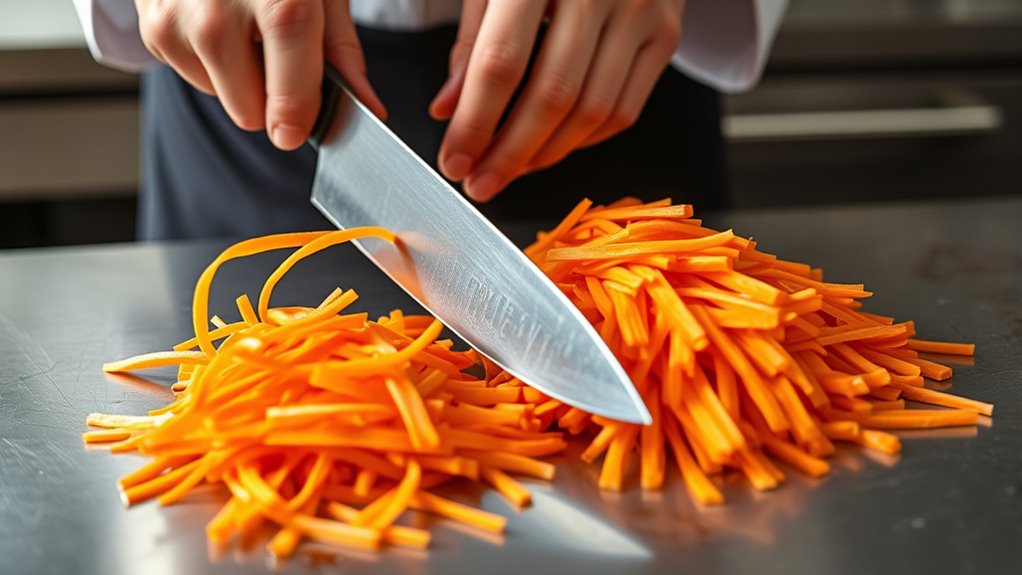
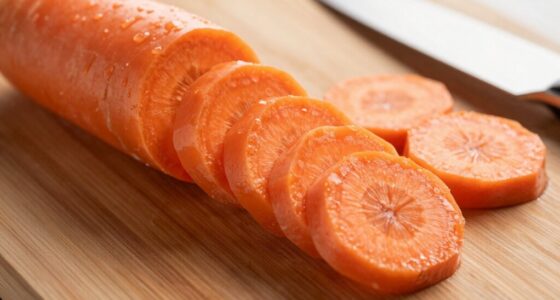
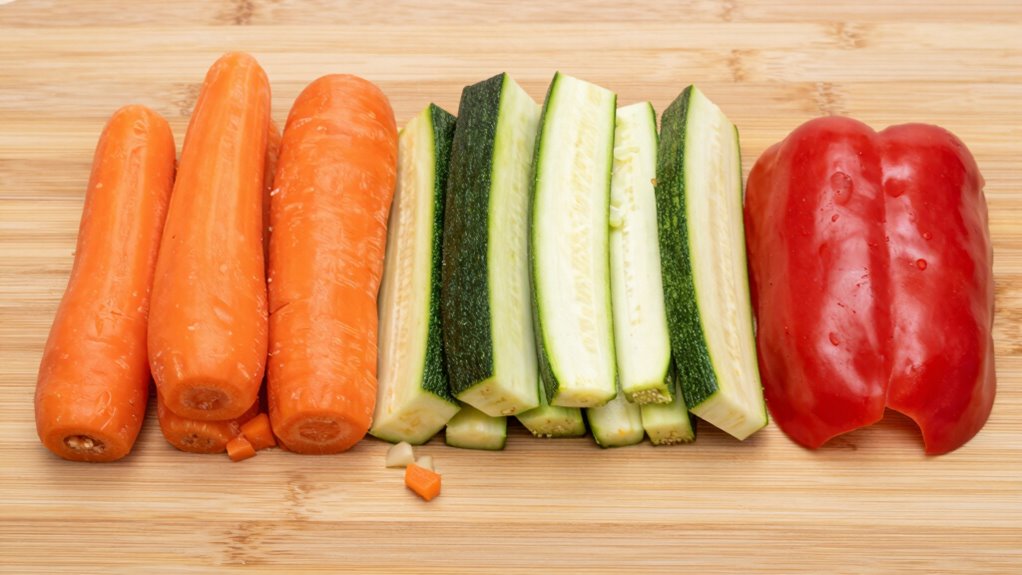
Mastering the classic julienne method involves precise steps that guarantee uniform, professional-looking strips. First, you cut the vegetable into 2-3 inch pieces and discard the ends. Next, you trim the rounded side to create a flat base for stability. Then, you slice the pieces into 1/16 to 1/8 inch thick planks lengthwise, visualizing thin sheets. To ensure accuracy, using a sharp knife is essential for clean cuts and safety. Additionally, maintaining a consistent measurement of thickness throughout the process helps achieve uniform strips. Incorporating proper tools can make the process more efficient and precise. For optimal results, practicing proper grip and technique enhances control and accuracy. Finally, include the trimmed piece, slicing it into similar strips. Think of each step as creating layers of evenly sliced sheets, then transforming them into matchstick-sized sticks. This method helps you achieve uniformity and precision, resulting in professional, restaurant-quality julienne cuts every time. Paying attention to precise measurements ensures the best results and consistency in your cuts.
As an affiliate, we earn on qualifying purchases.
Achieving Precision With Bias Julienne Cuts

The bias julienne method offers a practical alternative when working with cylindrical vegetables like carrots or cucumbers. Instead of cutting straight down, you slice at an extreme diagonal, creating thin, elongated slabs. These slabs typically measure 2-3 inches long and 1/16 to 1/8 inch thick, giving you more surface area for precise cuts. This technique simplifies the process, especially when working with rounded produce that’s difficult to stabilize. By cutting at an angle, you avoid the vegetable rolling and gain better control. Although the strips may not be perfectly uniform, you can still achieve consistent length and thickness by carefully measuring and maintaining a steady angle. Additionally, mastering this precision cutting technique can enhance your overall knife skills and improve presentation. Using a sharp, high-quality knife can make the process safer and more accurate. Incorporating proper technique can also help reduce waste and ensure each piece is as uniform as possible. Practicing the bias julienne method regularly can help you develop a steady hand and confidence in your knife skills, leading to more professional results. With practice, bias julienne cuts become a quick, effective way to produce professional-looking matchstick vegetables. Developing advanced cutting techniques can further elevate your culinary presentations and efficiency.
As an affiliate, we earn on qualifying purchases.
Transforming Julienne Into Brunoise: Step-By-Step
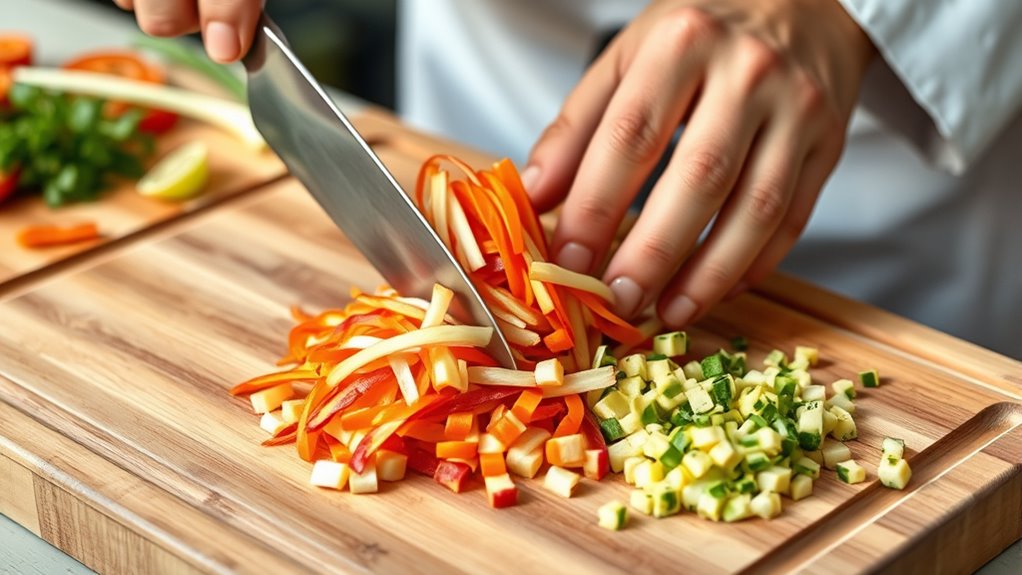
Once you have your julienne strips prepared, transforming them into brunoise is straightforward. First, gather your julienne strips and stack a few neatly on top of each other. Next, hold the bundle firmly with your fingertips curled inward for safety. Then, using a sharp knife, make even cross-cuts perpendicular to the strips, cutting into small 1/8-inch cubes. Visualize:
- Position the julienne bundle on the cutting board.
- Apply gentle pressure with your knife directly down.
- Make clean, precise cuts across the entire length.
- Turn the resulting cubes to create evenly sized brunoise. Keep your cuts consistent to ensure uniform cubes, and avoid rushing. With practice, this method produces professional-looking, perfectly sized brunoise from your julienne strips efficiently.
Professional Tips for Consistent, Clean Results
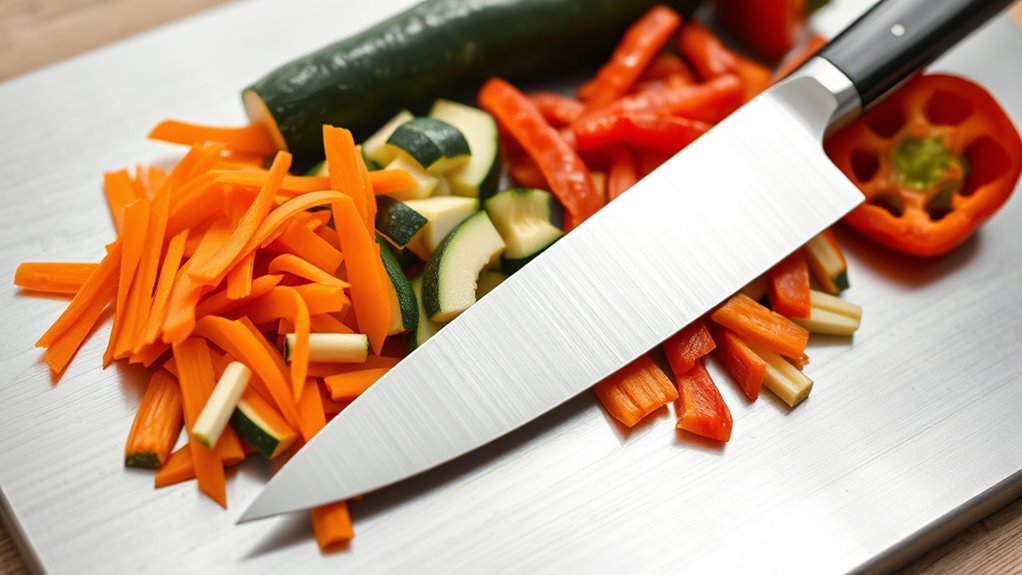
Achieving consistent, clean results when preparing julienne and brunoise requires attention to technique and proper tool use. Always start with a sharp, high-quality knife to ensure smooth cuts and maintain control. Use a ruler or guide to trim vegetables to uniform lengths, which helps with even sizing. Practice the claw grip—curl your fingers and guide the knife with your knuckles—to improve precision and safety. Keep your cutting surface stable and flat, preferably a wooden board, to prevent slipping. Take your time, making deliberate, steady cuts—rushing leads to uneven pieces. Consistency improves with practice; focus on maintaining the same pressure and angle. When working with cylindrical vegetables, bundle julienne strips and cross-cut carefully to produce uniform brunoise cubes. Incorporating technique and proper tool use and understanding kitchen safety ensures professional-looking results every time. Additionally, using the right knife maintenance routines keeps your blades sharp and ready for precise cuts.
Frequently Asked Questions
How Do I Choose the Best Vegetables for Julienne Cuts?
You should pick firm, fresh vegetables with smooth surfaces like carrots, zucchini, or bell peppers. Look for produce that’s free from blemishes or soft spots, as these can make cutting difficult. Choose vegetables that are uniform in size and shape for easier, even julienne cuts. Using fresh, crisp produce helps you achieve clean, precise strips, making your presentation look professional and ensuring even cooking.
Can I Julienne Frozen or Pre-Cut Vegetables?
Yes, you can julienne frozen or pre-cut vegetables, but beware! Blunt blades battle against brittle, frozen produce, making precise cuts tricky. Thaw or partially thaw first to soften surfaces and guarantee smoother slicing. Pre-cut veggies can work, but watch for uneven edges or inconsistent sizes. For perfect, professional-looking julienne, fresh vegetables offer the best balance of firmness and flexibility, giving you cleaner cuts and more consistent results.
What Safety Precautions Should I Take While Julienning?
You should always focus on knife safety when julienning. Keep your fingers tucked under your knuckles to avoid cuts, and use a sharp knife for better control. Make sure your cutting board is stable—place a damp towel underneath if needed. Work slowly and deliberately, especially with firm vegetables. Keep your workspace clear of clutter, and always pay attention to your hand placement to prevent accidents.
How Do I Prevent My Julienne Strips From Sticking Together?
Your julienne strips will stick together like magnets if you don’t prevent it. To stop this, dust them lightly with cornstarch or flour, which acts as a barrier. Spread the strips out on a clean towel or parchment paper and give them a gentle shake. Keep them separated while cooking or serving. Proper technique and quick handling will guarantee your strips stay perfectly separated and look professional.
What’s the Best Way to Store Julienned Vegetables for Freshness?
To keep your julienned vegetables fresh, store them in an airtight container or resealable plastic bag, removing as much air as possible. Wrap the strips in a damp paper towel to maintain moisture, then place them in the fridge. Keep them separate from strong-smelling foods to prevent odor transfer. Use within a day or two for ideal freshness and crunch.
Conclusion
With these simple, skillful steps, you’ll seamlessly master julienne and brunoise cuts, transforming your cooking into a professional presentation. Practice patience, pay attention to precision, and prioritize preparation. As you progress, you’ll produce perfectly uniform, polished pieces that impress every plate. Remember, consistent cuts create a culinary canvas, showcasing your skills and style. So, stay sharp, stay steady, and enjoy the satisfying satisfaction of slicing with skill and style!
Halloween Picks
halloween
As an affiliate, we earn on qualifying purchases.