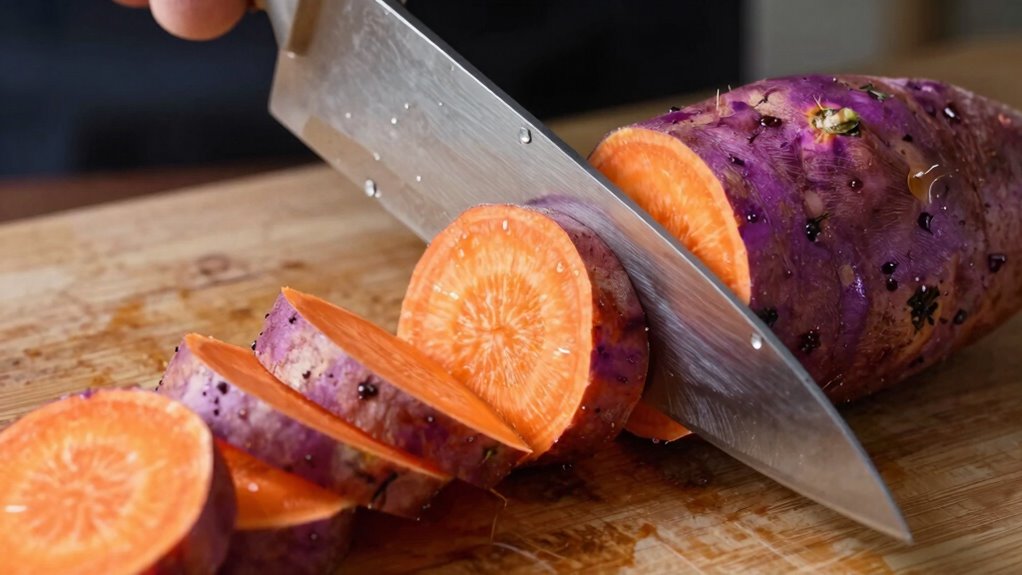
Your knife sticks in carrots and sweet potatoes because their dense, fibrous or starchy textures create resistance during cutting, especially if your knife isn’t sharp or you use improper technique. Resistance happens as the knife encounters internal structures and moisture content, making slicing more difficult. To improve, keep your knife sharp, use controlled, smooth motions, and adjust your approach based on the vegetable’s texture. Continue exploring these tips to cut more easily and efficiently.

Get kitchen gear delivered free — and shop member deals
- Fast, free delivery on millions of items
- Access to Prime Big Deal Days deals on October 6–7
- Prime Video, Amazon Music and more included
Key Takeaways
- Dense, fibrous textures in carrots and sweet potatoes increase resistance, causing knives to stick.
- Dull or improperly maintained knives create more friction, leading to sticking.
- Excessive force or sawing motions can cause the knife to bind in the vegetable.
- Moisture and starch content influence how smoothly the knife glides through the vegetable.
- Using a sharp knife and appropriate cutting techniques reduces sticking and improves efficiency.
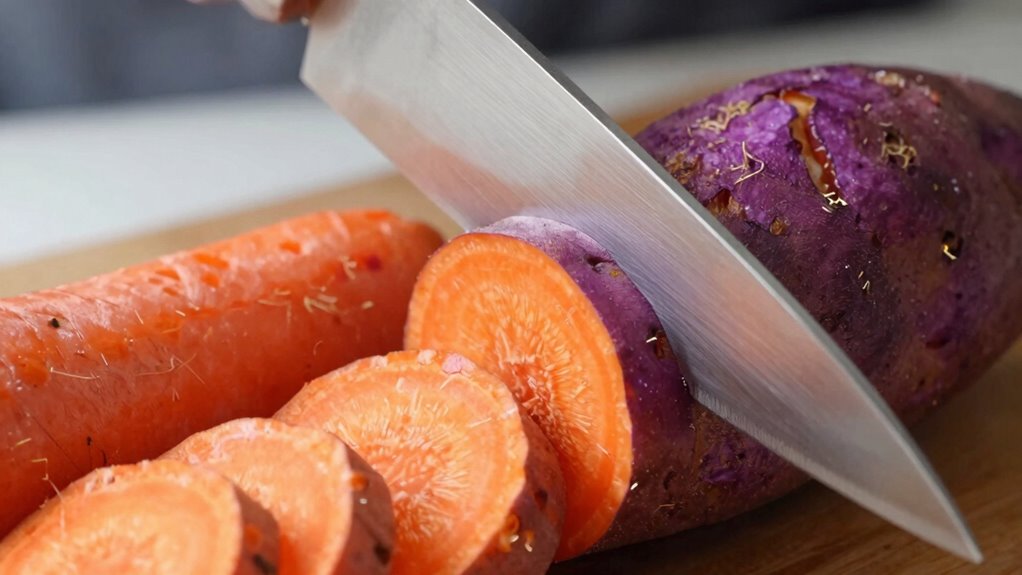
Have you ever noticed your knife sticking when slicing through carrots or sweet potatoes? It’s a common frustration, and the cause often comes down to the way you’re applying your knife techniques and the unique vegetable textures. Carrots and sweet potatoes are both dense, starchy vegetables, but they have different internal structures that influence how smoothly your knife moves through them. Understanding these textures can help you adjust your approach and make your slicing more efficient and enjoyable. Recognizing the importance of vegetable textures can help you choose the right cutting method for each type.
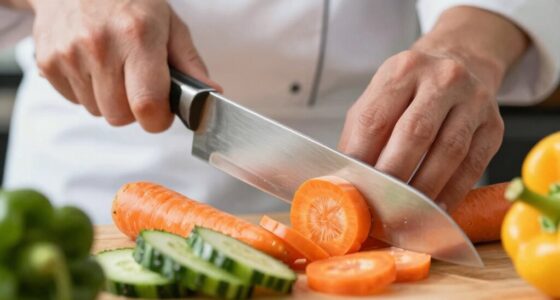
When you cut through carrots, you’re dealing with a vegetable that has a relatively firm, fibrous texture. This fibrous quality means your knife encounters resistance, especially if your blade isn’t sharp enough or if you’re using the wrong technique. If you press down too hard or try to saw back and forth, you’ll notice the knife sticking or catching. Instead, focus on using a proper slicing technique—steadily pushing the knife forward with a smooth, controlled motion. Keeping your knife sharp reduces the force needed, allowing for cleaner cuts and less sticking. Also, using a gentle sawing motion helps the blade glide through the fibrous parts without sticking. Additionally, understanding vegetable structure can help you anticipate points where resistance might occur and adjust your approach accordingly. Recognizing how different internal components respond to cutting can further improve your technique.
Sweet potatoes, on the other hand, are more starchy and moist. Their internal texture is softer but still dense, which can cause your knife to stick if it’s not sharp or if you’re applying uneven pressure. When slicing sweet potatoes, you might find the knife catching or slipping, especially near the center where the density is higher. To avoid this, ensure your knife is well-sharpened and use a consistent, moderate pressure rather than forcing through. It’s also helpful to cut with a gentle rocking motion, which allows the blade to navigate the vegetable’s moisture and starch content more easily. If your knife sticks frequently, it might be time to hone or sharpen it, as a dull blade increases friction and resistance. Paying attention to knife maintenance can significantly impact your slicing experience and prevent sticking.
Vegetable textures play a significant role in how your knife performs. Fibrous carrots require a technique that minimizes resistance, while starchy sweet potatoes need a sharp blade and smooth, deliberate motions. Paying attention to these details can make a huge difference. When you adapt your knife techniques to match the vegetable textures, you’ll find slicing becomes faster, safer, and less frustrating. Keep your knives sharp, use controlled motions, and respect the different internal structures of your vegetables to prevent sticking and achieve perfect slices every time.
As an affiliate, we earn on qualifying purchases.
Frequently Asked Questions
Does the Type of Knife Affect Sticking Issues?
Yes, the type of knife affects sticking issues. A sharper blade reduces sticking because it slices smoothly through vegetables like carrots and sweet potatoes. Additionally, a comfortable handle grip gives you better control, preventing slips that cause sticking. Opt for knives with a fine, sharp edge and an ergonomic handle to minimize sticking. Regularly honing and sharpening your knife also helps maintain that sharpness, making your cutting smoother and more efficient.
Can Temperature Changes Influence Knife Sticking?
Temperature fluctuations can influence whether your knife sticks when cutting carrots and sweet potatoes. When knives are cold, the material may contract slightly, increasing friction and causing sticking. Conversely, warmer temperatures can make the knife more flexible and reduce sticking. The knife material also matters; stainless steel tends to perform better under temperature changes than softer metals. To minimize sticking, try keeping your knife at a consistent, moderate temperature and consider using a high-quality, durable blade.
Do Different Cutting Techniques Reduce Sticking?
Imagine you’re a culinary knight in shining armor—different cutting techniques can definitely help reduce sticking. Keep your blade sharp and use a smooth, steady motion on a non-stick cutting surface. For instance, slicing with a rocking motion or using a gentle sawing technique minimizes resistance. These methods prevent the blade from catching, making your cuts more efficient and safer, especially with sticky vegetables like carrots and sweet potatoes.
Is It Better to Soak Carrots or Sweet Potatoes Before Cutting?
Soaking carrots or sweet potatoes before cutting isn’t necessary for flavor enhancement or nutritional retention. Instead, rinsing them briefly under cold water cleans off dirt without leaching nutrients. If you want better flavor, consider marinating or seasoning after cutting. Soaking can make the vegetables slippery, increasing the risk of accidents. Focus on proper cutting techniques and fresh produce to maximize flavor and retain nutrients without extra soaking.
How Does Moisture Content Impact Knife Sticking?
Ever wonder why your knife sticks? Moisture content impacts this by influencing surface adhesion. When vegetables like carrots and sweet potatoes have high moisture absorption, their surfaces become sticky, causing the knife to stick. Reducing surface moisture through proper prep minimizes sticking, making cutting smoother. So, keeping the vegetables dry or slightly damp can help, but overly wet surfaces increase surface adhesion, making your knife stick more.
As an affiliate, we earn on qualifying purchases.
Conclusion
Next time your knife sticks in carrots or sweet potatoes, remember it’s all about the starches and moisture. Did you know that sweet potatoes contain up to 20% more starch than carrots? That extra starch makes them stickier and harder to cut smoothly. To avoid frustration, try using a sharper knife, cutting on a firm surface, or chilling your vegetables. With these tips, you’ll glide through your prep work with ease, making cooking more enjoyable.
As an affiliate, we earn on qualifying purchases.
non-stick vegetable cutting board
As an affiliate, we earn on qualifying purchases.
As an affiliate, we earn on qualifying purchases.
Halloween Picks
halloween
As an affiliate, we earn on qualifying purchases.