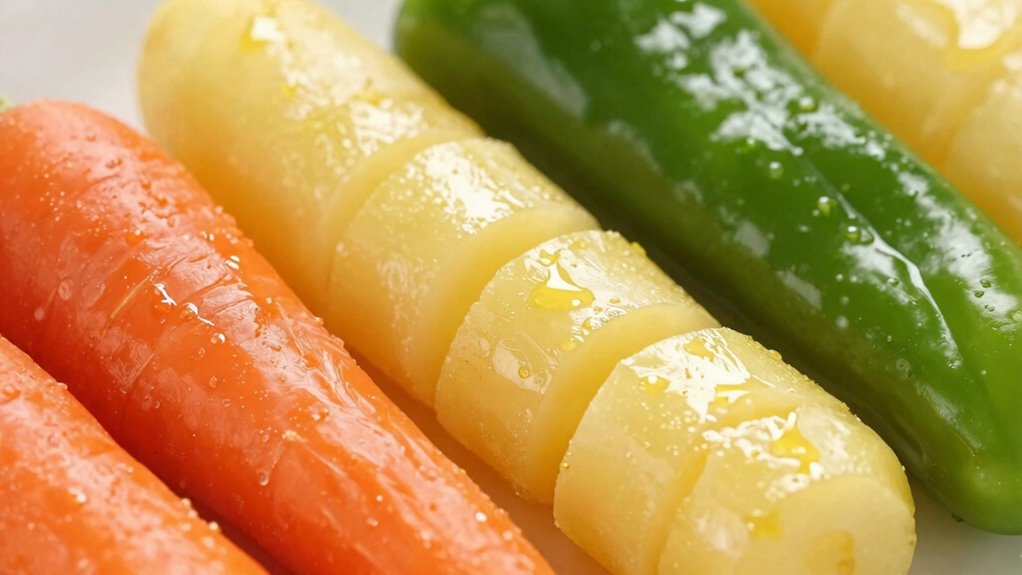
Mastering batonnet cuts is key to making fries and stir-fries look professional and cook evenly. This French technique involves cutting vegetables into uniform, stick-like pieces, which guarantees consistent texture, better presentation, and even heat distribution during cooking. Using sharp knives and steady hands, you’ll improve your knife skills while creating neat, attractive dishes. Keep going to discover how mastering this simple method can elevate your culinary skills and food quality even further.
Key Takeaways
- Batonnet cuts create uniform pieces, ensuring even cooking and better texture in fries and stir-fries.
- The precise French technique enhances presentation, making dishes look more professional and appealing.
- Consistent batonnet cuts promote better heat distribution, preventing overcooking or undercooking ingredients.
- Mastering the cut improves knife skills, increasing efficiency and safety in preparing large quantities.
- Uniform pieces facilitate better portion control, supporting healthier eating and precise recipe execution.
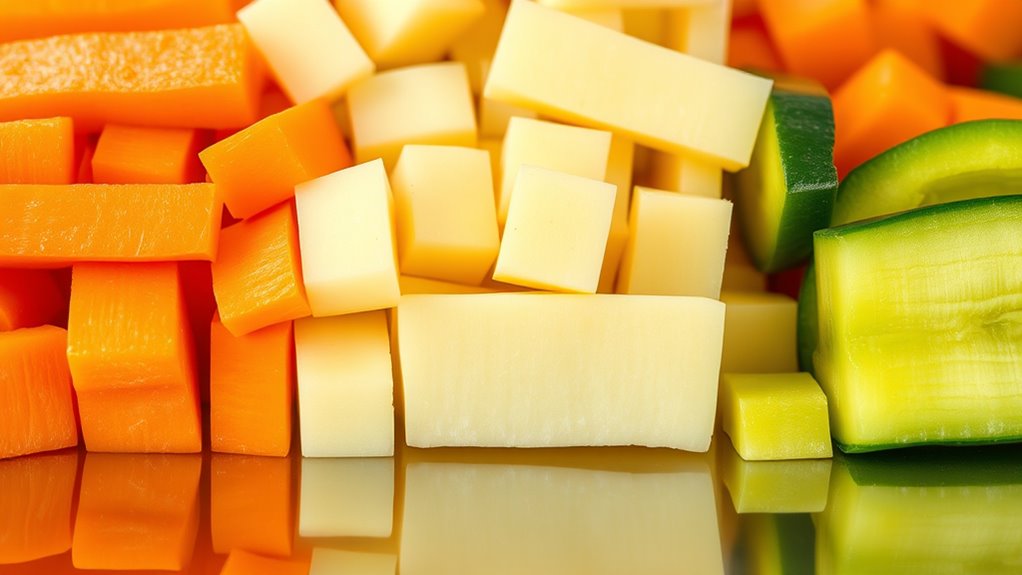
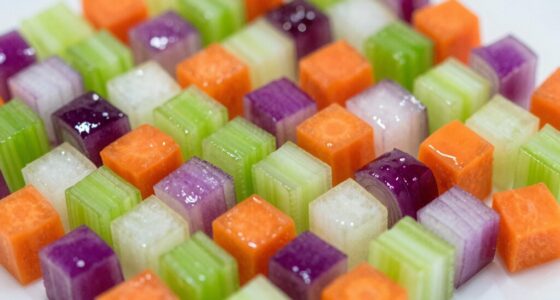
Have you ever wondered what makes a perfectly uniform cut for vegetables? Achieving consistent batonnet cuts isn’t just about aesthetics; it’s about precision that elevates your cooking and presentation. When you master this French technique, your dishes will look professional and visually appealing, impressing everyone at the table. Presentation tips come into play here—uniform pieces create a clean, organized appearance, making your dishes more appetizing. Whether you’re preparing fries, stir-fries, or garnishes, uniformity ensures even cooking, which is vital for a polished look and perfect texture. Plus, consistent sizes help with plating, allowing you to arrange your food neatly and enhance the overall visual appeal. To get the best presentation tips, focus on keeping your cuts straight and even, using a sharp knife, and maintaining steady hand control. This attention to detail immediately elevates your culinary game and shows your dedication to quality.
But the benefits go beyond looks. When you cut vegetables into batonnet shapes, you’re also enhancing their nutritional benefits. Even, uniform pieces cook more evenly, which helps preserve nutrients. Overcooking or undercooking can lead to nutrient loss, but with consistent cuts, you minimize this risk. For example, evenly cut carrots or bell peppers retain more vitamins and minerals because they cook uniformly, avoiding overexposure to heat in some parts and undercooking others. Additionally, smaller, uniform pieces can make it easier to incorporate more vegetables into your diet, encouraging healthy eating habits. When preparing stir-fries or roasted vegetables, these cuts allow heat to penetrate evenly, ensuring each piece retains its nutritional integrity. Plus, they make portion control easier, helping you manage calories and balanced intake without guesswork.
Practicing the batonnet cut also improves your knife skills over time. As you develop precision, you’ll notice your confidence in the kitchen grows, making other techniques easier to master. It’s a skill that enhances your efficiency and safety, reducing the risk of accidents. Once comfortable with batonnet cuts, you can quickly prepare ingredients for a variety of dishes, saving time and effort. This technique is especially useful when prepping for larger meals or meal prep sessions, where speed and uniformity are essential. The key is to keep your knife sharp and your hand steady, taking your time to ensure each cut is consistent. With consistent practice, you’ll find that your ability to produce professional-looking, nutritious dishes improves dramatically, making cooking more enjoyable and rewarding.
Frequently Asked Questions
What Are the Origins of the Batonnet Cut?
You might not realize it, but the batonnet cut originates from French culinary history, where precision and knife mastery techniques are highly valued. Chefs developed this method to create uniform, professional-looking strips for fries and stir-fries. Its roots trace back to classical French cuisine, emphasizing skillful knife work. By mastering this cut, you guarantee even cooking and a refined presentation that elevates your dishes to a professional standard.
Can Batonnet Cuts Be Used for Other Vegetables?
Absolutely, you can use batonnet cuts for colorful vegetable varieties like carrots, zucchini, and parsnips. The batonnet cut versatility shines here, giving you uniform, attractive pieces perfect for stir-fries, roasting, or salads. This technique helps you maintain consistency, making your dishes look professional and appealing. Experimenting with different vegetables using batonnet cuts enhances presentation and cooking evenness, elevating your culinary skills with simple, effective precision.
How Does Batonnet Cutting Affect Cooking Time?
Have you ever noticed how evenly cut vegetables cook faster and more uniformly? Batonnet cutting improves cooking efficiency by reducing overall cooking time, since the uniform size allows heat to penetrate evenly. This technique also enhances texture, giving you crispy edges and tender insides. By cutting vegetables into consistent, thick sticks, you guarantee a perfect balance of doneness and crispness, making your dishes more visually appealing and delicious.
Are There Safety Tips for Making Batonnet Cuts?
To stay safe when making batonnet cuts, always prioritize knife safety and cutting board stability. Keep your fingers tucked in to prevent cuts, and use a sharp knife to reduce slipping. Secure your cutting board with a damp towel underneath to prevent it from sliding. Take your time, and don’t rush—precision and safety go hand in hand, ensuring you cut confidently without risking injury.
What Tools Are Best for Achieving Precise Batonnet Cuts?
Imagine you’re preparing batonnet cuts for a restaurant kitchen; a sharp, high-quality chef’s knife like a Global or Wüsthof is your best tool. These knives enhance your knife skills and cutting techniques, allowing precise, uniform cuts. A mandoline slicer can also help, but mastering your knife gives you better control. Always choose a sturdy, well-balanced blade for safety and accuracy, making your batonnet cuts consistent and professional-looking.
Conclusion
Now that you know about batonnet cuts, you’ll see how this simple technique elevates your fries and stir-fries. Not only does it guarantee even cooking, but it also improves presentation. Did you know that French fries cut into batonnet shapes cook 20% faster than irregular cuts? Next time you’re in the kitchen, try mastering this technique—you’ll notice the difference in texture and flavor, making every dish more professional and delicious.