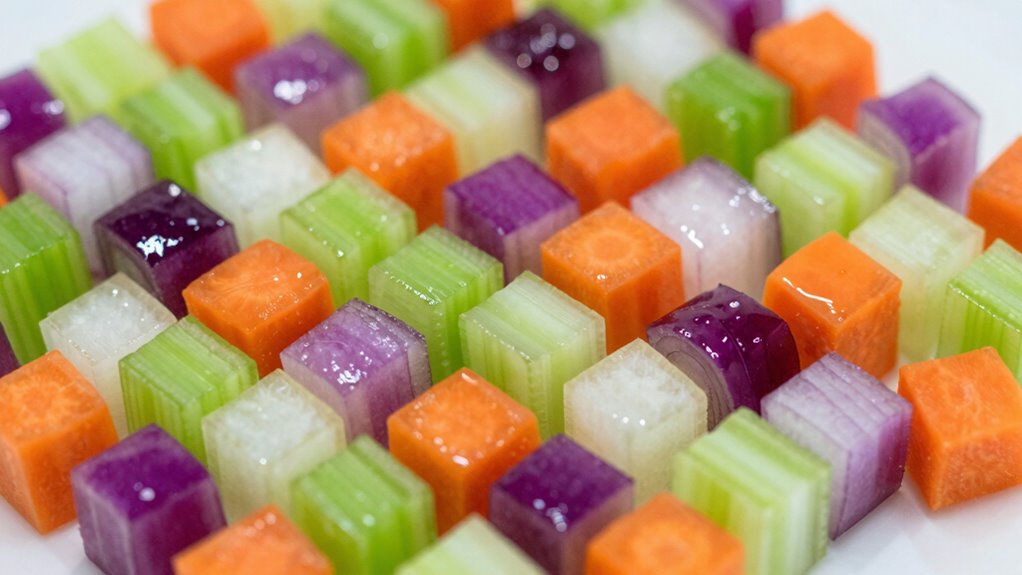
To achieve restaurant-level brunoise dice, you need a sharp knife, a steady workspace, and carefully prepared ingredients. Start by slicing vegetables into thin, even planks, then into sticks before finally cutting into tiny, uniform cubes. Practice consistent, slow movements, keep your fingers tucked, and maintain control throughout. With proper technique and tools, you’ll create perfect small cubes that elevate your dishes—continue to discover more tips and tricks behind this impressive culinary skill.

Get kitchen gear delivered free — and shop member deals
- Fast, free delivery on millions of items
- Access to Prime Big Deal Days deals on October 6–7
- Prime Video, Amazon Music and more included
Key Takeaways
- Master proper knife techniques and maintain sharp blades for uniform, professional-looking small cubes.
- Prepare ingredients thoroughly by washing, peeling, and slicing into even planks and sticks.
- Use a stable workspace with non-slip surfaces to ensure safety and precision during cutting.
- Practice controlled, slow motions to develop consistency and confidence in the brunoise technique.
- Incorporate colorful, well-cut brunoise into dishes for elevated presentation and restaurant-quality appeal.
professional chef knife for vegetables
As an affiliate, we earn on qualifying purchases.
As an affiliate, we earn on qualifying purchases.
Understanding the Brunoise Technique
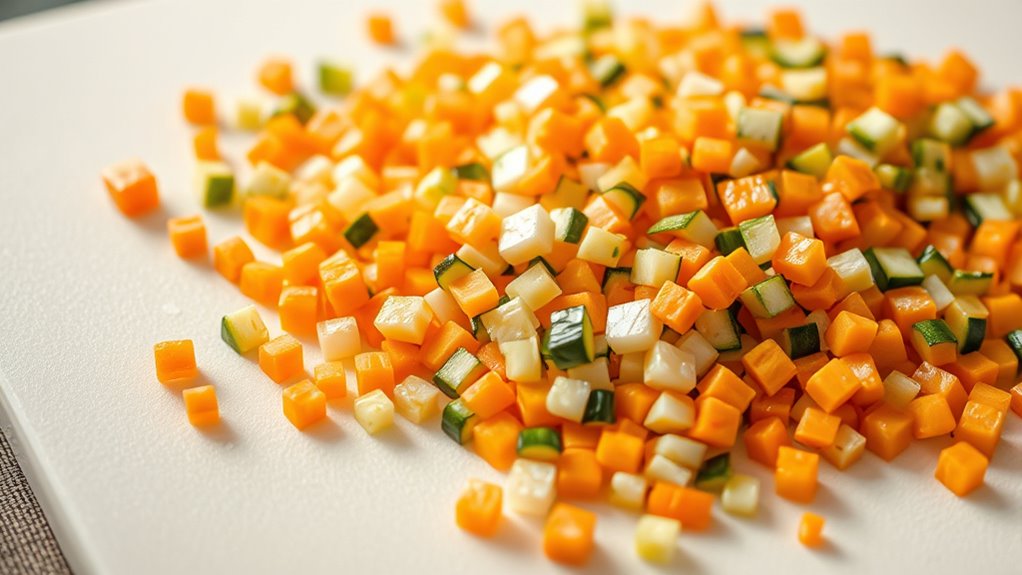
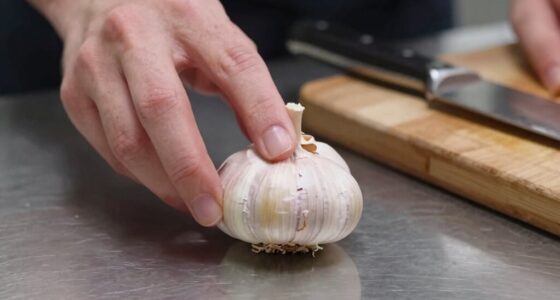
Understanding the Brunoise Technique is essential for achieving precise and uniform dice cuts in your culinary preparations. To start, develop a proper knife grip—firm yet relaxed—to maintain control and safety. Your grip influences your cutting rhythm, helping you achieve consistent small cubes. Keep your fingers curled inward on the hand holding the ingredient, guiding the knife with a steady, smooth motion. Focus on maintaining a consistent pace, avoiding rushed or uneven cuts, which can ruin the uniformity of your brunoise. Practice slow, deliberate movements to build muscle memory and confidence. As you refine your technique, you’ll notice your cuts becoming more precise, enhancing both the appearance and texture of your dishes. Mastering your knife grip and cutting rhythm is the key to perfect brunoise every time. Proper technique and consistent practice are vital for achieving professional results. Developing a cutting rhythm aligned with your knife skills will further improve your efficiency and precision. Incorporating technique refinement can help you elevate your culinary presentation and consistency. Additionally, paying attention to ingredient preparation, such as peeling and trimming, can improve overall cutting quality. Furthermore, understanding creative storytelling can help you present your dishes more compellingly to impress your guests and elevate your culinary branding.
As an affiliate, we earn on qualifying purchases.
Essential Tools and Ingredients for Perfect Brunoise
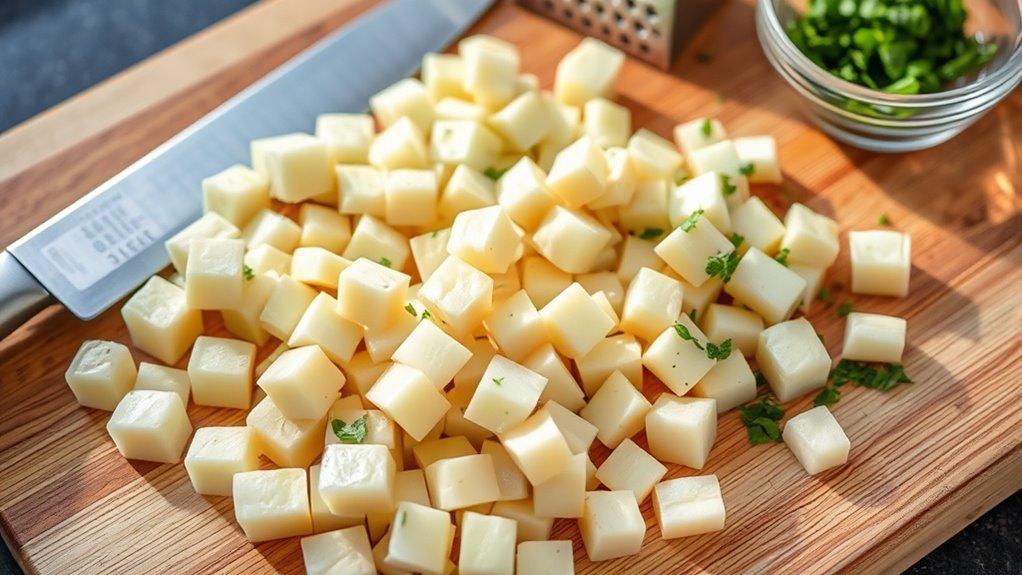
To achieve perfect brunoise, you need a sharp knife with quality blades that easily cut through vegetables. Using fresh, firm produce guarantees clean, uniform dice every time. With the right tools and ingredients, your prep will be precise and efficient. Ensuring proper piercing care and hygiene is essential to maintain cleanliness and prevent any cross-contamination during your prep process. Additionally, understanding projector technology can help you choose tools that enhance your overall kitchen setup for better precision. Proper knife skills are also crucial for achieving consistent, professional-looking small cubes. Moreover, being aware of global chaos like outages can help you plan ahead and prevent disruptions in your meal prep workflow. Incorporating AI applications in learning can also be beneficial for culinary training and skill development, ensuring you stay updated with the latest techniques and tools.
Sharp Knife Quality Blades
A sharp knife with high-quality blades is essential for achieving precise Brunoise cuts. A well-maintained blade ensures clean, uniform cubes and reduces the risk of slips that could compromise safety. Always prioritize knife safety by handling your blade carefully and using proper cutting techniques. Regular blade maintenance, such as honing and occasional sharpening, keeps your knife performing at its best. Dull blades require more force, increasing the chance of accidents and uneven cuts. Invest in a good-quality knife and keep it sharp to enhance control and precision. Remember, a sharp blade not only improves your results but also makes slicing safer and more efficient. Proper knife care is key to consistently achieving restaurant-level Brunoise in your own kitchen. Maintaining your knife’s sharpness is crucial for precise cuts and safety. Additionally, understanding the subtle techniques involved can elevate your cooking to professional standards. Developing a consistent cutting rhythm can further improve your precision and speed when dicing. In addition, using appropriate cutting techniques can help maintain uniformity and improve efficiency during prep.
Fresh, Firm Vegetables
Have you ever noticed how the texture and firmness of your vegetables directly impact the quality of your Brunoise? Using fresh, firm vegetables ensures your small cubes hold their shape and stay vibrant. Vegetable freshness is vital; wilted or aging produce can become soft and lose their color, making it difficult to achieve precise cuts. Firm vegetables maintain their structure during chopping, which helps preserve their natural color and appeal. To guarantee ideal results, select vegetables that feel crisp and look bright. Proper storage also plays a role—keep produce refrigerated and use it soon after purchase. Fresh, firm vegetables not only improve the visual appeal of your Brunoise but also make the process easier, resulting in cleaner, more consistent dice.
non-slip cutting board for vegetables
As an affiliate, we earn on qualifying purchases.
As an affiliate, we earn on qualifying purchases.
Step-by-Step Guide to Achieving Uniform Small Cubes
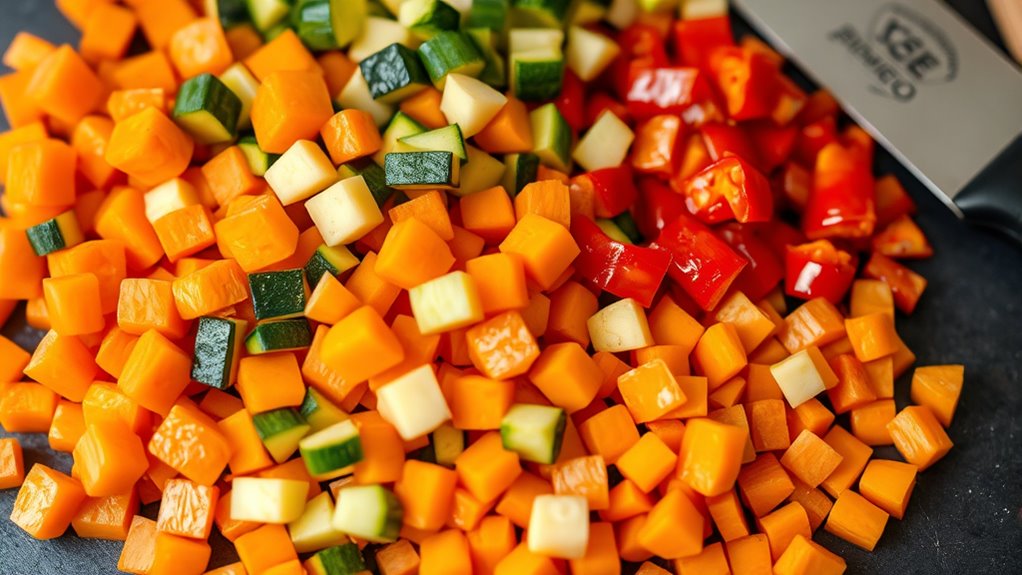
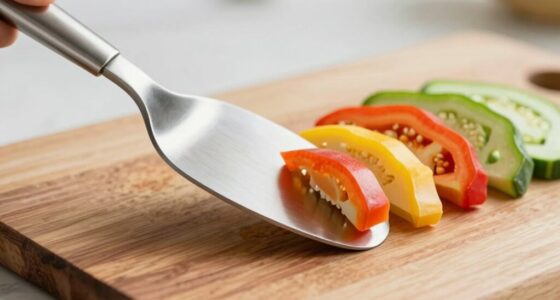
Achieving uniform small cubes, or brunoise dice, requires careful technique and attention to detail. First, ensure your knife is sharp; dull blades make precise cuts difficult and increase safety risks. Regular knife sharpening keeps your blade in top condition, allowing for cleaner cuts and reducing the chance of slips. Before starting, wash and peel your vegetables as needed, then trim them into manageable, flat surfaces. Begin by slicing the vegetable into even, thin planks. Stack these planks and cut into uniform sticks. Finally, turn the sticks and cut into tiny cubes, maintaining consistent width and height. Always focus on safe handling, keeping your fingers tucked and your knife controlled. Precision, patience, and proper sharpening are key to achieving perfect, restaurant-quality brunoise dice.
As an affiliate, we earn on qualifying purchases.
Tips for Safe and Efficient Cutting
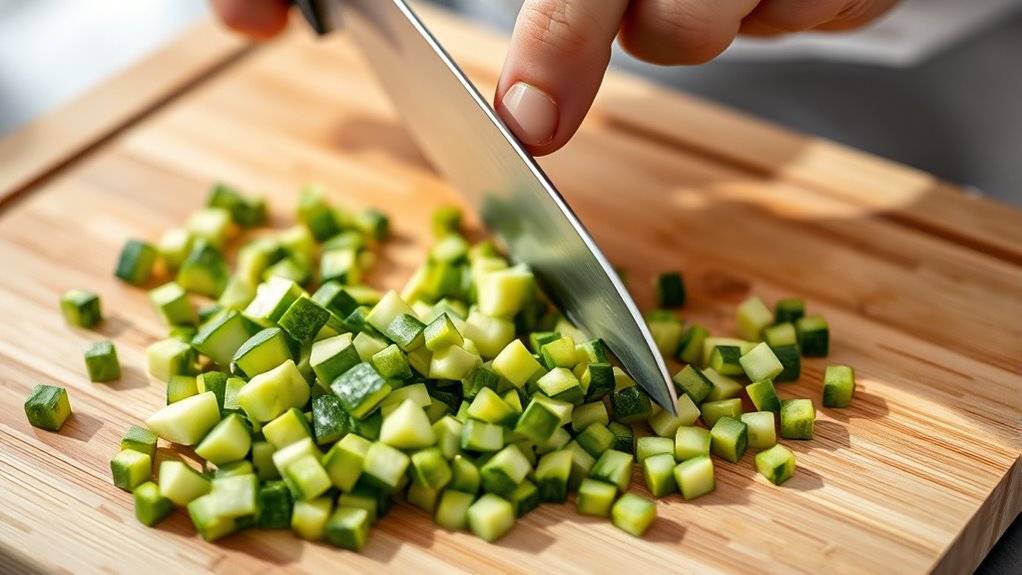
To cut safely and efficiently, you need to use proper knife technique, keeping your fingers tucked and controlling your movements. Make sure your cutting surface is stable to prevent slips, and handle ingredients carefully to avoid accidents. These tips help you work quickly while keeping safety a top priority. Additionally, understanding proper knife skills can significantly improve your precision and safety during food preparation.
Use Proper Knife Technique
Using proper knife technique is essential for both safety and efficiency in the kitchen. Your knife skills directly impact how safely and quickly you can work. Keep your grip firm but relaxed, holding the handle comfortably while guiding the blade with your fingers curled inward. Use smooth, controlled cutting techniques, applying even pressure to avoid slips or accidents. Maintain a steady, balanced posture to improve precision and reduce fatigue. Always cut away from your body and keep the blade sharp—dull knives require more force and increase risk. Practice basic motions like rocking the knife or slicing with a steady, confident motion. Mastering these cutting techniques ensures safer, cleaner cuts and makes preparing ingredients faster and more enjoyable. Additionally, understanding how to properly handle and store your knives can prolong their sharpness and ensure safety during use. Being aware of your appliance’s power requirements can also prevent electrical issues or damage during kitchen work. Proper knife maintenance, including regular honing and timely sharpening, is crucial for maintaining optimal cutting performance. Regularly inspecting your tools and tool maintenance practices can help prevent accidents caused by equipment failure.
Maintain Stable Cutting Surface
A stable cutting surface is essential for safe and efficient chopping. Without it, your knife can slip, increasing the risk of accidents and uneven cuts. Make certain your cutting board is secure by placing a damp towel or non-slip mat underneath to improve the stability of your workspace. Avoid moving the cutting surface while cutting, as this can cause mishaps or uneven Brunoise dice. Keep the board clean and dry to prevent slipping caused by moisture or debris. Using a sturdy, well-maintained cutting surface helps you maintain control over your knife, leading to cleaner, more precise cuts. Proper workspace setup is crucial for achieving restaurant-quality results in your kitchen. Additionally, regularly inspecting your cutting board for wear and tear ensures it remains a reliable safety tool during food preparation. Maintaining a stable cutting environment not only enhances safety but also improves your overall efficiency and precision when preparing ingredients. Being aware of food safety guidelines can further influence how carefully you handle your tools and workspace.
Handle Ingredients Carefully
Handling ingredients carefully is essential for both safety and efficiency during cutting. Choose fresh, firm ingredients for cleaner cuts and easier handling. Always prioritize knife safety by keeping blades sharp and using proper techniques. Proper ingredient selection reduces slipping and uneven cuts, saving time and preventing accidents. When preparing, arrange your ingredients neatly to streamline your workflow. Use a stable cutting surface and keep your fingers tucked under to avoid injury. Additionally, maintaining proper knife grip enhances control and safety during cutting. Being aware of nanotechnology advancements can also inspire safer and more precise kitchen tools in the future.
Creative Ways to Incorporate Brunoise in Your Dishes
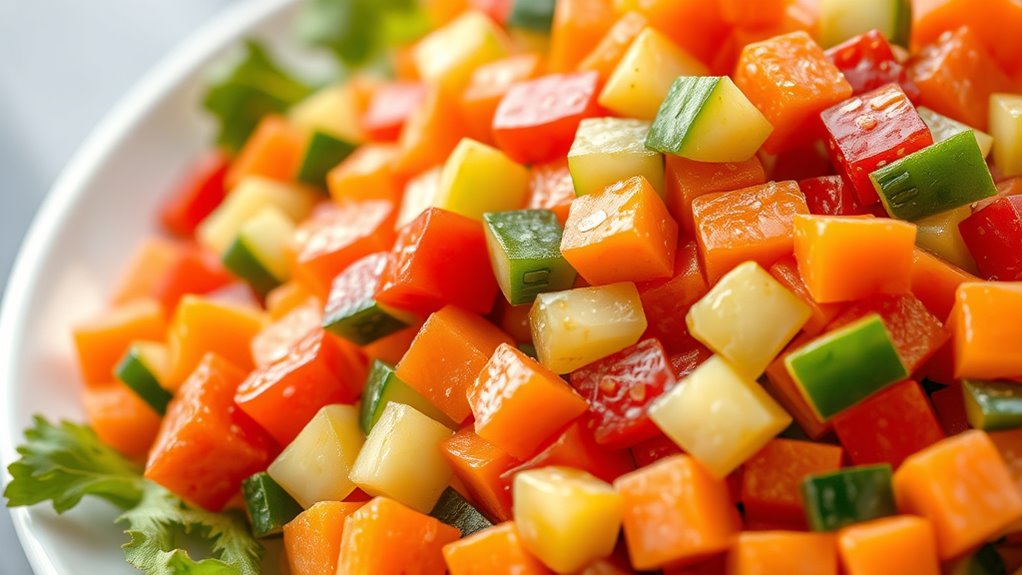
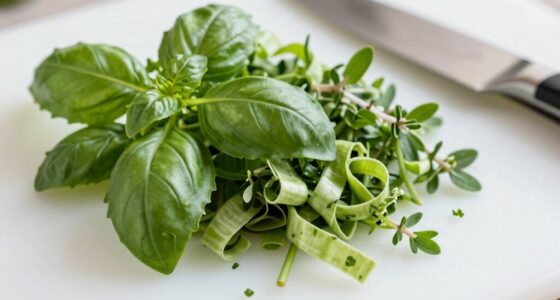
Incorporating brunoise dice into your dishes can elevate both their presentation and flavor. Use these tiny cubes for creative plating by layering them over salads, soups, or appetizers to add visual interest and texture. They work well as a garnish that enhances the dish’s overall aesthetic. When considering flavor pairing, choose ingredients that complement each other—like finely diced herbs with citrus or vegetables with herbs—to create balanced, harmonious bites. Brunoise adds sophistication and a restaurant-quality touch to everyday dishes, making them more appealing. Experiment with combining colorful vegetables or fruits for vibrant, eye-catching results. By thoughtfully integrating brunoise, you turn simple ingredients into artful, flavorful creations that impress your guests and elevate your culinary skills.
Troubleshooting Common Challenges in Brunoise Preparation
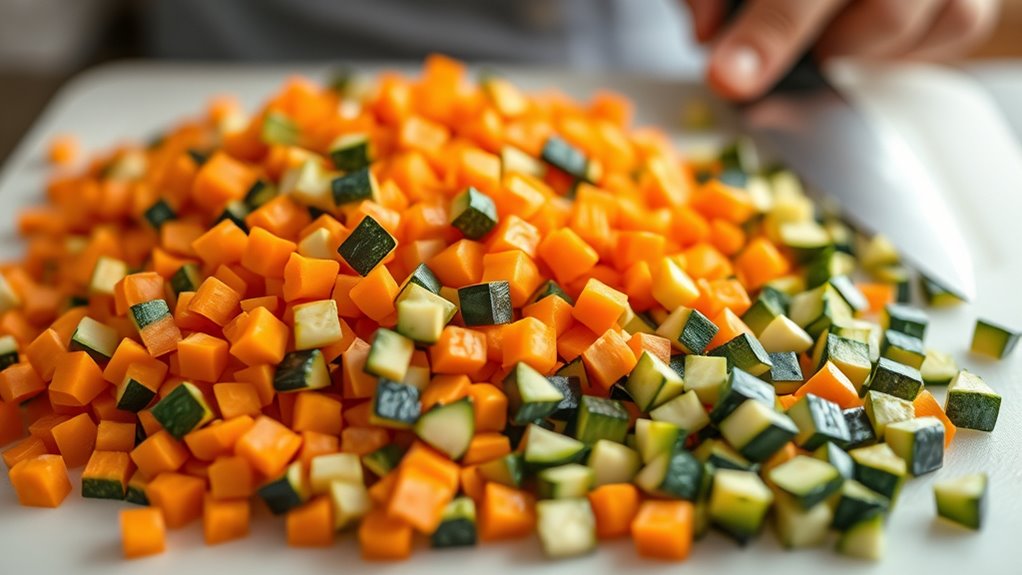
Achieving perfectly uniform brunoise dice can be challenging, especially if your knife skills or technique aren’t quite refined. To improve consistency, focus on proper knife maintenance; a sharp, well-honed blade is essential for clean cuts and safety. Regularly sharpen and hone your knife to prevent uneven slicing. Additionally, proper ingredient preparation matters—make sure vegetables are evenly washed, peeled, and dried before dicing. This reduces slipping and ensures uniform slices. If your cuts are uneven, slow down and use a guiding hand to maintain control. Practice your technique with small, steady motions. Remember, patience and precision are key to mastering the brunoise; with consistent knife care and careful ingredient prep, your small cubes will look professional and uniform every time.
Frequently Asked Questions
Can Brunoise Be Used With All Types of Vegetables?
Yes, you can use brunoise with many vegetable varieties, but it works best with firm, smooth vegetables like carrots, cucumbers, and celery. Soft or fibrous vegetables, such as tomatoes or zucchini, may not hold their shape well with this cutting technique. Always choose vegetables that are firm and smooth, and use proper cutting techniques to achieve precise, small cubes for elegant presentation and even cooking.
How Long Does It Take to Master Brunoise Cutting?
Mastering brunoise cutting takes consistent practice, much like honing a musician’s craft. Usually, it takes several weeks to a few months to develop solid knife skills and achieve precision techniques needed for perfect small cubes. Patience is key; focus on steady, controlled movements. As with any skill, regular practice refines your technique, helping you cut faster and more accurately, transforming your kitchen confidence and presentation.
Is Brunoise Suitable for Both Raw and Cooked Ingredients?
Yes, brunoise works well for both raw and cooked ingredients. When you cut raw items like vegetables, you retain their crisp texture, perfect for salads or garnishes. For cooked ingredients, the small cubes distribute flavors evenly and add visual appeal. Keep in mind, raw ingredients might be firmer, so you may need to adjust your cutting pressure. Overall, brunoise enhances presentation and texture in various culinary applications.
What Are Some Common Mistakes to Avoid During Brunoise Preparation?
To avoid common mistakes during brunoise preparation, guarantee your ingredients are uniformly shaped and cut with sharp knives. Don’t rush the process, as uneven cuts compromise presentation and cooking consistency. Follow preparation tips like using a stable cutting board and proper grip. Avoid applying too much pressure or rushing through; patience results in precise, restaurant-quality small cubes. Practice makes perfect, so take your time to master the technique.
How Do I Store Brunoise-Cut Ingredients to Maintain Freshness?
If you want your brunoise-cut ingredients to stay fresh longer, you gotta be a storage ninja! Use airtight containers to lock in moisture and prevent flavor leakage. Always refrigerate promptly, ideally in the coldest part of your fridge, and keep the lid sealed tight. For extra freshness, add a damp paper towel inside the container to absorb excess moisture. Follow these refrigeration tips, and your ingredients will stay crisp and vibrant!
Conclusion
Mastering the brunoise technique elevates your cooking to restaurant-level quality. Imagine preparing a vibrant vegetable garnish that adds both flavor and elegance to your dish—like a home cook who transformed a simple salad into a stunning plate by adding perfectly diced carrots and peppers. With practice, you’ll confidently create uniform, professional-looking small cubes. Keep experimenting, stay safe, and soon, brunoise will become your go-to skill for impressing everyone at your table.
Fall Picks
fall essentials
As an affiliate, we earn on qualifying purchases.