Choosing between a santoku and a nakiri depends on your preferred cutting style and the tasks you want to accomplish. The santoku’s curved blade makes rocking motions easy, perfect for diverse ingredients and quick, fluid cuts. The nakiri’s straight edge offers precise, straight-down slices, ideal for uniform vegetable prep. Understanding these differences helps you pick the right knife for your kitchen. Stay with us to explore how each blade shape influences your slicing and dicing approach even further.
Key Takeaways
- Santoku’s curved blade is ideal for rocking cuts and versatile kitchen tasks, while Nakiri’s straight edge excels in precise vegetable slicing.
- Use a santoku for general prep, including meats and herbs, and a nakiri for detailed vegetable chopping and uniform cuts.
- The curved santoku supports fluid, less-fatiguing slicing motions; the flat nakiri offers better control for straight-down cuts.
- Choose a santoku for quick, finesse cuts and a nakiri for controlled, precise vegetable preparation tasks.
- Both blades enhance efficiency but are optimized for different cutting styles: rocking versus straight chopping.
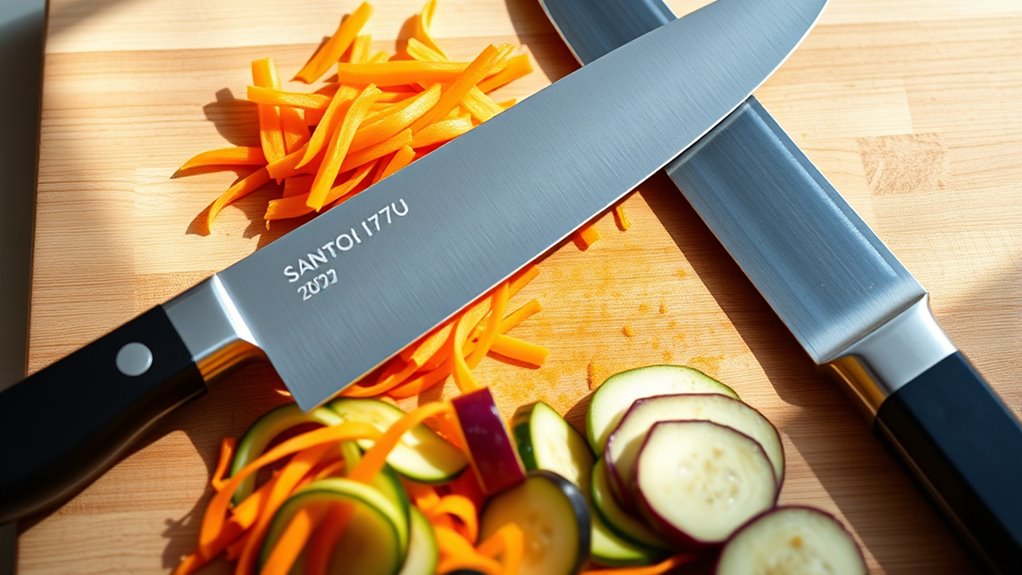
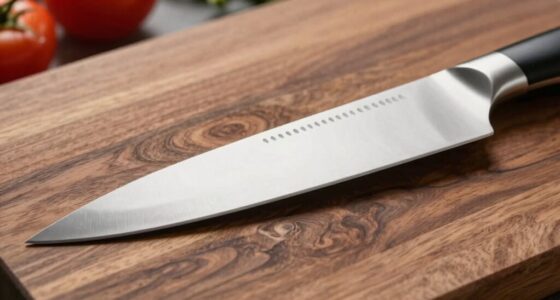
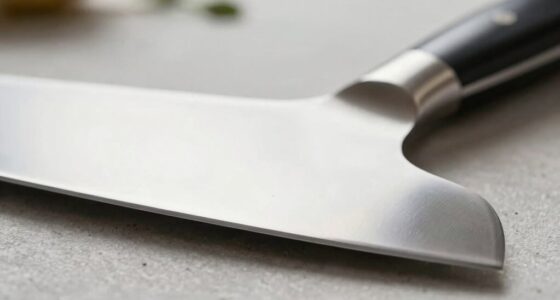
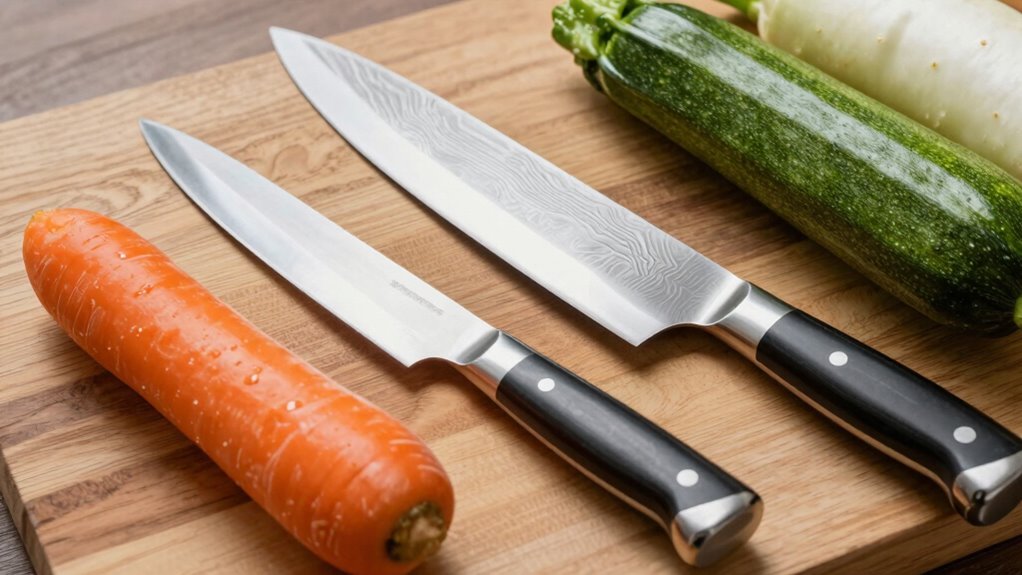
Choosing the right kitchen knife can make a big difference in your cooking experience, especially when deciding between a santoku and a nakiri. One of the key differences lies in their blade shape, which directly influences how you handle cutting techniques. The santoku features a slightly curved blade, which allows for a rocking motion, making it versatile for slicing, dicing, and chopping. Its shape supports a smooth, fluid cutting style that’s great for general kitchen tasks. In contrast, the nakiri has a straight, rectangular blade with a flat edge, designed for precise, straight-down cuts. This shape encourages a chopping technique where you lift and lower the knife, giving you control over vegetable cuts and minimizing crushing or tearing.
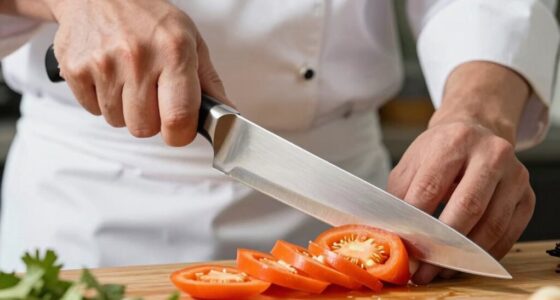
The blade shape of each knife determines how you approach different cutting techniques. With a santoku, the curved blade facilitates a rocking motion that’s ideal for thin slicing and fine mincing. The curve lets you pivot the knife smoothly, making repetitive slicing easier and more efficient. You can also use a push-cut method, pushing the blade forward to cut through ingredients with minimal effort. This makes the santoku especially handy for tasks that require speed and finesse, like preparing vegetables for stir-fries or salads. Its shape encourages a more fluid cutting rhythm, which can reduce fatigue during extended prep work. Additionally, the blade design influences how comfortable the knife feels during prolonged use, affecting overall precision and control.
On the other hand, the nakiri’s straight blade is tailored to a chopping technique that emphasizes straight downward cuts. You lift the knife and chop, leveraging the flat edge to make precise, uniform slices or dice. This technique is especially effective for vegetables like carrots, cucumbers, or bok choy, where even, clean cuts enhance presentation and cooking consistency. Because the nakiri’s blade has no curve, you have better control for delicate or detailed work. It’s less suited for rocking motions, but perfect for tasks where precision and straight cuts are paramount.
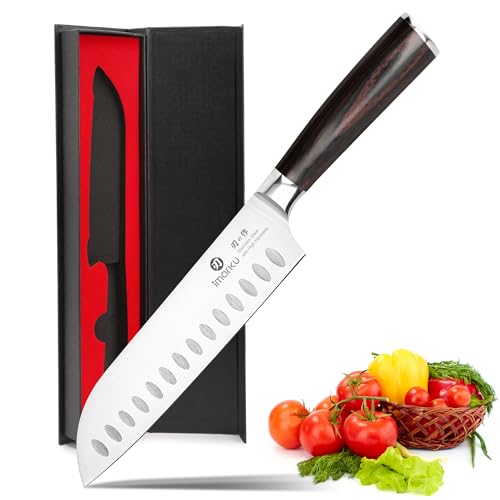
imarku Santoku Knife 7 Inch with Sharp Japanese High Carbon Stainless Steel
- Material: Japanese high carbon stainless steel
- Blade Sharpness: Ultra-sharp, 15-18° edge angle
- Blade Thickness: 2.5mm thick
As an affiliate, we earn on qualifying purchases.
As an affiliate, we earn on qualifying purchases.
Frequently Asked Questions
Which Knife Is Better for Slicing Soft Fruits?
For slicing soft fruits, a santoku knife works best because of its versatility and gentle, curved edge that makes vegetable preparation smooth. You’ll find it easier to handle delicate fruits without crushing or bruising them. Its thinner blade allows precise cuts, making it ideal for soft produce. While a nakiri is great for chopping vegetables, a santoku’s design offers better control and versatility for slicing soft fruits effortlessly.
Can I Use a Nakiri for Chopping Herbs?
Yes, you can use a nakiri for herb chopping. Its straight, sharp blade makes it easy to mince and chop herbs finely. However, keep in mind that while nakiris excel at vegetable prep, they might lack the versatility of a santoku for other tasks. If you often handle a variety of ingredients, consider how the nakiri’s design suits your overall kitchen needs.
How Does the Weight Affect Cutting Precision?
Coincidences often reveal how blade weight impacts your cutting precision. When your knife has a balanced blade weight and an ergonomic grip, it feels more controlled, allowing for cleaner cuts. A heavier blade, like some Nakiris, offers momentum for slicing through dense vegetables, but can tire your hand and reduce accuracy over time. Conversely, a lighter knife demands more effort but can enhance precision for delicate tasks.
Are These Knives Suitable for Left-Handed Users?
Yes, both knives can be suitable for left-handed users. Look for models with left-handed ergonomics, which are specifically designed to fit your grip comfortably. Alternatively, choose knives with an ambidextrous design, allowing for ease of use regardless of your dominant hand. This guarantees you maintain precision and control while chopping, making your culinary experience more comfortable and efficient. Always check the knife’s specifications before purchasing.
Which Knife Is Easier to Sharpen Regularly?
Imagine a chef struggling with frequent dullness, and you’ll see that Nakiris are easier to sharpen regularly because their blade durability allows for more straightforward maintenance. Nakiri knives often have simpler edges and handle ergonomics that make honing simpler, saving you time and effort. This means you can keep your knife in top shape effortlessly, ensuring precise cuts every time without frustration.

PAUDIN Nakiri Knife – 7" Razor Sharp Meat Cleaver and Vegetable Kitchen Knife, High Carbon Stainless Steel, Multipurpose Asian Chef Knife for Home and Kitchen with Ergonomic Handle
- All-Purpose 7-Inch Knife: Versatile for slicing, dicing, chopping
- Ultra Sharp Edge: Made of 5Cr15Mov stainless steel with 56+ hardness
- Durable and Rust-Resistant: Long-lasting, easy to maintain blade
As an affiliate, we earn on qualifying purchases.
As an affiliate, we earn on qualifying purchases.
Conclusion
Ultimately, choosing between a santoku and nakiri depends on your cooking style. Some say the nakiri’s straight edge makes it better for precise vegetable cuts, but a santoku’s versatility can surprise you. The truth? Both knives excel in different ways, and mastering both could elevate your skills. So, don’t limit yourself—try each and decide which feels right for you. After all, the best tool is the one that makes you confident in the kitchen.
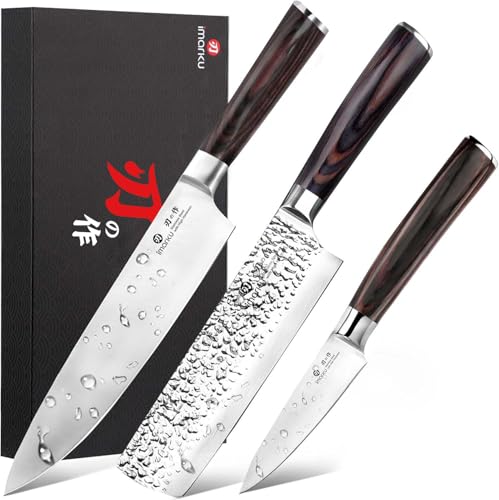
imarku 3 Pieces Knife set, Japanese HC Stainless Steel Kitchen Knife Set, Professional Chef Knife Set With Ergonomic Pakkawood Handle, Ultra Sharp Knives Set for Kitchen & Home Cooking, Best Gifts
- Ultra Sharp Double Bevel Edge: 15° angle for precise cuts
- 3-Piece Essential Kitchen Set: Includes chef, nakiri, and paring knives
- Versatile for Daily Cooking: Suitable for chopping, slicing, peeling
As an affiliate, we earn on qualifying purchases.
As an affiliate, we earn on qualifying purchases.

Cutluxe Brisket Knife, 12" Carving & Slicing Knife for Meat & BBQ
- Performance: Effortless slicing of various meats
- Blade Sharpness: Hand sharpened Granton edge for precision
- Handle Design: Full tang ergonomic pakkawood handle
As an affiliate, we earn on qualifying purchases.
As an affiliate, we earn on qualifying purchases.