
Even if two knives have the same length, they can feel very different because of handle design, weight distribution, and balance. A handle that fits well and offers a textured grip will feel more comfortable and secure. Properly balanced knives feel centered in your hand, making cutting easier. The way weight is distributed affects control and fatigue. Want to discover how these factors impact your grip and cutting experience? Keep exploring to learn more.
Key Takeaways
- Handle design, including ergonomics and texture, affects grip comfort and control, influencing how the knife feels in hand.
- Blade balance and weight distribution impact maneuverability and the perceived heaviness or lightness of the knife.
- Material choices for handle and blade alter overall weight and how that weight is felt during use.
- The knife’s ergonomic grip and contouring enhance comfort and reduce fatigue over extended periods.
- Similar length does not account for differences in handle shape, weight distribution, and balance, which shape overall handling.
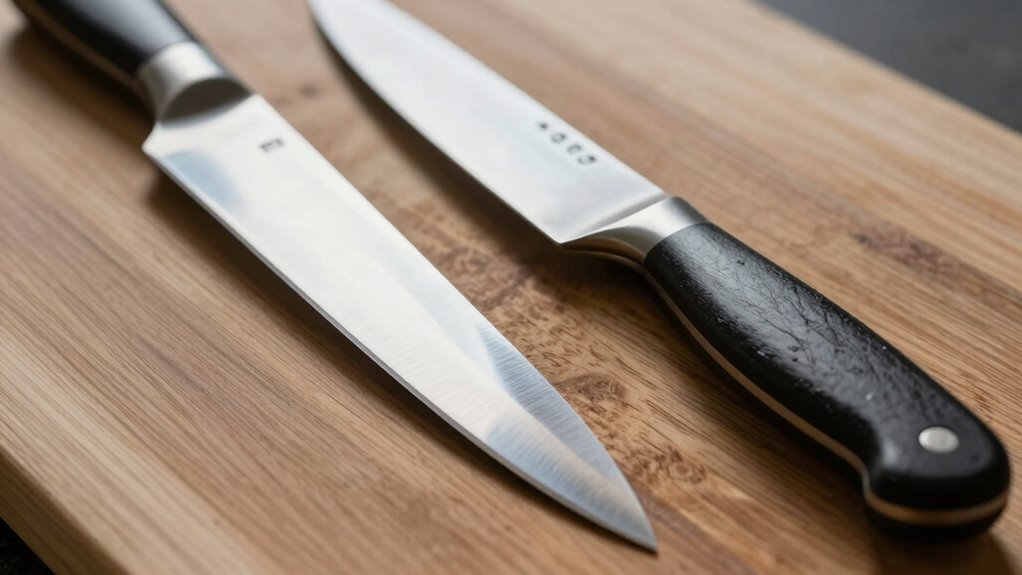
Even though two knives may be the same length, they can feel vastly different in your hand. That’s because factors like ergonomic grip and blade balance play a huge role in how a knife performs and how comfortable it feels during use. When you’re chopping, slicing, or dicing, these subtle differences can make a big impact on your efficiency and safety.
An ergonomic grip isn’t just about comfort; it’s about how well the handle fits your hand and how naturally it guides your movements. Some knives have handles designed to conform to the shape of your palm, reducing strain and preventing fatigue during extended use. Others might have a textured surface or a specific contour that enhances your grip, giving you better control and reducing the chance of slipping. If a knife doesn’t feel right in your hand, even if it’s the perfect length, you might find yourself adjusting your grip constantly, which can slow you down and increase the risk of accidents.
Blade balance is another critical factor. It refers to how the weight is distributed along the length of the knife. A well-balanced knife feels centered in your hand, making it easier to maneuver with precision. When the weight is concentrated toward the handle, it can feel heavier in your hand and might require more effort to control. Conversely, if the blade’s weight is toward the tip, you might experience a different kind of imbalance that affects your cutting accuracy. The right blade balance allows you to slice smoothly without exerting extra force or feeling fatigued quickly. Understanding blade material can influence how the weight feels and how the knife balances in your hand, further affecting your overall control.
Even if two knives are identical in length, their differences in handle design and weight distribution can translate into vastly different experiences. You might notice one feels lighter and more agile, while the other feels clunkier and harder to control. That’s why it’s essential to weigh these features, especially when choosing a knife for specific tasks. An ergonomic grip can reduce hand strain during prolonged use, and proper blade balance can improve your control and comfort.
Additionally, understanding how blade material influences weight and balance can help you select a knife better suited to your needs. Ultimately, the feel of a knife in your hand depends on these nuanced details. When you pick a knife, don’t just look at the length or blade material—test its grip and balance. These factors will determine whether it feels like an extension of your hand or an unwieldy tool. By paying attention to ergonomic design and blade balance, you’ll choose a knife that not only cuts well but also feels just right for you.
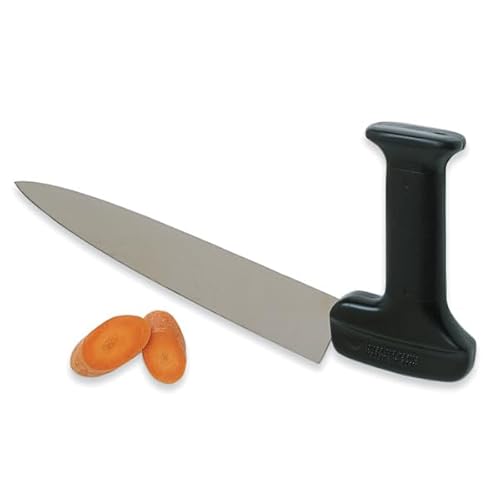
Swedish Steak Knife – Ergonomic Kitchen Chef's Knife
As an affiliate, we earn on qualifying purchases.
As an affiliate, we earn on qualifying purchases.
Frequently Asked Questions
How Does Handle Material Affect Knife Feel?
The handle material greatly affects how a knife feels in your hand. An ergonomic handle made from smooth, lightweight materials like plastic offers comfort and control, while textured handles, like rubber or wood, provide better grip and stability. The right handle material enhances your precision and reduces fatigue, making your cutting experience more enjoyable. Your choice depends on your grip preference and the type of tasks you’ll be performing.
Does Weight Distribution Impact Knife Handling?
Think of weight distribution as the balance of a tightrope walk—you feel more confident when it’s centered. It directly influences how you handle a knife, impacting your control and precision. An ergonomic grip combined with thoughtful blade curvature guarantees your hand feels naturally aligned, reducing fatigue. When weight is appropriately balanced, your movements become more intuitive, allowing you to work efficiently and comfortably, just like a skilled performer maintaining perfect harmony.
Can Grip Style Alter Perceived Knife Length?
Yes, your grip style can alter how you perceive a knife’s length. An ergonomic grip allows you to hold the knife comfortably, giving you better control and confidence, which can make it feel shorter or more manageable. Conversely, an aesthetic design that emphasizes length may influence your perception, but the way you grip the knife ultimately shapes your experience. Experimenting with different grips helps you find what feels most natural and effective.
Do Blade Thickness Differences Influence Cutting Experience?
Blade thickness differences definitely influence your cutting experience. Thinner blades tend to be more agile, allowing for precise cuts, especially with delicate ingredients. Thicker blades offer more durability and can handle tougher tasks. Blade sharpness also plays a role; a sharp knife requires less force, making your cutting technique smoother and safer. So, both blade thickness and sharpness shape how comfortable and efficient your cutting feels.
How Does Knife Balance Affect User Comfort?
Your comfort hinges on knife balance—think of it as a dance partner that’s perfectly in sync. An ergonomic design distributes weight evenly, making slicing feel effortless. Meanwhile, blade curvature influences how smoothly you glide through food, reducing fatigue. When these elements align, your knife feels like an extension of your hand, turning chopping into a joy rather than a chore. Balance truly makes or breaks your culinary harmony.
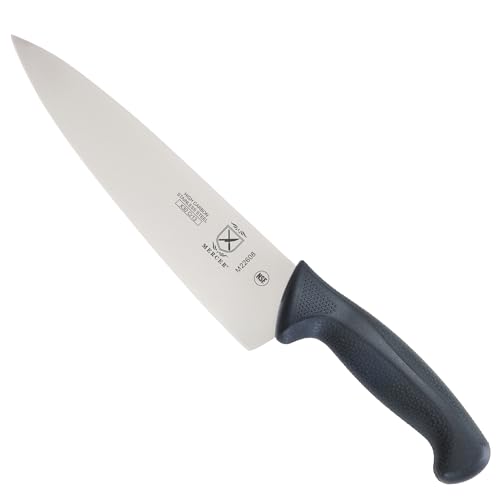
Mercer Culinary M22608 Millennia Black Handle, 8-Inch, Chef's Knife
QUALITY CONSTRUCTION: Knife is crafted with one-piece high-carbon Japanese steel for easy edge maintenance and long-lasting sharpness
As an affiliate, we earn on qualifying purchases.
As an affiliate, we earn on qualifying purchases.
Conclusion
So, next time you pick up two knives that seem identical in length, remember it’s not just about the size. Feel the weight shift in your hand, the way one balances perfectly while the other feels awkward. Imagine slicing through soft butter versus firm vegetables — their blades dance differently because of subtle differences. It’s like holding two sticks of the same length but one is smooth and the other rough. Your senses reveal what the numbers can’t show.

MITSUMOTO SAKARI 8 inch Gyuto Chef Knife, Japanese Hand Forged Kitchen Chef's Knives, 3-Layer 9CR18MOV High Carbon Steel, Rosewood Handle & Sandalwood Box
JAPANESE TRADITIONAL HAND FORGED: Professional chef knife blends traditional handmade forging craft with advanced tech and premium materials….
As an affiliate, we earn on qualifying purchases.
As an affiliate, we earn on qualifying purchases.

The HomeFlow Co’s 8" Chef Knife, Ultra Sharp German High Carbon Stainless Steel Kitchen Knife with Ergonomic Pakka Wood Handle, Full Tang Design, Professional Chef’s Knife with Gift Box
PREMIUM GERMAN HIGH-CARBON STAINLESS STEEL BLADE – Crafted from superior German high-carbon stainless steel, this professional 8-inch chef…
As an affiliate, we earn on qualifying purchases.
As an affiliate, we earn on qualifying purchases.