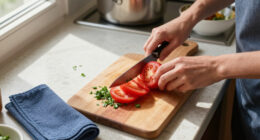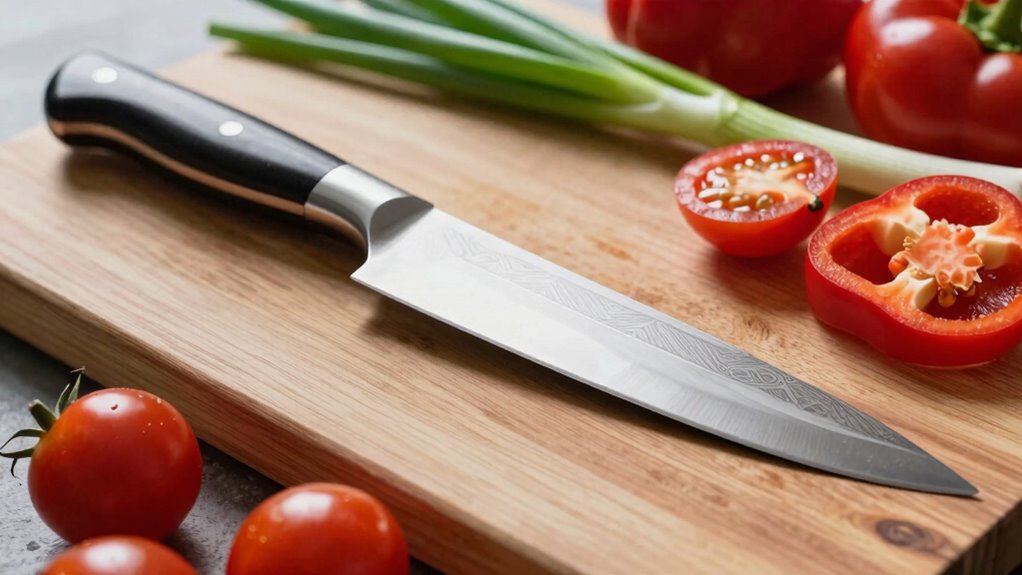
A kiritsuke can be a great addition to your kitchen if you want a versatile, multi-purpose tool for daily prep. Its long, flat blade excels at slicing vegetables, fish, and garnishes with precision, while the pointed tip is perfect for scoring and piercing delicate items. If you like to combine tasks like slicing, trimming, and garnishing into one tool, a kiritsuke makes sense. Keep exploring to discover how this hybrid knife can boost your culinary skills.

Get kitchen gear delivered free with Prime
- Fast, free delivery on millions of items
- Prime Video, Amazon Music and more included
- Member-only deals all year
Key Takeaways
- The Kiritsuke’s versatile blade handles slicing, scoring, and garnishing, making it suitable for a variety of everyday kitchen tasks.
- Its long, flat profile allows for efficient push-cutting and precise vegetable and fish slicing.
- Proper maintenance and handling ensure safety, sharpness, and durability for daily use.
- Ideal for home cooks seeking restaurant-quality presentation and detailed ingredient prep.
- Best suited for users comfortable with precise techniques, not for heavy chopping or bulk tasks.
Understanding the Unique Design of the Kiritsuke

To truly appreciate the kiritsuke, you need to understand its unique design features that set it apart from other Japanese knives. Its long, flat blade is perfect for straight, clean cuts, while the pointed K-tip offers precision for delicate tasks. The hybrid nature combines a yanagiba’s slicing edge with an usuba’s vegetable-cutting profile, making it versatile yet specialized. Traditional versions are often single-bevel, giving it a sharp, precise edge, but modern ones are double-bevel for easier handling. The broad blade near the handle supports slicing through small bones or tough ingredients. Key features include a sloped front edge ideal for scoring and piercing, a rounded spine for comfort, and an acute tip for soft foods. All these design elements enable controlled, precise cuts, making the kiritsuke a master’s tool. Understanding the unique design helps chefs utilize the knife’s full potential effectively.
Key Tasks Where the Kiritsuke Excels in Daily Kitchen Use
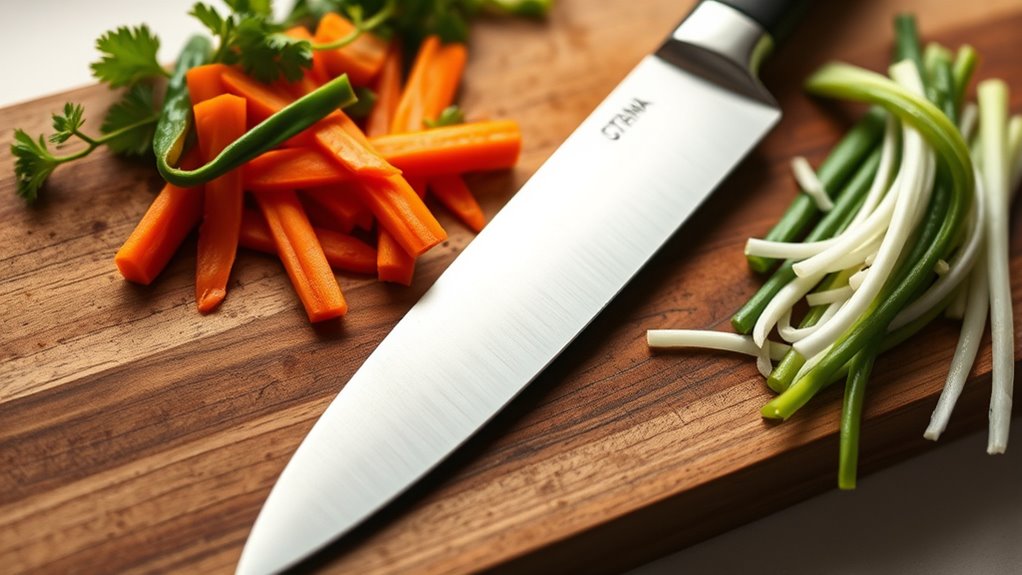
The kiritsuke really shines when you need precision slicing techniques that require control and sharpness. Its versatility makes it ideal for preparing a wide range of ingredients, from thin fish fillets to delicate vegetables. By mastering these tasks, you’ll maximize the knife’s strengths and elevate your everyday cooking skills. Additionally, understanding natural pools can inspire new ways to enhance your culinary presentation at home by creating immersive viewing experiences for cooking videos and tutorials. Proper knife sharpening techniques will ensure your kiritsuke maintains its edge for these precise cuts, making your daily tasks more efficient and enjoyable. Recognizing the cultural significance of traditional Japanese knives can deepen your appreciation and connection to their design and use. Incorporating proper maintenance practices will help preserve the knife’s performance over time, ensuring consistent results in your kitchen.
Precision Slicing Techniques
Precision slicing with a kiritsuke hinges on its long, flat blade and pointed tip, allowing you to make clean, straight cuts with minimal effort. This design enables you to achieve thin, uniform slices for fish, meats, and vegetables with ease. Whether you’re slicing sashimi, julienning carrots, or creating delicate garnishes, the kiritsuke offers unmatched control and sharpness. Its flat profile supports push-cutting techniques, reducing tearing and ensuring precision. Use the pointed tip for scoring or piercing soft foods. The following table highlights tasks where the kiritsuke excels:
| Task | Best Technique | Result |
|---|---|---|
| Fish filleting | Long, straight pushes | Thin, even slices |
| Vegetable julienne | Push cuts with the flat blade | Uniform, fine strips |
| Garnishing | Tip piercing and scoring | Precise decorative cuts |
Versatile Ingredient Prep
When it comes to preparing a variety of ingredients efficiently, the kiritsuke proves remarkably versatile in daily kitchen tasks. Its flat profile and sharp edge make it ideal for precision work across multiple prep stages. You can:
- Slice fish fillets thinly and evenly, thanks to the straight, smooth blade.
- Julienne vegetables quickly for salads or stir-fries, utilizing the push-cut technique.
- Score soft foods like tomatoes or tofu neatly, creating clean lines for even cooking or presentation.
This knife’s ability to handle both slicing and scoring reduces the need for multiple tools. Its precision and control allow you to work seamlessly on a range of ingredients, making it a valuable all-in-one prep tool in your kitchen.
Comparing the Kiritsuke to Other Popular Kitchen Knives
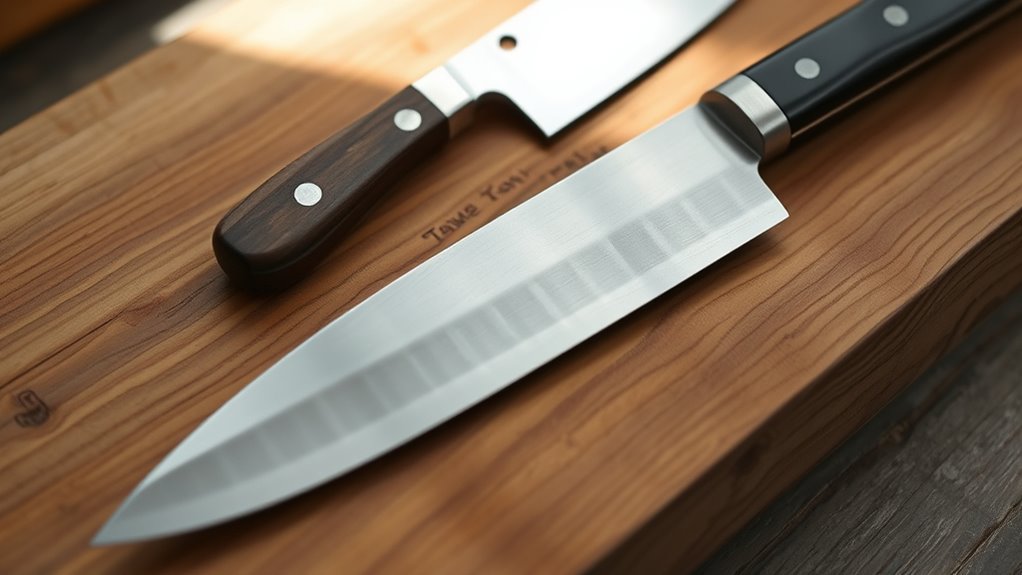
Comparing the kiritsuke to other popular kitchen knives reveals its unique blend of features that set it apart. Unlike a gyuto, which excels at broad chopping, the kiritsuke specializes in precise, straight cuts and slicing thinly, making it ideal for delicate tasks. Compared to a santoku, it offers superior slicing precision and a longer, flatter blade, though it lacks the curved belly for rocking cuts. The kiritsuke’s pointed K-tip allows for detailed piercing and scoring, which aren’t as easy with other knives. Its hybrid design combines the fish-slicing capabilities of a yanagiba with the vegetable prep of an usuba, offering versatility but requiring skill to maximize its potential. It’s more specialized than a chef’s knife, suited for users focused on precision and presentation.
Advantages of Using a Kiritsuke for Everyday Preparation

Using a kiritsuke for everyday prep offers several advantages that can elevate your cooking experience. First, its razor-sharp edge ensures you can slice delicate foods like fish and herbs thinly and cleanly, reducing tearing and mess. Second, the flat profile and long blade excel at push-cutting and straight slicing, making tasks like julienning vegetables or carving roasts quicker and more precise. Third, its versatile design allows you to handle a variety of tasks—scoring proteins, trimming fish, or preparing garnishes—without switching knives. This hybrid tool streamlines your workflow, increases control, and delivers consistent results. Additionally, its multi-purpose design makes it an ideal choice for both professional chefs and home cooks seeking efficiency. Overall, a kiritsuke simplifies intricate prep work while maintaining the precision and finesse that elevate your daily cooking.
Ideal Cooking Scenarios for the Hybrid Knife
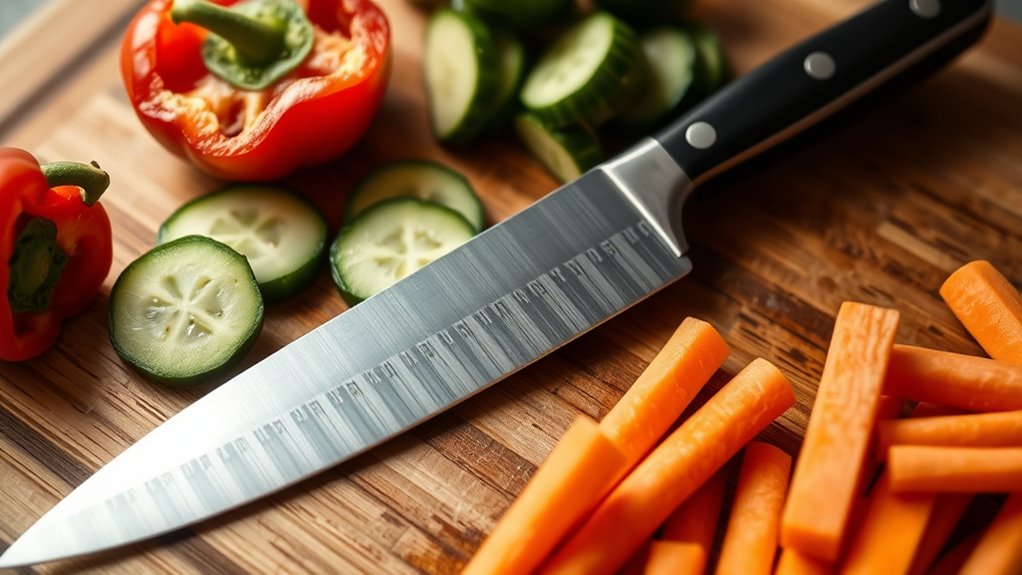
You’ll find the kiritsuke excels in preparing delicate proteins like fish and poultry, thanks to its razor-sharp, thin slices. It’s also perfect for precision vegetable tasks such as julienne or chiffonade, giving you clean, straight cuts. When you need versatility with control, this knife handles both protein and produce with ease. Additionally, the multi-functionality of luxury cutlery allows chefs to seamlessly transition between different tasks, enhancing efficiency in the kitchen. Its versatile design aligns well with the needs of home cooks seeking reliable tools for various culinary challenges. Incorporating proper technique further maximizes the knife’s performance and safety during use. Recognizing the importance of precise control can help you utilize the kiritsuke to its full potential, especially for intricate cuts.
Versatile Protein Preparation
The kiritsuke excels in versatile protein preparation, making it an invaluable tool in both home and professional kitchens. Its sharp, long blade allows you to slice fish fillets, poultry, and meats with minimal effort, delivering thin, even cuts. You’ll find it particularly effective in these scenarios:
- Filleting fish—thanks to its yanagiba edge, it glides smoothly along bones and skin.
- Carving roasts—its straight blade ensures clean, precise slices without tearing.
- Preparing small proteins—such as chicken breasts or tenderloin—due to its ability to control depth and detail.
- Incorporating best CAD papers in the manufacturing of knife components can improve durability and precision. Understanding material properties can help select the most suitable types for different knife parts, enhancing overall performance.
This knife’s combination of slicing and scoring capabilities streamlines protein prep, reducing the need for multiple tools while elevating presentation and texture.
Precision Vegetable Slicing
The kiritsuke’s long, flat blade shines in precision vegetable slicing, where clean, uniform cuts elevate both presentation and cooking consistency. You’ll appreciate its straight-edge design for slicing root vegetables like carrots, daikon, or parsnips into even julienne strips. The blade’s length allows you to make continuous, straight cuts without needing to reposition your hand, ensuring neat results. Its flat profile excels at push-cutting tasks, creating thin, delicate ribbons of herbs like basil or mint or slicing cabbage for salads. The acute tip pierces soft-skinned produce such as tomatoes or peaches with ease, allowing for precise, damage-free cuts. When presentation matters, and uniformity in cuts is key, the kiritsuke transforms vegetable prep into a swift, controlled process. Additionally, its versatile design makes it suitable for multi-tasking in various kitchen scenarios, streamlining your prep work. Proper handling techniques, such as correct grip and cutting angles, are essential for safety and efficiency during use. Mastering proper sharpening and maintenance also ensures the knife remains effective for precision cutting over time.
Tips for Maintaining and Using Your Kiritsuke Effectively

To keep your kiritsuke performing at its best, regular maintenance and proper handling are essential. First, always hand wash and dry your knife immediately after use to prevent rust and corrosion, especially if it’s high-carbon steel. Second, sharpen the blade regularly using a whetstone, maintaining the correct angle—around 15°, for ideal edge retention. Third, store your kiritsuke safely in a knife block or on a magnetic strip to avoid dulling the edge and protect your fingers. Additionally, use a gentle cutting surface like wood or plastic; avoid glass or marble, which can scratch and dull the blade. Proper care ensures your kiritsuke remains sharp, precise, and ready for detailed slicing tasks.
Who Should Consider Adding a Kiritsuke to Their Knife Collection

If you’re passionate about achieving restaurant-quality presentation at home, adding a kiritsuke to your collection can elevate your cooking. This knife is ideal for skilled home cooks who prioritize precision slicing and detailed prep work. If you often prepare fish, vegetables, or delicate garnishes, the kiritsuke’s sharp, straight edge makes those tasks easier and more accurate. It’s especially suited for those comfortable with push-cut techniques and looking to streamline their toolkit by replacing multiple knives. Professional chefs or serious home cooks who value control, craftsmanship, and presentation will find this hybrid knife a valuable addition. Additionally, mastering techniques such as proper grip and cutting angles can enhance your control and efficiency with a kiritsuke. However, if you mainly chop for bulk cooking or need a versatile all-in-one, a gyuto or santoku might serve you better. The kiritsuke excels in specialized, detail-oriented tasks. Mastering R sounds in speech therapy techniques can also enhance the clarity and precision of verbal instructions when teaching knife skills. Incorporating specialized kitchen tools like the kiritsuke can further improve your overall culinary efficiency and presentation.
Frequently Asked Questions
Can a Beginner Safely Use a Kiritsuke Effectively?
Yes, you can safely use a kiritsuke if you learn proper techniques and start slowly. Focus on controlling the blade, especially since it’s sharp and designed for precision. Keep your fingers away from the cutting edge, use a stable cutting surface, and practice push cuts and straight slicing. Over time, you’ll develop better control and confidence, making this versatile knife a valuable tool in your kitchen.
Is a Double-Bevel Kiritsuke Easier to Handle Than Traditional Single-Bevel?
A double-bevel kiritsuke is generally easier to handle than a traditional single-bevel because it offers more stability and control, especially for those less experienced. You don’t have to worry about the angle of the bevel or maintaining a specific cutting technique. This makes the knife more versatile and forgiving, letting you focus on your cuts without the need for advanced skill, perfect for home cooks seeking precision with less effort.
How Does the Weight of a Kiritsuke Compare to Other Japanese Knives?
You’ll find that a kiritsuke typically weighs between 6 to 8 ounces, making it lighter than many traditional Japanese knives like the deba or yanagiba, which can weigh up to 12 ounces. This lighter weight gives you better control, especially for precision slicing and push cuts. Compared to a gyuto, it’s often more balanced for delicate work, so you can handle intricate tasks with less fatigue during extended use.
Can a Kiritsuke Replace a Gyuto or Santoku in My Kitchen?
Yes, a kiritsuke can replace a gyuto or santoku in your kitchen, especially if you focus on slicing, precision cuts, and presentation. It offers versatility for vegetables, fish, and meats, combining features of both knives. However, it’s more specialized, so if you need a broader chopper or heavy-duty work, you might still want separate knives. Use the kiritsuke for detailed work and delicate slicing to maximize its strengths.
What Are Common Mistakes to Avoid When Using a Kiritsuke Daily?
Using a kiritsuke daily is like walking a tightrope—you need balance and precision. Avoid applying excessive force, which can damage the blade or cause slips. Never use it to chop bones or hard materials, as it’s designed for delicate slicing. Keep your edge sharp and don’t ignore proper technique. Also, don’t neglect regular maintenance; a dull knife is a dangerous and inefficient tool.
Conclusion
Incorporating a kiritsuke into your daily routine can transform your cooking game entirely. Its versatile design makes it a powerhouse for various tasks, turning even the most mundane prep into a seamless experience. Think of it as the secret weapon in your kitchen arsenal—more essential than your favorite spice! If you want to elevate your skills and make every cut count, the kiritsuke is your must-have tool. Don’t miss out—your culinary adventures deserve this game-changing knife!
Fall Picks
fall essentials
As an affiliate, we earn on qualifying purchases.