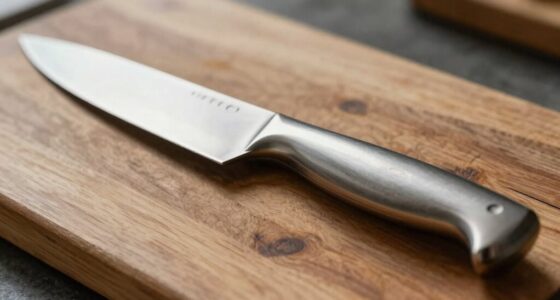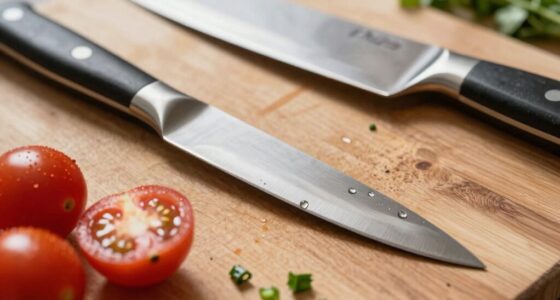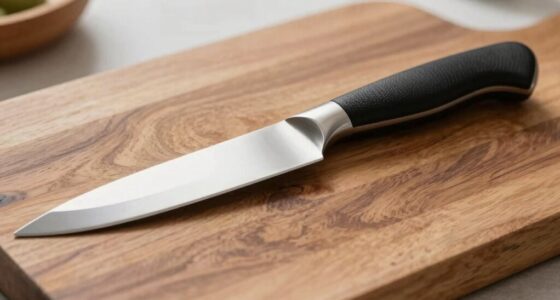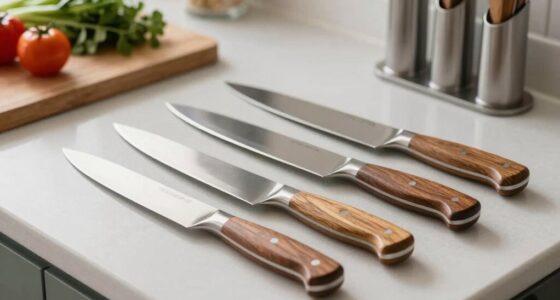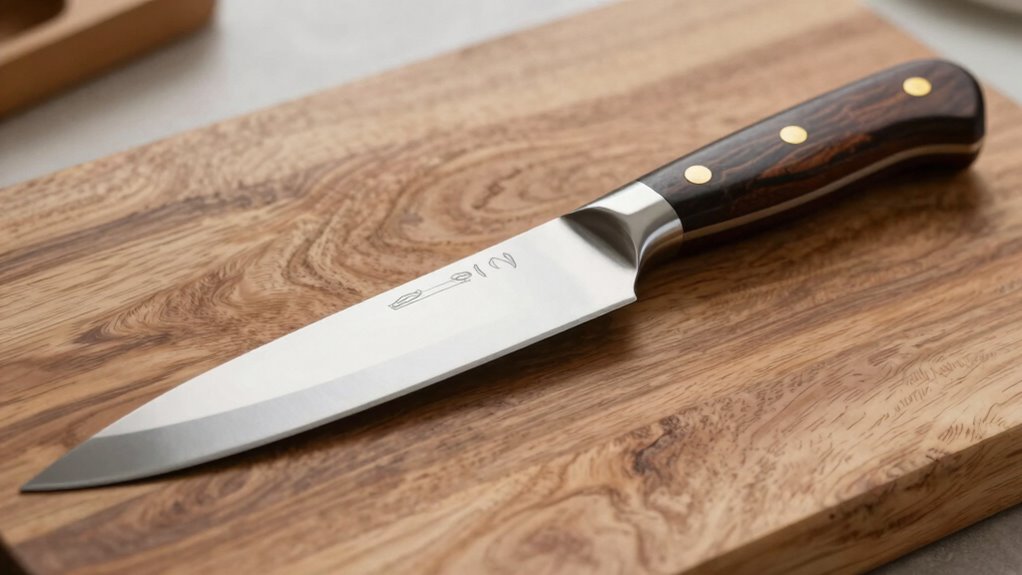

When looking at a knife listing, focus on the blade material, as it affects sharpness, durability, and maintenance. Check the blade geometry to verify it suits your intended tasks, and review the handle design for comfort and safety. Consider handle material and texture for grip and environmental resistance. Also, note the overall size, weight, and any special features that match your needs. If you keep these specs in mind, you’ll find the perfect knife—more details are just ahead.

Get kitchen gear delivered free with Prime
- Fast, free delivery on millions of items
- Prime Video, Amazon Music and more included
- Member-only deals all year
Key Takeaways
- Blade material type (stainless steel, high-carbon, exotic alloys) affects durability, maintenance, and performance.
- Blade geometry and shape determine suitability for specific tasks and cutting efficiency.
- Handle material and ergonomic design influence comfort, grip security, and safety during use.
- Blade length and thickness impact control, precision, and suitability for different cutting tasks.
- Maintenance instructions and care requirements ensure longevity and optimal performance.
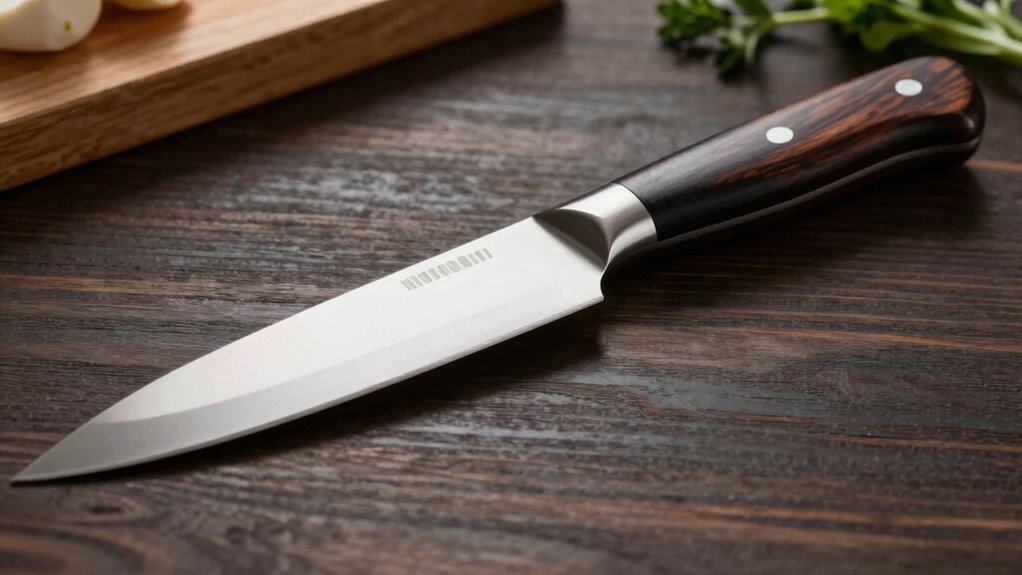
When you’re shopping for a new knife, understanding the key specs listed can make all the difference in choosing the right tool for your needs. Two of the most important specs to pay attention to are the blade material and handle ergonomics. These details directly influence the knife’s performance, durability, and comfort, helping you make an informed decision.
Starting with blade material, it’s vital because it determines how well the knife will hold its edge, how resistant it is to corrosion, and how easy it is to sharpen. Common blade materials include stainless steel, high-carbon steel, and exotic alloys. Stainless steel is popular for its corrosion resistance and low maintenance, making it suitable for everyday use. High-carbon steel, on the other hand, offers superior edge retention and sharpness, but it requires more care to prevent rust. Exotic alloys may provide a combination of durability, corrosion resistance, and edge retention, but they often come at a higher price. When reviewing a knife listing, look for details on the blade material to gauge how it matches your intended use—whether you need a tough, long-lasting blade for heavy tasks or a finely honed edge for precision work. Additionally, understanding the blade geometry can significantly impact how the knife performs and feels during use, as different shapes are optimized for various tasks. Proper blade care also plays a crucial role in maintaining its performance over time.
Choose blade materials carefully for durability, edge retention, and maintenance based on your specific needs.
Handle ergonomics is equally essential because it affects how comfortably and securely you can grip the knife. A well-designed handle fits naturally in your hand, reducing fatigue during extended use and providing better control. Pay attention to the handle shape, material, and texture. For example, a contoured handle that follows the natural shape of your hand allows for a more comfortable grip, while textured surfaces help prevent slipping, especially when your hands are wet or greasy. Handle materials vary from wood and synthetic composites to rubber, each offering different levels of grip, comfort, and durability. If you plan on using your knife frequently or for demanding tasks, prioritize handles with good ergonomics that feel balanced and secure in your grip. Remember that handle material can also influence how well the handle withstands environmental factors like moisture or temperature changes, which is essential for longevity and safety.
As an affiliate, we earn on qualifying purchases.
Frequently Asked Questions
How Do Knife Specs Affect Overall Performance?
Knife specs directly influence your performance by affecting comfort and durability. Blade ergonomics guarantee you handle the knife comfortably, reducing fatigue during long use. Meanwhile, edge retention determines how long the knife stays sharp, making your cutting tasks easier and safer. When these specs are optimized, you get a tool that’s efficient, comfortable, and reliable, helping you do your work better and faster without frequent sharpening or discomfort.
Are Higher Specs Always Better for Everyday Use?
Higher specs aren’t always better for everyday use because they can sometimes compromise comfort and practicality. For example, a knife with a high blade hardness might stay sharp longer, but it could be harder to sharpen and more prone to chipping. Also, blade ergonomics and handle weight matter—if the handle is too heavy or uncomfortable, it affects control during daily tasks. Balance specs with your comfort and needs for maximum performance.
What Materials Are Most Durable for Knife Handles?
You’ll find that materials like G-10, Micarta, and stainless steel offer the most durability for knife handles. These materials excel in handle ergonomics, providing a comfortable grip, and boast high corrosion resistance, making them ideal for daily use. While some might worry about weight, these tough materials balance durability with ease of handling, ensuring your knife stays reliable through heavy use and exposure to moisture.
How Does Blade Shape Influence Cutting Ability?
Blade shape, influenced by blade geometry, directly impacts your cutting ability. A curved blade allows for smoother rocking motions, ideal for chopping and mincing, while a straight edge provides precise slicing. The shape also affects edge retention; well-designed blades maintain sharpness longer, ensuring efficient cuts. Choosing the right blade shape based on your tasks helps you cut more effectively, making your kitchen work easier and safer.
Are There Safety Considerations Based on Knife Specs?
Did you know that 60% of knife injuries happen due to poor safety features or an ergonomic grip? You should prioritize knives with safety features like non-slip handles and secure locking mechanisms. An ergonomic grip ensures better control, reducing accidental slips. Always check for safety features on the knife listing, as they can greatly minimize injury risks and make your cutting tasks safer and more comfortable.
As an affiliate, we earn on qualifying purchases.
Conclusion
So, next time you’re eyeing that fancy knife, don’t just swoon over the shiny handle or impressive brand. Remember, the real magic lies in those specs—blade length, steel type, and edge angle. Because, of course, what’s more exciting than obsessing over technical details instead of actually using the knife? Happy hunting, and may your purchases be as sharp as your new blade’s edge—literally. Who knew specs could be so thrilling?
As an affiliate, we earn on qualifying purchases.
As an affiliate, we earn on qualifying purchases.
Halloween Picks
halloween
As an affiliate, we earn on qualifying purchases.