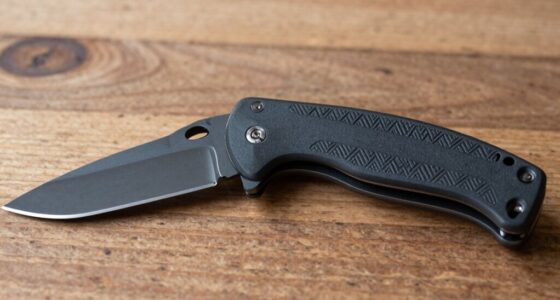
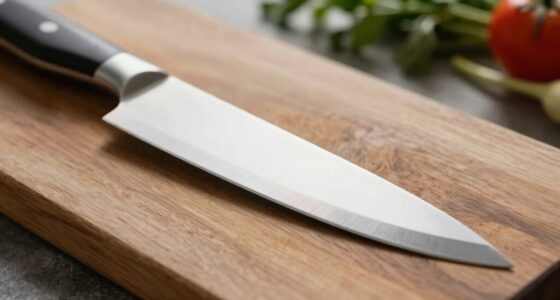
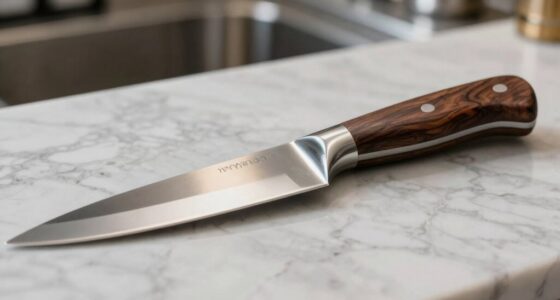
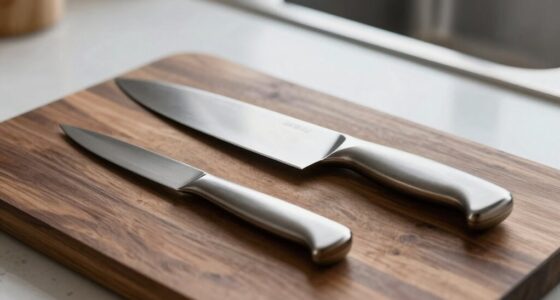
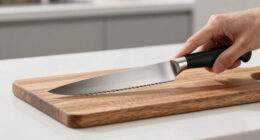
To find a beginner-friendly knife that doesn’t feel cheap, look for one with a sharp, durable stainless steel blade that’s easy to sharpen and maintain. Choose a handle made of non-slip, ergonomic materials like rubber or textured plastic for comfort and control during use. A well-balanced, lightweight design helps prevent fatigue, while smooth construction minimizes safety risks. When you keep these features in mind, you’ll be better equipped to select a knife that offers quality performance without a hefty price tag—and there’s more to explore if you continue.
Key Takeaways
- Choose a knife with a comfortable, ergonomic handle for easy control and reduced fatigue.
- Opt for high-quality stainless steel that stays sharp and is easy to sharpen over time.
- Ensure the blade has a balanced weight for precise cuts and safe handling.
- Select a lightweight design that feels manageable and reduces user strain.
- Prioritize safety features like non-slip handles to enhance grip and confidence during use.
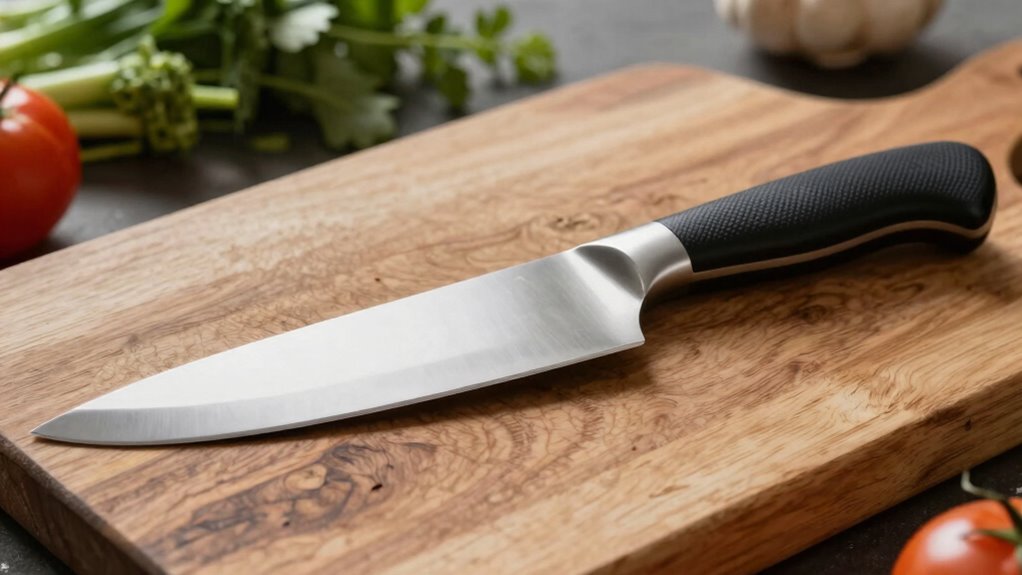
Are you wondering how to find a knife that’s easy to handle for beginners but doesn’t feel cheap or flimsy? The key lies in understanding what makes a knife beginner-friendly, especially when it comes to knife material and handle comfort. As a beginner, you want something that offers a good grip, balanced weight, and reliable performance without breaking the bank. The right knife material plays a vital role in durability and ease of use. High-quality stainless steel, for example, is a popular choice because it resists rust and corrosion, stays sharp longer, and is easy to sharpen when needed. You don’t have to go for the most expensive options—there are affordable knives made from decent steel that deliver excellent performance for everyday cooking tasks. Avoid cheaply made steels that dull quickly or chip easily, as these can make your cooking experience frustrating and unsafe. Considering the knife’s construction can also impact its overall durability and safety during use. Additionally, choosing a well-made handle can significantly improve your comfort and control during slicing or chopping tasks.
Handle comfort is just as important as the blade itself. A beginner-friendly knife should feel comfortable in your hand, giving you control without causing fatigue. Look for handles made from materials like rubber, textured plastic, or composite materials that provide a non-slip grip. These materials help you maintain control, especially when your hands are wet or greasy. The handle should also be well-balanced with the blade, not too heavy on one end, so you can maneuver with confidence and precision. Ergonomically designed handles are a bonus—they fit comfortably in your palm and reduce strain during extended use. When choosing a knife, hold it in your hand if possible, and see how it feels. A handle that feels awkward or slippery can make even the best blade feel uncomfortable and difficult to control. Additionally, selecting a knife with quality steel ensures durability and ease of maintenance, which is essential for beginners learning proper care. A properly balanced knife can also enhance safety and make cutting more efficient. Ensuring that the blade edge is easy to sharpen can also help maintain performance over time and build confidence in your skills. Moreover, a lightweight design can reduce fatigue, making it easier for beginners to practice their cutting techniques comfortably.

Astercook Knife Set for Kitchen with Block and Sharpener 15pcs German
【15 Pieces Multipurpose Knife Set】 15 pieces knife set includes: 8" Chef knife, 8" Slicing knife, 7" Santoku…
As an affiliate, we earn on qualifying purchases.
As an affiliate, we earn on qualifying purchases.
Frequently Asked Questions
What Materials Are Best for a Beginner’s Knife?
For a beginner’s knife, choose one with durable materials like stainless steel for the blade, which offers sharpness and easy maintenance. Opt for knife handle types like pakkawood or rubber, which provide a comfortable and secure grip. Look for blade edge angles around 15-20 degrees, making it easier to control and cut efficiently. These features guarantee your knife is both user-friendly and reliable without feeling cheap.
How Do I Maintain and Sharpen a Beginner Knife?
Maintaining and sharpening your beginner knife is simple with steady steps. Regularly clean the blade to prevent buildup, and use a honing rod to keep it aligned. When sharpening, consider blade length for precision, and choose a gentle sharpening stone to avoid damage. Prioritize knife handle comfort to maintain control, and sharpen consistently to preserve edge sharpness. Proper care guarantees your knife stays reliable, safe, and satisfying to use.
Are Cheaper Knives Safe to Use?
Cheaper knives can be safe to use if you choose ones with good knife aesthetics and a reputable brand. Look for knives with sturdy handles and sharp blades, even if they’re affordable. A well-made budget knife can perform safely and effectively. Always handle knives carefully, regardless of price, and prioritize brands known for quality, as they often guarantee better safety features and durability.
What Size Knife Is Ideal for Beginners?
As a beginner, an 8-inch chef’s knife is ideal because it offers a good balance of control and versatility. Focus on knife handle ergonomics to guarantee comfort during use, reducing fatigue. Also, consider blade thickness; a medium thickness provides strength without sacrificing precision. This size is manageable, versatile, and safer, making it perfect for learning basic cuts while feeling comfortable and confident in your skills.
How Can I Tell if a Knife Is Balanced?
You can tell if a knife is balanced by feeling its weight distribution. Hold the knife with your hand and see if it feels evenly weighted between the blade and handle, ensuring comfort with the handle’s design. A well-balanced knife offers better control and reduces fatigue. When the blade and handle seem to share the load smoothly, it’s a sign the knife’s balance is just right, making your cutting experience more enjoyable.

HOSHANHO Kitchen Knife in Japanese High Carbon Steel, Professional High-Class Chef's Knife 8 inch, Non-slip Ultra Sharp Cooking Knives with Ergonomic Handle
【High-End Japanese Steel Chef's Knife】 HOSHANHO chef's knife is made of Japanese high carbon steel 10Cr15CoMoV, 2x of…
As an affiliate, we earn on qualifying purchases.
As an affiliate, we earn on qualifying purchases.
Conclusion
Choosing a beginner-friendly knife that doesn’t feel cheap comes down to balancing quality, comfort, and style. Think of it like picking a trusty steed—reliable, well-crafted, and easy to handle. Remember, even the finest blade can be a knight’s rusty sword if it’s poorly maintained. So, invest wisely, care for it, and you’ll find your skills sharpening faster than a medieval blacksmith’s blade. After all, a good knife is your trusted squire in the kitchen’s joust.

HOSHANHO 3 Pieces Knife Set, Professional Japanese High Carbon Stainless Steel Kitchen Knife Set, Ultra Sharp Chef Knives Sets with Ergonomic Pakkawood Handle
【Multifunction】HOSHANHO 3 Piece professional kitchen knife set comes with 8" chef's knife, 7" santoku knife and 6" utility…
As an affiliate, we earn on qualifying purchases.
As an affiliate, we earn on qualifying purchases.
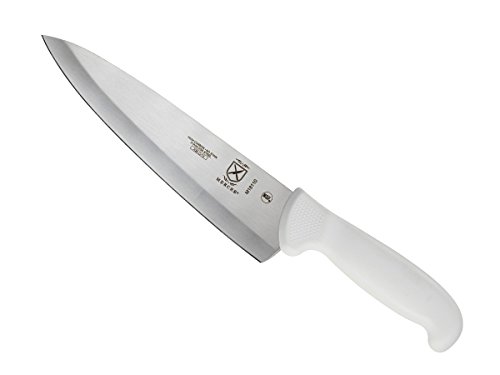
Mercer Culinary Ultimate White, 8 Inch Chef's Knife
QUALITY CONSTRUCTION: Knives are crafted with high-carbon Japanese steel for easy edge maintenance and a razor sharp blade…
As an affiliate, we earn on qualifying purchases.
As an affiliate, we earn on qualifying purchases.