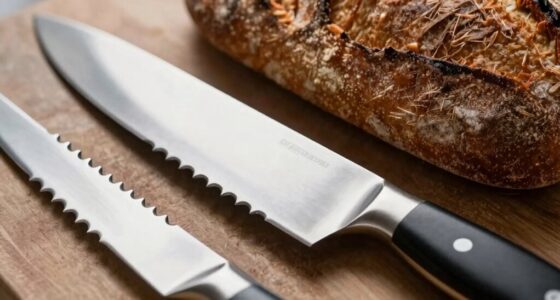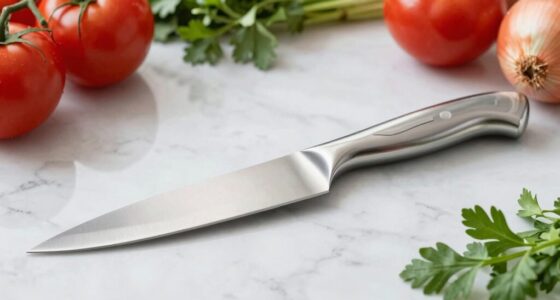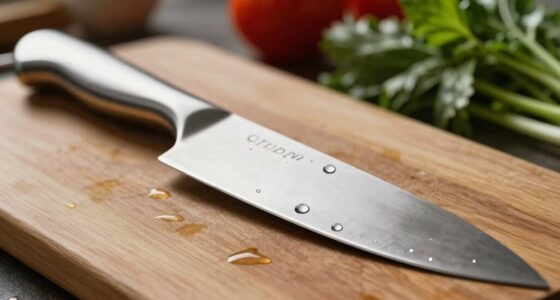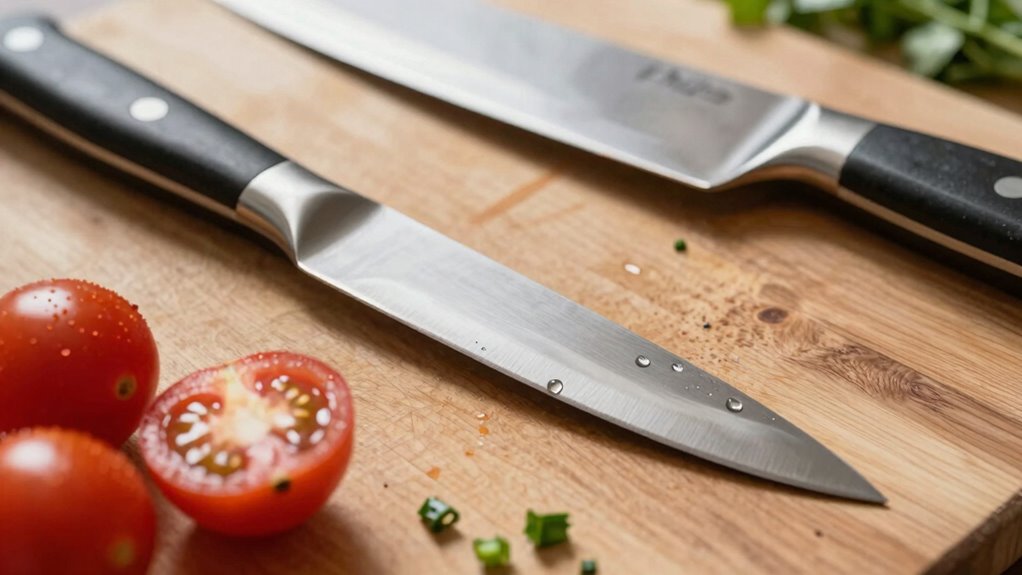

A smaller knife makes more sense than a chef knife when you need precision, control, or delicate handling. It’s ideal for peeling fruit, trimming, garnishing, or working in tight spaces where accuracy matters more than brute force. Smaller knives help you avoid accidents, stay organized, and follow traditional culinary techniques that require finesse. If you want to master these detailed tasks and improve your overall skills, keep exploring the benefits of choosing the right tool for each job.

Get kitchen gear delivered free — and shop member deals
- Fast, free delivery on millions of items
- Access to Prime Big Deal Days deals on October 6–7
- Prime Video, Amazon Music and more included
Key Takeaways
- For detailed, precise tasks like peeling, trimming, or garnishing where control is essential.
- When working in confined spaces or on small ingredients needing finesse.
- To enhance safety and organization during storage and handling of delicate blades.
- For cuisines or techniques that emphasize precision, such as sushi or pastry work.
- When developing skills that require delicate motions and avoid unwieldy tools.
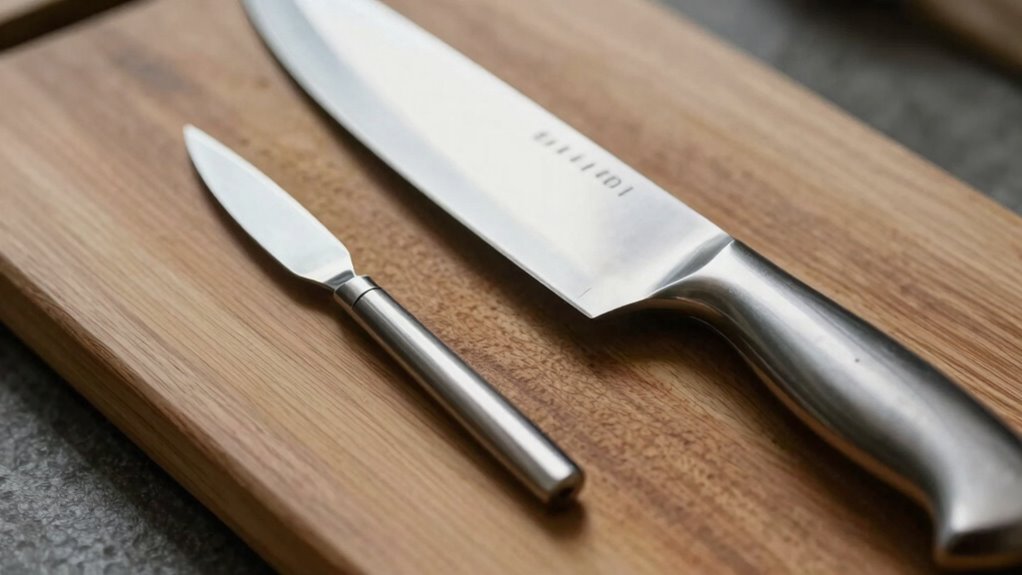
While a large chef’s knife might seem like the default choice for all kitchen tasks, there are times when a smaller knife actually makes more sense. When you’re working in tight spaces or handling delicate ingredients, a smaller blade offers better control and precision. Instead of cluttering your countertop with oversized knives, you can keep a trusty paring or utility knife close at hand for detailed work. These smaller knives are especially handy for tasks like peeling, trimming, or garnishing, where accuracy matters more than brute force.
Smaller knives offer better control and precision for delicate kitchen tasks and detailed work.
In terms of knife storage, smaller knives are easier to organize and safer to store. You avoid the risk of accidental cuts or damage to the blade by keeping them in a dedicated block, a drawer insert, or a magnetic strip. Because they’re more compact, they take up less space and are less likely to get lost among larger tools. Proper knife storage not only prolongs the life of your blades but also boosts kitchen safety, especially if you share your space with others or have children around. Additionally, proper knife storage can help prevent corrosion and dulling over time, keeping your smaller knives sharp and ready for use. Maintaining the right storage methods also supports blade longevity, ensuring your knives stay effective and safe to use for years to come.
Culinary traditions also influence when a smaller knife is the better choice. Many cultural cuisines emphasize specific techniques that require precise cuts—think of Japanese sushi preparation or French pastry work. These traditions often favor smaller, specialized knives designed for particular tasks. Using the right knife for the job aligns your techniques with those culinary customs, helping you achieve authentic results. It also allows you to develop more finesse and confidence in your skills, as you learn to handle each tool with purpose. Moreover, choosing the appropriate knife can enhance your understanding of culinary precision, which is essential for mastering complex dishes.
Moreover, smaller knives excel in tasks that demand finesse rather than force. When you’re peeling fruit, deveining shrimp, or decorating a cake, a large chef’s knife can feel unwieldy and imprecise. A smaller knife offers better maneuverability, giving you better control over delicate motions. Additionally, choosing appropriate tools for specific tasks is a key aspect of honing your culinary craft, ensuring precision and efficiency in your cooking. This precision enhances the presentation and quality of your dishes, elevating your cooking from good to great.
paring knife for detailed kitchen tasks
As an affiliate, we earn on qualifying purchases.
As an affiliate, we earn on qualifying purchases.
Frequently Asked Questions
Can a Smaller Knife Replace a Chef Knife for All Tasks?
A smaller knife can’t replace a chef knife for all tasks because it lacks the versatility needed for larger or tougher ingredients. However, it offers ergonomic advantages and alternative uses, especially for precise work like peeling or mincing. You’ll find it easier to control and less tiring for delicate tasks. For most heavy-duty chopping or slicing, though, a chef knife remains the better choice, but a smaller knife complements your toolkit well.
What Are the Main Safety Benefits of Using a Smaller Knife?
Using a smaller knife enhances safety by offering better blade control, reducing the risk of slips. You naturally adopt a safer safety grip, ensuring your fingers stay clear of the blade’s path. Imagine effortlessly slicing with precision, feeling confident in your grip. The smaller blade’s design keeps your hand close, minimizing accidents and boosting your confidence in the kitchen. It’s a simple switch that makes a big difference in safety.
How Do I Choose the Right Small Knife for My Needs?
To choose the right small knife, consider your tasks and comfort. Look for an ergonomic grip that feels secure and comfortable in your hand, reducing fatigue. Focus on blade versatility—pick a knife with a sharp, well-balanced blade suited for slicing, dicing, or peeling. Test different models if possible, and select one that offers precision and control for your specific needs, ensuring safer and more efficient prep work.
Is a Smaller Knife Suitable for Professional Chefs?
A smaller knife is suitable for professional chefs when precision cutting and ergonomic design matter most. While a chef knife excels at versatile tasks, a smaller knife offers better control for detailed work like garnishing or filleting. Its ergonomic design reduces fatigue during intricate tasks, making it a valuable tool in your kitchen arsenal. You’ll find that for specific, delicate tasks, a smaller knife enhances both efficiency and accuracy.
How Does Knife Maintenance Differ Between Small and Chef Knives?
You need to be more attentive when maintaining small knives compared to chef knives. Small blades often require more frequent sharpening to preserve blade longevity, as they’re used for precise, detailed cuts. Use gentle sharpening techniques, like honing with a fine stone or ceramic rod, to avoid damaging delicate edges. Regular cleaning and proper storage also help maintain their sharpness and prevent rust, ensuring your small knives perform well over time.
utility knife for precision cooking
As an affiliate, we earn on qualifying purchases.
As an affiliate, we earn on qualifying purchases.
Conclusion
Sometimes, going for a smaller knife is the smarter choice—you don’t want to bite off more than you can chew. Whether you’re tackling delicate tasks or working in tight spaces, a smaller knife can be your best ally. Don’t overlook the power of the right tool; it can make all the difference. Remember, sometimes less is more, and choosing the right knife means you’re already ahead of the game.
small chef knife for peeling and garnishing
As an affiliate, we earn on qualifying purchases.
As an affiliate, we earn on qualifying purchases.
As an affiliate, we earn on qualifying purchases.
Fall Picks
fall essentials
As an affiliate, we earn on qualifying purchases.