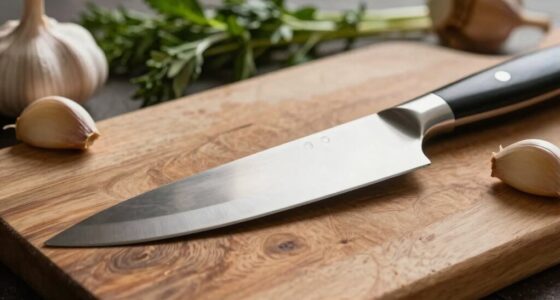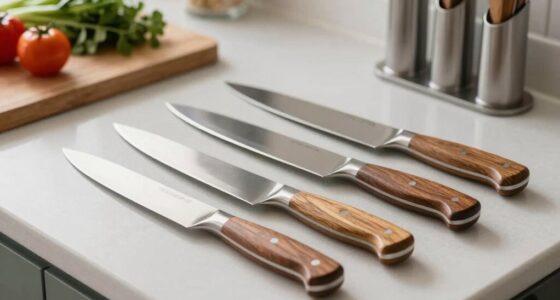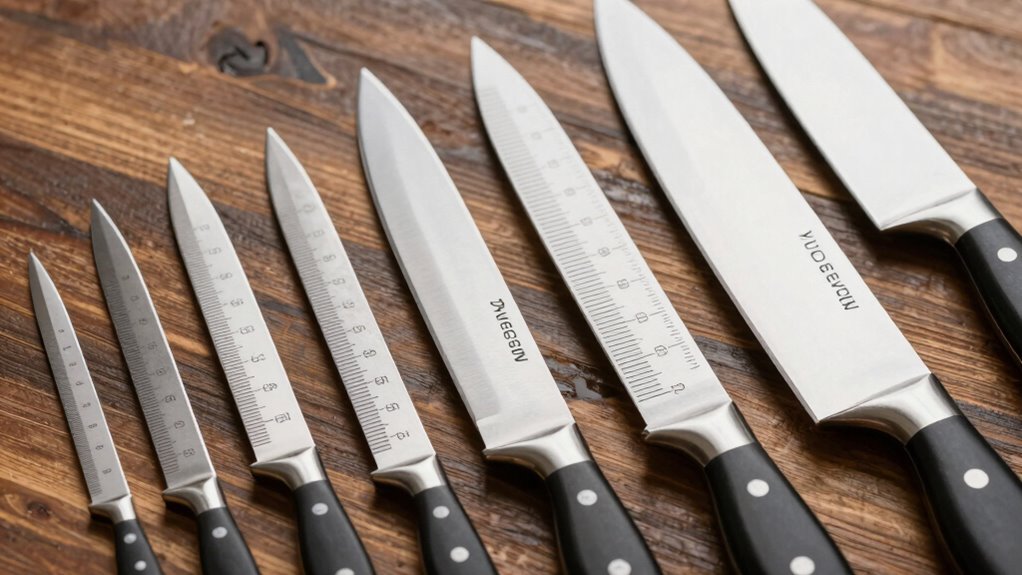

To compare knife sizes in centimeters and inches, understand that many chef’s knives measure about 20 cm or 8 inches. To convert: divide centimeters by 2.54 to get inches, or multiply inches by 2.54 to find centimeters. Knowing these conversions helps you pick the right size for your needs. If you want to learn more about choosing the perfect knife size and style, keep exploring the details.

Get kitchen gear delivered free — and shop member deals
- Fast, free delivery on millions of items
- Access to Prime Big Deal Days deals on October 6–7
- Prime Video, Amazon Music and more included
Key Takeaways
- Convert centimeters to inches by dividing the measurement by 2.54; convert inches to centimeters by multiplying by 2.54.
- A typical chef’s knife measures around 20 cm (8 inches), making it a common reference size.
- Use size conversions to compare knife lengths across different measurement systems accurately.
- Remember that overall length includes blade and handle, impacting usability and comfort.
- Consider blade and handle proportions alongside size for better knife selection and handling.
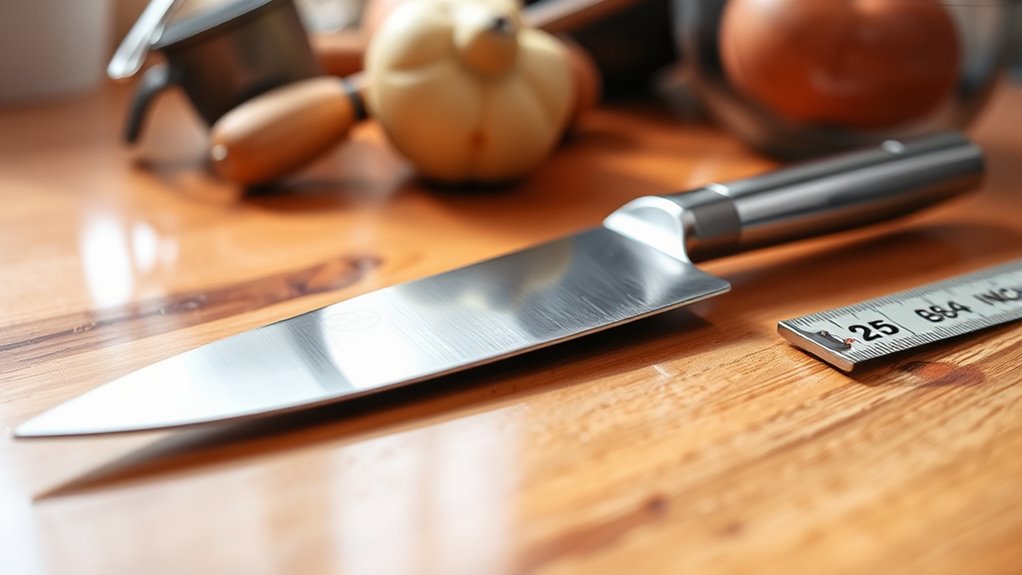
Ever wondered how to compare knife sizes across different measurement systems? It’s a common question, especially when shopping internationally or reading reviews that use inches while you’re used to centimeters. Understanding the conversion between centimeters and inches helps you choose the right knife for your needs, whether you’re in the kitchen or on the hunt for a new pocket knife. But size isn’t just about numbers; it’s also about how the knife feels and functions. When evaluating a knife, consider aspects like knife handle ergonomics, which refer to how comfortably and securely the handle fits in your hand. A well-designed handle reduces fatigue and improves control, making even a longer blade easier to maneuver. Handle ergonomics can vary considerably between models, so it’s worth testing if you can before buying. Also, pay attention to blade material types, as they influence durability, sharpness retention, and maintenance. Common blade materials include stainless steel, carbon steel, and ceramic, each with its own benefits and drawbacks. For example, stainless steel blades are corrosion-resistant and low-maintenance, making them popular for everyday use. Carbon steel blades are prized for their sharpness and edge retention but require more care to prevent rust. Ceramic blades are incredibly hard and stay sharp longer but are more brittle and prone to chipping if mishandled.
When you’re comparing knives, size conversions are straightforward once you understand the basics. A typical chef’s knife might measure around 20 centimeters, which is roughly 8 inches. To convert centimeters to inches, divide the centimeter length by 2.54, since one inch equals 2.54 centimeters. Conversely, to convert inches to centimeters, multiply the inch measurement by 2.54. This simple math allows you to compare sizes regardless of the measurement system used. Keep in mind that the overall length of a knife isn’t the only consideration. The blade length, handle length, and the balance between them influence how comfortable and effective the knife feels in your hand. For example, a shorter blade with a well-designed handle might feel more agile, especially if the handle ergonomics are tailored for your grip style.
As an affiliate, we earn on qualifying purchases.
Frequently Asked Questions
Are Knife Sizes Standardized Worldwide?
You’ll find that knife sizes aren’t standardized worldwide, which can make knife safety and choosing the right tool tricky. Different culinary traditions prefer specific sizes, and these variations impact how you handle knives safely. When you’re cooking internationally, it’s important to comprehend these differences to prevent accidents and ensure proper technique. Always check the size and style of your knives to match your culinary needs and respect local traditions.
How Do Blade Shapes Affect Size Measurements?
Think of blade shapes as the personality behind the size. You’ll notice blade length variations don’t tell the whole story—shape influence plays a key role. A curved chef’s knife feels more agile, while a straight paring knife offers precision. These differences shape how you handle and perceive the knife, making size alone insufficient. Embrace the symbolism: the shape reveals the knife’s true character beyond mere measurements.
What Is the Most Common Knife Size for Chefs?
The most common chef’s knife size is 8 inches, or about 20 centimeters. You should prioritize proper knife maintenance, like regular honing and sharpening, to keep it sharp. Also, store your knife correctly in a knife block or on a magnetic strip to prevent damage and accidents. This size offers versatility for most kitchen tasks, making it a favorite among chefs and home cooks alike.
Do Larger Knives Require Different Handling Techniques?
Yes, larger knives demand different handling techniques, so don’t expect to just waltz through your chopping. You’ll need an ergonomic grip to control that hefty blade and adapt your cutting technique to maintain safety and precision. Think of it like wielding a sword—confidence and proper form matter. Otherwise, you risk a chop catastrophe. So, embrace the change, sharpen your skills, and handle those big knives like a pro!
How Do I Convert Sizes for Specialty or Custom Knives?
To convert sizes for specialty blade measurements or custom knife sizing, you should use a precise measuring tool like a caliper to determine the exact length in centimeters or inches. Then, use a reliable conversion chart or calculator to switch between units. This guarantees you get accurate measurements tailored to your custom or specialty knives, helping you choose or craft the perfect blade size without guesswork.
As an affiliate, we earn on qualifying purchases.
Conclusion
Now that you’ve got the quick conversion guide, choosing the right knife size becomes a breeze. Picture your kitchen as a battlefield, each knife a trusted sword ready for action. With this knowledge, you’ll wield your tools with confidence, slicing through tasks like a sharp blade through silk. Remember, understanding sizes isn’t just about numbers—it’s about arming yourself with precision and mastery. So go ahead, carve out your culinary journey with clarity and ease.
As an affiliate, we earn on qualifying purchases.
As an affiliate, we earn on qualifying purchases.
Fall Picks
fall essentials
As an affiliate, we earn on qualifying purchases.