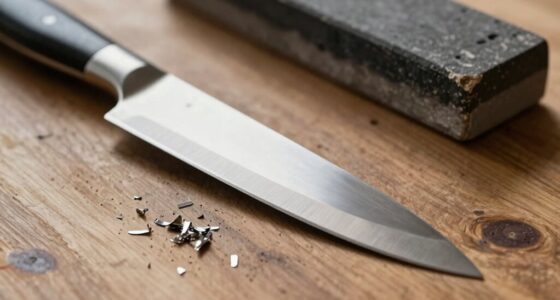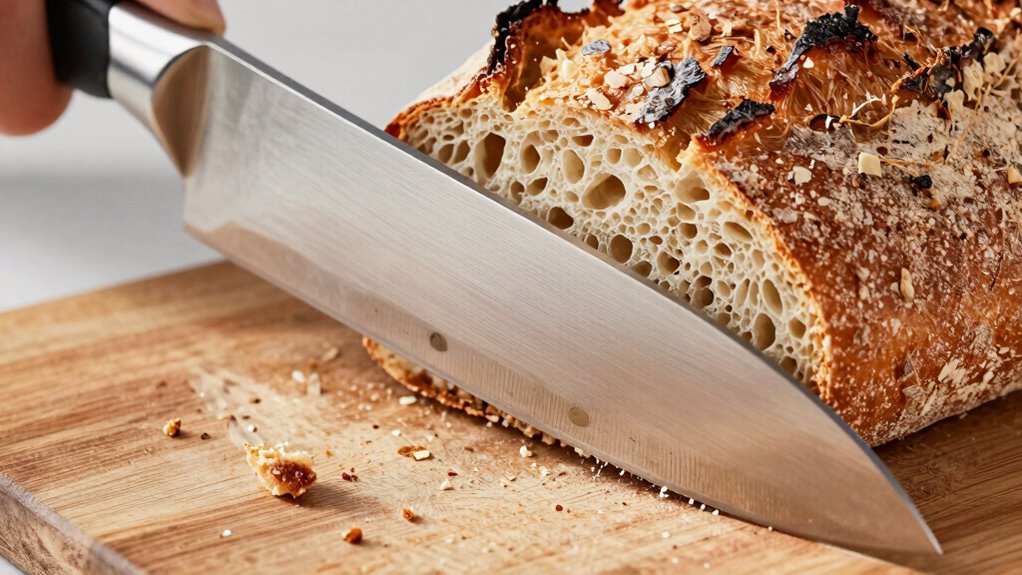

Knives chip on hard foods when you don’t maintain the blade properly, use incorrect techniques, or choose unsuitable tools. Dull or microchipped blades are more vulnerable to cracking under pressure, especially if you apply excessive force or twist the knife. To avoid this, keep your blades sharp through regular honing and proper sharpening, use the right knife for tough foods, and employ controlled, steady motions. Continue exploring to discover how proper care and technique can extend your knife’s life.
Key Takeaways
- Using dull or poorly maintained blades increases microchipping risk on hard foods.
- Applying excessive pressure or improper technique stresses the blade, causing microchips.
- Choosing lightweight or inappropriate knives for tough foods makes microchipping more likely.
- Cutting on hard or uneven surfaces can lead to blade chips and microfractures.
- Combining proper maintenance, technique, and suitable tools minimizes microchipping during hard food cuts.

Many people have experienced the frustration of damaging a knife or risking injury when cutting through hard foods like bones or frozen items. This common problem often results from neglecting proper blade maintenance and using incorrect cutting techniques. When your knife’s edge isn’t well-maintained, it becomes more vulnerable to chips and microchips, especially when faced with tough foods. Dull blades require more force to cut, increasing the chance of slipping or applying uneven pressure, which can cause tiny chips or cracks on the blade surface. Proper blade maintenance, including regular honing and occasional sharpening, keeps your knife edge sharp and resilient, reducing the risk of microchipping during demanding tasks.
Maintaining a sharp, well-honed knife prevents chips and microchips when cutting tough foods like bones or frozen items.
Equally important is your cutting technique. Many people tend to press down too hard or use improper angles when slicing through hard foods. Instead of forcing the knife through, you should adopt a controlled, steady cutting motion, letting the blade do the work. Applying excessive pressure not only dulls your knife faster but also stresses the blade material, making it more prone to microchips. Keep your wrist firm and use a smooth, slicing motion rather than pounding or levering the knife, which can cause microfractures in the steel. Also, avoid twisting or twisting motions that put uneven stress on the blade, especially when cutting through bones or frozen items.
Choosing the right knife for the job is another critical factor. For tough foods, a heavier, sturdier knife—like a cleaver or a heavy chef’s knife—is better suited for cutting through bones or frozen foods without damaging the blade. These knives are designed to withstand more force and are less likely to chip when used correctly. Using the wrong type of knife on hard foods forces you to compensate with more force or awkward techniques, increasing the likelihood of microchipping. Always ensure your knife is suited for the task at hand, and avoid using lighter or more delicate blades for such demanding cuts.
Finally, pay attention to your cutting surface. A hard or uneven surface can cause your blade to bounce or slip, increasing the risk of damage. Use a stable, appropriate cutting board, preferably wood or plastic, which absorbs some of the impact and provides better control. Incorporating proper equipment, such as a quality cutting board and sharp, well-maintained knives, can significantly reduce the chances of microchipping your knives on hard foods. Combining good blade maintenance, correct cutting techniques, and suitable tools will considerably reduce your chances of microchipping your knives on hard foods. By doing so, you’ll prolong their lifespan and keep your cutting experience safe and efficient.
Frequently Asked Questions
Can a Knife’s Microchipping Affect Food Safety?
Yes, a knife’s microchipping can affect food safety by introducing small metal particles into your food, which may cause contamination. When you sharpen your knife, microchips or tiny fragments can loosen, increasing the risk of food contamination. To prevent this, regularly inspect and maintain your knives, avoid aggressive sharpening, and replace damaged blades promptly, ensuring safe food preparation and reducing health risks.
Are Certain Knife Materials More Prone to Microchipping?
Ceramic blades are more prone to microchipping when cutting hard foods because they’re brittle and can chip easily under pressure. Stainless steel knives, on the other hand, are less susceptible to chipping due to their durability and flexibility. When you use ceramic knives, avoid applying excessive force on hard foods, and opt for stainless steel when tackling tougher ingredients to minimize chipping and extend your knife’s lifespan.
How Often Should I Replace My Knives to Prevent Microchipping?
You shouldn’t wait until your knives are battered to replace them; a good rule of thumb is to follow a replacement schedule every 2-3 years, depending on usage. Over time, even the best knives wear down, increasing the risk of microchipping. Regularly inspecting your knives and maintaining proper care can extend their lifespan, but don’t be shy about replacing them when they show signs of wear to keep your cuts smooth and safe.
Does Microchipping Impact the Knife’s Cutting Performance?
Microchipping can affect your knife’s cutting performance by weakening the blade over time, reducing its durability. When chips form, you might notice less precise cuts or increased effort. To maintain blade durability, use proper sharpening techniques and avoid cutting hard foods with dull knives. Regularly honing and sharpening your knife ensures it stays sharp, minimizing microchipping and preserving ideal cutting performance.
Can Microchipping Be Repaired or Restored on Knives?
Microchipping on knives can’t be repaired or restored, as it’s a permanent change in the metal’s structure. If you’re dealing with chips or microchipping, your best option is restoring knife chips by professionally sharpening or replacing the blade. Attempting microchipping repair yourself won’t work and could weaken the knife further. To avoid this issue, always use the proper technique and cutting surfaces, and consider investing in high-quality, durable knives.
Conclusion
Think of your knife as a brave explorer venturing into uncharted territory. When it hits hard foods, it’s like hitting a hidden reef—stressing and damaging its delicate senses. To keep your explorer safe and sharp, avoid forcing it through tough terrains. Instead, take gentle, deliberate steps. With care, your knife will continue its journey, slicing smoothly through life’s culinary adventures, preserving its spirit and strength for many more memorable voyages.