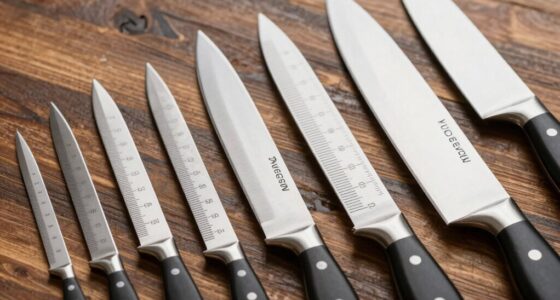
A basic everyday knife set should include a versatile chef’s knife for most tasks, a paring knife for detailed work, and a bread or serrated knife for slicing bread and soft foods. Proper maintenance, sharp blades, and good storage safeguard your investment and keep knives safe. While you may want extra specialty blades, focusing on quality handles and materials ensures durability and safety. To learn more tips for building an efficient set, keep exploring the essentials.
Key Takeaways
- An essential everyday knife set includes a versatile chef’s knife and a bread knife for general and specialized tasks.
- Small knives like paring and utility knives are vital for detailed prep work and precision.
- Proper knife storage and regular sharpening are crucial for safety and maintaining blade effectiveness.
- Quality handle materials and design enhance safety, comfort, and durability during daily use.
- Additional specialty knives increase versatility but should be balanced with storage and practicality.
Core Knives Every Kitchen Should Have

Every kitchen benefits from having a few essential knives that handle most cutting tasks with ease. The first is a chef’s knife, versatile enough for chopping, slicing, and dicing. It’s your go-to for nearly everything. Next, a bread knife makes slicing through loaves simple without crushing the crumb. To keep your knives sharp and effective, proper knife sharpening is vital—dull blades require more force and can be dangerous. Additionally, good knife storage helps protect your blades and keeps them accessible. Use a knife block or magnetic strip to prevent damage and maintain sharpness. Investing in these core knives and ensuring proper sharpening and storage makes your food prep safer, faster, and more enjoyable. These essentials form the backbone of any well-equipped kitchen.
The Role of Paring and Utility Knives

While a chef’s knife covers most cutting tasks, smaller knives like paring and utility knives offer unmatched precision for specific jobs. Paring knives excel at peeling, trimming, and intricate detail work, thanks to their small size and Japanese craftsmanship that guarantees a sharp, durable blade. Utility knives fill the gap between paring knives and larger chef’s knives, ideal for slicing sandwiches, fruits, or vegetables. Their versatility makes them essential in everyday kitchen tasks. Investing in high-quality, sharpened utility and paring knives enhances safety and efficiency. Proper knife sharpening techniques maintain their edge, ensuring precision and longevity. These smaller knives are indispensable for detailed prep work and should be part of your essential set for a well-rounded, functional kitchen.
Why a Chef’s Knife Is Indispensable

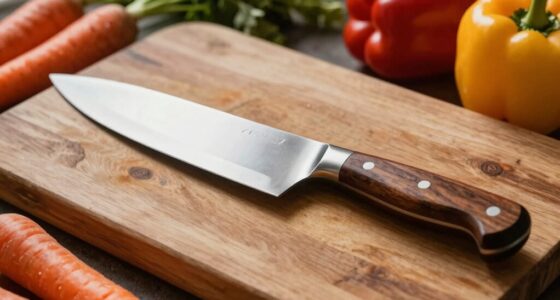
A chef’s knife is the most versatile tool in your kitchen, capable of handling a wide range of cutting tasks with ease. Its sharp, sturdy blade makes chopping, slicing, and dicing quick and efficient. Proper knife maintenance is essential to keep it performing at its best; regularly honing and occasional sharpening ensure a clean cut every time. Good knife storage, like a block or a magnetic strip, protects the blade from dulling and prevents accidents. This knife’s balance and size make it comfortable for prolonged use, reducing fatigue. Skimping on a quality chef’s knife can lead to more effort and frustration. Investing in one guarantees you have a reliable, multi-purpose tool that simplifies meal prep and elevates your cooking experience.
When to Consider a Bread or Serrated Knife

You should consider a bread or serrated knife when you need to slice soft bread without crushing it. These knives are also perfect for cutting through hard foods like tomatoes or crusty vegetables. If you often deal with these foods, adding a serrated option to your set can make prep much easier.
Perfect for Slicing Bread
When it comes to slicing bread smoothly without tearing or squishing, a bread or serrated knife is usually the best choice. These knives excel at dough cutting, allowing you to make clean, even slices. They’re also perfect for crust scoring, giving you control over the surface of freshly baked loaves. The serrated edge grips the crust without crushing the soft interior, making it easier to get uniform slices every time. Whether you’re slicing a baguette, a sandwich loaf, or a rustic country bread, this type of knife handles the job with ease. Its design prevents crushing and tearing, ensuring your bread looks professional and holds its shape. A bread or serrated knife is an essential tool for anyone who wants perfect slices with minimal effort.
Ideal for Hard Foods
Because of their serrated edges, bread knives excel at cutting through hard or crusty foods without applying excessive pressure, which can crush delicate textures. When dealing with tough foods like crusty bread or firm fruits, a serrated knife makes slicing safer and cleaner. To keep your bread knife performing well, proper knife storage is essential—store it separately or in a knife block to prevent dulling. Regular knife sharpening maintains its edge, ensuring smooth cuts every time. If your serrated knife becomes dull, avoid honing with a standard sharpener; instead, use a specialized serrated knife sharpener or seek professional sharpening. This keeps the blade effective, prolongs its lifespan, and ensures you’re always ready to cut through hard foods effortlessly.
Additional Knives: Are They Necessary?

Adding extra knives can increase your kitchen’s versatility, but it also requires more space for storage. You’ll need to weigh whether the extra cost is worth the utility they offer. Consider your cooking habits carefully to decide if more knives are a practical addition.
Versatility of Extra Blades
Having extra blades can considerably enhance the versatility of your knife set, allowing you to handle a wider range of tasks efficiently. Specialty blades, such as serrated or curved edges, are perfect for specific jobs like slicing bread or carving meat. Decorative knives add aesthetic appeal and can be used for display or light tasks, but some may also serve practical purposes. By including these extra blades, you’re prepared for different cutting needs without switching tools constantly.
- Specialty blades improve precision for particular tasks
- Decorative knives enhance visual appeal while remaining functional
- Additional blades save time and improve efficiency during food prep
Space and Storage Needs
Extra blades expand your knife collection’s versatility, but they also demand more space for proper storage. Efficient knife storage is key to maintaining safety and prolonging blade sharpness. If you add more knives, you’ll need to optimize your kitchen space accordingly. Using a knife block, magnetic strip, or drawer insert helps keep your collection organized. Here’s a quick comparison:
| Storage Type | Pros | Cons |
|---|---|---|
| Knife Block | Easy access, safety | Takes counter space |
| Magnetic Strip | Saves drawer space, visible access | May damage blades |
| Drawer Insert | Keeps knives hidden, organized | Less accessible |
Consider your kitchen layout to choose the best option. Extra knives mean better tools, but smart storage keeps your space uncluttered.
Cost vs. Utility
While an expanded knife collection can enhance your cooking experience, it’s important to weigh whether the cost is justified by the utility each new blade offers. Consider your budget considerations and whether the additional knives provide long-term value. Extra knives can be tempting, but they often end up unused, cluttering your space. Before buying, ask if you genuinely need a specific blade or if your current set suffices. Investing in high-quality, versatile knives usually offers better long-term value than numerous cheaper options. Remember, more knives don’t necessarily mean better cooking. Focus on a few well-chosen tools that serve multiple purposes. This approach ensures your collection remains practical and cost-effective.
- Meets multiple needs with fewer knives
- Balances quality and affordability
- Supports long-term utility over short-term gains
Choosing the Right Materials and Handles

Choosing the right materials and handles is essential for ensuring your knife set is comfortable, durable, and safe to use. When selecting blades, look for high-quality steel that offers excellent blade durability and edge retention, so your knives stay sharp longer. Handle ergonomics also matter; choose handles that fit comfortably in your hand, reducing fatigue during extended use. Materials like wood, composite, or rubber provide good grip and comfort, while stainless steel or aluminum handles add strength and longevity. Avoid handles that are too slick or poorly balanced, as they can compromise control and safety. Properly chosen materials improve overall performance, making your everyday knives easier and safer to handle, ensuring they serve you well for years to come.
Frequently Asked Questions
How Do I Maintain and Sharpen My Everyday Knife Set?
To maintain and sharpen your everyday knife set, you should regularly perform knife honing to keep the blades aligned and sharp. Use a honing rod after each use, and clean your blades with warm, soapy water to prevent buildup. For a more thorough sharpening, use a sharpening stone or electric sharpener periodically. Proper blade cleaning and honing guarantee your knives stay effective and last longer, making your prep work easier and safer.
What Safety Tips Should I Follow When Handling Kitchen Knives?
When handling kitchen knives, always use proper handling techniques to avoid accidents. Store your knives safely in a knife block or on a magnetic strip to prevent injuries and maintain sharpness. Always cut away from your body and keep your fingers clear of the blade’s path. Use a stable cutting surface, and avoid catching a falling knife. These safety tips keep you safe and extend your knives’ lifespan.
Can I Use My Everyday Knives for Professional Cooking?
Imagine slicing through ingredients with the precision of a professional chef—that’s what professional grade knives offer. While your daily kitchen tools are versatile, they might lack the sharpness and durability needed for high-stakes cooking. You can use them, but for consistent, quality results, investing in professional grade knives is wise. They handle more demanding tasks and stand up to frequent use, elevating your cooking experience from good to exceptional.
How Often Should I Replace or Upgrade My Knife Set?
You should replace or upgrade your knife set every 3 to 5 years, depending on usage and quality. Regularly check your knives for dullness or damage, and store them properly in knife storage to prevent dulling. High-quality knife materials like high-carbon stainless steel last longer, but even these need upgrading eventually. Keeping your knives sharp and well-maintained ensures peak performance and safety.
Are There Eco-Friendly or Sustainable Knife Options Available?
Did you know that eco-friendly knives are gaining popularity? You can find options with biodegradable handles and recycled steel blades, making your kitchen more sustainable. These knives perform just as well as traditional ones, helping reduce environmental impact. By choosing eco-friendly knives, you contribute to less waste and support sustainable manufacturing. It’s a smart, responsible choice that combines functionality with environmental consciousness.
Conclusion
Your essential knife set is the heartbeat of your kitchen, guiding every chop, slice, and dice with purpose. Think of these knives as trusted companions, each with a unique voice, ready to bring your culinary creations to life. When you choose the right tools, you’re not just preparing food—you’re orchestrating a symphony of flavors. Embrace the right set, and watch your kitchen transform into a stage where your skills truly shine.