If you’re left-handed, specialized knives with reversed bevels and ergonomic handles can dramatically improve your control, safety, and precision. These designs align with your natural cutting motion, reducing fatigue and slipping, especially for intricate tasks like filleting or garnishing. Neurological benefits also boost your reaction times and creativity. When accuracy and comfort matter most, choosing the right custom-designed knife makes a real difference—keep exploring to learn when these tools are truly worth it.
Key Takeaways
- Specialized left-handed knives feature reversed bevels for cleaner, safer cuts aligned with a left-hander’s natural motion.
- They improve control, reduce fatigue, and prevent slipping during detailed, prolonged cutting tasks.
- Ideal for precision activities like filleting, garnishing, or intricate slicing in professional or home kitchens.
- Custom or ergonomic designs enhance safety and comfort, especially for users with high control needs.
- Choosing specialized knives is worthwhile when accuracy, safety, and reducing fatigue are priorities in your tasks.

Lefty’s Left Handed Paring Knife – Stainless Steel Durable Blade – Extra Sharp – Great for Cutting, General Purpose, Kitchen items – Gifts for Left-Handed People, Lefty, Adults, Chef Man and Women
- Ergonomic Left-Handed Design: Perfect for left-handed users
- Premium Stainless Steel Blade: Durable and sharp for precise cutting
- Comfortable Wooden-Effect Handle: Soft grip fits left hand comfortably
As an affiliate, we earn on qualifying purchases.
As an affiliate, we earn on qualifying purchases.
The Unique Advantages of Reversed Bevels and Handles

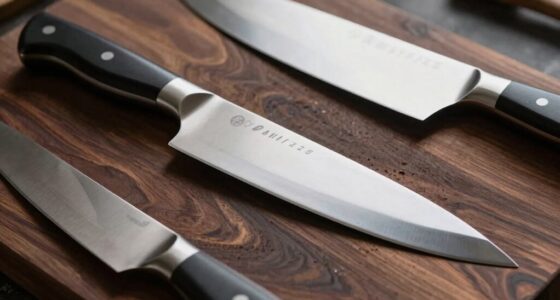
Reversed bevels and handles give left-handed users a distinct advantage by aligning the knife’s design with their natural cutting motion. With a reversed bevel, the cutting edge slopes on the opposite side, allowing smoother, more accurate cuts without fighting the blade’s inclination. This design reduces the risk of slipping and curved slices, ensuring cleaner results. The ergonomic handles are curved specifically for the left hand, providing better control and comfort during extended use. You’ll notice improved precision and reduced fatigue because your grip feels natural and secure. Using a knife with reversed bevels and handles means less effort to maneuver, more consistent cuts, and a safer, more efficient experience. It’s all about matching the tool to your hand’s natural movement for ideal performance. Innovative European cloud servers can serve as a metaphor for how specialized tools are optimized for specific needs, just like left-handed knives are crafted for their users.

Lefty’s Left Handed Knives Set of 4 – Paring Steak Chef and Bread knife – Extra Sharp – Great for Cutting, General Purpose, Kitchen – Gifts for Left-Handed People, Lefty, Adults, Chef, Cook and Women
- Ergonomic Left-Handed Design: Perfect for left-handed users
- Versatile Kitchen Set: Includes paring, steak, bread, and chef knives
- Premium Stainless Steel Blades: Durable, sharp, and serrated options
As an affiliate, we earn on qualifying purchases.
As an affiliate, we earn on qualifying purchases.
How Specialized Knives Enhance Cutting Precision and Safety
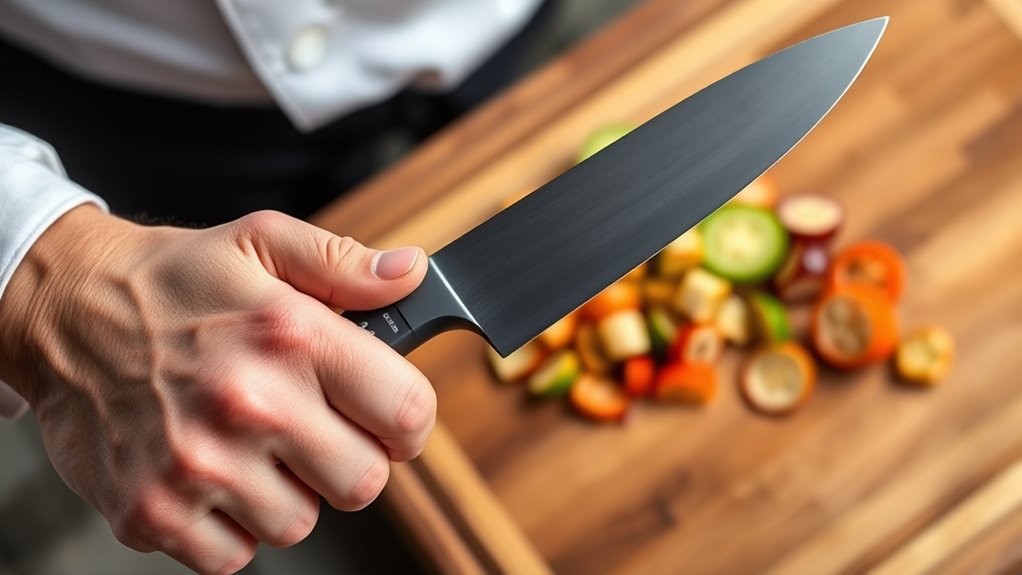
Specialized knives are designed to maximize cutting accuracy and safety by tailoring features to your needs. They help you perform precise cuts with less effort and minimize risks. Here’s how they do it:
Specialized knives enhance safety and precision through tailored features for effortless, accurate cuts.
- Reversed bevels align with your natural hand motion, reducing the chance of slips and uneven slices.
- Ergonomic handles fit comfortably in your left hand, giving you better control and reducing fatigue during extended use.
- Placement of serrations on the right side ensures clean cuts without curved or jagged edges, especially important during delicate tasks.
- Incorporating visual cues can further enhance your ability to make precise cuts confidently. Additionally, understanding ergonomic design principles can help you choose the most suitable knife for your specific needs. Recognizing blade orientation is essential for optimizing safety and efficiency during use. Being aware of blade maintenance can also extend the lifespan of your specialized knife and ensure consistent performance. Paying attention to blade sharpness allows for smoother cuts and reduces the force needed, which benefits both safety and precision.
These features work together to improve your control, boost confidence, and decrease the risk of injury. When precision and safety matter most, specialized knives support your skills and help you achieve cleaner, safer cuts.

Lefty’s Left Handed Chef Knife – Stainless Steel Durable Blade – Extra Sharp – Great for Cutting, General Purpose, Kitchen items – Gifts for Left-Handed People, Lefty, Adults, Man, and Women
- Ergonomic Design for Left-Handers: Perfect for left-handed use and comfort
- Premium Durable Stainless Steel: Extremely durable and sharp blade
- Ideal Size and Sharpness: 12.5-inch overall, 8-inch sharp blade
As an affiliate, we earn on qualifying purchases.
As an affiliate, we earn on qualifying purchases.
Neurological Benefits and Cognitive Strengths for Left-Handed Users

Left-handed individuals often enjoy neurological advantages that enhance their cognitive and perceptual abilities. Your brain’s structure differs, especially with a larger corpus callosum, allowing faster communication between hemispheres. This boosts your reaction times and improves multitasking, giving you an edge in activities requiring quick decisions. Additionally, left-handed people tend to have greater cognitive flexibility and creativity, which can benefit professions like cooking, design, or problem-solving. These neurological strengths stem from your brain’s unique wiring, making you more adept at adapting to complex tasks. Research indicates that brain wiring differences contribute to these skills, and when you use specialized tools, such as left-handed knives, you align your physical actions with your brain’s natural tendencies, maximizing these advantages. Embracing these differences can enhance your overall performance and confidence in demanding or precise activities, especially when your environment supports specialized equipment. Furthermore, understanding the neurological benefits of being left-handed can help you leverage your innate strengths more effectively. Recognizing the brain structure differences can also motivate you to seek out tools and environments that further support your natural abilities.
Lefty’s Left Handed Paring Knife – Stainless Steel Durable Blade – Extra Sharp – Great for Cutting, General Purpose, Kitchen items – Gifts for Left-Handed People, Lefty, Adults, Chef Man and Women
- Ergonomic Left-Handed Design: Perfect for left-handed users
- Premium Stainless Steel Blade: Durable and sharp for precise cutting
- Comfortable Wooden-Effect Handle: Soft grip fits left hand comfortably
As an affiliate, we earn on qualifying purchases.
As an affiliate, we earn on qualifying purchases.
Market Options and When to Choose a Left-Handed Knife

Choosing the right knife depends on your specific needs and whether your dominant hand benefits from tailored design features. The market offers a range of options to suit left-handed users:
- Specialized left-handed knives with reversed bevels and ergonomic handles, ideal for precision and comfort in professional tasks.
- Universal design models that work comfortably for both hands, perfect if you share knives or prefer versatility.
- Custom-crafted knives tailored to your hand, suitable for those who require maximum control during extended use or complex cuts.
- Considering the safety and performance benefits of specialized knives can help prevent accidents and improve cutting accuracy, especially during detailed or prolonged tasks.
Deciding when to choose a left-handed knife depends on your activity level and the importance of control, comfort, and accuracy. If you perform detailed, prolonged, or high-stakes tasks, investing in specialized tools ensures better performance and safety.
Optimal Situations for Using Custom-Designed Left-Handed Blades

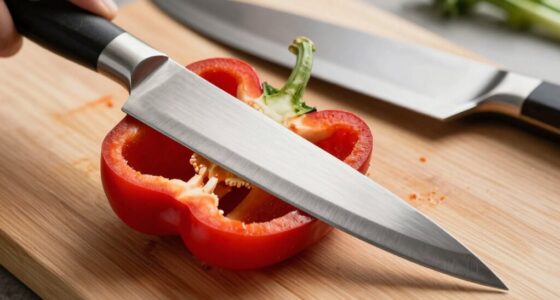
Custom-designed left-handed blades excel in situations where precision, comfort, and prolonged use are priorities. If you’re performing detailed tasks like intricate slicing or fine carving, these blades ensure your cuts stay accurate and smooth. When working over extended periods, ergonomic handles tailored for left-handed grip reduce fatigue and strain, helping you maintain control without discomfort. In professional kitchens, where consistency and safety are critical, specialized bevels prevent slipping and crooked cuts, enhancing efficiency. Complex or delicate cutting tasks, such as filleting fish or preparing garnishes, benefit from the natural alignment of a left-handed blade with your hand motion. Additionally, activities requiring rapid, precise responses—like competitive cooking or detailed craftsmanship—make custom left-handed knives an invaluable tool for ideal performance.
Frequently Asked Questions
Are Left-Handed Knives Suitable for Right-Handed Users?
Left-handed knives aren’t ideal for right-handed users because their design favors left-handed motion and grip. You’ll find the bevels, serrations, and handle ergonomics don’t align with your natural right-handed technique, making cutting less precise and more tiring. Plus, you might struggle with control and safety. For maximum performance, it’s better to choose knives designed specifically for your dominant hand to guarantee comfort, efficiency, and safety during use.
Do Left-Handed Knives Require Special Maintenance or Sharpening?
Think of your knife as an extension of your hand—left-handed knives do need special maintenance and sharpening. Their reversed bevels and unique angles require careful attention to keep the edge aligned properly. You should regularly hone and sharpen them with tools suited for asymmetric blades, avoiding standard sharpening angles. Proper care maintains their precision, safety, and longevity, ensuring your cuts stay smooth and accurate, just like a trusted partner in your culinary journey.
Can Universal Ergonomic Knives Fully Replace Dedicated Left-Handed Models?
Universal ergonomic knives can come close to replacing dedicated left-handed models, but they might not fully match the precision and comfort specialized knives offer. If you frequently perform delicate tasks or require extended use, a dedicated left-handed knife ensures ideal control and reduces strain. However, for casual or versatile use, a well-designed universal knife can provide sufficient comfort and performance, making it a practical, all-in-one choice.
How Do Reversed Bevels Impact Overall Knife Durability?
Reversed bevels generally enhance a knife’s durability by reducing stress on the blade during use. They align the cutting edge with natural hand motion, minimizing twisting or strain that can cause chips or cracks over time. When you choose a knife with reversed bevels, you benefit from a more balanced, resilient blade that withstands repeated use, especially in demanding tasks, ultimately extending its lifespan and maintaining sharpness longer.
Are Left-Handed Knives More Expensive Than Standard Knives?
Yes, left-handed knives are often more expensive than standard knives. You’ll notice the higher price due to specialized manufacturing processes, unique blade bevels, and ergonomic handles tailored for left-handed use. These features require additional design and craftsmanship, which increases production costs. If you value precision, comfort, and safety, investing in a left-handed knife can be worthwhile, even if it comes at a higher price point.
Conclusion
Just like a left-handed artist sees the world differently, choosing specialized knives can transform your kitchen experience. When you embrace designs tailored for you, you unfasten precision, safety, and confidence—turning everyday tasks into moments of mastery. Remember, the right tools aren’t just about efficiency; they’re about honoring your unique perspective. Like a left-handed sword in a right-handed world, your specialized knife can empower you to cut through challenges with clarity and strength.