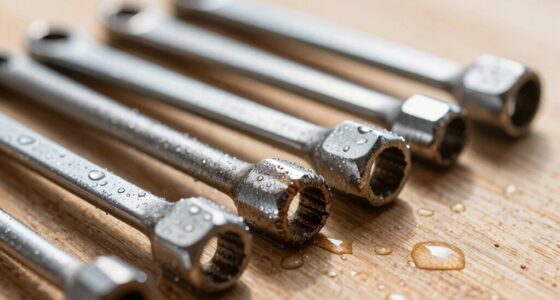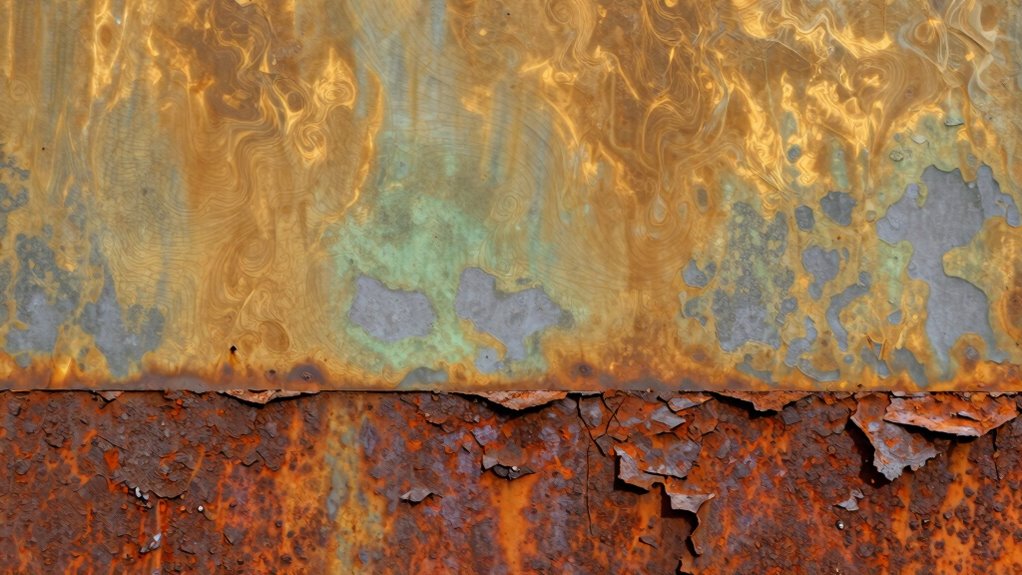

Patina is a natural, colorful film that forms gradually through oxidation, adding character and protecting the metal. Discoloration appears as uneven or blotchy color changes caused by heat, chemicals, or environmental factors, and isn’t always harmful. Rust, on the other hand, is a rough, reddish-brown coating resulting from iron or steel reacting with moisture, which weakens the material. Understanding these differences helps you care properly for metal items, and exploring further reveals how to maintain their beauty and strength.

Get kitchen gear delivered free with Prime
- Fast, free delivery on millions of items
- Prime Video, Amazon Music and more included
- Member-only deals all year
Key Takeaways
- Patina is a natural, often colorful, protective film that enhances metal’s appearance and indicates age or authenticity.
- Discoloration involves uneven or blotchy color changes caused by environmental factors or chemicals, which may be harmless.
- Rust is a flaky, reddish-brown corrosion caused by iron or steel reacting with moisture, weakening the metal structure.
- Patina adds aesthetic value and protection, while rust indicates active deterioration needing removal.
- Proper care involves preserving patina, addressing discoloration, and removing rust to prevent further damage.
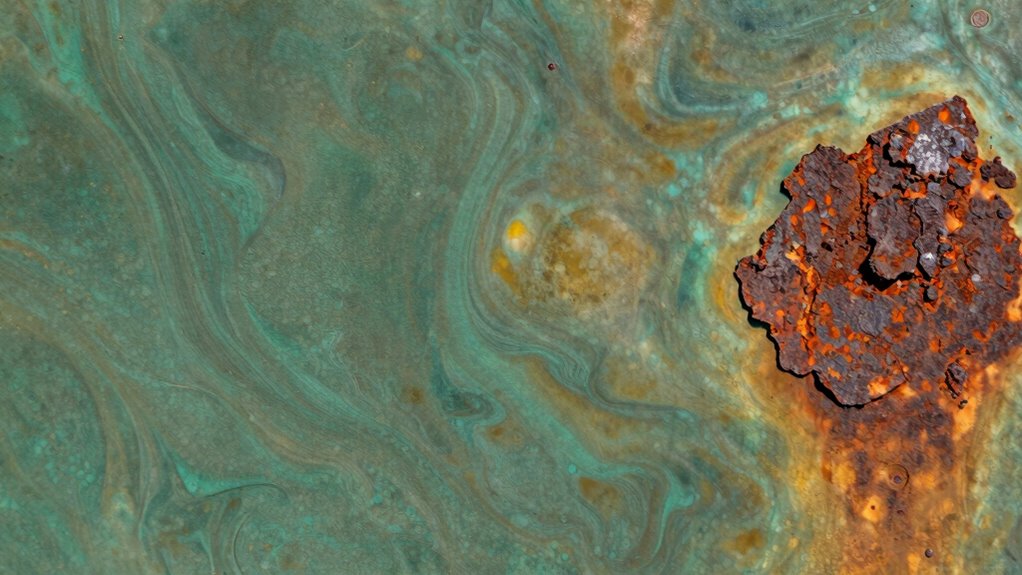
Understanding the differences between patina, discoloration, and rust is essential if you want to properly care for and preserve metal objects. Each one tells a different story about the metal’s life, its aesthetic aging, and the potential material deterioration it’s undergone. Recognizing these distinctions helps you decide whether a change is desirable or something to address before it causes damage. Patina, for instance, is often seen as a sign of beauty and history. It forms gradually over time as a natural result of oxidation processes, creating a thin, often colorful film that enhances the metal’s character. This aesthetic aging is usually valued, especially on antiques, sculptures, and jewelry, because it reflects authenticity and adds to the item’s visual appeal. Patina acts as a protective layer, preventing further deterioration, so preserving it is often beneficial. Additionally, understanding the oxidation process can help you better manage and maintain metal objects over time.
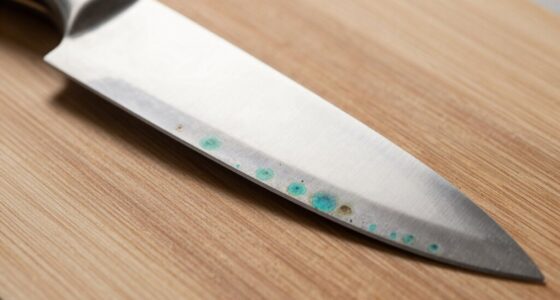
Discoloration, on the other hand, can be more inconsistent and less predictable. It appears as uneven or blotchy changes in color that may result from exposure to heat, chemicals, or environmental factors. Unlike patina, discoloration isn’t necessarily a sign of beauty but rather an indicator of some form of material change or damage. Sometimes, discoloration can be harmless, simply altering the appearance without affecting the metal’s integrity. However, it can also signal underlying issues, such as early stages of corrosion or contamination, which could lead to material deterioration if left unchecked. Recognizing discoloration allows you to assess whether cleaning or protective measures are needed to prevent further damage.
Rust, however, is a clear sign of material deterioration. It appears as a rough, flaky, reddish-brown coating that results from iron or steel reacting with moisture and oxygen. Rust weakens the structural integrity of the metal, making it brittle and more susceptible to breakage. Unlike patina, rust is generally undesirable, especially if you plan to maintain or restore an object. It indicates active corrosion that needs immediate attention to prevent further damage. Removing rust and applying protective coatings can halt its progress, but sometimes, extensive rust damage might require more intensive restoration.
As an affiliate, we earn on qualifying purchases.
Frequently Asked Questions
Can Patina Be Removed Without Damaging the Metal?
Yes, you can remove patina without damaging the metal by gently cleaning it with metal polishing products designed for delicate surfaces. Use soft cloths and avoid abrasive tools that might scratch or remove the protective coatings. Applying a clear sealant afterward can help preserve the metal’s appearance and prevent further patina formation. Always test a small area first to ensure the cleaning process doesn’t jeopardize the metal’s integrity.
What Are Common Causes of Unwanted Discoloration?
Unwanted discoloration often results from chemical reactions caused by environmental factors like humidity, pollution, or exposure to chemicals. These factors can trigger oxidation or other reactions on metal surfaces, leading to changes in color. You might notice discoloration in areas with high moisture or pollutants. To prevent this, keep metals dry, clean regularly, and store them in controlled environments, reducing the chances of unwanted discoloration from ongoing chemical reactions.
How Long Does Rust Typically Take to Form?
Rust typically forms within a few days to weeks when metal is exposed to moisture and oxygen. To slow metal preservation, you can use chemical treatments like rust inhibitors or protective coatings. Regular maintenance, such as keeping metal dry and applying protective sealants, helps prevent rust from developing quickly. Understanding these factors allows you to better protect your metal items and extend their lifespan.
Are There Any Health Risks Associated With Rust?
Rust exposure might pose health concerns if ingested or inhaled in large amounts, especially for sensitive individuals. While surface rust on tools or furniture isn’t usually dangerous, inhaling rust particles or swallowing small flakes can cause irritation or more serious issues over time. It’s wise to clean rusted surfaces properly and avoid prolonged exposure, particularly for children or those with respiratory conditions, to minimize potential health risks.
Can Patina Increase the Value of Collectibles?
Yes, patina can increase the value of collectibles when properly preserved. You should focus on patina preservation to maintain its authentic look and appeal. Collectible enhancement often involves protecting this natural aging process, which many collectors find desirable as it adds character and history. Keep in mind, over-cleaning can damage the patina, so gentle care is essential to maximize its value and appeal.
As an affiliate, we earn on qualifying purchases.
Conclusion
Understanding the difference between patina, discoloration, and rust helps you appreciate your metal objects more. While patina adds charm, discoloration signals change, and rust warns of damage. Think of patina as a beautiful age, discoloration as a fleeting shift, and rust as a sign to act fast. Embrace these changes like chapters in a story—each telling its own unique tale, whether of history, transformation, or time. Your metals become more than objects; they become storytellers.
metal cleaning and polishing kit
As an affiliate, we earn on qualifying purchases.
As an affiliate, we earn on qualifying purchases.
As an affiliate, we earn on qualifying purchases.
Halloween Picks
halloween
As an affiliate, we earn on qualifying purchases.