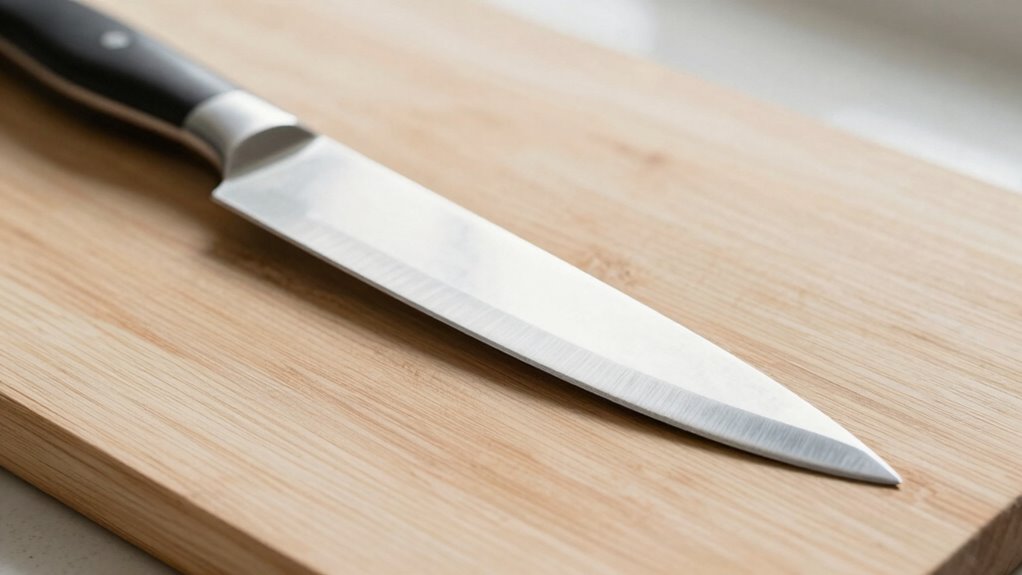

Keeping your cutting boards clean helps your knives last longer because residue and debris can quickly dull their edges. When you clean your boards properly, you prevent microscopic abrasions that damage blades over time. Different materials, like wood or plastic, respond better to regular maintenance, which further preserves sharpness. By consistently cleaning and maintaining your boards, you reduce the need for frequent sharpening and prolong the life of your knives. If you want to learn more, keep exploring the details.

Get kitchen gear delivered free with Prime
- Fast, free delivery on millions of items
- Prime Video, Amazon Music and more included
- Member-only deals all year
Key Takeaways
- Removing debris and residues prevents microscopic abrasions that dull knives over time.
- Clean boards reduce dirt and grime buildup, minimizing blade damage during cutting.
- Proper maintenance prevents embedded particles that can accelerate blade dulling.
- Regular cleaning preserves the surface quality, offering a gentler cutting experience.
- Hygiene and cleanliness decrease the need for frequent sharpening and blade replacement.
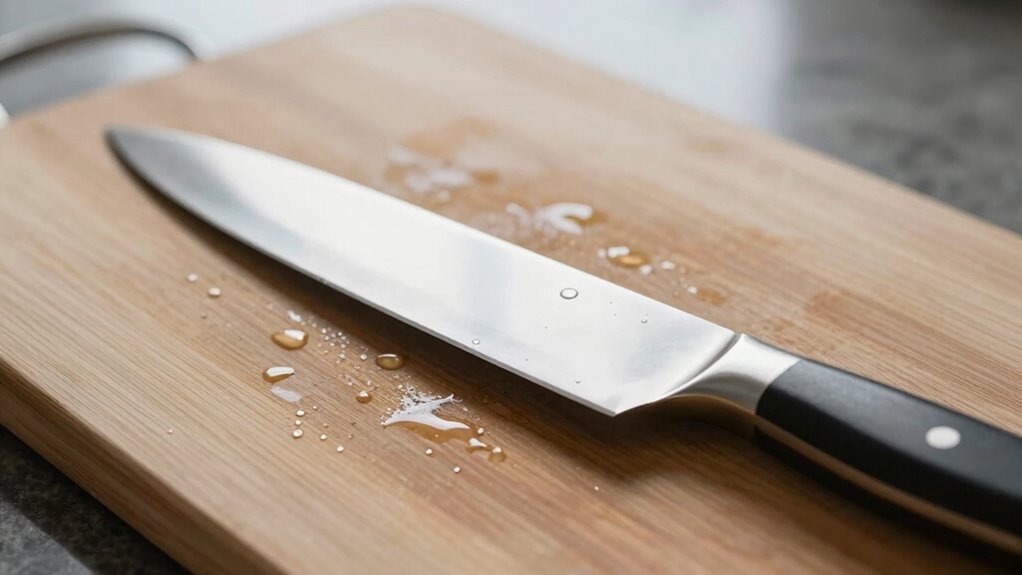
Keeping your cutting boards clean is vital because it directly impacts the longevity of your knives. When your cutting board is free of residue and debris, your knives stay sharper longer, making food prep safer and more efficient. Dirty or poorly maintained boards can cause knives to dull prematurely, forcing you to sharpen more often or even replace blades altogether. To prevent this, it’s essential to pay attention to both the cleanliness of your cutting boards and the materials they’re made from. Using the right cutting board materials can also make a significant difference in maintaining your knives’ sharpness over time. Different cutting board materials have varied effects on your knives. Wooden boards, for example, are gentle on blades and help maintain sharpness over time. They’re less likely to cause blade dulling because their slightly softer surface absorbs some of the impact during slicing or chopping. Conversely, plastic cutting boards tend to be harder and can cause blades to dull more quickly if not properly cleaned. Glass or marble boards, while easy to sanitize, are very hard and can accelerate dulling, requiring more frequent knife sharpening. Regular cleaning of your cutting boards ensures that any tiny particles or food scraps that could damage your knives are promptly removed, regardless of the material. Additionally, proper maintenance plays a key role in preventing microscopic abrasions that can dull blades over time. Proper maintenance begins with cleaning your cutting boards immediately after use. Use hot, soapy water to wash away food residues and bacteria, and dry the board thoroughly to prevent warping or bacterial growth. For wooden boards, occasional oiling helps keep the surface smooth and resistant to knife marks, which can trap food particles and make cleaning less effective. Plastic boards are dishwasher safe, so running them through a cycle can help sanitize and remove any embedded grime. By keeping your cutting boards clean, you minimize the risk of cross-contamination and guarantee that your knives aren’t exposed to abrasive particles that can dull their edges. Incorporating proper cleaning techniques and selecting the right materials can significantly extend your knives’ lifespan. When it comes to knife sharpening, a clean cutting surface plays a vital role. Dull knives require more force to cut through food, increasing the likelihood of accidents and uneven wear on the blade. A sharp knife, used on a well-maintained, clean cutting board, slices smoothly and evenly, reducing stress on the blade and prolonging its sharpness. In contrast, working on a dirty or scratched board can cause blades to catch or drag, leading to nicks and dullness. Regularly cleaning and choosing the right cutting board material for your needs help preserve your knives’ edge, meaning fewer sharpenings and longer-lasting blades. Ultimately, maintaining cleanliness isn’t just about hygiene—it’s a straightforward step that greatly extends the life of your knives and enhances your overall kitchen efficiency.
As an affiliate, we earn on qualifying purchases.
Frequently Asked Questions
Can Plastic Cutting Boards Be as Durable as Wood?
Plastic cutting boards can be quite durable, often matching or even exceeding some aspects of wooden longevity. Their plastic durability means they resist cracks and warping better over time, especially when properly maintained. However, they might show more cuts and scratches, which can harbor bacteria. Wooden boards tend to last longer if cared for correctly, but plastic offers a practical, durable alternative that can be easily sanitized, making it a solid choice for longevity.
How Often Should I Replace My Cutting Board?
You should replace your cutting board when it shows deep cuts, stains, or persistent odors that refuse to fade, like a stubborn stain on your favorite shirt. Regular knife storage and proper board odor elimination can extend its life, but over time, wear and tear weaken the surface. Keep an eye on your board’s condition, and when it no longer feels safe or sanitary, it’s time for a new one.
Do Different Cutting Board Materials Affect Knife Sharpness?
Different cutting board materials do impact your knife’s edge. Harder surfaces like glass or stone can dull your knife quickly, while softer materials like wood or plastic help preserve the blade’s sharpness. The material impact means you should choose your cutting board carefully; softer woods and high-quality plastics are gentler on your knife, keeping the edge sharper longer. Regular cleaning further protects your knife’s longevity by preventing debris that can cause damage.
What Are the Best Cleaning Methods for Cutting Boards?
To keep your cutting boards clean, use proper sanitizing techniques like washing with hot, soapy water after each use, then disinfect with a solution of vinegar or diluted bleach. For added care, oil treatments help maintain the board’s surface and prevent cracking, especially for wood. Regularly oil your board with food-safe mineral oil, and guarantee it’s thoroughly dry before storing to extend its lifespan and protect your knives.
Can Cutting Board Maintenance Prevent Cross-Contamination?
Yes, maintaining your cutting boards can prevent cross-contamination by reducing microbial growth. When you clean and sanitize your boards properly after each use, you eliminate bacteria and other pathogens that can transfer to different foods. This practice enhances food safety and minimizes the risk of foodborne illnesses. Regular maintenance guarantees your cutting boards stay hygienic, protecting you and your family from potential health hazards associated with cross-contamination.
plastic cutting board dishwasher safe
As an affiliate, we earn on qualifying purchases.
As an affiliate, we earn on qualifying purchases.
Conclusion
By now, it’s clear that maintaining a clean cutting board isn’t just about hygiene—it directly impacts your knives’ longevity. When you cut on a sanitized surface, you reduce the risk of dulling or damaging your blades, saving you money and effort in the long run. So, next time you prep, ask yourself: isn’t preserving your tools worth a little extra care? After all, a sharp knife starts with a clean cutting board.
As an affiliate, we earn on qualifying purchases.
As an affiliate, we earn on qualifying purchases.
Halloween Picks
halloween
As an affiliate, we earn on qualifying purchases.