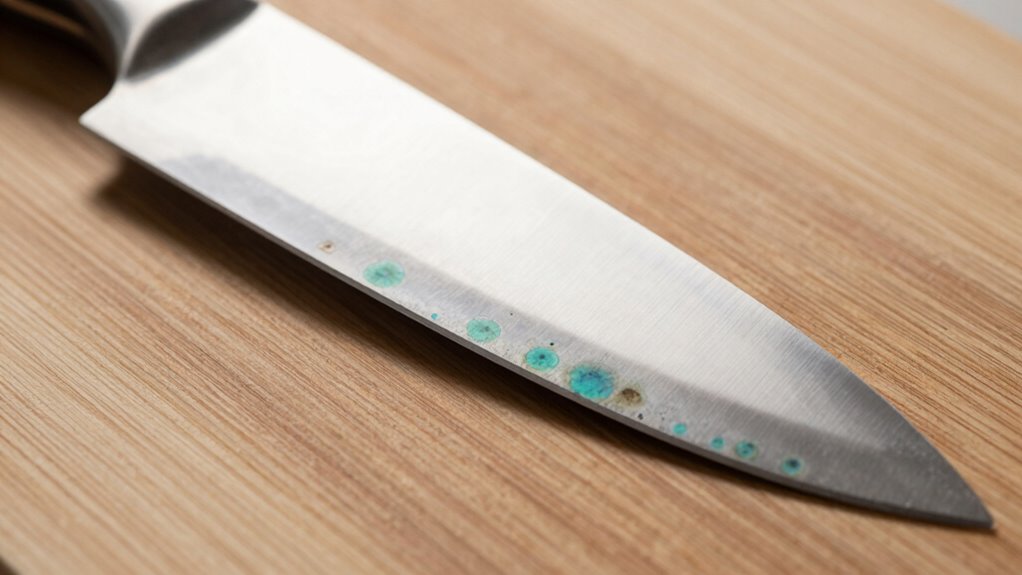

When you cut acidic foods like citrus or tomatoes, the acids react with your blade’s metal surface, causing visible discoloration. This is a normal chemical reaction that doesn’t mean your blade is damaged or dull. The acids can stain or discolor the surface, but it doesn’t affect performance or safety. To learn more about how to care for your blades and prevent discoloration, keep exploring the details below.

Get kitchen gear delivered free — and shop member deals
- Fast, free delivery on millions of items
- Access to Prime Big Deal Days deals on October 6–7
- Prime Video, Amazon Music and more included
Key Takeaways
- Acidic foods contain compounds that react chemically with metal blades, causing surface discoloration over time.
- Low pH foods like citrus and tomatoes can stain blades due to their high acidity levels.
- Discoloration results from normal chemical reactions and does not compromise the blade’s performance or safety.
- Surface stains are superficial and can often be removed with proper cleaning or polishing.
- Such discoloration is a common, normal effect of cutting acidic foods and does not indicate blade damage.
Understanding the Composition of Acidic Foods

Since acidic foods contain compounds that release hydrogen ions, they have a low pH level that makes them more corrosive to certain materials. Food acidity directly influences their pH levels, which typically range from 1 to 7. Highly acidic foods, like citrus fruits and vinegar, have lower pH values, making them more reactive. The pH level determines how aggressive these foods are in reacting with surfaces, including blades. Understanding the composition of acidic foods helps explain why they can cause discoloration or corrosion over time. Material compatibility plays a crucial role in how different materials respond to acidic foods. Additionally, the chemical properties of these foods contribute to their reactivity with metals and other surfaces. Recognizing food acidity and pH levels is key to understanding how these foods interact with your kitchen tools.
How Metals React With Acids on Blade Surfaces

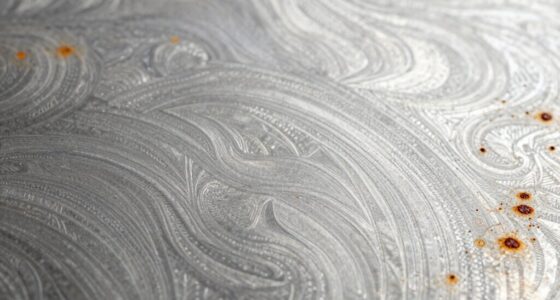
Metals react with acids through a process called corrosion, which involves the gradual breakdown of the metal surface. When you cut into acidic foods, the acid reacts with the metal of your blade, initiating metal corrosion. These acid reactions cause the metal atoms to dissolve or form new compounds, often resulting in discoloration or surface pitting. The severity of this reaction depends on the type of metal and acidity level. For example, softer metals like carbon steel are more prone to corrosion than stainless steel. Over time, these acid reactions weaken the blade’s surface and can lead to visible discoloration or dullness. This process is normal and doesn’t mean your blade is damaged beyond repair—it’s simply a natural response to acidic exposure. Understanding metal corrosion can help you better care for your cutlery and maintain its appearance, especially since different metals react uniquely to acids based on their composition and properties.
Common Foods That Can Cause Discoloration
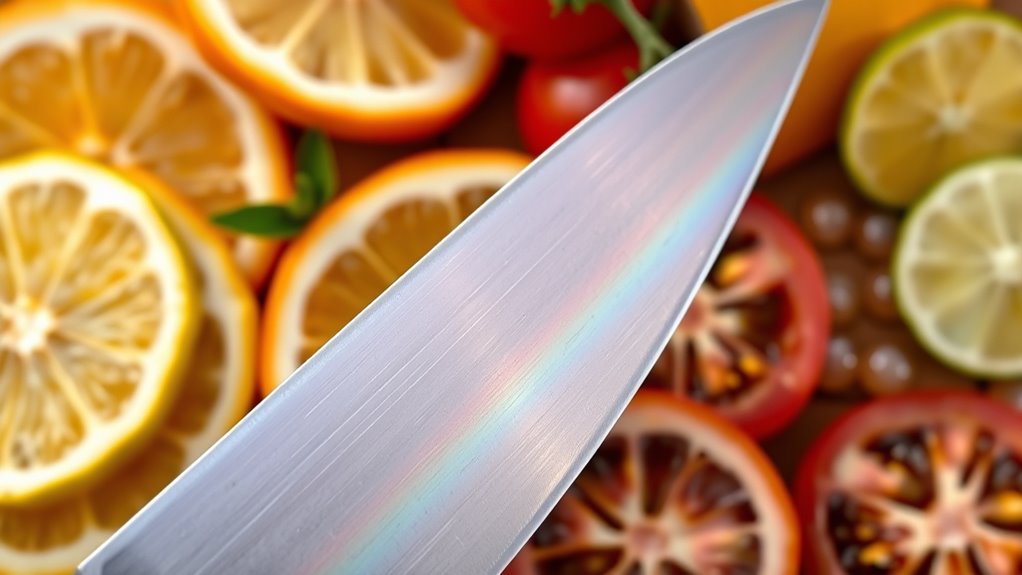
Certain foods are more likely to cause discoloration on your blades because of their acidity or chemical makeup. Foods with low pH levels, indicating high acidity, can react with metal surfaces, leading to visible stains. The key culprits include:
- Citrus fruits like lemons and oranges, with pH around 2-3, which can cause quick discoloration.
- Tomatoes, with a pH near 4, often leave reddish or orange stains.
- Vinegar-based foods, such as pickles, due to their high acidity and chemical reactivity.
- Berries like strawberries and blueberries, which contain natural pigments that can stain blades during cutting.
- Being aware of food acidity levels can help you better understand how different ingredients may impact your blades’ appearance and longevity.
The Difference Between Surface Stains and Blade Damage

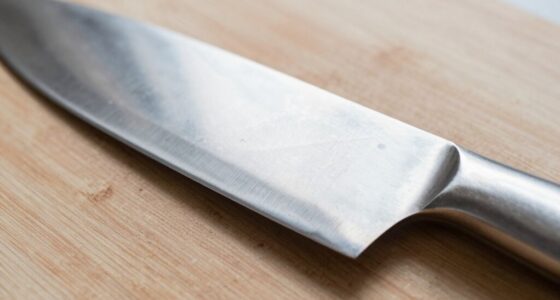
While surface stains from acidic foods might seem like a minor issue, they don’t necessarily indicate damage to your blades. Surface stains typically appear as discoloration or tarnish on the blade’s surface and can often be removed with proper polishing techniques. Damage to the blade itself, however, involves chipping, warping, or loss of sharpness, which can compromise safety and effectiveness. To prevent confusion, store your blades properly using suitable storage solutions, avoiding moisture and contact with other utensils. Regular polishing can restore the appearance of surface stains without affecting the blade’s integrity. Recognizing the difference helps you determine whether cleaning is sufficient or if professional sharpening or replacement is necessary to maintain ideal performance.
Why Discoloration Doesn’t Affect Cutting Performance

Discoloration caused by acidic foods primarily affects the blade’s surface appearance and doesn’t weaken its cutting ability. Your knife’s core strength remains intact, meaning performance stays sharp and reliable. To maintain this, focus on proper blade sharpening techniques that restore a fine edge without removing the discoloration. Coating protection, such as a quality blade finish, shields against further staining and rust, ensuring durability. Keep in mind:
Discoloration is superficial, doesn’t weaken your knife, and doesn’t affect performance.
- Discoloration is superficial, not structural.
- It doesn’t impact the blade’s edge or cutting efficiency.
- Regular blade sharpening keeps performance ideal.
- Coating protection preserves surface integrity and prevents corrosion.
Additionally, understanding affiliate disclosure helps you make informed decisions when purchasing maintenance tools. In essence, surface stains are cosmetic and don’t interfere with your knife’s functionality. You can confidently use your blade, knowing discoloration isn’t a performance issue.
Proper Care Tips to Minimize Discoloration
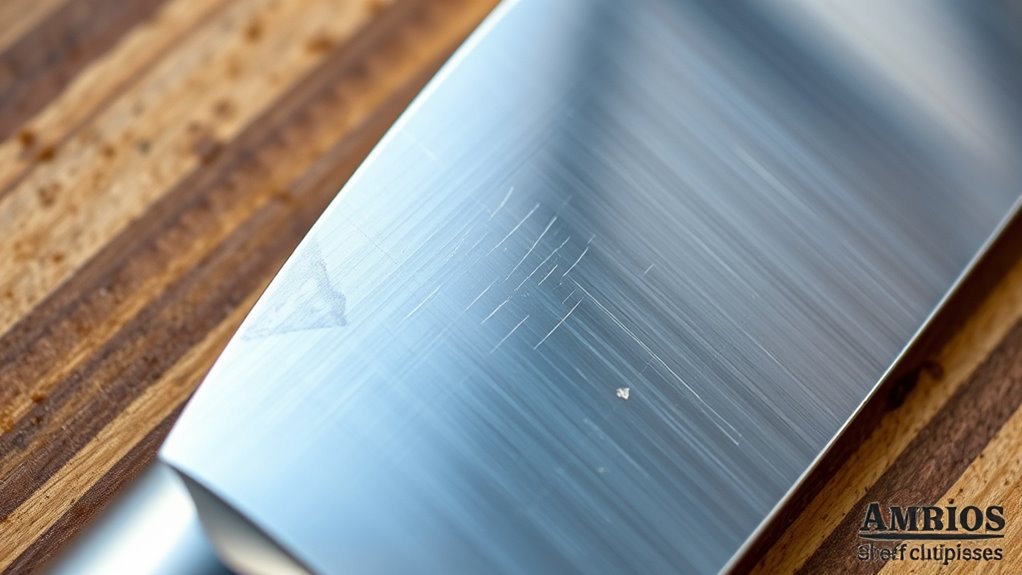
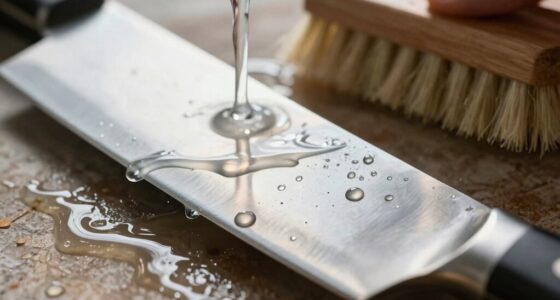
Since discoloration mainly affects the blade’s surface and not its performance, taking proactive steps can help keep your knife looking its best. When you’re preparing acidic foods, consider smart food pairing—combine acidic ingredients with less reactive items to reduce exposure. After use, clean your blade immediately with warm water and a gentle detergent to prevent oxidation. Store your knife properly by keeping it in a knife block, on a magnetic strip, or in a protective sheath, avoiding humid environments that can accelerate discoloration. Avoid storing your knife with other metals or in damp conditions. Regular maintenance, like honing and occasional polishing with a non-abrasive cloth, also helps minimize surface discoloration and keeps your blade looking sharp and new longer.
When to Be Concerned About Blade Condition

If your blades show signs of excessive wear or become chipped, it’s time to pay attention. Dull edges that don’t cut smoothly or have visible damage can compromise safety and efficiency. When these issues arise, consider replacing your blades to maintain ideal performance. Regular maintenance can also prevent corrosion and prolong the lifespan of your blades, especially if you use precious metal investments as part of your portfolio. Additionally, understanding blade materials can help in selecting the most durable options for your needs.
Signs of Excessive Wear
Over time, you may notice your blades aren’t cutting as smoothly or efficiently as they once did. Excessive wear can signal it’s time to evaluate their condition. Look for these signs:
- Dullness or jagged edges, which hinder food preservation and compromise culinary history by reducing blade effectiveness. Regular blade maintenance can help identify early signs of wear before they become serious issues.
- Chipping or cracks, indicating the metal is weakened and may lead to unsafe use.
- Discoloration that extends beyond normal oxidation, suggesting corrosion from acidic foods. This process can accelerate if blades are exposed repeatedly to acidic foods, highlighting the importance of proper cleaning.
- Inconsistent cutting performance, such as tearing or crushing ingredients, showing the blade’s edge has worn down.
- Monitoring for signs of corrosion and wear can help extend the lifespan of your blades by understanding metal fatigue and proper maintenance. Proper storage techniques can also reduce exposure to environmental factors that promote blade deterioration.
Recognizing these signs helps you preserve the integrity of your kitchen tools, maintaining their role in culinary history and ensuring safe, efficient food preparation.
When to Seek Replacement
Knowing when to replace your blades is essential for maintaining safe and effective food preparation. If you notice persistent discoloration or difficulty cutting even after blade sharpening, it’s time to contemplate replacement guidelines. Dull blades require more force and can compromise food safety. Be alert for nicks, chips, or uneven edges, which indicate significant wear. When your blade no longer responds to sharpening or if sharpening doesn’t restore its performance, replacement is necessary. Ignoring these signs can lead to contamination or accidents. Regular inspection helps you identify when a blade has reached the end of its lifespan. Following proper replacement guidelines ensures you maintain ideal cutting efficiency and safety, preventing potential hazards caused by compromised blades.
Frequently Asked Questions
Can Acidic Foods Weaken or Damage the Blade Over Time?
Yes, acidic foods can weaken your blade over time by causing acidic corrosion. This process accelerates blade deterioration, making it more prone to chipping or dulling. To protect your knife, clean it promptly after cutting acidic items and avoid prolonged exposure. Proper maintenance helps prevent damage, ensuring your blade stays sharp and functional longer. Regular care is key to minimizing the effects of acidic corrosion on your blades.
Are There Specific Types of Blades More Prone to Discoloration?
Think of your blades as delicate paintbrushes—some are more prone to staining than others. Ceramic blades often resist discoloration, while softer metals like carbon steel or weaker stainless steel are more susceptible due to their staining tendencies. You’ll notice that blades with a softer or less durable material show discoloration faster when cutting acidic foods. Choosing high-quality, stain-resistant blades can keep your tools looking sharp and pristine longer.
How Can I Restore the Original Appearance of a Discolored Blade?
To restore your discolored blade, start with proper stainless steel maintenance by using a gentle abrasive like baking soda or a stainless steel cleaner. Follow blade cleaning tips by scrubbing gently with a soft cloth or sponge, avoiding harsh abrasives that can cause damage. Rinse thoroughly and dry immediately to prevent water spots. Regular cleaning and proper care help keep your blades looking shiny and new over time.
Does Discoloration Impact the Safety of Using the Knife?
Discoloration doesn’t impact blade safety, so you can confidently use your knife without concerns about safety risks. The discoloration is mainly a cosmetic issue caused by acids reacting with the metal, not a sign of damage or contamination. While discoloration concerns may bother you aesthetically, they don’t affect the blade’s performance or safety. To keep your knife safe and looking good, regularly clean and properly maintain it.
Are There Recommended Storage Methods to Prevent Blade Discoloration?
Think of your knife as a delicate artist’s brush—proper storage keeps it pristine. To prevent blade discoloration, you should use storage solutions like knife blocks, magnetic strips, or blade guards. Regular blade maintenance, including cleaning and drying thoroughly, also helps. Avoid storing blades loosely in drawers or with other metals, which can cause corrosion. With these tips, your blades stay sharp and beautiful, ready for their next masterpiece.
Conclusion
So, next time you’re slicing lemons or tomatoes, remember you’re basically inviting tiny metal gremlins to throw a color party on your blades. Discoloration might look dramatic, but it’s just a harmless party crash, not a sign of impending doom. Keep your knives happy with proper care, and they’ll keep performing like champs—no need for a metal detox. After all, who knew your kitchen’s most vibrant event was just acidic foods doing their colorful dance?
Fall Picks
fall essentials
As an affiliate, we earn on qualifying purchases.