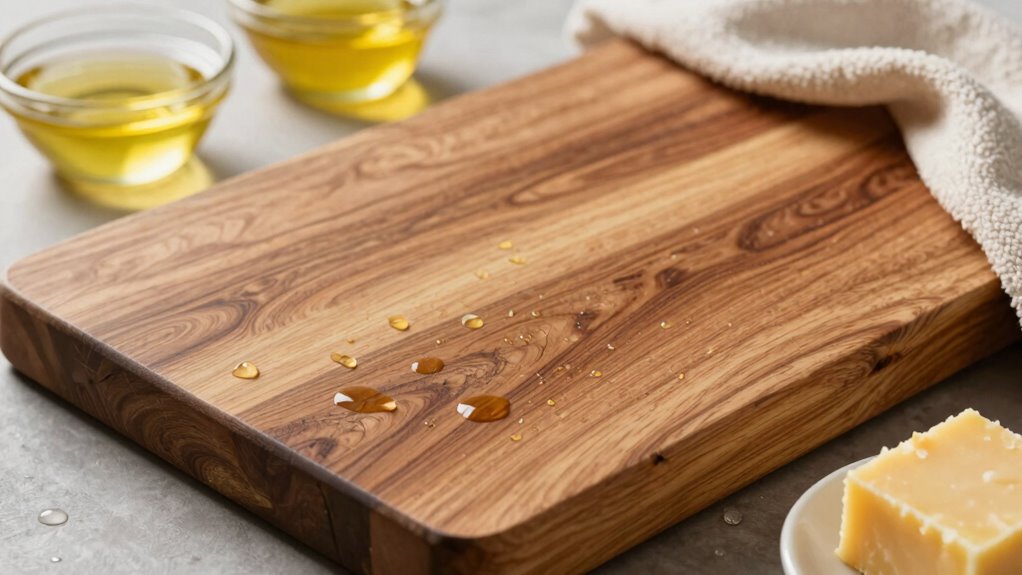

To make your butcher block last longer, regularly clean it with warm water and mild soap, then dry thoroughly. Apply food-safe oil, like mineral oil, evenly along the grain and let it soak in for hours or overnight. Keep up with routine maintenance by reapplying oil whenever you notice dryness, and avoid harsh chemicals or soaking. Proper care prevents cracking and keeps your board looking beautiful—stick with these tips to guarantee long-term durability and get even more helpful advice.

Get kitchen gear delivered free — and shop member deals
- Fast, free delivery on millions of items
- Access to Prime Big Deal Days deals on October 6–7
- Prime Video, Amazon Music and more included
Key Takeaways
- Regularly clean with warm water and mild soap, then dry thoroughly to prevent moisture buildup.
- Apply food-safe oil evenly along the grain and let it soak in to nourish and protect the wood.
- Re-oil the surface after cleaning or when dry patches appear to maintain moisture and prevent cracks.
- Avoid soaking, harsh chemicals, and abrasive tools to prevent damage and prolong the board’s lifespan.
- Store in a dry, well-ventilated area and avoid exposure to excessive moisture or direct sunlight.

Butcher block boards are a versatile and stylish addition to any kitchen, but they require proper care to stay in top condition. One of the key elements in maintaining your board’s durability and appearance is understanding the importance of the wood grain. The wood grain not only contributes to the aesthetic appeal but also influences how well the board resists moisture and bacteria. When you look at your butcher block, you’ll notice that the grain’s direction affects how the surface reacts to cuts and spills. To keep it looking its best, you should always cut with the grain, which minimizes damage and helps preserve the surface. Over time, the wood grain can become dull or stained if not properly cared for, but regular oil application can markedly improve its longevity. Proper wood grain orientation also helps the surface resist splitting and cracking, ensuring your board lasts longer. Applying oil is crucial because it penetrates the wood, nourishing it from within and creating a protective barrier against moisture. You want to choose a food-safe oil, like mineral oil or specialized butcher block oil, and apply it generously. The process involves spreading the oil evenly across the entire surface, paying close attention to the grain direction. Let the oil soak in for several hours or overnight, allowing it to deeply hydrate the wood and enhance its natural beauty. Regular oil application not only revitalizes the wood grain, making the surface look richer and deeper in color, but it also prevents the wood from drying out and cracking. As you oil your board, you’ll notice that the grain becomes more prominent and vibrant, which adds to its visual appeal. Keeping your butcher block in top shape also involves a routine of cleaning and oiling. After each use, wash the board with warm water and mild soap, then dry it thoroughly to prevent moisture buildup. Once dry, applying a fresh coat of oil will help maintain the wood’s structural integrity and appearance. If you notice any dry patches or streaks, it’s a sign that your board needs more oil. Additionally, understanding the benefits of proper maintenance** can motivate consistent care. Avoid using harsh chemicals or soaking the board in water, as these actions can damage the wood grain and compromise its structure. Instead, focus on consistent, light maintenance—regular oiling and careful cleaning—to ensure your butcher block stays functional and beautiful for years to come. Proper wood grain care** is essential for preventing damage and extending the lifespan of your board.
food-safe mineral oil for butcher block
As an affiliate, we earn on qualifying purchases.
As an affiliate, we earn on qualifying purchases.
Frequently Asked Questions
Can I Put My Butcher Block in the Dishwasher?
You shouldn’t put your butcher block in the dishwasher. Dishwasher safety isn’t suitable because the high heat and moisture can warp or crack the wood. Instead, use alternative cleaning methods like wiping with mild soap and water, then oiling the surface regularly. For deep cleaning, sprinkle salt or baking soda and scrub with a lemon. These methods keep your butcher block in top shape without risking damage from the dishwasher.
How Often Should I Sand My Butcher Block?
Think of your butcher block like a trusted friend with a unique wood grain, constantly evolving. You should sand it every 4 to 6 months, or when the surface starts to feel rough or shows signs of wear. Regular sanding preserves the wood grain’s beauty and boosts surface durability, preventing deep cuts and stains. Keep it smooth and resilient, so your board remains a reliable partner in your kitchen adventures.
Is It Safe to Cut Raw Meat on a Butcher Block?
Yes, it’s safe to cut raw meat on a butcher block if you follow proper food safety practices. You should sanitize the surface thoroughly after cutting raw meat to prevent bacterial growth. Use hot, soapy water and a disinfectant, then rinse and dry completely. Regularly sanding and oiling your butcher block also helps maintain its condition and reduces bacteria hiding in the wood’s pores, keeping it safe for food prep.
What Is the Best Oil for Maintaining Butcher Block?
Think of your butcher block as a sponge, soaking in the right nourishment. The best oil for maintaining it is food-grade mineral oil because it penetrates the wood grain deeply, preventing excessive oil absorption and drying out. This oil creates a protective barrier, keeps your board smooth, and preserves its natural beauty. Regularly oiling your board with mineral oil guarantees it stays durable and looking like new for years to come.
How Do I Remove Stains From My Butcher Block?
To remove stains from your butcher block, start with a cleaning technique using a mix of baking soda and water to make a paste. Spread it over the stain, let it sit for a few hours, then scrub gently with a soft brush or sponge. Rinse with water and dry thoroughly. For stubborn stains, repeat the process or consider using a mild bleach solution, ensuring you rinse and dry completely afterward.
butcher block oil and conditioner
As an affiliate, we earn on qualifying purchases.
As an affiliate, we earn on qualifying purchases.
Conclusion
By caring for your butcher block with patience and regular upkeep, you’ll keep it looking as timeless as a piece of art, much like a treasured book passed down through generations. Think of it as your culinary faithful companion—ready to serve, cut, and carve through countless meals. With a little love and attention, your board will stand the test of time, becoming part of your kitchen’s story, just like the classics that never go out of style.
As an affiliate, we earn on qualifying purchases.
butcher block cleaning and maintenance kit
As an affiliate, we earn on qualifying purchases.
As an affiliate, we earn on qualifying purchases.
Fall Picks
fall essentials
As an affiliate, we earn on qualifying purchases.