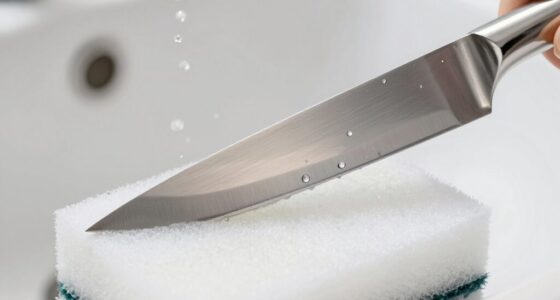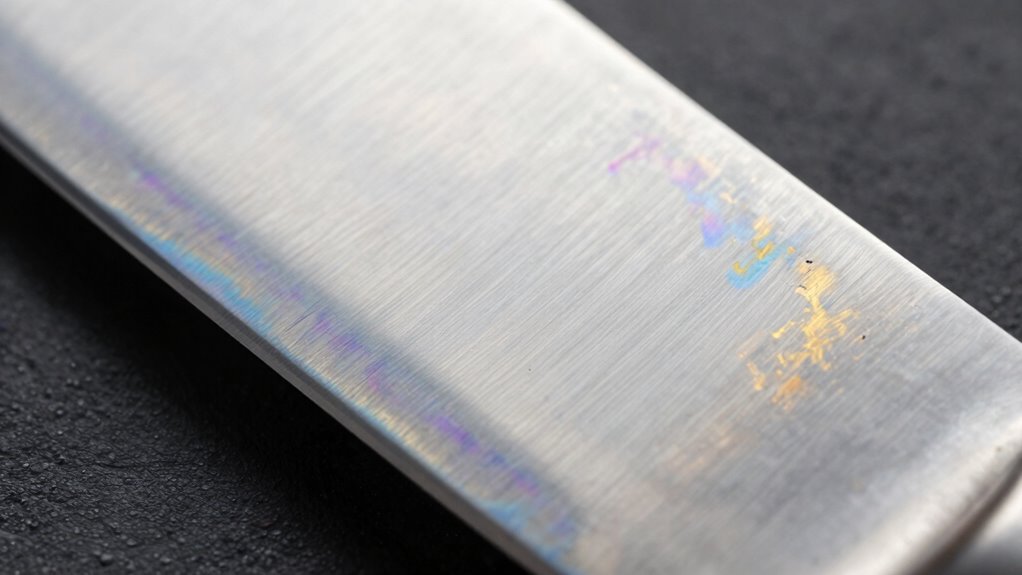

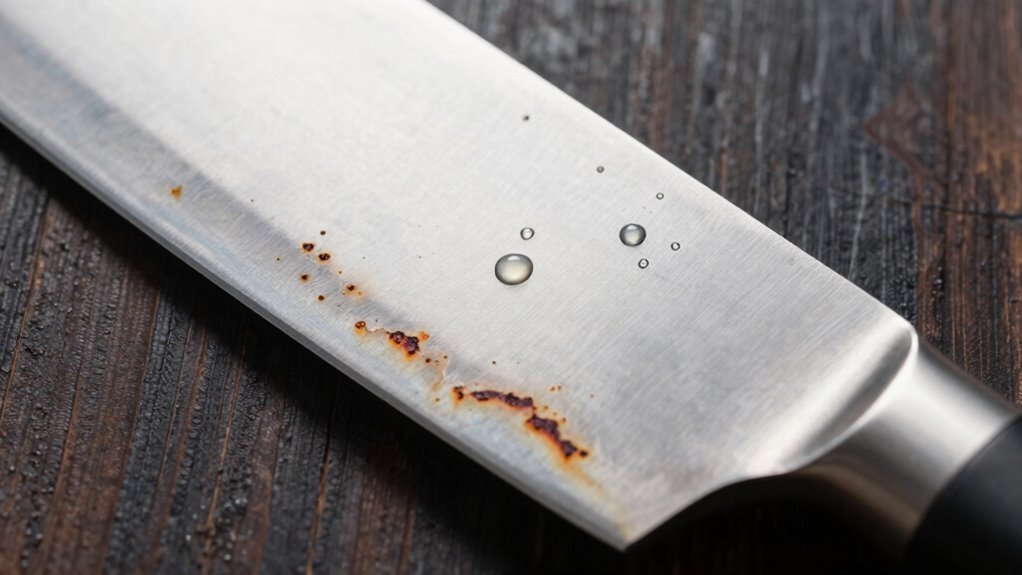
When you cut acidic foods like citrus or tomatoes with certain knives, it causes visible staining and discoloration because acids react with the steel’s surface alloys. This reaction can lead to tarnishing, rust spots, and dull spots, which affect both the look and durability of your knife. The type of steel, especially its chromium content, influences how it withstands acids. Keep exploring to understand how to choose and care for your knives better.

Get kitchen gear delivered free with Prime
- Fast, free delivery on millions of items
- Prime Video, Amazon Music and more included
- Member-only deals all year
Key Takeaways
- Acidic foods react with steel, causing chemical changes that lead to staining and discoloration.
- Corrosion from acids creates dull spots, rust, or pitting on the knife surface.
- Variations in steel alloy composition affect how susceptible the blade is to acid-induced staining.
- Acid exposure can weaken the steel structure, resulting in visual and structural damage.
- Proper maintenance and choosing high chromium steels help prevent these visual changes.
When you cut into acidic foods like citrus or tomatoes, you might notice your knife’s edge dulls faster than usual. This is because acids from these foods can react with the steel, leading to changes in appearance and performance. The corrosion resistance of your knife plays a significant role here, and it’s largely determined by the alloy composition of the steel. Different steels contain varying amounts of elements like chromium, nickel, and carbon, which influence how well they withstand corrosion caused by acids.
Knives made from high-quality stainless steel typically have a higher corrosion resistance because they contain more chromium. Chromium forms a thin, protective oxide layer on the surface of the steel, shielding it from environmental factors and food acids alike. When this layer remains intact, your knife maintains its shine and structural integrity, ensuring it doesn’t develop rust or discoloration. Conversely, steels with lower chromium content are more vulnerable to the corrosive effects of acids, which can lead to staining, pitting, or dulling of the blade. Regular maintenance, such as cleaning and proper storage, can help preserve this protective layer and prevent premature corrosion.
High-quality stainless steel knives resist corrosion better due to their higher chromium content.
The alloy composition directly impacts how your knife reacts with acidic foods. For instance, high-carbon steels offer excellent edge retention but usually lack the corrosion resistance of stainless steels. If the alloy composition isn’t balanced properly, the steel can become prone to staining and rust when exposed to acids. This can manifest as a change in the blade’s appearance, with dull spots or discoloration that might look like staining but are actually corrosion spots. Over time, these spots can deepen, weakening the steel and making the blade more prone to chipping or breakage. Understanding the steel alloy composition of your knife is crucial because it influences how well your blade resists corrosion and maintains its performance over time. Additionally, corrosion resistance is a key factor to consider when selecting a knife for frequent use with acidic ingredients, as it directly affects durability and longevity.
While proper maintenance can mitigate some effects, understanding your knife’s alloy composition helps you choose the right steel for your needs. If you often work with acidic ingredients, look for knives made from steels with high corrosion resistance, like those containing a significant amount of chromium and other alloying elements designed to resist acid attack. Knowing how different steels react with acids can also guide you in selecting the most suitable knife for your kitchen tasks. Regular cleaning and drying after use also help preserve the integrity of the alloy’s protective layer, preventing the acids from causing lasting damage. Additionally, choosing corrosion-resistant steel when selecting a knife can significantly extend its lifespan and performance. Being aware of how different steels react to acids can guide you in making informed choices that enhance cutting performance and prolong the life of your knives.
stainless steel kitchen knives high chromium
As an affiliate, we earn on qualifying purchases.
As an affiliate, we earn on qualifying purchases.
Frequently Asked Questions
Can Acidic Foods Cause Permanent Damage to Knife Edges?
Acidic foods can cause permanent damage to your knife edges if not cleaned properly. They can lead to pitting formation, where small holes develop in the steel, and steel discoloration, which affects the knife’s appearance. Over time, these issues weaken the blade and reduce its sharpness. To prevent this, you should clean your knives immediately after use with acidic foods and avoid prolonged contact to maintain their quality.
Are Some Knife Steels More Resistant to Acid Corrosion Than Others?
Some steel alloys are more resistant to acid corrosion than others. You’ll find that steels with higher corrosion resistance, like those with added chromium or nickel, stand strong against acidic foods. These alloys create a protective barrier, preventing rust and discoloration. So, when choosing a knife, look for those with superior corrosion resistance, ensuring your blades stay beautiful and functional, even after chopping acidic ingredients like citrus or tomatoes.
How Often Should I Clean My Knives After Cutting Acidic Foods?
You should clean your knives immediately after cutting acidic foods to maintain proper blade maintenance. For regular use, aim to clean your knives within a few minutes to prevent acid damage and corrosion. Frequent cleaning minimizes staining and preserves the steel’s appearance. Remember, proper cleaning frequency not only prolongs your knife’s lifespan but also keeps your blades sharp and hygienic, ensuring safe and effective cutting every time.
Does the pH Level of the Food Affect Steel Corrosion?
Yes, the pH impact of food directly affects steel corrosion. Acidic foods with low pH levels can weaken the corrosion resistance of your knife steel, leading to rust and discoloration over time. When you cut or prepare highly acidic ingredients, you’re exposing the steel to conditions that can accelerate corrosion. To protect your knives, clean and dry them promptly after preparing acidic foods, maintaining their corrosion resistance and overall performance.
Can Acid Exposure Weaken the Overall Structure of a Knife?
Acid exposure can weaken your knife’s overall structure by promoting corrosion, especially if the steel has lower corrosion resistance. Over time, acids can erode the material, reducing its durability and making it more prone to damage or chipping. To guarantee your knife’s strength, choose blades with high corrosion resistance and clean them promptly after acidic foods. Proper care helps preserve the material’s durability and ensures your knife lasts longer.
As an affiliate, we earn on qualifying purchases.
Conclusion
So, next time you’re slicing through that tangy tomato or zesty lemon, remember it’s not just your taste buds that feel the punch—your knife steel does too. Acidic foods act like a sneaky artist, slowly painting corrosion and tarnish on your blades. Think of your knife as a brave knight; protect it with proper care, and it’ll stay sharp and shiny, ready to conquer every culinary adventure. After all, a blade’s beauty deserves more than just a fleeting moment.
As an affiliate, we earn on qualifying purchases.
high corrosion resistance kitchen knives
As an affiliate, we earn on qualifying purchases.
As an affiliate, we earn on qualifying purchases.
Halloween Picks
halloween
As an affiliate, we earn on qualifying purchases.