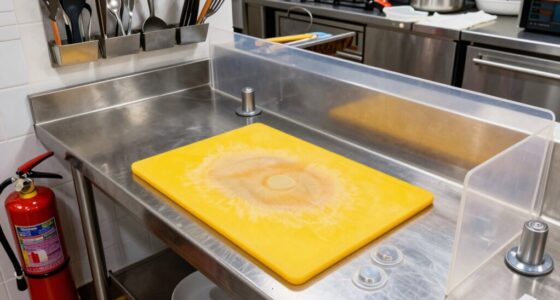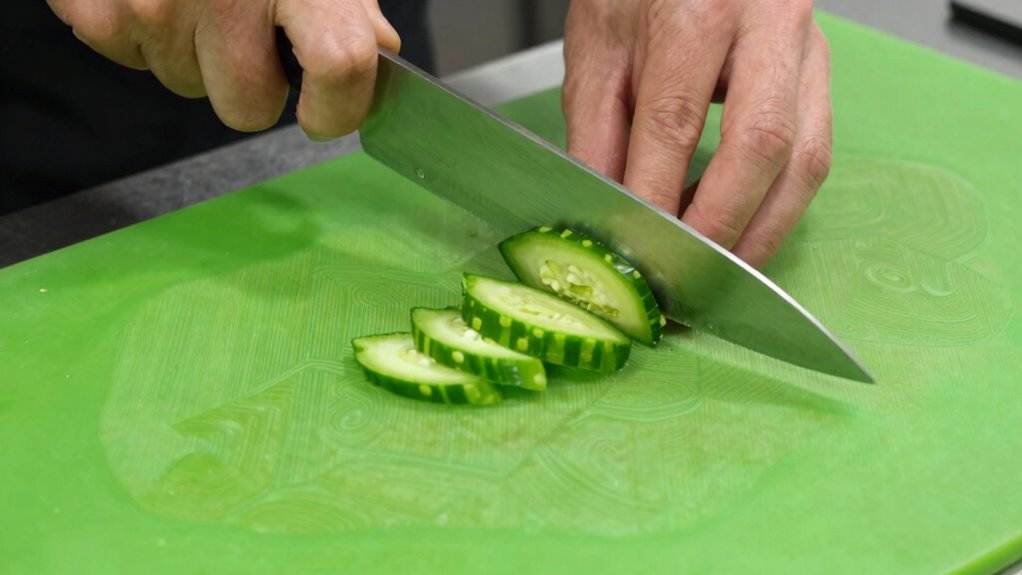

A stable cutting surface keeps your workspace safe by preventing slips and wobbling, so you can focus better and make accurate cuts. It helps you control your tools with less effort, reducing strain and the risk of injuries. When your surface is steady, you work faster and more confidently, wasting less material and avoiding mistakes. For insights on how combining stability and good design boosts both safety and efficiency, keep exploring these key tips.

Get kitchen gear delivered free with Prime
- Fast, free delivery on millions of items
- Prime Video, Amazon Music and more included
- Member-only deals all year
Key Takeaways
- Stable surfaces prevent slips and wobbling, reducing the risk of injuries during cutting tasks.
- They enable more accurate cuts, minimizing material waste and rework.
- Ergonomic, stable workstations reduce fatigue and improve control over tools.
- Stability minimizes vibrations, allowing for cleaner, faster cuts with less effort.
- Combining stability with ergonomic design enhances safety, speed, and overall work quality.

A stable cutting surface is essential for both safety and efficiency in any workspace. When you’re working with sharp blades, stability becomes even more critical because it directly impacts your control and precision. A wobbling or unstable surface increases the risk of slips and accidents, which can cause serious injuries. It also makes it harder to make clean, accurate cuts, wasting time and materials. By ensuring your workspace has a sturdy, reliable surface, you reduce hazards and create a more productive environment. This stability allows you to focus on your task without constantly fighting against movement or vibrations that can compromise safety and quality.
A stable surface enhances safety, precision, and efficiency in any workspace, reducing accidents and improving cutting quality.
The design of your cutting station plays a significant role in both safety and speed. An ergonomic design isn’t just about comfort; it’s about creating an environment that supports your natural movements and minimizes strain. When your workspace is thoughtfully designed, it aligns with your body’s mechanics, helping you work more efficiently and with less fatigue. An ergonomic setup reduces the likelihood of mistakes, which often happen when you’re tired or uncomfortable. Plus, it helps you maintain better control over your tools, especially when using sharp blades that demand careful handling. This combination of stability and ergonomic design means you can work faster because you spend less time readjusting your position or correcting errors caused by instability.
Having a stable surface also allows you to use your tools more effectively. When the surface stays firm under pressure, you can apply consistent force, resulting in cleaner cuts and less strain on your hands and wrists. Sharp blades work best when they’re used with precision, and a stable platform helps you achieve that. With a solid work surface, you don’t need to exert extra effort to keep your materials in place, which accelerates your workflow. Additionally, a well-designed, stable workstation minimizes vibrations and movement, enabling you to make precise, confident cuts without hesitation. This not only speeds up your work but also enhances safety, because you’re less likely to slip or mishandle your blades.
In essence, a stable cutting surface combined with an ergonomic design creates an environment where safety and speed go hand in hand. It empowers you to work efficiently while reducing the chances of accidents. Your sharp blades perform better when used on a firm, stable platform, and your overall workflow improves because you can work with confidence and precision. Investing in a sturdy, well-designed workspace is the simplest way to make your cutting tasks safer, faster, and more accurate.
Understanding workspace stability is crucial because it directly influences safety and efficiency in your task.
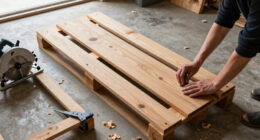
stable cutting surface for woodworking
As an affiliate, we earn on qualifying purchases.
As an affiliate, we earn on qualifying purchases.
Frequently Asked Questions
How Do Stable Surfaces Reduce Kitchen Accidents?
Stable surfaces reduce kitchen accidents by providing a secure base for cutting, which enhances knife safety and minimizes slips. When your cutting station is steady, you can focus better on precision and control, improving kitchen ergonomics. This stability prevents unexpected movements that could cause cuts or injuries. By ensuring your cutting surface stays firm, you create a safer environment, allowing you to work faster and more confidently without risking accidents.
Can Unstable Surfaces Damage Knives?
Unstable surfaces can indeed damage knives, especially if they cause slips or excessive force. Imagine chopping on a wobbly countertop, risking uneven pressure that dulls or chips your blade. This impacts your knife maintenance and compromises cutting surface hygiene, leading to potential bacterial buildup. To keep your knives sharp and safe, always use stable, non-slip cutting surfaces. This reduces the risk of damage and keeps your workspace hygienic.
Are There Specific Materials Best for Stable Cutting Boards?
You should choose cutting boards made from durable materials like hardwood, bamboo, or high-quality plastic. These materials offer excellent durability and resist cuts, ensuring longevity. They also have manageable maintenance requirements—clean with soap and water regularly, and avoid soaking or dishwasher use for wood. Plastic boards are easy to sanitize, while bamboo offers a natural antimicrobial benefit. Opting for these materials keeps your surface stable, safe, and efficient for your kitchen tasks.
How Often Should I Replace My Cutting Surface?
Think of your cutting surface as a trusted friend—eventually, wear and tear take a toll. You should replace it when cleaning maintenance becomes difficult, or you notice deep cuts and grooves. These imperfections compromise surface longevity and safety. Regularly inspect your board, and don’t hesitate to replace it when upkeep no longer restores its stability. This keeps your workspace safe, hygienic, and efficient.
Do Stable Surfaces Improve Cutting Precision?
Yes, stable surfaces greatly improve your cutting accuracy. When your cutting surface remains steady, you avoid slips and uneven cuts, leading to cleaner, more precise results. Surface stability helps you maintain control, especially when working with sharp tools or delicate materials. By choosing a stable cutting surface, you guarantee consistent performance, reduce mistakes, and enhance overall safety and efficiency in your cutting tasks.
As an affiliate, we earn on qualifying purchases.
Conclusion
Using a stable cutting surface isn’t just about speed—it’s about safety too. When your workspace is secure, you can focus fully on the task at hand, reducing accidents and increasing efficiency. Think of it as having a solid foundation; without it, everything else can crumble. So, make sure your cutting surface is firm and reliable. After all, a steady surface keeps you safe and helps you get the job done right the first time.
As an affiliate, we earn on qualifying purchases.
As an affiliate, we earn on qualifying purchases.
Fall Picks
fall essentials
As an affiliate, we earn on qualifying purchases.